Hawaii’s Doves and Where They Feed
For many hunters in Hawaii, the pursuit of big game like axis deer or feral pigs often overshadows the more subtle, yet equally rewarding, challenge of game bird hunting. However, ignoring the vibrant dove populations in the islands means missing out on incredible opportunities, especially when you're looking for accessible, fast-paced action. This guide will walk you through identifying Hawaii's huntable dove species, understanding their preferred habitats and feeding patterns, and how to increase your success in the field.
Understanding Hawaii's Huntable Doves
When you think about doves in Hawaii, you might picture them cooing softly in urban parks. But out in the wilder parts of the islands, these birds offer a fantastic hunting experience. It's crucial to know which species are fair game and where they prefer to hang out, as not all doves are created equal, and some areas are more productive than others. The Department of Land and Natural Resources (DLNR) sets specific regulations for game birds, so staying informed is key.
Barred Doves: The Ubiquitous Upland Bird
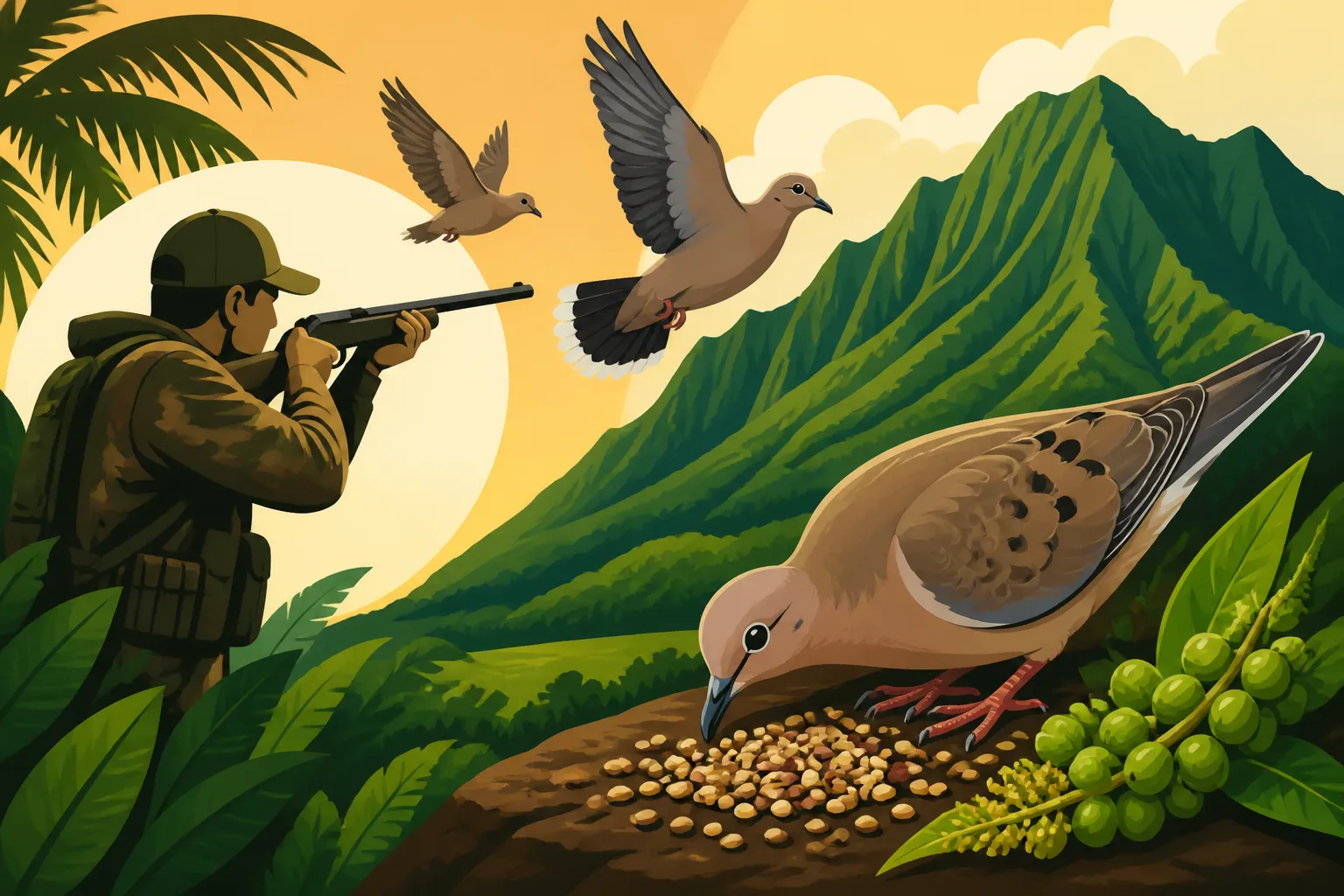
The Barred Dove, also known locally as the Zebra Dove, is arguably the most common and widespread dove species across the Hawaiian Islands. These small, agile birds are recognized by their distinct barred pattern on the neck and breast, giving them a somewhat "striped" appearance. They're often seen foraging on the ground in open areas, pastures, lawns, and agricultural fields. They thrive in environments where there's a mix of short grass for feeding and scattered shrubs or trees for roosting and cover.
They're particularly fond of areas where seeds are abundant. Think about places like old pineapple fields gone fallow, macadamia nut orchards, or even just general ranch land where cattle graze, keeping the grass short and exposing seeds. Their diet consists almost entirely of small seeds, fallen grains, and tiny insects, which is why you'll often find them working the edges of cultivated lands or recently mowed areas. Their flight is quick and direct, making them a challenging target for shotgunners, and their small size means you might need a good number to make a meal, but their flavor is excellent. Finding a good concentration of Barred Doves can often lead to some exciting action, especially during peak feeding times.
Spotted Doves: The Urban & Rural Mix
The Spotted Dove is another popular game bird in Hawaii, often found in similar habitats to the Barred Dove but tending to prefer slightly denser cover or areas closer to human habitation, though they are certainly found in remote rural settings as well. You can identify the Spotted Dove by its larger size compared to the Barred Dove and, most distinctly, by the heavily spotted patch on the sides of its neck. Their coloration is generally more muted, with a grayish head and pinkish-brown body.
These doves also primarily feed on seeds, grains, and some small fruits. They are frequently observed in residential areas, parks, and around farm buildings, but don't let that fool you into thinking they're strictly city birds. They're equally at home on ranch lands, in forest edges, and along the boundaries of agricultural plots, particularly where there are berry-producing shrubs or fruit trees. Their foraging habits often take them into thicker vegetation than the Barred Dove might prefer, and their flight can be equally challenging, often appearing a bit more deliberate but still very fast. Hunting these birds often involves walking up pockets of cover or positioning yourself along flight paths between feeding and roosting areas.
Legalities and Regulations for Dove Hunting
Before you even think about heading out, it's absolutely critical to understand the legal framework for hunting doves in Hawaii. The Hawaii Department of Land and Natural Resources (DLNR), specifically the Division of Forestry and Wildlife (DOFAW), manages all game bird seasons, bag limits, and legal hunting areas. You'll need a valid Hawaii hunting license, and potentially a game bird stamp, depending on current regulations. These can often be purchased online through platforms like GoHunt, which streamlines the process.
Each island and even specific hunting units might have slightly different rules or season dates. For instance, Hawaii Game Bird Seasons and Bag Limits will detail specific opening and closing dates, as well as the daily and possession limits for both Barred and Spotted Doves. Typically, doves are hunted during specific game bird weekends or longer seasons, often spanning from early November through mid-January, but these dates can change annually. You'll also need to be aware of legal shooting hours, which generally run from sunrise to sunset. Always check the most current regulations directly from DOFAW before planning your hunt, as closures or adjustments can happen.
Typical Habitats and Feeding Grounds
Understanding where doves prefer to eat is half the battle when it comes to successful hunting. Doves are primarily ground feeders, constantly searching for seeds and grains. This means certain types of landscapes will naturally attract them more than others. Hawaii's diverse terrain offers a variety of these preferred habitats, from dry, dusty flats to lush agricultural fringes.
Agricultural Edges and Fallow Fields
One of the absolute best places to find both Barred and Spotted Doves is along the edges of agricultural fields and in fallow land. These areas are veritable buffets for doves. When crops like corn, sorghum, or even smaller grains are harvested, a significant amount of seeds often drops to the ground, providing an easy food source. Even fields that are intentionally left fallow or are in rotation for crops like pineapple or sugarcane will develop a natural growth of weeds, many of which produce the small seeds doves crave.
Picture a long-abandoned sugar cane field on Maui, or a fallow pineapple tract on Oahu. These spots, often overgrown with low-lying weeds and grasses, become prime feeding real estate. Doves will spend hours on the ground, meticulously picking through the debris for sustenance. The edges of these fields, where they meet a forest line, a road, or a treeline, are often excellent places to set up. Doves will fly from roosting areas in the trees to these feeding grounds, offering opportunities for pass shooting. Hunters often find success walking slowly through these fields, flushing birds, or setting up blinds near known flight paths.
Ranch Pastures and Water Sources
Ranch lands, with their expansive pastures and often sparse trees, are another magnet for doves. Cattle grazing keeps the grass short, which does two things: it makes it easier for doves to spot and access fallen seeds, and it often promotes the growth of certain weed species that doves love. When you're Hunting a Ranch Pasture Boundary, pay close attention to areas where cattle have recently grazed. These disturbed areas can expose fresh seeds and attract doves.
Beyond just the pastures, water sources are absolutely critical, especially in Hawaii's drier leeward regions. Doves need to drink regularly, particularly in the warm climate. Stock ponds, small reservoirs, intermittent streams, and even cattle troughs can become gathering points for doves, especially in the late morning or mid-afternoon. If you can locate a reliable water source on or near a good feeding ground, you've likely found a hotspot. Positioning yourself near a frequently visited water hole, such as Hunting a Reservoir Edge for Doves, can be incredibly effective, allowing for ambush opportunities as birds come in for a drink.
Coastal Lowlands and Kiawe Flats
Hawaii's unique geography also means that certain coastal lowlands and dry, scrubby areas offer fantastic dove habitat. The kiawe tree (mesquite) is a common sight in these dry, sun-baked environments, particularly on islands like Maui, Lanai, and the leeward side of the Big Island. The kiawe pods, when dry, contain seeds that doves readily consume. So, a Hunting a Kiawe Flat for Axis Deer unit can also double as a prime dove hunting ground.
These areas, often characterized by low-growing kiawe, buffelgrass, and other arid-adapted plants, provide both food and scattered cover for doves. The ground is typically dry and dusty, making it easy to spot birds on the ground. Hunters can walk these flats, flushing birds that have been feeding, or watch for incoming flights heading towards water or roosts further inland. The sparse vegetation can make for challenging shots, as birds often gain speed quickly once airborne. Don't underestimate these drier coastal zones; they often hold significant numbers of doves, especially during periods of drought when other food sources might be scarce.
Seasonal Patterns and Best Times to Hunt
Like all game animals, doves have predictable patterns influenced by the time of year and time of day. Knowing these rhythms can dramatically improve your chances of success and help you maximize your time afield. Hawaii's relatively stable climate means less dramatic seasonal shifts than on the mainland, but there are still key considerations.
The Game Bird Season Calendar
Hawaii's game bird seasons are typically set to coincide with periods of higher bird populations and optimal foraging conditions. As mentioned earlier, the season for doves often runs through specific weekends from fall into early winter. This timing usually follows the breeding season, ensuring that most birds are mature, and it often aligns with the natural drop of seeds from many plants that comprise the dove's diet.
It's vital to check the annual DOFAW regulations for the exact dates. For example, specific units might open for Hawaii's Weekend and Holiday Hunting Rules for game birds, meaning your dove hunting opportunities might be concentrated on certain days. This requires careful planning. You might find that early in the season, birds are less wary, having seen less hunting pressure. As the season progresses, they can become much more educated and challenging to approach, making good concealment and strategic positioning even more important. Always consult the official DOFAW website or materials before planning your specific dates.
Early Morning and Late Afternoon Activity
Doves are creatures of habit, and their daily routine is largely dictated by feeding and watering needs. The absolute best times to hunt doves are typically during the first couple of hours after sunrise and the last couple of hours before sunset. During these periods, doves are most actively flying between their roosting sites, feeding grounds, and water sources.
In the early morning, birds will leave their nighttime roosts – often in taller trees, dense forest edges, or even along power lines – and head directly to their preferred feeding areas. This creates excellent opportunities for pass shooting along these flight corridors. As the sun climbs higher, they might take a break, finding shade in kiawe trees or other dense foliage, before heading to water. In the late afternoon, the pattern reverses: they'll feed again before making their final flights back to their roosts for the night. Hunting mid-day can still be productive if you're walking up birds in feeding areas or ambushing them at water, but the most consistent action is usually found during these "golden hours."
Impact of Weather on Dove Movement
While Hawaii generally has pleasant weather, local conditions can significantly influence dove behavior. Doves are sensitive to temperature, wind, and rain, and understanding these factors can help you predict their movements. On hot, sunny days, doves will be particularly active around water sources, often making multiple trips throughout the day. A strong, consistent Reading Hawaii's Trade Wind Patterns can affect their flight paths, sometimes pushing them lower to the ground or making their flight more erratic, creating tricky shots.
Conversely, very windy conditions might keep birds hunkered down in sheltered areas, reducing overall flight activity. Rain can also affect dove behavior. Light rain might not deter them much, but heavy downpours will often send them to cover, where they'll stay until the weather clears. The day after a heavy rain, however, can be excellent, as newly exposed seeds and softened ground make for easy foraging. Paying attention to the local forecast and understanding how these elements influence dove activity will allow you to adjust your hunting strategy for the best possible results.
Reading the Landscape for Dove Sign
Doves are relatively small birds, and they move with stealth on the ground, but they leave behind clear clues if you know what to look for. Scouting an area for "sign" before or during your hunt is crucial for pinpointing high-activity zones and increasing your success rate. It's all about connecting the dots of their daily lives.
Identifying Feeding Areas by Droppings and Tracks
When doves are consistently feeding in a particular area, they leave behind tell-tale signs. The most obvious is their droppings. Dove droppings are small, often whitish-gray, and cylindrical, much like a small pellet. You'll find these concentrated in areas where they spend a lot of time on the ground foraging. If you're walking through a pasture, fallow field, or even a cleared dirt patch and notice a good scattering of these droppings, you're likely in a productive feeding area. The fresher and more numerous the droppings, the more current the activity.
Another subtle but useful clue is their tracks. Doves have small, three-toed tracks, typically less than an inch long, that will be visible in soft dirt or dust. Look for these tracks in dusty trails, along field edges, or near water sources. A crisscross pattern of numerous small tracks indicates heavy feeding activity. Combine the presence of tracks with droppings, and you've got strong evidence that doves are regularly using that spot for meals. This is particularly helpful in identifying areas for Dove Hunting on Hawaii Farm Ground where visual confirmation of birds might be difficult.
Locating Roosting Trees and Water Holes
Understanding where doves roost and water is just as important as knowing where they feed. Doves typically roost in trees, often dense stands that offer protection from predators and the elements. These can be tall eucalyptus trees, kiawe groves, or even dense thickets along a forest edge. Look for trees where you see a concentration of droppings on the ground directly underneath, indicating consistent nighttime use. Identifying these roosting areas allows you to set up for early morning or late afternoon flights as birds depart or return.
Water holes, as mentioned before, are magnets for doves, especially during dry periods. But not all water sources are equal. Look for puddles, stock tanks, shallow edges of reservoirs, or even small, slow-moving sections of streams that have open access to the ground. Doves prefer open, unobstructed approaches to water, where they can see predators coming. If you find a water source with fresh tracks and droppings around its perimeter, you've hit pay dirt. Remember, doves will often fly directly from a feeding area to water, then to a loafing or roosting spot, making these transition zones key ambush points.
Using Flight Paths to Your Advantage
Doves, like many migratory and non-migratory game birds, tend to follow predictable flight paths between their essential resources: food, water, and roosts. These "flyways" are like highways in the sky for doves. Identifying these routes is one of the most effective strategies for pass shooting. Spend some time observing an area before you hunt, especially during peak flight times (early morning and late afternoon). Watch where birds are coming from and where they are going.
Look for natural funnels in the landscape, such as gaps in treelines, saddles between hills, or open corridors in otherwise dense vegetation. Doves will often use the path of least resistance. A lone tall tree in a field, a fence line, or even a slight rise in elevation can act as a landmark for doves, concentrating their flight. Setting up a natural blind or simply hiding yourself along one of these active flight paths can lead to continuous shooting opportunities. The goal is to intercept them as they fly by, rather than constantly chasing them on the ground.
Ethical Considerations and Conservation
Hunting in Hawaii is a privilege that comes with significant responsibilities, especially concerning the unique island ecosystems. While doves are introduced species, practicing ethical hunting and being mindful of conservation principles ensures that these opportunities continue for future generations and minimizes negative impacts on native flora and fauna.
Respecting Private Land and Public Access
A huge part of responsible hunting in Hawaii involves understanding land ownership and access. Many prime dove hunting areas, especially agricultural fields and ranch pastures, are on private land. Without explicit permission from the landowner, hunting on private property is considered trespassing and can lead to severe penalties and permanently damage public access relationships. Always secure permission well in advance. Some private lands may offer guided hunts or require specific permits.
Conversely, there are many public hunting areas (HMAs, FRs, GMAs) managed by DOFAW where dove hunting is permitted during open seasons. You'll need to know Hawaii's Hunting Units and How They Work, and specifically which units are open for game bird hunting. Always check in and out at designated stations or use the OuterSpatial app if required, and abide by all unit-specific rules regarding vehicle access, camping, and dog use. Respecting land boundaries, whether public or private, is paramount for the future of hunting in Hawaii.
Minimizing Impact on Native Species
While doves are introduced and considered game animals, Hawaii is home to numerous endangered native bird species and fragile ecosystems. Hunters have a critical role in minimizing any unintended impact. Always be 100% sure of your target. Never shoot at unknown birds, especially if they are in trees or areas where doves are less likely to be found. Native birds, like the Nene (Hawaiian Goose) or various forest birds, are strictly protected, and accidentally harming one carries severe penalties.
Focus your hunting efforts on established game bird habitats, typically open fields and dry scrublands, where native species are less common. Avoid overly sensitive areas like dense native forests or wetlands unless explicitly designated for game bird hunting. Pick up all spent shotgun shells and any other trash you generate. Practicing "Leave No Trace" principles is essential to maintaining the health of Hawaii's unique environments and demonstrating that hunters are responsible stewards of the land.
Responsible Bird Dog Use
Many hunters enjoy using a good bird dog for dove hunting, and a well-trained retriever can significantly increase your success by finding downed birds in thick cover, reducing waste. However, using dogs in Hawaii requires extra vigilance. First, ensure your dog is registered if required, and that the specific hunting unit or private land allows dogs. Rules for Hawaii Dog Hunting Rules vary, so always double-check.
Hawaii's warm climate, rough terrain, and unique flora and fauna present challenges for dogs. Overheating is a serious risk, so always bring plenty of water for your dog. Be mindful of sharp lava rock or kiawe thorns that can injure paws. Importantly, be aware of protected native wildlife and areas. Your dog should be under strict control at all times and trained to hunt only game birds. Avoid allowing your dog to chase or harass any other wildlife, especially protected species like the Nene or endangered forest birds. Responsible dog handling is a key component of ethical hunting in Hawaii.
Table: Comparing Hawaii's Huntable Doves
To give you a quick overview, here's a comparison of the two primary dove species you'll encounter while hunting in Hawaii:
| Feature | Barred Dove (Zebra Dove) | Spotted Dove |
|---|---|---|
| Size | Small (approx. 8-9 inches long) | Medium (approx. 11-12 inches long) |
| Distinguishing Mark | Fine black barring on neck and breast | Large, spotted black and white patch on neck sides |
| Typical Color | Grayish-brown with pinkish belly | Pinkish-brown body, grayish head |
| Preferred Habitat | Open grasslands, pastures, agricultural fields, lawns | Agricultural edges, forest fringes, urban parks, residential areas |
| Flight Pattern | Fast, direct, often low to the ground | Fast, can be erratic, often slightly higher |
| Diet | Primarily small seeds, fallen grains, tiny insects | Seeds, grains, small fruits, some insects |
| Daily Bag Limit | Consult current DOFAW regulations (often 15 combined) | Consult current DOFAW regulations (often 15 combined) |
Always remember that these details are general guidelines, and individual birds can vary. The key is to be able to positively identify your target before taking a shot.
Disclaimer
This article is for general informational purposes only and does not constitute professional advice. Laws, prices and regulations vary by location and change over time. Consult a qualified professional for guidance on your specific situation.