Where Chukar Live on the Big Island
For many hunters, the thought of Hawaii conjures images of lush, tropical forests and pristine beaches, but the Big Island offers an entirely different, incredibly challenging, and rewarding experience: chasing Chukar partridge in its high-elevation, rugged country. It’s not a hunt for the faint of heart, or those unprepared for thin air and steep, unforgiving terrain. This guide is going to walk you through exactly where these elusive game birds make their home on Hawaii Island, and what it takes to find them.
Understanding Chukar Habitat on Hawaii Island
Chukar aren't your typical island dwellers, content with a breezy, palm-fringed existence. Far from it. These hardy game birds thrive in some of the Big Island's most stark and demanding environments, a stark contrast to the verdant lowlands. Their preferred habitat is specific, and understanding it is the first step to a successful hunt.
The High-Elevation Preference
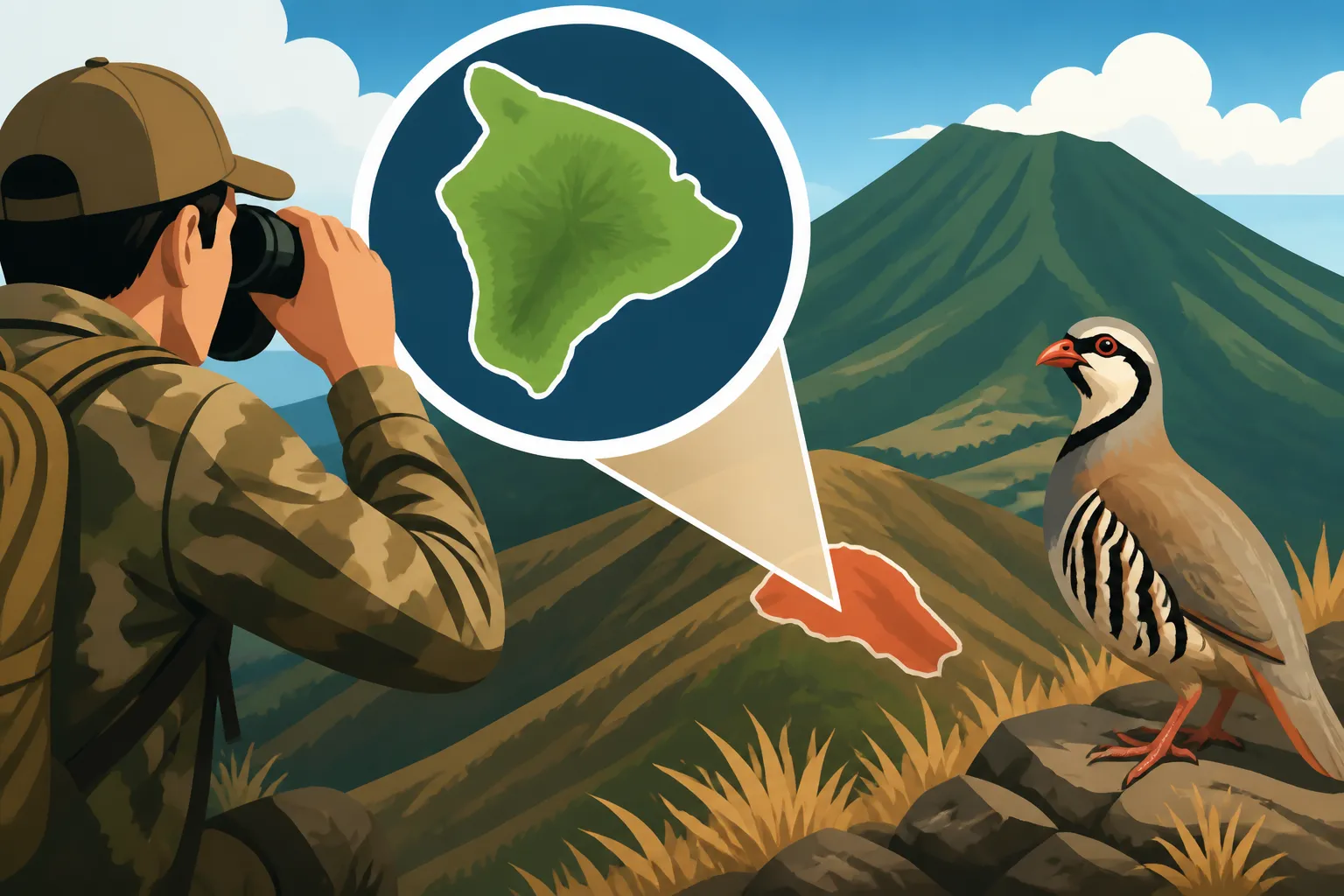
You won't find Chukar strutting around a coffee farm or pecking along a coastal road. Their domain is firmly set in the higher elevations of Mauna Kea and Mauna Loa, typically above 6,000 feet, often pushing up to 10,000 feet or even higher in places. This elevation range is critical because it provides the specific climate and vegetation they need to survive and flourish. The air is thinner up here, the temperatures can swing wildly from hot sun to freezing winds, and the landscape is vastly different from what most people imagine when they think of Hawaii. It's a land of cinder cones, lava flows, and sparse, hardy vegetation.
At these altitudes, the ecosystem changes dramatically. The dense, wet forests give way to drier, more open country. This is where Chukar thrive, using the open visibility to spot predators and the rugged terrain for escape. The challenges of hunting at this elevation are significant, demanding good physical conditioning and proper acclimatization. Forget your light hiking shoes; you'll need sturdy boots designed for serious mountain trekking, capable of handling sharp lava rock and loose scree.
Dry, Rocky, and Sparse Terrain
Chukar are masters of camouflage in their preferred landscape: dry, rocky, and often sparsely vegetated terrain. Think of areas dominated by broken lava flows, cinders, and exposed rock faces. They blend in almost perfectly with these surroundings, making them incredibly difficult to spot until they burst into flight, often with a startling flush. The vegetation, when present, usually consists of tough, drought-resistant grasses, small shrubs like mamane and naio, and often patches of introduced gorse or kiawe.
These plants provide both food and cover, allowing the Chukar to forage for seeds, insects, and tender shoots while remaining hidden from aerial predators like the pueo (Hawaiian owl) or other raptors. The rocky terrain itself offers innumerable crevices and overhangs for shelter from the elements and a quick escape from perceived threats. When spooked, a covey of Chukar won't fly far horizontally; they'll typically fly downhill rapidly, using the steep slopes and broken ground to put distance between themselves and the hunter, often landing just out of sight behind a ridge or into a gulch.
Water Sources and Thermals
While Chukar prefer dry country, they still need water. On the Big Island's high slopes, natural water sources can be scarce and sporadic, especially during dry seasons. This means that hunters often focus their efforts around known seeps, small springs, or man-made guzzlers if they exist within a unit. These locations become critical congregation points, particularly in the mornings and evenings when the birds venture out to drink. Knowing where these water sources are, or identifying areas that might hold temporary pockets of water after a rain, can significantly increase your chances of finding birds.
Additionally, understanding the daily thermals is key. As the sun rises and heats the rocky slopes, updrafts are created. Chukar will often use these thermals, especially later in the morning, to move efficiently between feeding and resting areas without expending too much energy. Conversely, in the late afternoon, they might seek out sheltered, cooler pockets as the sun begins to set. Paying attention to wind direction and thermal currents, especially in the afternoon, can give you an edge in predicting their movement patterns.
Key Hunting Units for Chukar on the Big Island
The Big Island, or Hawaiʻi Island, has several designated public hunting units that offer opportunities for Chukar. These areas are managed by the Department of Land and Natural Resources (DLNR) Division of Forestry and Wildlife (DOFAW) and are subject to specific regulations, seasons, and access rules. It’s crucial to familiarize yourself with these units before you even think about lacing up your boots.
Mauna Kea Game Management Areas
Without a doubt, the prime territory for Chukar hunting on the Big Island centers around the Mauna Kea Game Management Areas (GMAs). These GMAs encompass vast tracts of land on the slopes of Mauna Kea, providing the ideal high-elevation, rocky, and semi-arid conditions that Chukar require. Unit A, in particular, is often mentioned as a key area, known for its challenging terrain and potential for good bird numbers.
Access to these areas often involves driving up the Saddle Road and then turning onto various rough, unpaved roads. A four-wheel-drive vehicle is not just recommended, it's often essential, especially after rains or in remote sections. Hunters walking in to a remote Hawaii unit in these areas should be prepared for long treks over unforgiving ground. You'll want to consult detailed maps, often available through resources like GoHunt, to understand the precise boundaries and access points. These units are not places where you can simply wander in; check-in and check-out procedures, often using the OuterSpatial app to check in, are mandatory for all hunters.
Mauna Loa and Pohakuloa Lands
While Mauna Kea often gets the spotlight for Chukar, the higher slopes of Mauna Loa also offer potential, particularly in areas with similar dry, rocky characteristics. The Pohakuloa Training Area (PTA), a large military reservation located in the saddle between Mauna Kea and Mauna Loa, also contains significant Chukar habitat. While military lands have their own specific access rules and often require special permits and clearances, they can provide excellent hunting opportunities when open.
Hunting in these zones requires an even greater degree of planning due to the dual jurisdiction of military and state regulations. It’s common for certain sections to be closed for military exercises, so always verify access and open hunting days well in advance. These areas can be incredibly expansive and remote, sometimes stretching for miles with little to no cell service on a Hawaii hunt. Carrying a GPS, a satellite messenger, and plenty of water and emergency supplies is non-negotiable.
Other High-Elevation Zones
Beyond the main GMAs, there might be smaller, isolated pockets of suitable habitat in other high-elevation forest reserves or cooperative management areas that have the right combination of elevation, dryness, and rocky ground. These areas are often less hunted due to their smaller size or more difficult access, but they can sometimes hold surprising numbers of birds for the adventurous hunter willing to do their homework.
These less-known spots often require more intensive scouting a Hawaii hunting unit before opening. This might involve extensive map study, utilizing satellite imagery, and even physically hiking into areas during the off-season to look for bird sign, suitable cover, and water sources. Remember, Chukar are masters of concealment, so their presence isn't always obvious until you're right on top of them. Looking for dusting bowls, droppings, and shed feathers can confirm their presence, even if you don't see the birds themselves.
Reading the Landscape for Chukar Sign
Chukar are notoriously difficult to spot, even when you're in prime habitat. Their cryptic coloration allows them to blend almost seamlessly with the lava rock and sparse vegetation. This means that successful Chukar hunting often comes down to reading the landscape for subtle signs of their presence, rather than relying solely on visual spotting.
Identifying Food Sources and Dusting Bowls
Chukar are primarily ground feeders, and their diet consists of a variety of seeds, grasses, and insects. On the Big Island, this often includes seeds from mamane trees, native grasses, and introduced weeds. Look for areas where these plants are abundant, especially on south-facing slopes that receive plenty of sun and tend to be drier. If you can identify patches of specific plants that are known Chukar food sources, you've found a potential feeding ground.
Beyond foraging areas, keep an eye out for dusting bowls. Like many game birds, Chukar love to take dust baths to maintain their feathers and rid themselves of parasites. These dusting bowls are usually shallow depressions in dry, sandy, or dusty soil, often found under the cover of a small shrub or rock overhang. You'll recognize them by the fine, disturbed dust and sometimes by tell-tale feathers left behind. Finding an active dusting bowl is a strong indicator that Chukar are frequenting the area.
Droppings and Tracks
While Chukar tracks can be subtle on rocky ground, in softer dirt patches or near water sources, you might find their distinctive three-toed tracks. They resemble a small chicken or pheasant track, often with a clear rear toe. Look for these tracks along game trails, near water sources, or in the dusty areas around their dusting bowls.
Chukar droppings are another key indicator. They are typically small, dark, and tubular, often with a white cap (urates). You'll find them scattered in areas where birds have been feeding, roosting, or dust-bathing. The freshness of the droppings can give you a clue as to how recently birds were in the area. A collection of fresh droppings under a particular bush or rock outcrop can suggest a favored roosting spot, especially if it offers protection from the wind and elements.
Locating Roosting and Thermal Cover
Chukar will seek out specific types of cover for roosting, especially overnight or during midday heat. This often includes dense patches of low-growing shrubs, rocky outcrops, or steep, broken slopes that offer protection from predators and the elements. They prefer to roost in areas that provide good visibility for spotting danger and quick access to escape routes.
During the heat of the day, particularly on sunny, exposed slopes, Chukar will seek out thermal cover. This might be the shade of a large lava boulder, a small cave or overhang, or the dense canopy of a mamane tree. These spots offer respite from the intense sun and wind, allowing the birds to conserve energy. Learning to identify these potential roosting and thermal cover areas based on the geology and vegetation of the Big Island's high country is a skill that comes with experience. Using binoculars to glass a lava flow for Mouflon Rams or Chukar in the early morning or late afternoon can also help pinpoint these spots before you commit to a steep climb.
Seasonal Patterns and Chukar Movement
Chukar hunting on the Big Island is highly influenced by seasonal changes, primarily rainfall and temperature variations. Understanding these patterns is crucial for predicting where birds will be and planning your hunt effectively. Hawaii's weather, even in the high country, can be unpredictable, adding another layer of challenge.
Impact of Wet and Dry Seasons
The Big Island experiences distinct wet and dry seasons, even in its high-elevation zones, though the patterns can differ from the lowlands. During the drier months, natural water sources become scarce, and Chukar will concentrate more heavily around reliable water holes or seeps. This can make them easier to locate, but also increases hunting pressure on those specific spots. Hunters often focus on hunting a water source in dry Hawaii country during these times.
Conversely, during wetter periods, water is more abundant, and birds tend to disperse across a wider area, making them harder to pinpoint. However, rain also brings new growth, providing fresh forage. The challenge during wet weather is the slick, muddy conditions it can create on jeep trails and rocky slopes, making access even more difficult and increasing the risk of slips and falls. Keeping powder dry on a wet forest hunt is a concern for muzzleloader hunters, but bird hunters need to consider the impact on access and footing.
Daily Movement Patterns
Chukar typically follow a fairly consistent daily routine, dictated by feeding, watering, and resting needs. Early mornings are prime time, as birds move out from their roosting spots to feed. This is when they are often most vocal, their distinctive "chuk-chuk-chukar" call echoing across the vast landscape. As the sun rises and temperatures climb, they'll head to water, then seek out shade and cover for resting during the mid-day heat.
Late afternoons see another burst of activity as they feed again before returning to their roosts at dusk. Understanding these patterns allows hunters to strategically plan their movements throughout the day, focusing on feeding grounds at dawn and dusk, and water sources or shaded areas during the warmer middle hours. Pay attention to how the sun heats up the ground and affects the thermals; this can influence their movement patterns as they try to conserve energy.
Wind, Fog, and Temperature Swings
The high country of the Big Island is notorious for its dramatic weather swings. Strong trade winds can make hunting incredibly challenging, carrying scent and making it difficult to hear birds. Fog can roll in rapidly, reducing visibility to mere yards and creating disorienting conditions, especially on unfamiliar terrain. Temperatures can drop significantly from mid-day highs to near-freezing lows, even in Hawaii.
Hunters need to be prepared for all of these conditions. Layered clothing is essential, allowing you to adapt to changing temperatures. Quality rain gear is a must, even if the forecast looks clear, as sudden showers or fog banks can appear quickly. When the wind is strong, hunting into the wind or across it can help mask your approach, but it also makes hearing flushing birds more difficult. Checking Hawaii's trade wind patterns before your hunt can help you plan your approach.
Challenges and Strategies for Big Island Chukar Hunting
Hunting Chukar on the Big Island is a demanding endeavor that tests both physical endurance and hunting skill. It's not a casual stroll; it's a strenuous climb over rough, high-altitude terrain. Being prepared for these challenges and having a sound strategy is key to success.
Physical Demands and Acclimatization
The most significant challenge is the physical demand. Hunting at 6,000 to 10,000 feet elevation means significantly less oxygen than at sea level. If you're coming from sea level, you will feel it. Expect to get winded easily, and possibly experience mild altitude sickness symptoms like headaches or nausea if you push too hard too fast. Fitness for a steep Hawaii hunt is crucial.
Strategies:
- Acclimatize: If possible, spend a day or two at an intermediate elevation (like the cabins at Hale Pohaku on Mauna Kea) before your hunt to allow your body to adjust to the thinner air.
- Pace Yourself: Don't try to power hike up a steep slope right out of the gate. Take it slow, keep a steady pace, and take frequent breaks. Conserve your energy.
- Hydrate: Drink plenty of water before, during, and after your hunt. Dehydration can exacerbate altitude sickness. Always carry more water than you think you'll need. Planning for water and heat on a Hawaii hunt in this arid environment is crucial.
Navigating Rugged Terrain
The terrain is brutal. Sharp, jagged lava rock, loose cinders, and steep, broken slopes are the norm. This kind of ground is unforgiving on feet, ankles, and gear. A single misstep can lead to injury.
Strategies:
- Footwear is Key: Invest in high-quality, ankle-supporting hiking boots designed for mountaineering or serious backpacking. They should be well-broken in. Consider heavy-duty gaiters to keep cinders and sharp debris out of your boots and protect your lower legs. Walking rough lava without wrecking your boots is a real consideration.
- Trekking Poles: These are invaluable for stability on steep ascents and descents, helping to distribute your weight and prevent falls.
- Map and GPS: Carry a detailed topographical map and a reliable GPS device or a smartphone app like OnX with downloaded maps. It's easy to get disoriented in the vast, featureless landscape, especially if fog rolls in. No cell signal on a Hawaii hunt is common, so offline maps are essential.
Hunting Techniques for Elusive Birds
Chukar are known for their ability to run uphill rapidly or fly downhill, making them tricky targets. They often hold tight, only flushing when you're almost on top of them, then disappear over a ridge.
Strategies:
- Hunt with a Dog: A well-trained bird dog, particularly a pointing or flushing breed, can dramatically increase your success. Dogs can sniff out birds that you would otherwise walk past and retrieve birds from difficult terrain. However, ensure your dog is conditioned for high-altitude work and protected from the sharp lava.
- Walk-Up Approach: If hunting without a dog, a slow, methodical walk-up approach is best. Work parallel to contour lines or in sweeping patterns across slopes. Pay close attention to changes in terrain that might hold birds.
- Anticipate the Flush: When Chukar flush, they often fly downhill. Be ready for a fast, downhill shot. Practice shooting at angles.
- Work with a Partner: If hunting with a partner, one person can push birds from above, while the other waits below to intercept them. This can be very effective in steep gulches or on large slopes. Just make sure to communicate constantly and maintain safe shooting lanes.
- Listen for Calls: Chukar are very vocal, especially in the mornings. Learn their calls and listen carefully. Their "chuk-chuk-chukar" can lead you directly to a covey.
Game Care in Remote Conditions
Once you've harvested a Chukar, proper field care is important, even for small game, especially if you have a long walk back to the vehicle.
Strategies:
- Cool Quickly: In Hawaii's heat, even at high elevations, game can spoil quickly. Field dress your birds immediately. You can carry a small cooler bag with ice packs or frozen water bottles to cool your birds as quickly as possible. This is also important when packing meat out of a Hawaii gulch if you're lucky enough to take a larger animal.
- Protect from Sun: Keep harvested birds out of direct sunlight.
- Transport Safely: Have a plan for transporting your birds out of the unit and back to your accommodations. This might involve a specialized game bag or cooler.
Chukar Hunting: A Unique Hawaii Experience
Chukar hunting on the Big Island is unlike any other hunting experience in Hawaii. It’s a true mountain hunt, demanding preparation, resilience, and respect for the harsh beauty of its habitat. It's not about the quantity of birds, but the quality of the challenge and the immersion in a truly unique environment. Whether you're hunting Hawaii's weekend-only game bird days or making a dedicated trip, the reward of harvesting a Chukar in this incredible landscape is immense.
The Appeal of the High Country Hunt
There’s something incredibly magnetic about the high-elevation country of Mauna Kea and Mauna Loa. The expansive views, the stark beauty of the lava flows, and the sheer quiet that descends when the wind dies down are all part of the experience. It's a place where you feel small, yet invigorated, a place that pushes your limits and connects you to a raw, untamed side of Hawaii that few visitors ever see.
This isn't a hunt where you'll encounter crowds of other hunters. These remote units, despite being public hunting land in Hawaii, often see very little pressure due to the difficulty of access and the demanding nature of the hunt. This means a greater sense of solitude and immersion in the wild. It’s a chance to truly disconnect and test your skills against one of Hawaii's most resilient game birds.
Essential Gear and Preparation Checklist
To ensure a safe and successful Chukar hunt, a comprehensive gear list and thorough preparation are non-negotiable.
Essential Gear:
- Sturdy Boots and Gaiters: As discussed, this is paramount.
- Layered Clothing: Wicking base layers, insulating mid-layers, and a waterproof/windproof outer shell.
- Backpack: Large enough to carry water, food, extra layers, first-aid, and game.
- Water Reservoir/Bottles: Minimum 3-4 liters, more if scouting unknown areas.
- Navigation Tools: GPS with offline maps, physical map, compass.
- First-Aid Kit: Comprehensive, including blister treatment and altitude sickness medication if advised by your doctor.
- Headlamp/Flashlight: Essential for early mornings or if you get caught out after dark.
- Shotgun and Ammunition: Appropriate gauge (12 or 20 gauge are popular) and shot size (e.g., #6 or #7.5). Know Hawaii's legal weapon rules by season.
- Binoculars: For spotting birds or checking terrain at a distance.
- Sun Protection: Hat, sunglasses, sunscreen. The sun at high elevation is intense.
- Trekking Poles: Highly recommended for stability.
- Game Bag/Cooler: For field-dressed birds.
- Hunting License and Tags: Always carry your Hawaii hunting licenses and what they cost.
Preparation:
- Physical Conditioning: Start training well in advance with cardio and strength exercises. Focus on hiking with a weighted pack.
- Study Maps: Familiarize yourself with the unit boundaries, terrain features, and access roads. GoHunt often has valuable resources for this.
- Check Regulations: Always verify current season dates, bag limits, and any specific unit rules with DOFAW before heading out.
- Weather Forecast: Check the high-elevation forecast, but be prepared for rapid changes.
- Inform Someone: Let someone know your hunting plan, including your route and expected return time.
Table: Chukar Habitat Characteristics on Hawaii Island
| Characteristic | Description | Why it Matters for Chukar | Hunting Implication |
|---|---|---|---|
| Elevation | Typically 6,000 to 10,000+ feet (Mauna Kea, Mauna Loa slopes). | Thrives in thin air, less competition from other species, provides specific climate. | Demands physical fitness, acclimatization, awareness of altitude sickness. |
| Terrain | Rugged, steep, broken lava flows, cinder cones, scree slopes, rocky outcrops. | Provides excellent camouflage, escape routes, and shelter from predators and elements. | Requires durable, ankle-supporting boots; trekking poles are highly recommended for stability. |
| Vegetation | Sparse, drought-resistant grasses, mamane, naio, some gorse, kiawe. | Primary food source (seeds, insects) and limited cover for roosting and dusting. | Look for areas with these specific plant communities, especially on sun-exposed slopes. |
| Water Access | Scarce and sporadic natural seeps, small springs; some man-made guzzlers. | Essential for survival, birds congregate around reliable sources, especially in dry seasons. | Focus scouting and hunting efforts around known or suspected water sources. |
| Climate | Dry, often windy, intense sun, significant temperature swings (hot days, cold nights), sudden fog. | Influences daily movement patterns, dictates need for specific thermal and wind cover. | Pack layered clothing, wind/waterproof outerwear, and be prepared for rapid weather changes; hydrate continuously. |
Chukar hunting on the Big Island is an adventure that offers profound rewards for those willing to embrace its unique challenges. It's a testament to the diverse hunting experiences Hawaii truly has to offer.
Disclaimer
This article is for general informational purposes only and does not constitute professional advice. Laws, prices and regulations vary by location and change over time. Consult a qualified professional for guidance on your specific situation.