How Hawaii’s Turkey Flocks Are Doing
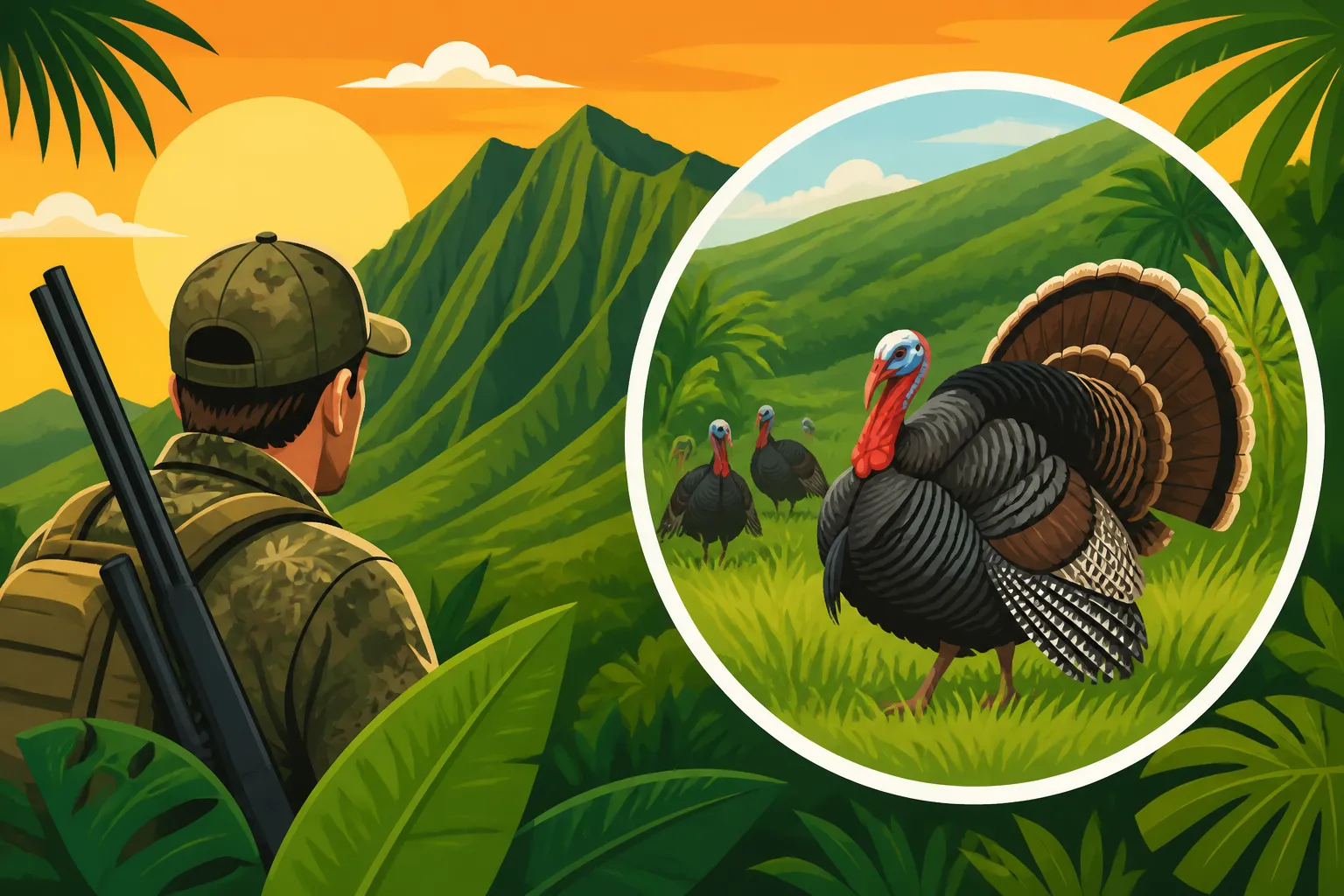
It’s a common question among hunters, both kama'aina and malihini, who have heard whispers of wild turkeys roaming the slopes of Hawaii's volcanoes: just how are these birds doing, and can you hunt them? It's easy to imagine the thrill of chasing gobblers against a backdrop of lava flows and rainforests, but the reality of Hawaii's turkey populations is a bit more nuanced. This guide will walk you through the history, current health, and management status of Hawaii's wild turkey flocks, shedding light on why they're seen but not hunted, and what the future might hold for these majestic birds in the islands.
The Intriguing History of Wild Turkeys in Hawaii
The thought of wild turkeys in Hawaii might seem unusual at first glance, but like many of the islands' game species, they are a testament to intentional introductions. These aren't native birds, but rather a successful, albeit managed, addition to Hawaii's diverse ecosystems. Understanding their journey here helps explain their current status.
Initial Introduction and Species
Wild turkeys were first introduced to Hawaii Island in the late 1950s and early 1960s. The birds brought over were primarily Rio Grande wild turkeys, known for their adaptability and ability to thrive in varied habitats, from arid brushlands to riparian zones. This choice was strategic, as wildlife managers aimed to establish a new game bird population that could utilize parts of the island's landscape not heavily used by other species, and potentially offer future hunting opportunities.
The initial releases were carefully orchestrated, with birds often sourced from mainland states and then transported across the Pacific. These pioneering flocks had to contend with a new environment, different forage, and unique predatory pressures. Their ability to not just survive but to establish breeding populations speaks volumes about their resilience and the suitability of certain Hawaiian habitats.
Early Establishment and Spread
Once released, the Rio Grande turkeys found particular success on the Big Island, especially on the leeward slopes of Mauna Kea and Mauna Loa. These areas offered a mosaic of open grasslands, sparse forests, and kiawe thickets, providing both cover and food sources. The turkeys adapted, learning to forage on native seeds, fruits, and insects, as well as introduced plant species.
The population steadily grew throughout the 1970s and 80s, expanding their range across thousands of acres. Hunters and locals began reporting sightings of impressive gobblers and hens with their broods, signaling a thriving population. This early success sparked conversations among the hunting community about the potential for a new and exciting game bird season in the islands, much like the established opportunities for other Hawaii Game Bird Hunting.
Where Hawaii's Turkeys Roam: Habitat and Range
While wild turkeys have established themselves on Hawaii Island, their distribution isn't uniform. They prefer specific types of terrain and elevation, often congregating in areas that offer a balance of food, water, and shelter from both weather and potential disturbance.
Preferred Ecosystems on the Big Island
Hawaii's wild turkeys are most commonly found in the dry, open, and semi-arid regions of Hawaii Island. Think about the western and southern slopes, where rainfall is less abundant, and the vegetation is more sparse. They thrive in areas characterized by extensive pastures, scattered kiawe (mesquite) forests, and the edges of mamane-naio woodlands. These environments provide crucial roosting trees, insect populations for poults, and seeds and berries for adults.
You'll often find them feeding in the early mornings and late afternoons along ranch roads or pasture boundaries, where they can easily spot predators. These drier regions also mean less dense undergrowth, which allows turkeys to move freely and maintain visibility, an important survival strategy for flocking birds. This habitat preference makes them distinct from some other game birds, like the Kalij pheasant, which prefers Where Kalij Pheasant Live in Wet Forest.
Elevation and Key Locations
The turkeys on Hawaii Island tend to stick to mid-elevations, generally ranging from about 2,000 to 6,000 feet above sea level. This altitude sweet spot offers suitable temperatures, avoids the extremely dense wet forests of the windward side, and steers clear of the barren, high-alpine zones. Prime locations include areas around Pu'u Wa'awa'a, the Pohakuloa Training Area perimeter, and vast tracts of ranch land on the slopes of Mauna Kea and Mauna Loa.
For instance, areas bordering or within the Hunting Unit A on Mauna Kea can be excellent for spotting turkeys, particularly in the lower elevations of the unit where the mamane trees are more prevalent. They utilize these areas not just for foraging but also for roosting in the larger trees overnight. Their presence here is a unique example of how an introduced species can adapt to the island's varied landscape, carving out a niche that supports a healthy population.
Population Dynamics: What We Know About Hawaii's Flocks
Understanding the health of any wildlife population involves looking at its numbers, reproductive success, and the factors that influence its growth or decline. For Hawaii's wild turkeys, the picture is one of general stability, but with inherent challenges that keep management cautious.
Current Population Estimates and Health
While exact, real-time population counts are challenging to obtain for any wild species, observations from wildlife biologists and local residents suggest that Hawaii Island's wild turkey flocks are generally healthy and robust. They have successfully adapted to the unique island environment, with reproductive rates seemingly sufficient to maintain their numbers. Flocks of dozens of birds are not uncommon, especially in their preferred habitats.
The health of the population can be inferred from consistent sightings, stable flock sizes, and the presence of all age classes, including young poults during breeding seasons. Unlike some areas on the mainland where turkey populations might face significant pressure from disease or habitat loss, Hawaii's turkeys seem to enjoy relatively consistent conditions, albeit within a finite island ecosystem.
Factors Influencing Flock Numbers
Several factors play into the stability and distribution of Hawaii's wild turkey populations. Habitat availability is paramount; while there are suitable areas, the total land mass is limited, and urban sprawl or agricultural conversion can fragment these crucial habitats. Weather patterns, especially drought years, can impact food availability and poult survival rates, though turkeys are known for their resilience in drier conditions.
Predation by introduced species like feral cats, dogs, and mongoose can also take a toll, particularly on eggs and young poults. However, the turkeys' natural wary behavior and flocking instincts offer some defense. On the management side, there are no current hunting pressures, which allows the population to grow without human-induced mortality, a key distinction from most mainland turkey populations. This contrasts sharply with how Hawaii's Feral Pigs, Island by Island are managed, often with significant hunting pressure to control their numbers.
Known Population Challenges and Successes
One of the ongoing challenges for Hawaii's turkey flocks is simply being an introduced species in a delicate ecosystem. While they thrive, their presence does add another layer to the complex interactions between native and non-native flora and fauna. Successes include their ability to establish stable, self-sustaining populations across large areas of the Big Island, demonstrating a remarkable adaptation to an environment far removed from their continental origins.
However, a major limiting factor is the simple geography of an island. While they occupy significant acreage, there's a ceiling to how much they can expand. This finite habitat means that carrying capacity will eventually be reached, and any significant environmental changes could have a more pronounced effect on the entire population compared to a mainland population with vast contiguous habitats.
Why You Can't Hunt Turkeys in Hawaii (Yet): Management and Regulations
For many hunters, the discovery of wild turkeys in Hawaii immediately leads to the question: "Can I hunt them?" The simple answer, for now, is no. This isn't due to a lack of turkeys, but rather a deliberate management decision by the state's wildlife authorities.
Current Hunting Status and Regulations
As of now, wild turkeys are designated as a non-game species in Hawaii. This means there is no legal hunting season for them on any island. The Department of Land and Natural Resources (DLNR) and its Division of Forestry and Wildlife (DOFAW) have not opened a season for turkeys, despite their healthy populations. This status is clearly outlined in Hawaii's hunting regulations, and it's a critical point for any hunter planning a trip to the islands.
This regulation stands in contrast to most other introduced game species in Hawaii, such as Axis deer, feral pigs, goats, and mouflon sheep, all of which have established hunting seasons. The decision to keep turkeys off the game animal list reflects a cautious approach to wildlife management and the unique considerations of island ecosystems. You can find comprehensive information on other huntable species and seasons in Hawaii Game Mammal Seasons and Hawaii Game Bird Seasons and Bag Limits, but wild turkey will not be among them.
Reasons for Non-Game Status
Several factors contribute to the ongoing non-game status of wild turkeys in Hawaii. Firstly, while populations are healthy, they are not as widespread or numerous as species like feral pigs or goats, which are often targeted for population control due to their ecological impacts. Turkeys generally stick to specific habitats and their overall impact on native ecosystems is considered less severe than some other introduced ungulates.
Secondly, wildlife managers often prioritize the long-term stability and expansion of a species before considering a hunting season. There might be a desire to ensure the turkeys are firmly established across their potential range and are capable of withstanding hunting pressure without jeopardizing the population's future. It's also possible that resources for managing a turkey season, including monitoring, tag systems, and enforcement, are currently allocated to existing game species.
The Role of Conservation and Public Interest
Conservation efforts play a significant role in DOFAW's decisions. While turkeys are introduced, they are appreciated by many for their aesthetic value and presence in the landscape. Introducing a hunting season would require careful consideration of public opinion, potential economic benefits, and ensuring that any harvest would be sustainable.
Furthermore, Hawaii has a complex history with its introduced species, and while many are hunted, others are managed with a more hands-off approach. Any shift in the turkey's status would likely involve extensive biological surveys, public hearings, and careful planning. Hunters looking for regulatory updates or detailed information on current hunting laws often check official state resources or platforms like GoHunt, which aggregates hunting information for various states, including Hawaii.
The Future of Wild Turkeys in Hawaii: Conservation and Potential
The future of wild turkeys in Hawaii is a topic of ongoing discussion and speculation among wildlife enthusiasts and hunters alike. While they currently remain a non-game species, their thriving presence opens doors for potential future changes, albeit under strict management.
Prospects for a Future Hunting Season
Could there ever be a wild turkey hunting season in Hawaii? It's not out of the realm of possibility, but it would require a significant shift in management policy and a demonstrated need or benefit. For a season to be considered, DOFAW would likely need to establish clear evidence that the population can sustain hunting pressure, that there is sufficient demand from hunters, and that a season would align with broader conservation goals.
Such a decision would involve detailed population assessments, habitat carrying capacity studies, and the development of comprehensive regulations, including bag limits, season dates, and legal weapons. It would also need to address how a turkey season would integrate with existing hunting units and seasons, like those outlined for Hawaii Island Hunting Unit Seasons. The process would be thorough and likely involve significant public input, as opening a new game season is a substantial undertaking.
Ongoing Monitoring and Management
Even without a hunting season, Hawaii's wild turkey populations are subject to ongoing observation and management by DOFAW. This includes periodic surveys, habitat assessments, and monitoring for any signs of disease or significant population fluctuations. The goal is to ensure the long-term health of the species and to understand its ecological role within the islands.
This careful approach allows managers to gather more data on turkey behavior, reproductive success, and interactions with other wildlife. The accumulated knowledge will be crucial if a decision is ever made to change their status. It's a continuous process of learning and adapting, ensuring that any future actions are based on sound scientific principles and conservation best practices.
The Ecological Role of Wild Turkeys in Hawaii
While introduced, wild turkeys have carved out an ecological niche. They consume a variety of plant material, including seeds and fruits, and also feed on insects, potentially playing a role in insect control. Their presence adds to the biodiversity of the dryland forests and grasslands, and they contribute to the complex food web of these ecosystems.
However, as with any introduced species, their long-term impact on native flora and fauna is a subject of scientific inquiry. Understanding this role fully is critical for DOFAW's overall conservation strategy, which often balances the management of introduced game species with the protection of Hawaii's unique and often endangered native biodiversity. This delicate balance is a recurring theme in Hawaii's wildlife management, particularly when considering species like Hawaii's Feral Goats and Why They Matter which can have significant environmental impacts.
Table: Current Status of Wild Turkeys vs. Other Game Birds in Hawaii
| Feature | Wild Turkeys in Hawaii | Other Hunted Game Birds (e.g., Francolin, Pheasant, Chukar) |
|---|---|---|
| Origin | Introduced (Rio Grande subspecies) | Introduced (various species) |
| Population Status | Generally healthy, self-sustaining | Healthy, populations managed through hunting |
| Hunting Status | Non-game species, no open season | Game species, seasonal hunting allowed |
| Primary Island | Hawaii Island (Big Island) | All main islands, depending on species/unit |
| Preferred Habitat | Dry, open grasslands, kiawe/mamane forests (2-6k ft) | Varied: wet forests, uplands, pastures, brushy areas |
| Ecological Impact | Generally considered low-moderate | Variable, managed to mitigate impact |
| Management Focus | Monitoring, population stability, habitat assessment | Regulated harvest, habitat management, population control |
| Future Potential | Possible future game status, requires policy shift | Continued recreational hunting, season adjustments |
This table clearly illustrates the distinction between wild turkeys and other game birds, emphasizing the current lack of a hunting season for turkeys. It helps to contextualize the unique situation of these birds within Hawaii's broader wildlife management framework.
Disclaimer
This article is for general informational purposes only and does not constitute professional advice. Laws, prices and regulations vary by location and change over time. Consult a qualified professional for guidance on your specific situation.