Where Hawaii Doves Feed at Dawn
There’s nothing quite like the cool, quiet anticipation of a Hawaii dawn hunt. But for many, the frustration of doves flying just out of reach, or worse, not seeing a single bird, can be disheartening. You scouted, you got up early, but they just aren't where you thought they'd be. This guide will dive deep into the specific habits of Hawaii's doves at first light, helping you pinpoint exactly where these elusive game birds are likely to be found for that crucial morning meal.
The Morning Muster: Understanding Dove Behavior at First Light
Doves, like many game birds, operate on a fairly predictable daily rhythm, and understanding this rhythm is the key to successful dawn hunting in Hawaii. They're creatures of habit, driven by fundamental needs: safety, food, and water. First light, in particular, triggers a very specific sequence of events that hunters can exploit.
The Urge to Feed: Why First Light is Prime Time
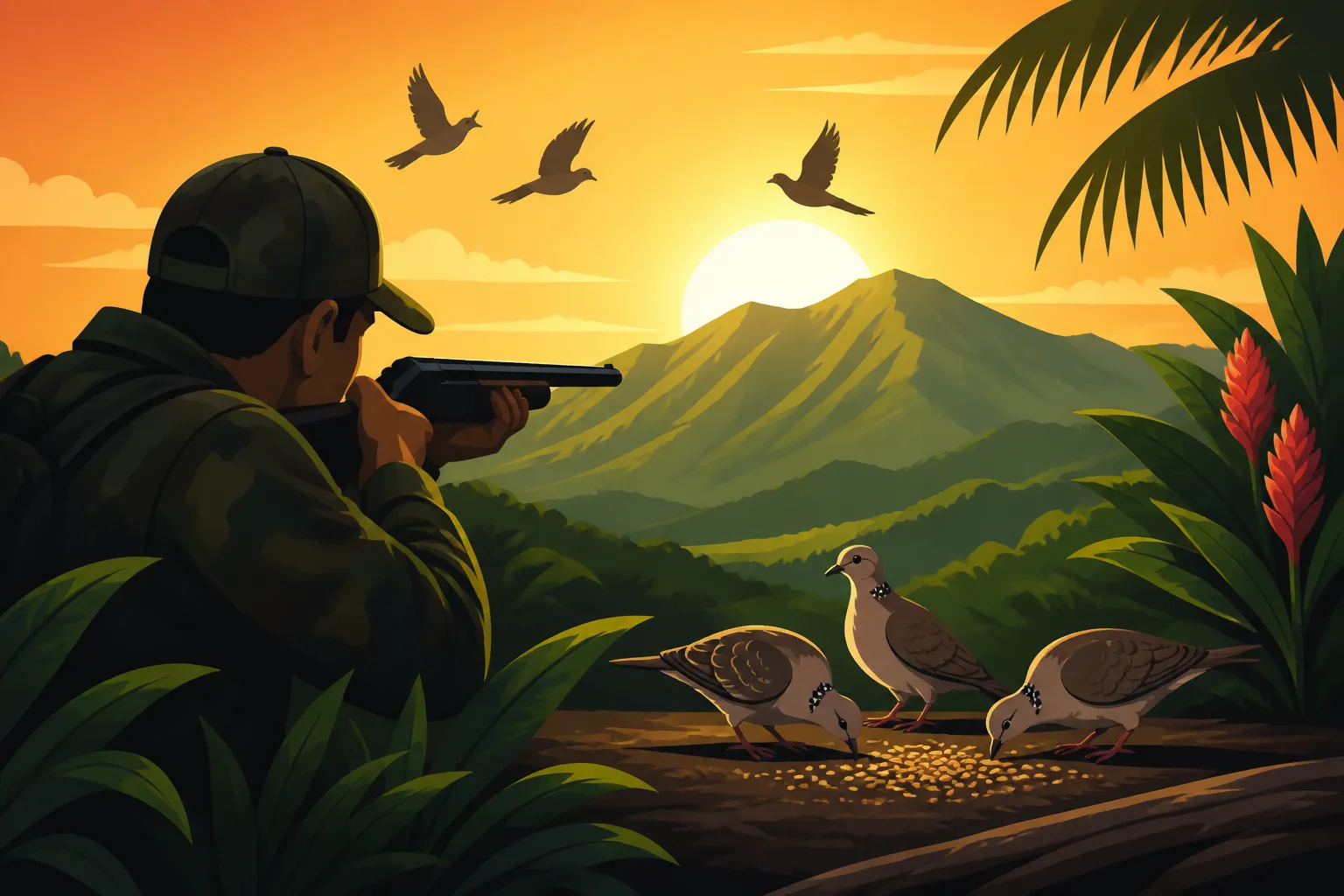
Imagine waking up after a long night, feeling hungry and thirsty. That's essentially what doves experience. After roosting safely overnight, often in taller trees or dense thickets away from immediate threats, their primary instinct at dawn is to refuel. Their metabolism demands it, especially after the cooler night temperatures. This makes the period right at sunrise, and for a couple of hours after, their most active feeding time. They’ll fly directly from their roosts to their chosen breakfast spots, often along consistent flight paths, which provides a brief but excellent window of opportunity for hunters.
The cooler air of the early morning also plays a big role. As the sun rises higher and the tropical heat starts to build, doves will become less active, preferring to loaf in the shade or near water sources. This narrow window before the heat really sets in is when they are most vulnerable and concentrated on feeding. If you're not in place and ready before the first hint of color streaks the sky, you might miss the bulk of the action.
Daily Routines: Roost, Water, Feed, and Rest
The dove's day is a simple, yet consistent cycle, and understanding each phase helps you predict their movements.
- Roosting: Overnight, doves will congregate in safe, often dense cover. This could be a stand of mature kiawe trees, a thick eucalyptus grove, or even tall, dense brush that provides protection from nocturnal predators. They typically choose locations with good visibility of approaching threats.
- Dawn Feeding: As mentioned, this is their first order of business. They fly from their roosts to open feeding areas. These areas are usually rich in seeds – their primary food source.
- Mid-Morning Watering: After a good meal of dry seeds, doves get thirsty. They will then fly to water sources, often small ponds, cattle troughs, or muddy banks of streams or reservoirs. This secondary flight path can also offer hunting opportunities. You can learn more about this by reading Hunting a Reservoir Edge for Doves.
- Mid-Day Loafing: Once fed and watered, doves will seek shade and rest during the hottest part of the day. They might pick a lone tree in a field or dense canopy near their feeding grounds.
- Late Afternoon Feeding/Watering: As temperatures drop in the late afternoon, doves will often undertake another feeding and watering run, though sometimes less intense than the morning flight. You can find useful information on this in Hunting a Hawaii High Pasture at Last Light.
- Evening Roosting: Finally, they return to their secure roosting areas for the night.
Knowing this cycle helps you anticipate where they will be, but also when. For dawn hunting, your focus is that initial burst of activity as they leave the roost and hit the feeding grounds.
Prime Real Estate for Early Birds: Identifying Feeding Grounds
So, what does a prime dove breakfast spot actually look like in Hawaii? It's all about seeds, safety, and proximity to water. Doves aren't picky about the type of seed, as long as it's abundant and easily accessible.
Agricultural Fields and Pastures: The Obvious Choices
When it comes to dove hunting, agricultural lands are often the first place hunters look, and for good reason. These areas provide concentrated food sources that are hard to beat.
- Grain Fields and Stubble: Think about areas that once grew corn, sorghum, sunflowers, or wheat. Even after harvest, or when a field is fallow, the ground is often littered with dropped seeds. Doves are ground feeders, meticulously picking up seeds from open, bare dirt. A freshly cut corn field or a sunflower patch that's gone to seed can be an absolute magnet. On some islands, you might find old sugar cane lands that have gone to seed, or even abandoned pineapple fields that are now covered in grasses. These can be prime Dove Hunting on Hawaii Farm Ground.
- Cattle Pastures: Don't overlook seemingly innocuous pastures. Cattle grazing naturally churns up the soil, exposing seeds that were previously buried. More importantly, cattle feed often includes grains, and doves are quick to pick up any spilled kernels or undigested seeds in droppings. A well-trafficked cattle pasture, especially one with shorter grass and patches of bare dirt, can be a goldmine. The edges of these pastures, where different vegetation types meet, are particularly appealing.
- Orchard Edges and Coffee Farms: While not traditional grain fields, macadamia nut orchards or coffee farms can also attract doves, especially along their edges or in areas where ground cover is sparse. Spilled nuts or coffee cherries might be of interest, but more often, it's the weed seeds growing in the disturbed soil between rows that draw them in. A Hunting a Coffee Farm Boundary or Hunting a Macadamia Orchard Edge could prove productive.
When scouting these areas, look for open ground where doves can land and feed without thick brush impeding their movement or vision. They prefer to have an escape route and a clear view of potential threats.
Natural Seed Sources: Weeds and Native Plants
Hawaii's unique ecosystem also offers a variety of natural seed sources that doves readily exploit, particularly in less-developed areas.
- Disturbed Ground: Construction sites (if legal to hunt nearby and with permission), old logging roads, firebreaks, or areas cleared for utilities often have disturbed soil that quickly sprouts various weed species. Many of these weeds produce seeds that doves love. Keep an eye out for these "edge habitats" in public hunting units or near ranching operations.
- Invasive Grasses and Seed-Producing Weeds: Unfortunately, many invasive plant species thrive in Hawaii, and some of them are excellent dove food sources. Guinea grass, buffalo grass, and various types of spurge or castor bean plants all produce seeds that doves consume. Areas where these invasive species dominate, particularly on drier, leeward slopes or along old dirt tracks, can be excellent feeding zones. You might find this useful when Hunting a Hawaii Ranch Pasture Boundary or Hunting a Hawaii Pineapple Field Edge.
- Kiawe Pods: In the drier coastal and leeward regions, kiawe trees are ubiquitous. Their pods, especially when dried and fallen, are a significant food source for many feral animals, including doves. Look for open kiawe flats with bare ground underneath. Doves will feed on the fallen pods, breaking them apart to get to the seeds inside. Hunting a Kiawe Flat for Axis Deer also provides insight into these areas, which can be shared by doves.
The key here is observing what's growing on the ground. If you see plants going to seed, especially if they're annuals that produce many small seeds, chances are doves are noticing them too.
Water Sources Near Food: The Crucial Combination
Doves need water. After a breakfast of dry seeds, they'll head to water, often within a short flight. This makes water sources, or areas adjacent to them, incredibly important for a successful morning hunt.
- Stock Ponds and Reservoirs: Any standing water in a dry area is a magnet. Cattle ponds, small agricultural reservoirs, or even retention basins will draw doves. Look for shallow, muddy edges where they can land and drink safely. The flight path between a feeding field and a nearby water source can be a high-traffic area.
- Stream Edges and Muddy Banks: Even small trickles or seeps can be enough. Doves prefer open, muddy banks over dense vegetation for drinking, as it offers a clear view for predators and easy access. Follow an old ranch road or cattle trail that leads to a small stream, and you might find the perfect setup.
- Puddles and Depressions: After rain, even temporary puddles in fields or dirt roads can become crucial watering holes. While less reliable than permanent sources, they can concentrate birds temporarily.
When scouting, always look for the combination: a good feeding area and a nearby, accessible water source. The doves will use both in quick succession, making your setup location even more effective. GoHunt often has detailed maps that can show water sources in public hunting units, which can be invaluable for planning.
Scouting for Success: Pinpointing Dawn Feeding Hotspots
You can read all the articles in the world, but nothing replaces boots-on-the-ground scouting. For doves, especially for a dawn hunt, scouting is paramount. You need to know not just where they generally feed, but exactly where they are feeding right now.
Pre-Season Reconnaissance: Drive, Walk, and Observe
Scouting isn't just for big game. For doves, it's about patterns and recent activity.
- Observe Flight Paths: Drive around the areas you plan to hunt in the late afternoon or early morning before the season opens. Watch where doves are flying from and to. Do they consistently fly over a particular fence line, a gap in trees, or along a certain road? These are their aerial highways, and they are gold for setting up decoys or blinds.
- Look for Sign: Doves leave plenty of clues. Their droppings, which are small and white-capped, will be concentrated in feeding areas. Look for bare patches of dirt where they've been scratching and feeding, or even small depressions where they've taken dust baths. Piles of feathers can indicate a hawk or mongoose has been successful, but also confirms recent dove activity. Pay particular attention to the ground under power lines or fence lines near feeding areas – doves often perch there before dropping down to feed.
- Use Digital Tools: Tools like GoHunt or other mapping apps can be incredibly helpful for identifying potential public hunting units, property lines, and terrain features that might concentrate birds. You can look for Using onX for Hawaii Land Status to confirm boundaries and access points. These apps often show contours, water features, and even vegetation types that can inform your scouting.
- Talk to Locals: If you can, chat with local farmers, ranchers, or other hunters. They often have invaluable, current information on where the birds are active. Respect their knowledge and their land.
Reading the Sign: What to Look For Beyond Flight
Beyond flight patterns, the ground tells a story.
- Droppings and Tracks: Fresh droppings indicate recent activity. Pay attention to the quantity; a lot of droppings means a lot of birds. Look for their distinctive three-toed tracks in soft dirt or mud near feeding areas and water.
- Dusting Bowls: Doves take dust baths to maintain their feathers and rid themselves of parasites. These "bowls" are shallow, bare depressions in soft, dry soil, usually a few inches across. Finding these near a potential feeding area is a strong indicator of dove presence.
- Seed Preferences: Take note of what seeds you find in the droppings, or what plants are going to seed in the areas you scout. This helps confirm their current food preference and guides your focus for future hunts.
Timing Your Approach: Setting Up Before First Light
Once you've identified a promising dawn feeding location, your approach and setup are critical.
- Early Arrival: You need to be in your blind or setup location at least 30-45 minutes before sunrise. Doves can start moving with the first hint of gray light. Moving around as they are flying in will likely spook them.
- Concealment is Key: Doves have excellent eyesight. You don't need an elaborate blind, but breaking up your silhouette is essential. Use natural cover like kiawe trees, dense brush, or even a fence line. A simple camouflage net can work wonders.
- Wind Direction: Try to set up with the wind at your back or crosswind. Doves, like most birds, prefer to land into the wind. If your decoys are facing into the wind, real birds will likely approach from that direction, giving you a better shot opportunity as they commit.
- Decoys: A few simple dove decoys placed on the ground, or on a fence line, can be incredibly effective at drawing in passing birds. Place them in open areas where real doves would land to feed. Motion decoys, if legal and available, can be even more enticing.
Remember to check into your hunting unit using systems like the OuterSpatial App to Check In or the traditional Checking In and Out of Hawaii Hunting Units. Always be aware of the specific Hawaii Game Bird Season Dates and Hawaii Game Bird Bag Limits for the area you're hunting. Being prepared with your Hawaii Hunting Licenses and What They Cost and understanding all regulations is key to a responsible and successful hunt.
Table: Common Dawn Dove Feeding Locations in Hawaii
| Location Type | Key Features for Doves | What to Look For While Scouting | Best Time to Hunt |
|---|---|---|---|
| Agricultural Fields | Harvested grain (corn, sorghum, sunflower, wheat) | Stubble, dropped seeds, bare dirt patches, farmer activity | Sunrise – 2 hours after |
| Cattle Pastures | Short grass, exposed soil, spilled feed/droppings | Droppings, tracks, disturbed ground from grazing, lone trees | Sunrise – 1.5 hours after |
| Disturbed/Fallow Land | Weed seeds (guinea grass, spurge), exposed soil | Abundant weeds going to seed, dust bowls, droppings | Sunrise – 2 hours after |
| Kiawe Flats | Fallen kiawe pods, bare ground, scattered trees | Concentrated pods, droppings, flight paths to/from water | Sunrise – 1 hour after |
| Orchard/Farm Edges | Weed seeds between rows, fence lines, clearings | Fence line perches, droppings along edges, sparse ground cover | Sunrise – 1 hour after |
| Water Sources (nearby) | Shallow, muddy banks, open access, isolated ponds | Active drinking, concentrated tracks/droppings on mud | After initial feeding (often 1-2 hours after sunrise) |
The pursuit of doves at dawn in Hawaii is a rewarding experience, combining the beauty of the island's sunrise with the thrill of the hunt. By understanding their habits, scouting diligently, and setting up strategically, you'll significantly increase your chances of a successful morning in the field.
Disclaimer
This article is for general informational purposes only and does not constitute professional advice. Laws, prices and regulations vary by location and change over time. Consult a qualified professional for guidance on your specific situation.