Hunting a Coffee Farm Boundary
It’s a unique challenge, hunting the boundaries of Hawaii’s coffee farms. Many hunters dream of the deep forest, the rugged lava, or the high alpine slopes, but the reality is, some of the most consistent game activity happens right where agriculture meets the wild. You’ve probably seen the signs: rooting pigs, fresh goat tracks, maybe even some deer scat, all along the edges of those meticulously cultivated rows. The frustration often comes with knowing the game is there, but figuring out how to access it legally and effectively. This guide will walk you through everything you need to know to hunt the edges of Hawaii's coffee farms successfully and respectfully.
Understanding Hawaii's Coffee Farm Ecosystems and Game
Hawaii’s coffee farms, particularly those on the Big Island and Maui, aren't just agricultural zones; they're vibrant ecosystems that attract a surprising amount of game. The rich soil, the shade trees, the occasional water source, and the proximity to untouched gulches or wild kipukas create an irresistible draw for various animals. It's a different kind of hunting than the deep wilderness, demanding a keen understanding of both agricultural practices and animal behavior.
What Attracts Game to Coffee Farms?
Think about it from an animal's perspective. A coffee farm, especially one that practices sustainable methods, is often a buffet. Fallen coffee cherries can be a sweet treat for feral pigs. The disturbed earth from cultivation can expose roots, grubs, and other edibles that pigs love to root up. Then there's the natural vegetation that often grows along farm boundaries, providing cover, forage, and bedding. Many coffee farms also integrate native and non-native shade trees like macadamia, avocado, or various fruit trees, which drop their bounty, creating even more food sources. Water, too, is often managed on farms for irrigation, and any leaks or small catchment areas can become vital waterholes in drier periods, attracting thirsty animals like feral goats or even Axis deer if the farm is in appropriate habitat.
For example, on the slopes of Hualalai or Mauna Loa on the Big Island, where many coffee farms thrive, these cultivated areas are often interspersed with untouched native forest or dense invasive scrub. Pigs especially will use these dense pockets for bedding during the day, emerging under the cover of darkness or low light to feed along the farm edges. They'll follow established trails, often no more than tunnels through thick guava or ginger, directly into the farm, sometimes even venturing deep into the rows themselves. Goats, while typically preferring steeper, drier terrain, will often graze the lush grasses and weeds that grow along fences and ditches bordering coffee lands, especially if a gulch or pali provides easy escape routes nearby. It’s a classic edge habitat scenario, providing food, water, and cover all in one convenient location for hungry game.
Identifying Common Game Species Near Coffee
While the deep forest might hold a broader array of species, the primary targets around Hawaii's coffee farm boundaries are almost exclusively feral pigs and feral goats. These are the two species most prone to opportunistic feeding and habituating to human activity, making them frequent visitors to agricultural zones.
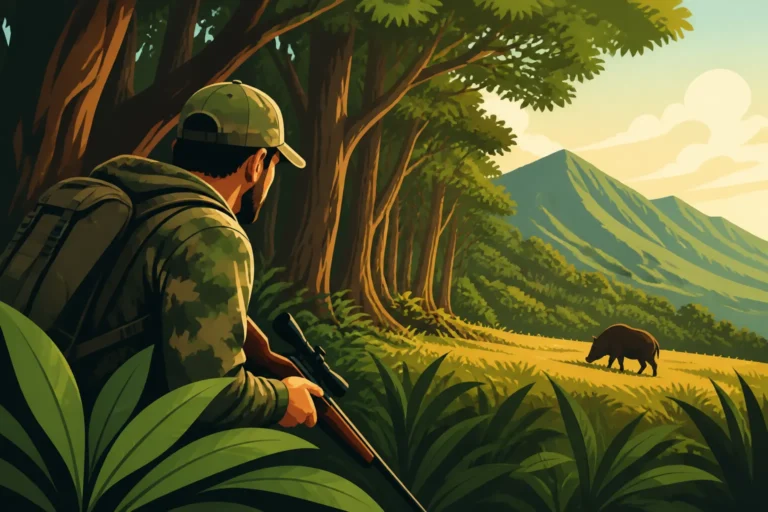
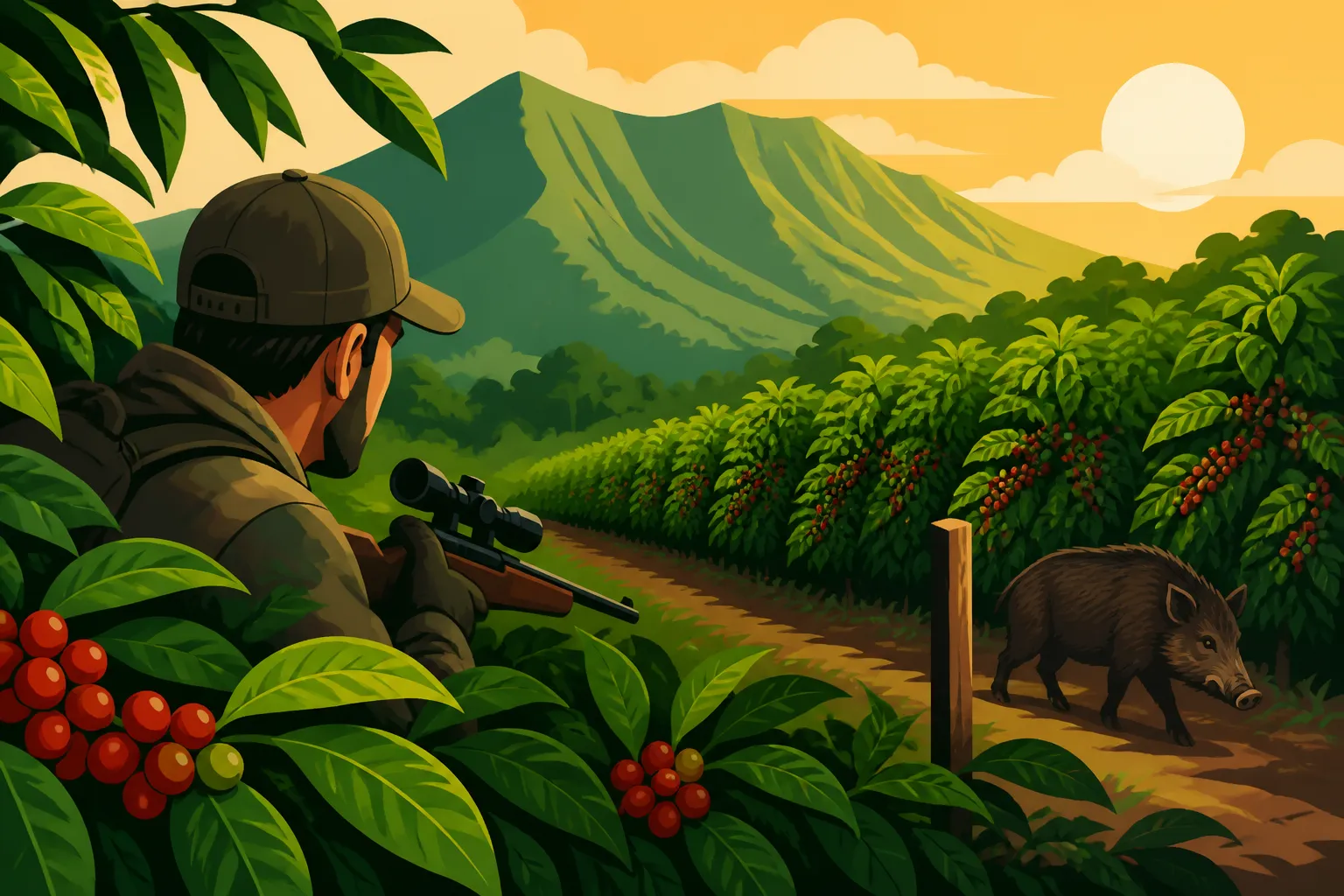
Feral pigs are the kings of the coffee farm edge. You’ll see their tell-tale rooting patterns, where the ground looks like a rototiller went through it, often right at the edge of the coffee trees or in grassy areas bordering the fields. Their tracks are unmistakable, often accompanied by scat and rub marks on trees as they scratch parasites or mark territory. In areas where coffee farms transition into wet forest, you might also find pig wallows, indicating a regular presence. Pigs can cause significant damage to crops, which is why landowners are often open to controlled hunting. For instance, in the Kona coffee belt, pigs are a constant headache for farmers, and understanding their patterns—like when they move from deep cover to feed—is key. You might find them in the morning mist, just as the sun begins to hit the rows, or in the evening as daylight fades, moving stealthily along the natural contours of the land or old farm roads. For deeper insights into these resilient animals, check out our guide on Hawaii's Feral Pigs, Island by Island.
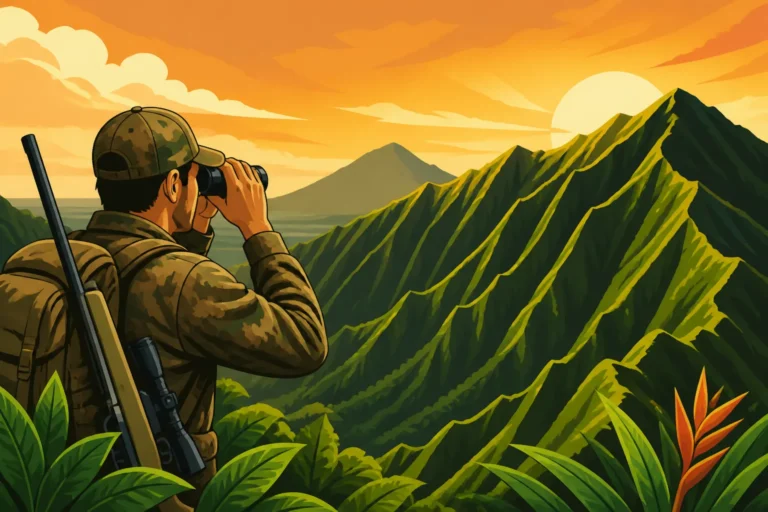
Feral goats, while less damaging to the coffee trees themselves, are often present along rocky boundaries, dry gulches, or steeper slopes adjacent to coffee farms. They're browsers, not rooters, and will feast on weeds, grasses, and shrubs that grow around the farm perimeter. Look for their distinct split-hoof tracks and small, pellet-like droppings. They often leave hair on fence lines as they squeeze through or under them. Goats are notoriously wary, making them a challenging quarry. A particularly good strategy for goats is to glass from a distance, watching for their movement along ridges or cliff faces that border the coffee plots. On islands like the Big Island or Maui, where goat populations are strong, areas where coffee cultivation gives way to more rugged, unmanaged land are prime goat territory.
Navigating Access and Regulations for Coffee Farm Hunting
This is arguably the most critical and often the most challenging aspect of hunting coffee farm boundaries: securing legal access. Unlike public hunting units, coffee farms are almost universally private land, and respecting property rights is paramount. Trespassing is not just illegal; it's a surefire way to shut down any future hunting opportunities for everyone.
The Importance of Private Land Access and Permission
Let's be blunt: if you don't have explicit permission, you don't hunt there. End of story. Coffee farm owners pour their livelihoods into those fields, and they need to know who is on their property, for liability, safety, and to protect their crops. Approaching a landowner respectfully and directly is the only way to gain access. Start by identifying the farm owner or manager. Sometimes, a simple Google search can reveal contact information, or you might have to visit local stores or community hubs to ask around. Many coffee farms in Hawaii are family-run operations, like those producing the famed Kona coffee, and personal connections can go a long way.
When you make contact, be polite, professional, and clear about your intentions. Explain that you're interested in helping manage feral pig or goat populations that might be impacting their crops. Offer to walk the boundaries with them, discuss specific areas you'd like to hunt, and reassure them about your commitment to safety and respect for their property. Emphasize that you will follow all rules and regulations. It helps to be flexible – maybe they only want you to hunt certain days, or only target specific animals. Building trust takes time, but a good relationship with a landowner is invaluable. For a broader look at this topic, our guide on Getting Onto Hawaii Private Land offers more advice. Sometimes, a landowner might even have a small fee or require you to sign a liability waiver, which is completely reasonable.
Legal Considerations and Hawaii's Hunting Unit System
Even on private land, you’re not entirely exempt from state hunting regulations. You still need a valid Hawaii hunting license. These can be purchased through the Department of Land and Natural Resources (DLNR) website or authorized vendors. The GoHunt Hawaii portal is often a good starting point for managing your licenses and permits. Additionally, you must adhere to legal hunting seasons for the species you are pursuing, even on private land, unless specific permits are obtained for nuisance animal control.
Hawaii operates on a system of hunting units, and while private land isn't a "unit" in the public sense, the general hunting seasons and bag limits still apply unless otherwise specified by a special permit. For example, if you're hunting pigs on private coffee land, the statewide regulations on legal weapons, shooting hours, and potentially even bag limits (though often more flexible on private land if actively managing a nuisance) still come into play. It's crucial to understand these nuances. The DLNR website (dlnr.hawaii.gov/dofaw) is your best friend here, providing detailed information on Hawaii Hunting Licenses and What They Cost and Hawaii Game Mammal Seasons. Some farmers might ask you to keep a log of animals taken or report your harvest, which is a great way to maintain transparency and show good faith. Always carry your license and any written permission from the landowner with you while hunting.
Effective Hunting Strategies Along Coffee Farm Boundaries
Hunting the edge of a coffee farm requires a blend of traditional hunting skills and an awareness of the agricultural environment. It’s not just about finding game; it’s about finding it without disturbing farm operations, startling livestock (if present), or damaging crops. This means focusing on stealth, understanding game movement patterns, and using the available cover to your advantage.
Scouting for Sign and Travel Corridors
Your first step, after securing permission, should be thorough scouting. Don't just show up with your rifle on opening day. Walk the farm boundaries, paying close attention to where the wild country meets the cultivated fields. Look for the "highways" and "byways" game animals use. Pigs, in particular, are creatures of habit. They'll often have well-worn trails leading from dense cover (like a gulch filled with guava or an unmanaged patch of kiawe) directly into the coffee rows or adjacent pastures. Look for fresh tracks, droppings, and rooting activity. Are they coming from a particular direction? Is there a specific fence line they're pushing under? Pay attention to the age of the sign – fresh rooting means recent activity.
For goats, scan any rocky outcrops, steep embankments, or lava flows that border the farm. They often bed down in these areas and move onto the periphery of the farm to browse. Identify where they might be crossing from one side of the farm to another, or where they descend from higher ground. Often, game will follow natural contours, old logging roads, or drainage ditches that provide both cover and an easy path. If the coffee farm has specific shade trees, check under them for fallen fruit and fresh pig sign. Remember, the goal is not to enter the active coffee rows unless explicitly allowed by the farmer, but rather to intercept animals as they move to or from these feeding areas. Our guide on Reading Pig Sign Along a Muddy Trail can give you more detailed tips for identifying specific animal activities.
Stalking and Ambush Tactics in Farm Edges
Once you’ve identified key travel corridors and feeding areas, you can develop your hunting strategy. Given the presence of human activity and potentially less cover than deep wilderness, a mix of still-hunting and ambush tactics often works best.
Still-Hunting: This involves moving very slowly and deliberately, stopping frequently to scan, listen, and glass. The edges of coffee farms often have a mix of tall grass, brush, and shade trees that can offer concealment. Use your binoculars to pick apart every shadow and clump of vegetation. Move into the wind, always. The wind in Hawaii can be notoriously shifty, especially in mountainous areas where coffee farms are often located. Pay attention to thermals in the morning and evening, as they will typically pull scent uphill or downhill. For an idea of how to move quietly in dense cover, consider reading about Still-Hunting Pigs in Hawaii's Wet Forest, as many coffee farm edges mimic this type of environment.
Ambush Hunting: This is often highly effective near coffee farms. Identify a strategic spot that overlooks a known travel corridor or feeding area. This might be a fence corner, a small kopje of trees, or even a rise that offers a good vantage point. Get there well before first light or in the late afternoon. Position yourself to have a clear shooting lane while remaining concealed. Consider the angles carefully to ensure a safe shot that won't endanger any farm structures, livestock, or workers. Pigs often move in low light, so being in position early is key. For goats, glassing from a hidden spot and waiting for them to move into a kill zone can be effective. Being patient and letting the animals come to you will increase your chances.
Remember, quiet is king. You don't want to alert game to your presence, nor do you want to disturb the peaceful operations of the farm.
Gear and Safety Considerations for Coffee Farm Hunting
Hunting in Hawaii’s unique environment, especially near agriculture, requires specific gear choices and an unwavering commitment to safety. You're not just in the wilderness; you're often in a transition zone with people, machinery, and cultivated land.
Essential Gear for Farm-Edge Hunting
Your gear needs to be robust, quiet, and suitable for potentially varied terrain.
- Footwear: Sturdy, comfortable, waterproof hiking boots are essential. Coffee farms can have muddy access roads, wet grass, and uneven ground from rooting pigs. Good ankle support is crucial, especially if you venture into adjacent gulches.
- Clothing: Layered, quiet clothing in subdued colors. Camouflage isn't strictly necessary but helps. Think durable pants to push through brush and a lightweight, breathable shirt. A rain jacket is a must, as Hawaii's weather can change in an instant. For hunters in these areas, Brands like Kryptek or Kuiu offer durable, quiet options.
- Optics: Binoculars are indispensable for spotting game in dense cover or across open fields. A good quality 8x or 10x binocular will allow you to pick apart shadows and identify animals without having to move. A rangefinder is also highly recommended for precise shot placement.
- Weapon: Depending on local regulations and landowner preference, a rifle, shotgun, or archery equipment can be used. If using a rifle, choose an appropriate caliber for the game (e.g., .243, .270, .30-06, or similar for pigs and goats). Ensure your firearm is sighted in and you are proficient with it. For archers, a reliable bow and sharp broadheads are critical. Muzzleloaders are also a viable option in many units. Always check Hawaii's legal weapon requirements, which can vary by species and unit.
- Scent Control: While not always perfect in Hawaii's swirling winds, paying attention to scent can help. Wash hunting clothes in unscented detergent, and consider using scent-eliminating sprays. Most importantly, always hunt with the wind in your favor.
- Basic Hunting Kit: A good backpack with water, snacks, a first-aid kit, a headlamp, a knife for field dressing, and game bags for meat transport. Even on private land, you might be a decent walk from your vehicle. Don't forget your Hawaii hunting license and written landowner permission!
Safety Protocols and Respecting Farm Operations
Safety is paramount, especially when hunting near inhabited or cultivated areas.
- Communication: Before every hunt, inform the landowner of your presence and planned hunting area. Let someone know where you are going and when you expect to return.
- Identify Property Lines: Know the exact boundaries of where you are allowed to hunt. Use apps like onX Hunt or even Google Maps to mark these boundaries precisely. Do not cross into adjacent properties without explicit permission.
- Target Identification: Always be 100% positive of your target and what's beyond it. Never take a shot if there's any doubt. This is particularly crucial near coffee farms where houses, farm buildings, workers, or even livestock might be present. A safe backstop is non-negotiable.
- No Shooting Near Structures or Roads: Hawaii law (and common sense) dictates that you cannot discharge a firearm within certain distances of dwellings, public roads, or other occupied structures. Respect these rules stringently.
- Farm Workers and Machinery: Be acutely aware of farm operations. Coffee farms often have workers in the fields, sometimes very early in the morning or late in the afternoon. Listen for machinery. If you see or hear workers, make your presence known respectfully and avoid hunting that area until they've moved on. Never point your weapon, even if unloaded, in their direction.
- Field Care: Once an animal is down, perform prompt field dressing to cool the meat quickly, especially in Hawaii's heat and humidity. This prevents spoilage and shows respect for the animal and the resource. Transport the carcass out discreetly, especially if driving through residential areas near the farm. For tips on handling meat in the heat, refer to Field Care in Hawaii's Heat and Humidity.
By adhering to these guidelines, you not only ensure your own safety and success but also uphold the reputation of hunters in Hawaii, fostering good relationships with landowners and securing future access to these unique hunting opportunities. Hunting the edges of a coffee farm can be incredibly rewarding, offering a chance to fill your freezer while helping a local farmer protect their livelihood.
| Aspect | Feral Pigs | Feral Goats |
|---|---|---|
| Primary Attraction | Fallen coffee cherries, disturbed soil, roots, grubs, water, dense cover for bedding. | Weeds, grasses, shrubs along edges, rocky outcrops, gulches for cover and escape. |
| Typical Sign | Rooting, wallows, distinct cloven tracks, scat, rub marks on trees. | Pellet droppings, split-hoof tracks (smaller), hair on fence lines, browsing evidence. |
| Preferred Habitat | Dense, often wet, cover adjacent to farm, transition zones, gulches. | Dry, steep, rocky slopes, cliff faces, areas with tall grasses. |
| Movement Patterns | Often nocturnal or crepuscular, using established trails to access farm edges. | More diurnal, often moving in early morning or late afternoon, wary. |
| Hunting Strategy | Ambush near trails/feeding areas, still-hunting dense edges. | Spot-and-stalk from a distance, ambush near known crossings/bedding areas. |
| Damage to Farms | Significant rooting damage to crops, irrigation lines, erosion. | Less direct crop damage; can browse young trees and contribute to erosion on slopes. |
Disclaimer
Hunting in Hawaii involves inherent risks and requires strict adherence to state regulations and ethical practices. The information provided in this guide is for informational purposes only and does not constitute legal advice. Always consult the official Hawaii Department of Land and Natural Resources (DLNR) Division of Forestry and Wildlife (DOFAW) regulations, obtain all necessary licenses and permits, and secure explicit landowner permission before hunting on private land. Safety should always be your top priority.