Hunting Hawaii Island’s Lava Flow Sheep
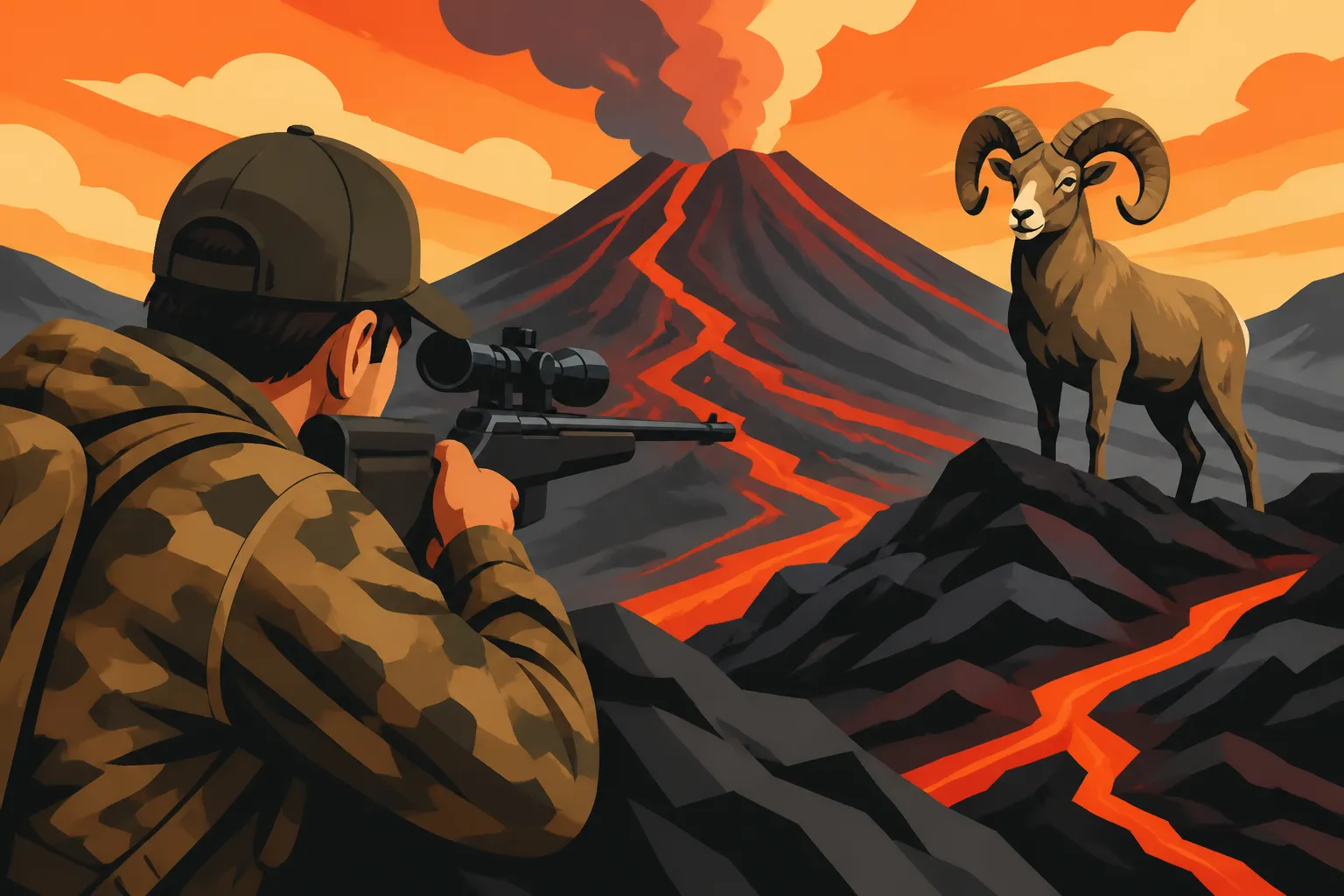
Hunting sheep on Hawaii Island's vast, desolate lava flows is an experience unlike any other, presenting a stark contrast to the lush images of paradise most people envision. The reality is often brutal: endless fields of jagged rock, relentless sun, and game animals perfectly adapted to disappear into this harsh landscape. It’s a challenge that tests your gear, your resolve, and your hunting skills to their absolute limit. This guide is here to walk you through the ins and outs, giving you the real talk on what it takes to find success in this truly unique Hawaiian hunting ground.
The Unique Challenge of Hawaii Island's Lava Flow Sheep
The Big Island is home to a unique population of sheep, primarily mouflon and feral sheep hybrids, that thrive in the stark, high-elevation lava landscapes. These animals are a testament to adaptability, surviving and even flourishing in an environment that seems utterly inhospitable to life. Understanding their lineage, their habitat preferences, and their specific behaviors is the first step to even dreaming of success.
Understanding the Mouflon and Feral Sheep Mix
When we talk about hunting sheep on Hawaii Island, we're largely discussing the European mouflon (Ovis aries musimon) and various crosses with domestic feral sheep. The pure mouflon were originally introduced to the island in the 1960s, specifically to the Mauna Kea slopes, for sport hunting. Over time, these magnificent sheep interbred with feral domestic sheep that had been roaming the island for generations, creating a population that exhibits a wide range of characteristics. You might encounter an animal that looks very much like a pure mouflon, with its distinctive saddle patch and tight-curling horns, or one that’s a shaggier, more variable feral sheep. Regardless of their exact genetics, they are all incredibly tough, wary, and perfectly at home on the lava. Knowing that these are not just one type of sheep but a blend helps you appreciate their resilience and diversity. For a deeper dive into their origins, check out our piece on Hawaii's Feral Sheep on the Big Island.
Why They Call the Lava Home
It seems counterintuitive for sheep to live on vast, treeless lava flows, but for these Big Island ungulates, it's a matter of survival and opportunity. The lava fields, especially those at higher elevations like the Pohakuloa Training Area (PTA) buffer zones and the upper slopes of Mauna Kea, offer several critical advantages. First, the broken, uneven terrain provides exceptional camouflage. A sheep standing motionless among the dark, volcanic rock can be incredibly difficult to spot, even with powerful optics. Second, the wide-open nature of the landscape allows them to spot predators (or hunters) from a great distance, giving them ample time to flee. Third, despite appearances, these flows are often punctuated by kipuka—islands of older vegetation where native mamane trees and grasses thrive. These areas, along with sparse pockets of lichen and pioneering plants that colonize newer flows, provide essential forage and water sources. This allows them to exploit niches that other game animals might avoid, making the lava their domain.
Behavior and Adaptations to a Harsh Landscape
Lava flow sheep have evolved remarkable behaviors and physical adaptations to cope with their brutal environment. Their coats, often a dusty brown or reddish-brown, blend seamlessly with the volcanic rock. Their hooves are incredibly hard and agile, allowing them to navigate the sharp, uneven a'a lava and the smoother, undulating pahoehoe flows with surprising grace and speed. They are constantly on the move, grazing opportunistically and seeking out shelter from the sun or wind in lava tubes, old cinder cones, or the lee sides of ridges. They are also incredibly water-wise, often able to subsist on dew, morning fog, and the moisture content of the plants they eat, traveling long distances to isolated water pockets only when absolutely necessary. Their keen eyesight and sense of smell are honed by the exposed environment, making them exceptionally difficult to approach. Understanding these adaptations is key to planning your Hunting Mouflon in Mauna Kea's Thin Air and increasing your chances of success.
Key Hunting Units and Navigating the A'a and Pahoehoe
Hawaii Island offers several public hunting units where you might encounter lava flow sheep. However, access, terrain, and regulations vary significantly, and the volcanic landscape itself presents the most formidable challenge.
Public Lands Known for Lava Sheep
The primary hunting grounds for lava flow sheep on Hawaii Island are concentrated in the higher elevation areas. Unit A, on the slopes of Mauna Kea, is perhaps the most iconic, famous for its mouflon and mouflon-feral sheep hybrids. This unit is characterized by expansive, high-altitude lava flows, interspersed with mamane-naio forest kipuka. Another significant area is the Kaohe Game Management Area (GMA) and parts of the Pohakuloa Training Area (PTA) Public Hunting Area. These areas, particularly the mauka (mountain) sections, are dominated by varying types of lava, from crumbly cinders to vast, jagged fields of a'a and smoother pahoehoe. These units often require special permits or limited entry through drawn hunts due to the sensitive nature of the habitat or military operations, so always check the current Hawaii Island Hunting Unit Seasons before planning. You can find detailed maps and current regulations through the State of Hawaii Department of Land and Natural Resources (DLNR) Division of Forestry and Wildlife (DOFAW) website, or often through services like GoHunt.
The Brutality of Volcanic Terrain
Hunting on Hawaii's lava flows is physically grueling. The terrain is a relentless obstacle course designed to test every fiber of your being. A'a lava, with its sharp, angular, and often unstable clinkers, can shred boots, tear clothing, and turn an ankle in an instant. It’s like walking through a minefield of broken pottery. Pahoehoe lava, while smoother and more undulating, is often glazed and slippery, especially when wet, and can still conceal deep cracks and holes. Walking even a mile across these fields can feel like ten miles on flat ground. The altitude itself, especially on Mauna Kea, means thinner air, which adds to the physical strain. There’s little to no shade, so the sun beats down relentlessly, reflecting off the dark rock, creating immense heat and glare. And then there are the unpredictable weather patterns—clear skies can give way to dense fog or freezing rain in minutes. This environment is not for the faint of heart, and proper preparation is paramount to avoid serious injury or heat exhaustion. Consider our guide on How Lava Flows Shape Hawaii Game Range for a better understanding of these unique formations.
Essential Navigation for Expansive Lava Fields
Getting lost on a lava flow is a real and dangerous possibility. Landmarks can be scarce or look remarkably similar across vast expanses. The undulating terrain often obscures your view, and a promising ridge might lead to another, identical-looking one. A reliable GPS unit or a smartphone with robust offline mapping capabilities (like the GoHunt app or similar outdoor navigation apps) is absolutely critical. Do not rely solely on cell service, as it is often non-existent in these remote areas. Familiarize yourself with topographical maps, identifying key cinder cones, kipuka, or prominent lava features that can serve as waypoints. Always mark your vehicle's location and frequently drop waypoints as you move. A compass and physical map are also wise backups. Even short excursions into these areas can lead to disorientation, so always communicate your plan with someone reliable, detailing your intended route and expected return time. Safety in these vast, unforgiving areas hinges on meticulous navigation.
Gear Up for the Grind: Equipment for Lava Hunts
The right gear isn't just about comfort on a lava flow hunt; it's about survival and success. The harsh, abrasive environment demands durable, specialized equipment that can withstand constant abuse and protect you from the elements.
Footwear is Non-Negotiable: Protecting Your Soles and Ankles
Your boots are, without a doubt, the most important piece of gear for hunting lava flow sheep. Forget your lightweight hiking shoes; you need heavy-duty, stiff-soled, high-ankle hunting boots. The sharp a'a lava will shred softer soles and offers no mercy to unprotected ankles. Look for boots with a thick, aggressive outsole made from a durable rubber compound, ideally with a rand that wraps high around the boot to protect against abrasion. Brands like Kenetrek, Crispi, or Schnee's are often favored by hunters in rugged terrain. Even with the toughest boots, expect wear and tear, and possibly some small punctures. It's smart to bring super glue or boot repair adhesive for minor repairs in the field. Double-check your laces, and consider gaiters to prevent small pieces of lava from getting into your boots, which can cause painful blisters. This type of terrain will demand robust footwear; you don't want to be Walking Rough Lava Without Wrecking Your Boots and cutting your hunt short.
Optics, Clothing, and Water: Surviving the Exposed Environment
The open, exposed nature of lava fields means powerful optics are your best friend for spotting sheep from a distance. High-quality binoculars (10x or 12x) and a spotting scope (20-60x or 25-75x) with a sturdy tripod are essential. You'll spend hours glassing, so comfort and clarity are key. Clothing needs to be tough, breathable, and provide sun protection. Long sleeves and pants, even in hot weather, are crucial to prevent sunburn and cuts from abrasive rock. Lightweight, synthetic fabrics that wick moisture are ideal. Layers are important for adapting to temperature swings. A wide-brimmed hat, sunglasses, and plenty of sunscreen are absolute musts. And water – you can never bring enough. The dry air, high altitude, and physical exertion will dehydrate you quickly. Plan for at least 1-1.5 gallons per person per day, maybe more if you're pushing hard. A hydration pack is convenient, but carry extra bottles too. Electrolytes are a smart addition to your water to combat cramping.
Rifle, Ammunition, and Other Essentials for Success
For sheep, a flat-shooting rifle in a common big-game caliber like .270, .30-06, 7mm Rem Mag, or .308 is usually sufficient. Accuracy is key, as shots can often be long in the open country. Practice shooting from various positions, including prone, as stable shooting rests are often hard to find on uneven lava. Bring enough ammunition for practice and the hunt, as specific calibers can be hard to find on the island. Beyond your weapon, a sturdy backpack is vital for carrying your gear, water, and eventually, meat. Headlamps, first-aid kits (including blister treatment and wound care for cuts from lava), emergency signaling devices (like a satellite messenger or personal locator beacon), and enough food for energy are non-negotiable. Don't forget a sharp knife, game bags, and cordage for field dressing and packing out your animal.
Strategies for Success: Spotting and Stalking in the Open
Hunting lava flow sheep is primarily a spot-and-stalk endeavor, demanding patience, keen eyes, and a methodical approach. The expansive, open terrain means you'll spend far more time glassing than walking.
Mastering the Art of Glassing Lava Fields
In this type of open country, your optics are your most valuable tool. You'll literally spend hours behind your binoculars and spotting scope, systematically picking apart the landscape. Find a high vantage point, preferably with some cover from the wind, and set up your spotting scope on a sturdy tripod. Begin by glassing the "edges" of the lava flows where they meet kipuka or areas of sparse vegetation, as these are prime feeding grounds. Then, slowly and meticulously, scan the entire landscape, paying close attention to any breaks in the pattern, any unusual shapes, or anything that just doesn't look like a rock. Sheep blend in incredibly well, and often only a glint of horn, the flick of an ear, or a slight change in texture will give them away. Don't rush. Take your time, let your eyes relax, and use a grid pattern to ensure you cover every inch. Be patient; it might take multiple passes over the same area to finally reveal an animal. Learning Glassing a Lava Flow for Mouflon Rams is a skill in itself.
Approaching Wary Sheep in Open Country
Once you've spotted a sheep, the real challenge begins: the stalk. Because the terrain is so open, getting within shooting range undetected is incredibly difficult. Wind direction is paramount; always approach from downwind. Use every available piece of cover, no matter how small—a slight rise in the lava, a cluster of mamane trees in a kipuka, or even a larger boulder. Move slowly and deliberately, taking advantage of any undulations in the landscape to stay out of sight. Pay constant attention to the sheep's behavior. If they appear alert, freeze. If they look directly at you, remain absolutely motionless until they relax. Often, a stalk can take hours, requiring long crawls over jagged rock. Be prepared to back out and try a different approach if the sheep move into an unfavorable position or spot you. Success hinges on extreme patience and meticulous execution.
When to Hold Back, When to Move Fast
There's a delicate balance between patience and seizing opportunity on a lava hunt. Often, you'll spot sheep at distances too great for a shot, or in positions that make a stalk impossible. In these situations, patience is key. Watch their movements, try to anticipate where they might feed or bed down, and wait for them to move into a more favorable position. Sometimes, waiting a few hours for them to cross a ridge or dip into a gulch can save you a much longer, more difficult stalk. However, there are also times when you need to move quickly. If a ram is clearly on the move and heading towards better cover or a more open area, you might need to hustle to intercept him or get into a shooting lane before he disappears. This intuition comes with experience, but generally, err on the side of caution. A rushed stalk often ends in a busted opportunity. Remember, Hunting a Cinder Cone Rim can give you an advantage, but also expose you.
Regulations, Permits, and Planning Your Hawaii Island Hunt
Navigating Hawaii's hunting regulations can feel like a hunt in itself. It's crucial to understand the rules, acquire the correct permits, and use available resources to plan your trip effectively.
Securing Your Hunting License and Permit-Tags
Before you even step foot on a lava flow, you'll need to secure a Hawaii hunting license. For residents, this is a straightforward process. Non-residents will need to either have completed a hunter education course that is recognized by Hawaii or provide a valid hunting license from another state or country. You can typically purchase your license online through the State's system, which is often integrated with platforms like GoHunt. Beyond the general hunting license, specific permit-tags are often required for mouflon and feral sheep, especially in drawn hunt areas like Mauna Kea's Unit A. These permits are typically obtained through a lottery system, meaning you'll need to apply well in advance of the season. Always check the annual hunting regulations for application deadlines and specific requirements. Don't assume anything; what was true last year might have changed. Get the full scoop on Hawaii Game Mammal Seasons for an overview.
Understanding Unit-Specific Seasons and Rules
Hawaii's hunting seasons and rules are highly unit-specific. For lava flow sheep, seasons can vary not only by unit but also by weapon type (archery, muzzleloader, rifle) and even by specific weekends or dates within a season. Some units, like Unit A on Mauna Kea, are exclusively drawn hunts, while others might have general open seasons. It's absolutely critical to consult the most current DOFAW hunting regulations for Hawaii Island. These regulations detail legal shooting hours, bag limits (which can be very specific, sometimes differentiating between rams, ewes, or any sheep), weapon restrictions, and check-in/check-out procedures. Many units, especially those in remote areas, require you to physically check in and out at a hunter check station or use a digital system like the Using the OuterSpatial App to Check In. Failing to follow these procedures can result in fines or loss of hunting privileges.
Utilizing Online Resources for Planning
In today's digital age, a wealth of information is available at your fingertips. The DOFAW website is your primary source for official regulations, hunting maps, and season announcements. However, third-party platforms like GoHunt can often provide a more user-friendly interface for license purchases, permit applications, and even detailed unit information with interactive maps that overlay public and private land boundaries, topography, and aerial imagery. These tools can be invaluable for scouting from afar, identifying potential glassing points, and understanding terrain features. Additionally, online hunting forums and social media groups dedicated to Hawaii hunting can be excellent places to gather anecdotal information, ask questions, and learn from experienced local hunters. Just remember to verify any information with official sources. Planning meticulously, from regulations to route, is your best defense against unexpected issues.
After the Shot: Field Care, Packing, and Preservation
Successfully taking a sheep on the lava is just the beginning. The real work, and arguably the most difficult part, comes next: field care, butchering, and packing out your animal over punishing terrain.
The Urgency of Field Dressing in Hawaii's Climate
Hawaii's climate, even at high elevations, can be warm, and the dark lava absorbs and radiates heat fiercely. This means meat spoils quickly. As soon as your animal is down, the clock starts ticking. Field dressing must be performed immediately and efficiently. Remove the guts completely, including the windpipe and esophagus, to allow for maximum cooling. Prop the carcass open, if possible, to facilitate airflow. If you have ice or cool packs, get them into the body cavity as soon as possible. The goal is to get the body heat out of the animal as quickly as possible. Don't waste time admiring your trophy; focus on preserving the meat. Speed and cleanliness are paramount to ensure you take home quality venison. Our guide on Field Care in Hawaii's Heat and Humidity offers more critical tips.
The Physical Toll of Packing Meat Over Lava
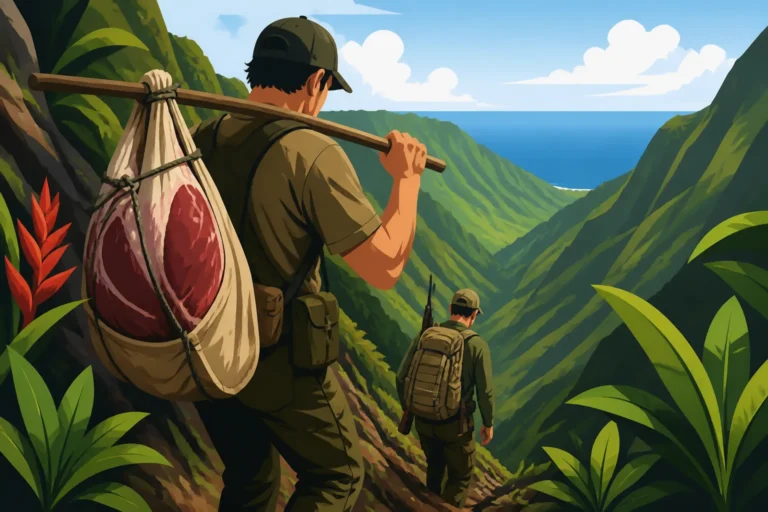
Packing out a sheep over lava flows is one of the most physically demanding aspects of this hunt. Even a modest-sized mouflon ram can weigh over 100 pounds, and that weight feels exponentially heavier when you're navigating jagged, uneven rock. You'll want sturdy game bags to protect the meat from dirt and flies. Quartering the animal into manageable pieces is usually the best approach, distributing the weight across multiple trips or among hunting partners. Expect falls, scrapes, and brutal fatigue. Trekking poles can provide stability and reduce strain on your knees and ankles. Take frequent breaks, hydrate constantly, and don't push yourself to exhaustion. It's far better to make multiple, shorter trips than to attempt too much at once and risk injury or spoil the meat. This isn't a walk in the park; it's a gut-check of endurance.
Transporting Your Harvest Off the Mountain
Once your meat is packed into game bags and loaded onto your frame pack, the journey back to the vehicle begins. This descent, often more challenging than the ascent, will test your every muscle. Be methodical in your steps, using your trekking poles for balance. Once you reach your vehicle, the cooling process becomes even more critical. Have coolers packed with ice ready to receive the meat immediately. If you have a long drive ahead, consider adding dry ice on top of the regular ice to keep everything colder for longer. The goal is to keep the meat as cold as possible until it can be professionally processed or frozen. Some hunters might even arrange for a local butcher to meet them closer to the hunting unit, though this requires prior planning. This entire process, from shot to freezer, is a testament to your commitment as a hunter.
Table: Key Challenges and Solutions for Lava Flow Hunting
| Challenge | Description | Recommended Solution |
|---|---|---|
| Jagged Terrain (A'a) | Extremely sharp, unstable volcanic rock that shreds gear and causes falls. | Heavy-duty, stiff-soled hunting boots with high ankle support and a protective rand. Trekking poles for stability. |
| Slippery Surfaces (Pahoehoe) | Smooth, glassy lava that becomes treacherous when wet, prone to hidden cracks and holes. | Aggressive outsole tread for traction. Deliberate foot placement. |
| Extreme Sun & Heat | Intense solar radiation and heat reflection from dark rock, leading to dehydration and sunburn. | Ample water (1-1.5+ gallons/day), electrolytes. Sunscreen, wide-brimmed hat, sunglasses. Breathable, long-sleeved clothing. |
| Limited Cover & Open Vistas | Difficulty in stalking animals due to vast, exposed areas; animals spot you easily. | High-quality binoculars and spotting scope on a tripod for long-distance glassing. Patience and slow, deliberate movements. Utilize micro-terrain for concealment. |
| Navigation Difficulties | Lack of distinct landmarks, undulating terrain, and potential for disorientation. | Reliable GPS unit with offline maps (e.g., GoHunt app), physical map, and compass. Mark vehicle location and drop frequent waypoints. Inform others of your route. |
| Rapid Meat Spoilage | Warm temperatures, especially close to the lava, quickly degrade game meat. | Immediate and thorough field dressing. Use game bags. Rapid cooling with ice in coolers after packing out. |
| Physical Exertion | High altitude, uneven terrain, and heavy pack loads lead to extreme fatigue. | Excellent physical fitness. Adequate hydration and nutrition. Trekking poles. Break up packing into smaller loads or multiple trips. |
Disclaimer
Please be aware that hunting regulations in Hawaii can change. It is your responsibility to consult the most current rules and regulations published by the State of Hawaii Department of Land and Natural Resources (DLNR) Division of Forestry and Wildlife (DOFAW) before planning or undertaking any hunting activity. This guide is for informational purposes only and does not supersede official regulations. Stay safe, hunt ethically, and respect the 'aina.