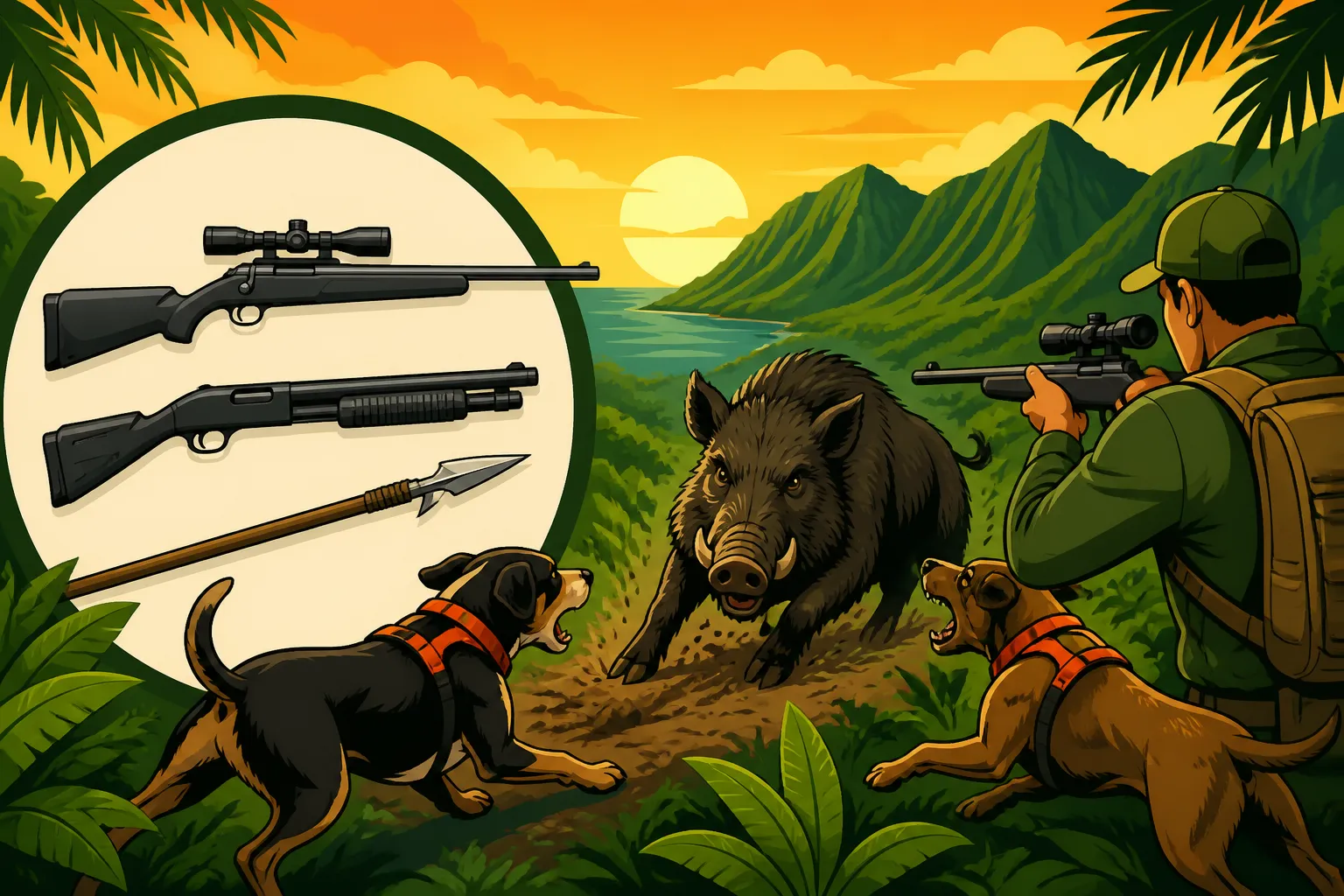
Legal Weapons When Hunting Pigs With Dogs
One of the trickiest parts about hunting in Hawaii, especially if you're used to mainland regulations, is figuring out the specific rules for each type of hunt. When it comes to chasing feral pigs with a pack of hounds, the question of what weapons are actually legal and practical can be a real head-scratcher. This guide aims to clear up the confusion, walking you through the ins and outs of permissible weaponry for pig hunting with dogs across our diverse islands.
Understanding Hawaii's General Hunting Regulations
Navigating the legal landscape of hunting in Hawaii can feel a bit like trying to find your way through a kiawe thicket – dense and full of unexpected thorns if you're not careful. Before we even dive into specific weapons for dog hunting, it's crucial to grasp the overarching regulations set forth by the Department of Land and Natural Resources (DLNR), Division of Forestry and Wildlife (DOFAW). These aren't just suggestions; they are the law, and they dictate everything from licensing to acceptable calibers and seasons.
The Importance of Current DOFAW Regulations
The biggest frustration many hunters face, particularly those visiting or new to a specific island, is how quickly regulations can change or how nuanced they are from one unit to the next. What's allowed in a public hunting unit on the Big Island might be completely different from what's permitted in an adjacent forest reserve, let alone on another island. It's not enough to rely on what your buddy told you last year, or what you read in an old forum post. You absolutely need to consult the most current Hawaii Game Mammal Seasons and the specific rules for the hunting unit you plan to visit. DOFAW updates these regularly, and a quick check can save you a heap of trouble. Many local hunters use resources like the GoHunt Hawaii website or the OuterSpatial app to stay informed about check-in procedures, unit boundaries, and the latest regulatory changes, which often include weapon restrictions.
Licensing and Permits for Pig Hunting
Before you even think about what weapon to carry, make sure your paperwork is in order. Every hunter in Hawaii, resident or nonresident, needs a valid Hawaii Hunting Licenses and What They Cost. Beyond the general license, some units or specific hunts might require additional permits or tags, although for feral pigs, a general hunting license is usually sufficient across most public hunting units. However, always double-check the specific rules for your chosen area. The process is pretty straightforward, but you don't want to show up to a check station ready for a hunt only to find out you're missing a crucial document. Getting caught without the proper license or permit isn't just a slap on the wrist; it can lead to hefty fines and loss of hunting privileges.
Specifics for Dog and Knife Pig Hunting
When people talk about hunting pigs with dogs in Hawaii, more often than not, they're envisioning the traditional "dog and knife" method. This is a deeply rooted practice here, and it carries its own set of traditions, ethics, and, yes, legal considerations when it comes to the actual dispatching of the animal.
Legality of Knives and Spears
Yes, for many, the most iconic and traditional method of finishing a bayed pig in Hawaii is with a knife or a spear. This method is generally legal and widely practiced. The idea is to allow your well-trained pack of dogs to bay or catch the pig, and then, in a close-quarters, quick, and humane manner, dispatch it with a thrust to the vitals.
However, "legal" doesn't mean "anything goes." When you're Using a Knife or Spear on a Bayed Pig, you need to ensure the weapon is designed for the task and used responsibly. A hunting knife should be stout, with a fixed blade, and long enough to reach the vitals effectively and quickly, usually a minimum of 6-8 inches. Spears, while less common for the final dispatch in thick cover, are certainly part of the tradition for some, especially for larger boars in more open terrain where a longer reach is beneficial. The key here is humane dispatch. The goal is to end the animal's life as swiftly and cleanly as possible once the dogs have it contained. It's a method that requires skill, nerve, and proper training, both for the hunter and the dogs, to ensure safety for all involved.
Practical Considerations for Close-Quarters Hunting
Hunting pigs with dogs often means you're operating in extremely dense, unforgiving terrain – think thick guava tangles, deep gulches, or tangled rainforests. In such close quarters, discharging a firearm can be incredibly dangerous, not just for the hunter but, more critically, for your valuable dogs. This is precisely why the knife-and-dog method has persisted and is often preferred.
Imagine your dogs have a 200-pound boar bayed in a stand of cane grass, barely 10 feet in front of you. The dogs are working hard, darting in and out, keeping the pig's attention. Attempting to use a rifle or shotgun in that scenario risks hitting a dog, or worse, having a ricochet injure a human. A knife or spear allows for a controlled, precise action once you've safely assessed the situation and can move in. This method requires a deep understanding of pig anatomy and the dynamics of the dog pack. It’s physically demanding, and you need to be in good shape to keep up with your dogs and safely enter the fray when the time comes.
Legal Firearms and Archery Equipment for Pig Hunting
While the knife is a cornerstone of dog hunting for pigs, firearms and archery equipment also have their place, though with more specific regulations, especially when dogs are involved. You’ll need to pay close attention to the Hawaii's Legal Weapons by Season and for specific units.
Shotguns and Rifles
For pig hunting in general, shotguns and rifles are legal in many public units. However, the caveat "with dogs" changes things considerably. The Hawaii's Weapon Rules for Dog Hunting typically aim to minimize risk. In many areas, when hunting pigs with the aid of dogs, the use of firearms for the actual taking of the animal is restricted or even prohibited. The rationale, as mentioned, is safety: avoiding accidental injury to dogs or fellow hunters in the chaotic, close-range environment of a bayed pig.
If firearms are allowed when dog hunting (which is rare for the actual kill, but sometimes for dispatching a wounded animal after the dogs are pulled away), there will be specific caliber restrictions. For rifles, common calibers allowed for big game often include .243 Winchester, .270 Winchester, .30-06 Springfield, and .308 Winchester, among others. For shotguns, slugs are typically required for big game, not birdshot or buckshot, to ensure a clean kill. Always verify the minimum caliber and projectile requirements for your specific hunting unit. You won't find a blanket "any rifle goes" rule here; it's always precise.
Archery Equipment
Bowhunting Hawaii's Public Units is a popular method for many hunters, and it is a legal means to take pigs. When hunting pigs with dogs, archery equipment faces similar considerations as firearms regarding safety. While a well-placed arrow can be incredibly lethal and quiet, the close-quarters nature of a dog hunt still presents risks. The dogs are trained to hold the pig, often very close to the animal's head or shoulders, making a clean shot with an arrow challenging without risking injury to your hounds.
If you choose to use archery equipment, ensure you comply with the minimum draw weight and broadhead specifications. For pigs and other big game in Hawaii, broadheads must typically be fixed-blade or mechanical broadheads with a minimum cutting diameter. Recurve bows, compound bows, and longbows are generally allowed, but crossbows have specific regulations you need to check, as they aren't always universally permitted for all big game seasons or units. Again, the most crucial aspect when hunting with dogs is the safety of your pack and the humane dispatch of the animal.
Navigating Unit-Specific Weapon Restrictions
This is where many hunters, especially those new to the islands, can get tripped up. Hawaii's hunting units are incredibly diverse, not just in their terrain and wildlife, but also in their rules. A single island can have multiple units, each with its own set of regulations on seasons, bag limits, and, yes, what weapons you can carry.
Checking Individual Unit Regulations
It cannot be stressed enough: always check the specific rules for the unit you intend to hunt. For instance, while certain areas might allow a wide range of legal weapons when hunting Pigs With Dogs in Hawaii, others might explicitly state "no firearms" when dogs are present, or even restrict dog hunting entirely to certain times of the year or specific zones. Some units might be designated "Archery Only," while others are open to "Any Legal Weapon."
You might find that a unit like the Waiakea Forest Reserve on the Big Island has different rules from the Kula Forest Reserve on Maui. These details are typically outlined in the annual hunting regulations booklet provided by DOFAW, which you can often find online or at their local offices. Don't just skim it; read the fine print for the specific unit number you're planning to enter. Neglecting this step is one of the quickest ways to find yourself in violation of the law. Using resources like the GoHunt Hawaii website can provide direct links to these specific unit regulations, making it easier to be compliant.
The Role of Ranger and Officer Discretion
While written regulations are paramount, remember that game wardens and DOFAW officers have the ultimate authority in the field. They are there to enforce the rules and ensure safety and ethical hunting practices. If an officer observes what they deem to be an unsafe or unethical use of a weapon, even if it technically falls within the letter of the law, they may intervene.
For example, if you are using a knife to dispatch a pig with dogs, but doing so in a prolonged or seemingly inhumane manner, an officer could still issue a citation or investigate further. Ethical hunting is about more than just legality; it's about respect for the animal and responsible practices. Always conduct yourself with integrity and common sense. If you're ever unsure about a specific situation or weapon, it's far better to err on the side of caution or contact DOFAW directly for clarification before heading into the field. This proactive approach ensures a safe and legal hunt for everyone involved, especially your dedicated hunting companions.
Here’s a quick overview of typical weapon considerations for pig hunting with dogs in Hawaii:
| Weapon Type | General Legality for Pig Hunting | Specific Considerations with Dogs | Common Use in Hawaii Dog Hunting |
|---|---|---|---|
| Hunting Knife | Generally Legal | Essential for humane, close-quarters dispatch of bayed pigs. Risks to dogs are minimal if used correctly. | Primary method for finishing bayed pigs in dense cover. |
| Spear | Generally Legal | Provides reach, similar benefits to a knife for humane dispatch. Requires skill to ensure safety of dogs. | Traditional, less common than knife but used by some hunters for larger pigs. |
| Rifle | Legal in many units for pigs | Often restricted or prohibited when dogs are actively engaging pigs due to high risk of injuring dogs or hunters. Specific caliber rules apply. | Generally used for still-hunting or hunting without dogs; rarely for finishing a dog-bayed pig. |
| Shotgun (Slugs) | Legal in many units for pigs | Often restricted or prohibited when dogs are actively engaging pigs due to high risk of injuring dogs or hunters. Slugs required for big game. | Similar to rifles, primarily for hunting without dogs. |
| Archery (Bow/Arrow) | Legal in many units for pigs | Permitted, but challenging in close quarters with dogs. Risk of hitting a dog is present. Specific broadhead rules apply. | Used by skilled archers; requires extreme caution to avoid hitting dogs. |
| Crossbow | Varies by Unit/Season | Similar challenges and restrictions as traditional archery. Check unit rules carefully. | Less common; legality and usage vary significantly. |
Final Thoughts on Responsible Dog Hunting
Ultimately, responsible hunting in Hawaii, especially when you bring your dogs into the mix for pigs, comes down to a few key principles: deep respect for the land, the animals, and the regulations. The tradition of Dog and Knife Pig Hunting in Hawaii is a challenging but rewarding one, demanding a high level of skill, ethics, and preparation.
Beyond just the weapon, consider the full scope of your hunt. Are your dogs properly trained for Pig Hunting With Dogs in Hawaii to ensure they work safely and effectively? Do you have appropriate gear for Fitting a Cut Vest on a Catch Dog to protect them from the pig's tusks? Have you planned for Cooling Meat Fast on a Hawaii Hunt in our tropical climate? And crucially, do you know how to Getting a Pig Out of a Hawaii Gulch once it's down?
The specific rules about what you can carry, especially if it's not a knife, are often a reflection of these safety concerns. While Hunting Hawaii's Feral Pigs is a vital part of conservation efforts and a cultural practice, it must be done within the bounds of the law to ensure its continuity. Always check with DOFAW directly, utilize trusted resources, and remember that safety for your dogs, yourself, and other hunters is always the top priority. Good luck out there, and hunt safe!
Disclaimer
The information provided in this guide is for general informational purposes only and is not legal advice. Hunting regulations in Hawaii are subject to change, and specific rules may vary by island, unit, and season. Always consult the most current official Hawaii Department of Land and Natural Resources (DLNR) Division of Forestry and Wildlife (DOFAW) regulations and local authorities before engaging in any hunting activities. Failure to do so may result in fines or penalties.