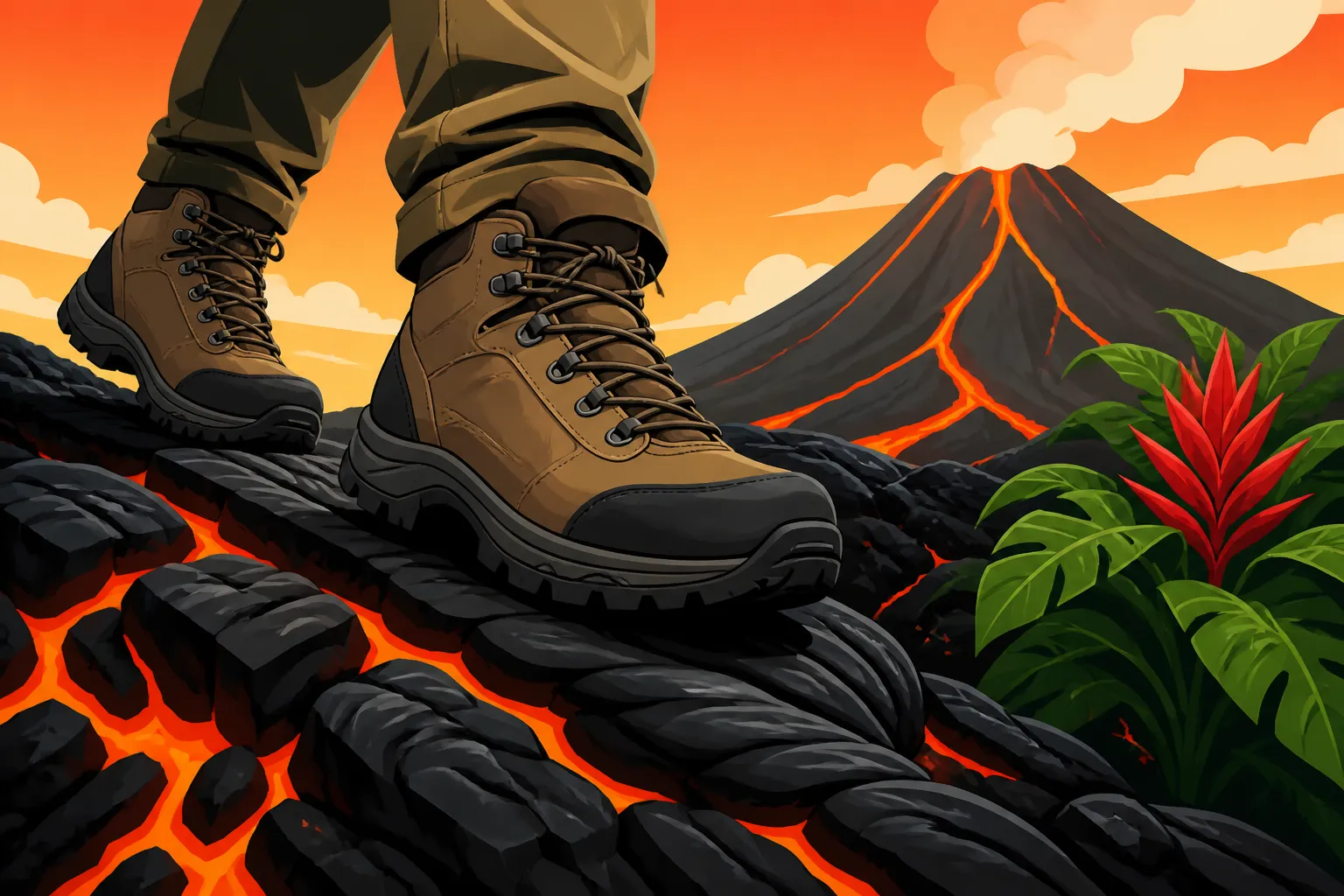
Walking Rough Lava Without Wrecking Your Boots
There's nothing quite like the raw, primal beauty of Hawaii's volcanic landscapes, whether you're chasing mouflon sheep on Mauna Kea or stalking feral goats across ancient lava flows. But beneath that stunning scenery lies a relentless challenge for your footwear: the incredibly abrasive and sharp lava rock that can shred even the toughest boots in a single hunt. This guide is all about navigating that unforgiving terrain without prematurely sending your expensive hunting boots to an early grave, ensuring your feet stay protected and your hunt stays on track.
The Unique Challenges of Hawaii's Lava Terrain
Hawaii's volcanic islands are a hunter's paradise, but they present a stark reality for gear: everything, especially your boots, takes a beating. Unlike the softer soils, packed dirt trails, or even rocky scree you might find on the mainland, Hawaii's lava fields are a relentless gauntlet of sharp edges, abrasive surfaces, and unpredictable footing. It's a landscape that tests the very limits of footwear durability.
Understanding Different Lava Types
When we talk about lava, it’s not just one thing. Hawaii boasts two primary types of basaltic lava, and understanding their characteristics is crucial for appreciating the challenge they pose to your boots. Each type has a distinct personality, and both are equally adept at destroying footwear.
First, you have ʻAʻā (pronounced "ah-ah"). This is the notoriously rough, jagged, and clinkery lava that forms a broken, rubbly surface. Imagine a field of shattered glass, but heavier and infinitely more abrasive. Walking on ʻaʻā feels like trudging through a fresh rock quarry. Every step brings your sole into contact with countless sharp points and edges that abrade and cut. It’s relentless. Hunters often encounter ʻaʻā in units like those found on the lower slopes of Mauna Kea or in parts of the Puʻu Waʻawaʻa unit, where ancient flows created these rough, broken landscapes. Your boots aren't just getting scratched; they're being actively ground down and sliced open by this unforgiving material.
Then there's Pāhoehoe (pronounced "pah-hoy-hoy"). This lava forms smoother, more ropey, and undulating surfaces, often described as looking like coiled ropes or wrinkled fabric. While it's smoother than ʻaʻā, don't let that fool you into thinking it's gentle. Pāhoehoe is incredibly abrasive, like coarse-grit sandpaper that never ends. It creates exceptional traction, which is a blessing for avoiding slips, but it comes at a cost. The constant friction wears away at your boot soles with remarkable speed. Imagine dragging a block of rubber across a giant, rough emery board all day long; that's what your boot soles are experiencing. You'll find extensive pāhoehoe flows in many areas, particularly on the Big Island, creating vast, undulating fields that can be deceptively easy to walk on until you check the wear on your soles.
The Unforgiving Nature of A'a and Pahoehoe
Neither ʻaʻā nor pāhoehoe offers any quarter. The primary frustration for hunters is the sheer speed at which these surfaces destroy soles. A pair of boots that might last several seasons in a typical Western hunting environment could be on its last legs after just a few trips through Hawaii's lava fields. This isn't just about comfort; it's about safety. A compromised sole can lead to painful foot injuries, loss of traction on critical inclines or declines, and ultimately, a hunt cut short.
The sharp, angular edges of ʻaʻā flows penetrate and slice. I’ve seen brand-new boot soles with deep gouges after only a morning of hiking through an ʻaʻā field. These cuts can compromise the integrity of the sole, leading to delamination or cracking. Think of it like a thousand tiny knives constantly trying to peel away layers of rubber. Even the most robust lug patterns can be shredded, turning aggressive traction into smooth, worn spots alarmingly fast. This wear not only reduces grip but also exposes the softer midsole, which is even less equipped to handle the abuse.
Pāhoehoe, with its sandpaper-like quality, doesn't cut so much as it grinds. It relentlessly abrades the entire surface of the sole, thinning it out uniformly but quickly. This can lead to faster-than-expected wear on the lug tips, effectively shortening the lifespan of your boots even if you don't see dramatic cuts. The constant friction also generates heat, which can soften adhesives and contribute to premature sole separation – a nightmare scenario when you're miles into a remote hunting unit. Both types of lava demand a fundamental shift in how you approach footwear selection and care, recognizing that "durable" takes on a whole new meaning here.
Essential Boot Features for Lava Country
Knowing what kind of abuse your boots will endure in Hawaii’s volcanic terrain is the first step. The next is understanding what features are absolutely essential to give your footwear a fighting chance. This isn't the place to skimp or make compromises on durability, because your boots are your most critical piece of gear for navigating these unique landscapes.
Prioritizing Sole Durability and Protection
When hunting on Hawaii's lava, the sole of your boot is the primary line of defense. It takes the brunt of the abuse, and if it fails, your hunt is effectively over. Therefore, prioritizing an extremely durable and protective sole is paramount. Look for boots with soles made from very hard rubber compounds. While softer compounds offer superior grip on wet surfaces, they simply won't last against the constant abrasion and cutting action of lava. Brands like Vibram, which are common in many quality hunting boots, offer various compounds; seek out those known for their durability rather than extreme stickiness. You'll sacrifice a tiny bit of initial "grip feel" but gain immense longevity, which is the real prize here.
Beyond the rubber compound, consider the thickness of the sole. A thicker sole provides more material to wear down before the integrity of the boot is compromised. Some boot manufacturers integrate a rock plate or shank into the midsole, often made of a rigid material like fiberglass, carbon fiber, or steel. This isn't just about comfort, preventing sharp rocks from bruising your arch; it's about protecting the boot's structure. These plates provide an additional barrier against the sharp edges of ʻaʻā lava trying to puncture the sole, and they help maintain the boot's shape and support under constant pressure. Many experienced hunters in Hawaii will tell you that a boot without a good stiff shank or rock plate will leave your feet screaming in pain after a long day traversing rough lava, even if the lugs look okay.
The lug pattern on the sole also plays a role. While deep, aggressive lugs are great for mud and soft earth, they can be a double-edged sword on lava. They provide excellent initial traction on pāhoehoe and can help dig into smaller cracks on ʻaʻā, but their exposed edges are often the first to wear down and chip off from the constant grinding. Some hunters prefer a more moderate lug pattern with a larger surface area in contact with the ground, as this distributes the abrasive force more evenly and can lead to slower overall wear. This is where a balance is key: you still need enough grip to navigate steep volcanic slopes, but not at the expense of rapid material loss. Choosing a boot specifically designed for mountaineering or heavy-duty backpacking in rocky terrain will often provide the kind of sole protection needed.
Ankle Support and Stability are Non-Negotiable
Walking across uneven, broken lava fields is a constant exercise in balance and stability. Every step involves navigating shifting rocks, hidden voids, and treacherous angles. This isn't a place for low-cut hikers or minimalist trail shoes. Strong ankle support is absolutely critical, not just for comfort but for preventing serious injuries. A twisted or sprained ankle deep in a remote unit, especially when trying to pack out a mouflon ram or a feral pig, can turn a challenging hunt into a dangerous emergency.
High-cut boots that extend well above the ankle provide the necessary lateral support to prevent your foot from rolling. Look for boots with stiff ankle collars and well-designed lacing systems that allow you to cinch them down securely without creating pressure points. Many quality hunting boots feature supportive cuffs with dense padding and integrated stiffeners that cradle the ankle. This kind of robust construction helps stabilize your foot and ankle joint as you navigate the unpredictable undulations of pāhoehoe or the sharp, uneven blocks of ʻaʻā. Without adequate support, the constant micro-adjustments your ankles have to make will lead to fatigue, pain, and significantly increase your risk of injury.
Beyond just the height of the boot, the overall torsional rigidity of the boot chassis is important. This refers to how much the boot resists twisting along its length. A boot with good torsional rigidity will prevent excessive pronation or supination of your foot when you step on an angled or uneven surface. This stability is directly linked to the shank and sole construction. If you can easily twist the boot side-to-side by hand, it likely won't provide the stability needed for Hawaii's lava. When you're carrying a pack and potentially game meat over challenging ground, that extra support makes all the difference, helping you maintain a secure footing and reducing the cumulative strain on your lower body.
Material Considerations for Abrasion Resistance
While the sole is critical, the upper materials of your boots also need to stand up to the lava's abuse. It’s not uncommon for the sides of boots to rub against sharp rocks as you maneuver through tight spots or scramble over boulders. Therefore, the choice of material for the boot's upper is another key factor in its overall longevity in lava country.
Full-grain leather is often lauded for its durability, and for good reason. Thick, treated full-grain leather offers excellent abrasion resistance and can withstand a lot of scraping and scuffing before showing significant wear or tearing. Look for boots with minimal stitching on the high-wear areas, as seams are always potential weak points where lava can snag and unravel threads. When present, ensure stitching is double or triple reinforced. However, leather boots require regular conditioning to maintain their protective qualities, especially in Hawaii's varying humidity and sun exposure, to prevent drying out and cracking.
Many modern hunting boots incorporate synthetic materials, often Cordura or similar heavy-duty nylon weaves. These can be lighter and quicker drying than leather. However, not all synthetics are created equal in terms of abrasion resistance. Cheaper, thinner synthetic panels can be easily shredded by sharp ʻaʻā lava. Look for boots that feature robust, high-denier synthetic fabrics, often reinforced with rubber rands or PU coatings. A full rubber rand that wraps completely around the perimeter of the boot, from the toe box to the heel, provides an exceptional layer of protection against side-scrapes and impacts. This rand acts like armor, taking the abuse that would otherwise chew through the upper material. Without a good rand, even durable leather or synthetic uppers will quickly show significant cosmetic and structural damage from repeated contact with lava.
Field Strategies to Preserve Your Footwear
Even with the most durable boots on your feet, how you walk and care for them in the field can significantly impact their lifespan. It's not just about what you buy, but how you use it. Adopting specific strategies when hunting Hawaii's lava can help minimize wear and tear, keeping your boots performing their best for longer.
Mindful Foot Placement and Stride
This might sound obvious, but consciously thinking about where and how you place your feet is the single most effective strategy for preserving your boots on lava. Instead of shuffling or dragging your feet, aim for deliberate, precise foot placement. Each step should be a conscious decision to land on a stable, relatively flat surface, avoiding direct contact with sharp edges or deep fissures whenever possible. This is particularly crucial when descending steep, rocky slopes, where the tendency might be to "slide" down, which will rapidly wear down your soles.
When traversing ʻaʻā, try to step over the sharpest points rather than directly on them. Visualize a path that minimizes direct contact with the most abrasive sections. This often means taking slightly longer strides or carefully navigating around particularly nasty patches. On pāhoehoe, while the surface is smoother, the constant friction is the enemy. Avoid unnecessary pivoting or twisting of your feet when they are firmly planted, as this grinds the sole against the abrasive rock. Instead, lift your foot completely before changing direction. This kind of mindful movement not only protects your boots but also reduces the risk of slips, falls, and ankle injuries, especially when you're loaded down with a pack or game meat.
Your stride itself should adapt to the terrain. On extremely broken ground, a shorter, more controlled stride allows for quicker adjustments and better balance, reducing the chances of a misstep that could catch a boot on a sharp edge. When moving across more stable, but still abrasive, pāhoehoe, a smooth, deliberate pace can reduce the cumulative wear. It’s a constant dance with the environment, and over time, you'll develop an intuitive sense for the "best" path. This isn't about speed; it's about efficiency and preservation. Remember, a successful hunt isn't just about finding game; it's about getting in and out safely and with your gear intact, especially when you're deep into a remote section while Hunting Hawaii's Volcanic Terrain.
Utilizing Trekking Poles for Balance and Support
Trekking poles are an absolute game-changer for hunting in Hawaii's lava country, and they play a direct role in preserving your boots. Many hunters initially resist poles, thinking they're just extra bulk, but once you experience the stability and relief they offer on unpredictable terrain, you'll wonder how you ever hunted without them.
The primary benefit of trekking poles is improved balance and stability. When you have two extra points of contact with the ground, you significantly reduce the load and strain on your ankles, knees, and feet. This means less wobbling and fewer desperate attempts to regain balance, which in turn means less inadvertent scraping and twisting of your boot soles against abrasive lava. Poles allow you to "test" unstable sections of ground before committing your full weight, helping you avoid hidden ankle-rollers or particularly sharp points that could damage your footwear. They're invaluable for navigating uneven volcanic terrain.
Beyond balance, trekking poles allow you to strategically redistribute your weight. When stepping down onto a precarious or sharp piece of lava, you can lean more heavily on your poles, lightening the impact on your boot sole. This subtly reduces the compressive and abrasive forces on your footwear. When climbing steep, loose scree or scrambling over larger lava blocks, poles provide leverage and push, minimizing the "scramble" effect where your boots might be dragged or scraped. This not only makes the hike easier but also extends the life of your boots by reducing unnecessary friction and impact. Whether you're Glassing a Lava Flow for Mouflon Rams or trying to get a better vantage point on a Cinder Cone Rim, poles make the journey safer and gentler on your gear.
Post-Hunt Care and Maintenance
The moment you step off the lava, your boot preservation efforts shouldn't end. Proper post-hunt care is crucial for maximizing the lifespan of your boots, especially after they've been subjected to the abrasive nature of Hawaii's volcanic terrain. Neglecting your boots after a tough hunt can undo all the careful thought you put into selecting and protecting them.
First and foremost, clean your boots thoroughly. Lava dust and fine grit can get into every crevice, acting like tiny sandpaper particles that continue to abrade materials even when the boots are not in use. Use a stiff brush to dislodge dried mud, dirt, and any embedded lava particles from the sole and the upper. Then, wipe them down with a damp cloth. For full-grain leather boots, this is the time to recondition them. Apply a good quality leather conditioner or wax to replenish oils, prevent drying and cracking, and maintain their water repellency. This keeps the leather supple and strong, making it less susceptible to tearing or splitting from future abrasion.
For synthetic boots, inspect them closely for any cuts or abrasions on the uppers or rands. Small nicks in synthetic materials can quickly expand if not addressed. If your boots have a rubber rand, check for any peeling or separation. Any minor damage can be sealed with a flexible adhesive like Shoe Goo or a similar outdoor repair sealant, which we'll discuss more in the next section. Finally, ensure your boots dry completely in a well-ventilated area, away from direct heat sources. Stuffing them with newspaper can help absorb moisture from the inside. Storing them dry prevents mold and mildew from forming, which can degrade stitching and adhesives over time, and keeps them fresh for your next adventure chasing Mouflon Sheep Hunting on Hawaii Island. Taking these few extra steps after each hunt will dramatically extend the life of your expensive footwear, making your investment last for many more Hawaiian hunting excursions.
Alternative Footwear and Repair Tips
Sometimes, even the most robust boots need a little help, or you might find yourself needing a quick fix in the field. Having some strategies for supplementary protection and emergency repairs can be a real hunt-saver when you're miles from the truck.
When to Consider Gaiters or Overlays
Gaiters are fabric covers that extend from your boots up your lower leg, typically to just below the knee. While primarily designed to keep debris, snow, or water out of your boots, they offer a secondary, highly valuable benefit in Hawaii's lava country: protecting your boot uppers. High-quality gaiters made from durable nylon or Cordura can act as an sacrificial layer against the constant scraping and rubbing from lava rocks. When you brush against a sharp piece of ʻaʻā or scramble over a rough pāhoehoe boulder, the gaiter takes the abuse, saving your boot's leather or synthetic upper from cuts and tears. This is especially useful for boots that lack a full rubber rand, protecting exposed stitching and fabric.
There are also various overlays or protective films designed for footwear, though they are less common in the hunting world. These often involve adhesive-backed, abrasion-resistant patches that can be applied to high-wear areas of a boot, particularly along the sides or over exposed stitching. While perhaps not as robust as an integrated rubber rand, they can offer some localized protection and extend the life of boots that are otherwise well-suited for lava but lack specific upper reinforcement. Think of them as preventative bandages for your boots. Some hunters even fashion their own temporary overlays from heavy-duty duct tape or similar materials to protect specific areas they know are prone to rubbing, especially when they know they'll be Hunting Hawaii's Kipuka Islands of Forest, which can involve a lot of varied terrain.
Choosing to use gaiters or overlays depends on the specific terrain you'll be hunting, your boot's construction, and your personal preference for added gear. For areas known for particularly aggressive ʻaʻā or thick brush with abrasive rock hidden within, gaiters are a smart choice to preserve your main investment. They also keep out the notorious fine, silty lava dust that can infiltrate even well-sealed boots, which is important for overall comfort and hygiene. You can research different options available through various hunting and outdoor gear retailers, or even check platforms like GoHunt for gear reviews relevant to extreme conditions.
Field Repairs and Emergency Solutions
Despite all your best efforts, things can go wrong in the field. A sole can begin to delaminate, a seam might split, or a deep cut could appear in the upper. Knowing a few emergency field repair tricks can mean the difference between limping back to the truck early and successfully finishing your hunt.
One of the most valuable items in your repair kit should be a small tube of Shoe Goo, AquaSeal, or a similar flexible, waterproof adhesive. This stuff is gold. If you notice a sole starting to separate from the upper, clean the area as best you can, apply a generous amount of the adhesive, and then bind the boot tightly with duct tape or heavy-duty electrical tape. Let it cure for as long as possible (overnight is ideal). This can often provide a temporary, but surprisingly robust, repair that will get you through the rest of your hunt. For small cuts in the upper, especially in synthetic fabrics, these adhesives can seal the wound, preventing it from snagging further and expanding.
Duct tape, of course, is the universal outdoor repair solution. While it won't permanently fix a delaminated sole, it can hold things together in a pinch. If a major tear occurs, or a sole completely peels away, wrapping the affected area extensively with duct tape can provide enough structural integrity and protection to get you back to civilization. It's not pretty, but it works. I’ve seen hunters use it to reinforce worn spots, reattach flapping sole sections, and even jury-rig makeshift gaiters. Always carry a small roll in your pack, perhaps wrapped around a water bottle or trekking pole, so you're never caught unprepared when Facing a No Cell Signal on a Hawaii Hunt. Having these basic repair items allows for improvisation, giving you the confidence to push deeper into challenging units without fear of a single gear failure ending your adventure prematurely.
Disclaimer
Hunting in Hawaii involves inherent risks, including those associated with rugged terrain, rapidly changing weather conditions, and wildlife encounters. The information provided in this guide is for informational purposes only and should not replace proper preparation, professional guidance, or adherence to all local regulations and safety protocols. Always hunt within your capabilities and prioritize safety.