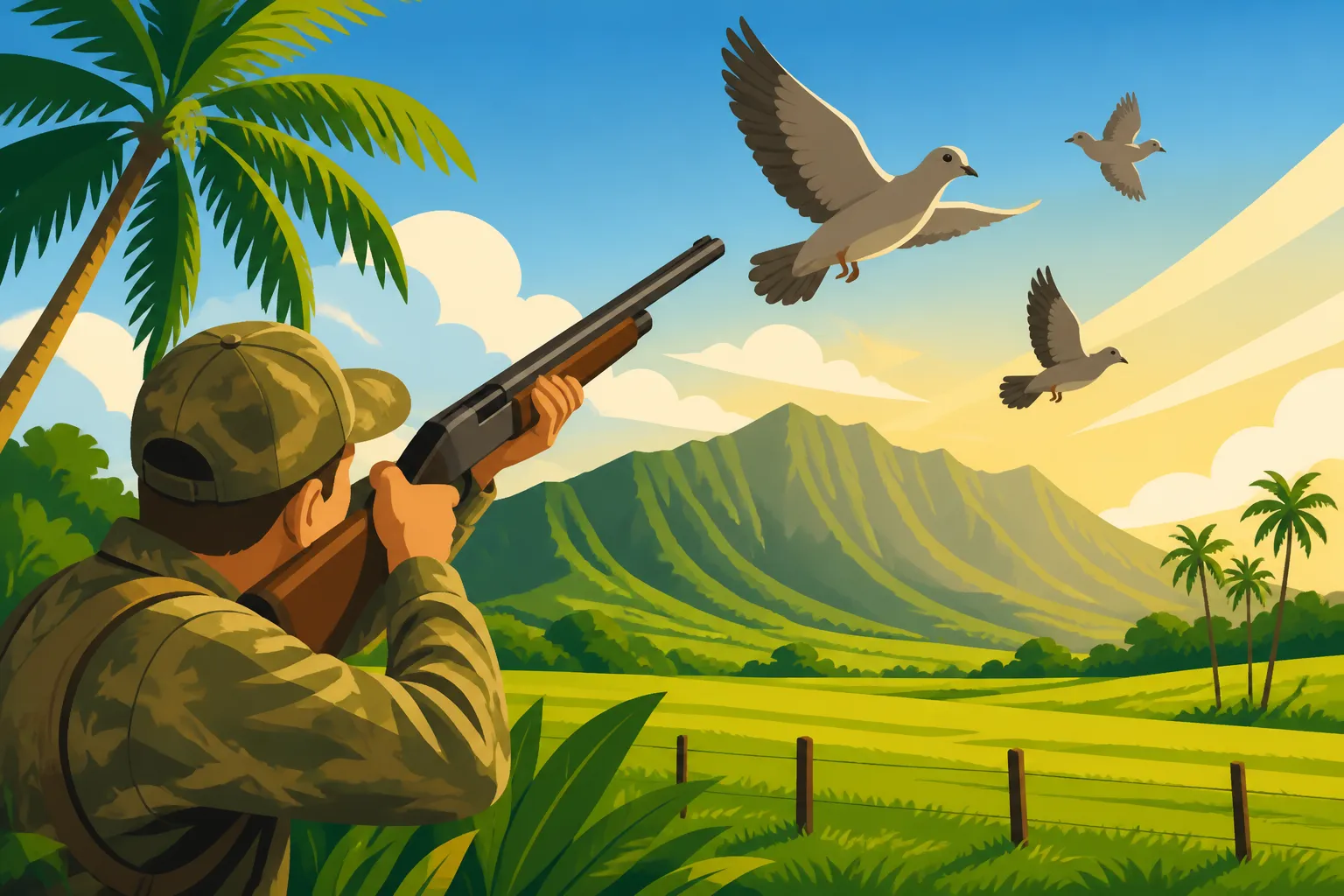
Hunting Doves Over a Hawaii Pasture
Many hunters in Hawaii find themselves frustrated by the challenge of consistently locating and effectively hunting game birds, especially doves, which seem to appear and disappear like ghosts. This comprehensive guide is here to shed light on the unique world of dove hunting over Hawaii's pastures, offering practical strategies and insights to help you connect with these fast-flying birds.
Understanding Hawaii's Dove Species and Habits
Doves are a beloved game bird across the globe, and in Hawaii, they offer a thrilling hunt for those who understand their patterns. Unlike larger game, doves require a keen eye, quick reflexes, and a good understanding of their daily routines. Here in the islands, we primarily focus on a couple of introduced species that have adapted well to our diverse landscapes.
Barred and Spotted Doves: The Main Targets
When you're out hunting in Hawaii, the two main dove species you'll encounter are the Barred Dove (also known as the Zebra Dove) and the Spotted Dove. Both are smaller than your mainland Mourning Dove, but what they lack in size, they make up for in speed and agility, making them incredibly sporting targets.
The Barred Dove is the smaller of the two, often seen pecking around lawns and, yes, pastures. They have a distinctive barred pattern on their neck and a soft, cooing call. They tend to fly in smaller groups or pairs and are quite wary. Spotted Doves are a bit larger, with a beautiful spotted patch on their neck. They often congregate in larger flocks, especially when a good food source is present. Their flight is strong and direct, but they can be surprisingly quick when spooked. Both species are non-native, introduced in the late 1800s and early 1900s, and have since become a common sight across the islands, thriving in disturbed habitats like agricultural fields and pastures. Understanding Hawaii's Doves and Where They Feed is crucial for anticipating their movements.
Why Pastures Attract Doves
Pastures, whether they're actively grazed by cattle or horses, or simply fallow fields, are absolute magnets for doves in Hawaii. There are several key reasons for this, and knowing them will give you a serious edge in your hunt.
Firstly, pastures are typically open ground, providing doves with easy access to their primary food source: seeds. Grasses, weeds, and fallen seeds from nearby trees are all on the menu, and the short, sparse vegetation of a well-grazed pasture makes these seeds easy to spot and pick up. Doves are ground feeders, and they feel safe in open areas where they can easily spot predators. Secondly, pastures often have exposed dirt or gravel patches, which doves frequent for grit. Grit is essential for their digestive system, helping them grind up the seeds they consume. Thirdly, many pastures in Hawaii are dotted with water sources like stock tanks, natural springs, or even puddles after a rain. Doves need to water regularly, especially in our warmer climate, and these water points become natural congregation areas. Finally, the edges of pastures often feature fence lines, scattered trees, or power lines, which doves use as roosting spots or perches to survey the area before dropping down to feed. If you can find a pasture with a good combination of these elements – seeds, grit, water, and safe perches – you've likely found a dove hotspot.
Essential Gear and Setup for Pasture Dove Hunting
Hunting doves effectively in Hawaii's pastures isn't just about showing up with a shotgun. It requires the right equipment and a smart setup to maximize your chances against these fast-flying, keen-eyed birds.
Shotguns and Ammunition Choices
When it comes to shotguns for dove hunting, versatility is key. While many hunters prefer a fast-swinging 20-gauge for its lighter recoil and quick handling, a 12-gauge is also a perfectly suitable choice, especially if you're comfortable with it. The important thing is a shotgun that fits you well and that you can shoulder and swing smoothly. Many hunters opt for an over-under or semi-automatic for quick follow-up shots, but a pump-action can be just as effective in skilled hands. For choke selection, doves are fast and typically shot at varying ranges, so a modified or improved cylinder choke is often ideal. This provides a good balance of pattern density and spread, forgiving enough for close flushing birds but tight enough for those longer pass shots.
Ammunition choice is equally important. For Barred and Spotted Doves, smaller shot sizes are generally preferred. #7.5 or #8 lead shot are excellent choices, offering a dense pattern of small pellets that are effective on these smaller birds without excessive penetration that could damage meat. Make sure you bring plenty of shells! Dove hunting can be fast-paced, and it's not uncommon to shoot through a box or two of shells for a good limit. If you're planning a trip, remember to check the Legal Weapons When Hunting Pigs With Dogs as well, even if you're only targeting doves, just to be sure about general firearms regulations for Hawaii hunting, although specific bird hunting rules will be more relevant for shotguns.
Decoys and Blinds: Maximizing Your Chances
You might think decoys are just for ducks and geese, but they can be incredibly effective for doves, especially when hunting over a pasture. Doves are social birds, and seeing other doves on the ground or perched can draw them in. Simple, full-bodied dove decoys placed strategically on the ground near your position or clipped to fence lines can make a huge difference. Motion decoys, like spinning wing doves, can be absolute game-changers, catching the birds' eyes from a distance and convincing them that the area is safe and active.
For blinds, remember that doves have excellent eyesight. You don't need an elaborate pop-up blind in most pasture scenarios, but some form of concealment is vital. Natural cover, like a clump of kiawe trees, a low brush line, or even a large rock, can be enough if you remain still. If natural cover is sparse, a simple camo netting draped over a couple of fence posts or a portable blind that blends with the surroundings will suffice. The key is to break up your outline and keep movement to a minimum, especially when birds are approaching. Sitting with your back to the sun can also give you a significant advantage, as doves will struggle to see you against the glare.
Strategic Approaches to Hunting Pasture Doves
Dove hunting isn't just about pointing and shooting; it's a strategic game of understanding bird behavior, timing, and positioning. Mastering these elements will significantly improve your success rate over Hawaii's pastures.
Scouting and Timing: Key to Success
The most successful dove hunts are built on good scouting. You can't just show up to any pasture and expect doves to be there in droves. Before opening day or your planned hunt, take some time to observe the pastures you have access to. Drive or walk the perimeter, using binoculars to spot dove activity. Look for specific areas where birds are feeding, watering, or roosting. Pay attention to their flight paths – where are they coming from, and where are they going? Are they flying along a particular fence line, over a specific section of trees, or consistently crossing a low saddle between hills? These are your "flyways" and are prime spots for setting up. Scouting a Hawaii Hunting Unit Before Opening applies just as much to doves as it does to bigger game.
Timing is equally critical. Doves are creatures of habit, typically most active during the first few hours after sunrise and the last few hours before sunset. These are their prime feeding and watering times. Mid-day can be slow, especially on hot days, as birds will often retreat to shaded roosts. Setting up an hour before legal shooting light in the morning or several hours before sunset in the afternoon will position you perfectly to intercept birds as they begin their daily movements. Knowing the Legal Shooting Hours for Game Birds is vital to ensure you're hunting within the regulations.
Positioning for Optimal Shots
Once you've scouted and identified active areas and flight paths, your positioning becomes paramount. You want to be hidden, downwind if possible (though wind often shifts in Hawaii), and in a spot that offers good visibility and a clear shot opportunity along a flyway. If doves are consistently flying over a particular gap in a fence, a low spot in a ridge, or a specific corner of the pasture, that's where you want to be.
Consider the sun's position. As mentioned, having the sun at your back can blind incoming doves, making them harder for them to spot you. However, you need to be mindful of glare on your shotgun if the sun is low. If birds are working a particular feed or water source, try to set up so that you're between their roosting area and that resource. This will put you on their natural travel route. When setting up decoys, place them where they're highly visible to incoming birds, mimicking birds feeding on the ground or resting on a fence. Always ensure you have a safe shooting lane and are aware of what's beyond your target. This is especially true when hunting close to Hunting a Ranch Pasture Boundary where private property lines can be less obvious.
Navigating Regulations and Access for Dove Hunting
Hawaii's hunting regulations can be a maze for the uninitiated, and securing access to productive dove pastures often requires more than just showing up. Understanding these aspects is crucial for a legal and successful hunt.
Licensing and Permit Requirements
Before you even think about stepping foot in a pasture with a shotgun, you need to ensure all your paperwork is in order. Every hunter in Hawaii, resident or non-resident, must possess a valid Hawaii hunting license. Beyond that, to hunt game birds, you'll need a Hawaii Game Bird Stamp. This stamp is an additional requirement for anyone planning to pursue pheasant, francolin, quail, chukar, or doves. These can typically be purchased where you get your hunting license.
The best way to stay on top of the current rules and purchase your license and stamps is through the state's online portal or authorized vendors. Many hunters use the GoHunt Hawaii website or app, which streamlines the process and provides up-to-date information on seasons and regulations. Always double-check the current Hawaii Game Bird Seasons and Bag Limits and the Dove and Quail Daily Bag Limits for the specific island you plan to hunt, as dates and limits can vary. Failure to possess the correct licenses and stamps can lead to hefty fines and loss of hunting privileges, so don't cut corners here. For a comprehensive overview, checking Hawaii Hunting Licenses and What They Cost and Hawaii Game Bird Stamp Cost and Who Needs It will give you all the details.
Gaining Access to Private Pastures
This is perhaps the biggest hurdle for dove hunters in Hawaii: most of the prime pastureland is privately owned. Unlike many mainland states with vast public lands open to hunting, Hawaii's public hunting areas, while numerous, are often rugged and not typically prime dove habitat. The lush, flat, or gently rolling pastures favored by doves are almost exclusively on private ranches or farms. This means obtaining landowner permission is not just recommended, it's essential and legally required. Trespassing is taken very seriously here, and it can quickly land you in deep trouble.
Building relationships with landowners is the most effective way to secure access. This often starts with simply asking politely, in person, well in advance of the season. Dress respectfully, be articulate, and be prepared to explain exactly what you want to hunt, when, and how. Offer to help with chores, clear invasive species, or assist with fencing in exchange for access. Some landowners may require a liability waiver, while others might charge a small fee for access, especially if the land offers exceptional hunting. You might also find opportunities on properties that are open for Hunting a Reservoir Edge for Doves as many reservoirs are found on private ranchlands. Exploring Hawaii Private Land Access Permits might also reveal options if specific agreements are in place. Always carry written permission if possible, and leave the property better than you found it. Respect for the land and the landowner is paramount to keeping these valuable access points open for future generations of hunters.
Practical Tips for a Successful Dove Hunt
Beyond the core strategies, a few practical tips can make your Hawaii dove hunt more comfortable and productive. Our island environment presents unique challenges and opportunities that mainland hunters might not anticipate.
Adapting to Hawaii's Climate
Hawaii's climate is a blessing and a curse. It's beautiful, but it can also be intensely hot and humid, even in the "cooler" months. This impacts both you and the game. Doves will seek shade and water more frequently during the heat of the day, making early morning and late afternoon the most productive hunting times. For yourself, bring plenty of water – more than you think you'll need. Light, breathable clothing in natural colors is essential. A wide-brimmed hat and sunscreen are non-negotiable.
The heat also means you need to prioritize proper game care. Doves are small, but their meat is delicate. Get your birds into a cooler with ice as quickly as possible after the retrieve. A small cooler you can carry with you to the field is a great investment. Remember that flies and ants can quickly get to game left out in the heat.
Retrievers and Ethical Hunting
A good bird dog can be an invaluable asset when hunting doves over pastures. Doves, particularly when shot over taller grass or brushy edges, can be incredibly difficult to find. A well-trained retriever not only speeds up recovery but also ensures that fewer birds are lost, upholding the ethical hunting principle of utilizing everything you harvest. If you have a dog, make sure it's accustomed to the heat and brings its own water. If you don't have a dog, mark your fallen birds precisely and retrieve them immediately. This not only saves meat but also allows you to focus on the next incoming birds without distraction. More tips on Using a Bird Dog in Hawaii Terrain can be found in our other guides.
Always practice safe firearm handling. Be aware of your surroundings, know your target and what's beyond it, and only shoot at birds within safe range. A table on dove identification and characteristics can be quite helpful:
| Feature | Barred Dove (Zebra Dove) | Spotted Dove (Indian Spotted Dove) |
|---|---|---|
| Size | Small (approx. 8-9 inches) | Medium (approx. 11-13 inches) |
| Plumage | Grayish-brown, barred neck/chest, scaled back | Pinkish-brown, spotted neck collar, gray head |
| Call | Soft, cooing "coo-coo-coo" | Deeper, more throaty "croo-croo-croo" |
| Flight Pattern | Fast, direct, often in pairs or small groups | Strong, direct, often in larger flocks |
| Habitat | Open areas, pastures, lawns, agricultural fringes | Urban parks, gardens, pastures, cultivated lands |
| Bag Limit | Varies by island/season (check current regs) | Varies by island/season (check current regs) |
Finally, enjoy the experience. Hunting Hawaii's Game Bird Weekends offers a fantastic opportunity to be out in our beautiful natural environment. Whether you're aiming for a full bag limit or just enjoying the challenge of these zippy birds, dove hunting in Hawaii is a unique and rewarding experience. Just imagine setting up for Hunting a Hawaii High Pasture at Last Light with the sun dipping into the Pacific and doves darting overhead – it’s truly magical.
Disclaimer
Hunting is an inherently dangerous activity. Always prioritize safety, follow all local and state regulations, and obtain proper landowner permission. The information provided here is for educational purposes and should not replace official Hawaii Department of Land and Natural Resources (DLNR) regulations or professional guidance. Always verify current seasons, bag limits, and rules before heading afield.