Hunting Unit A on Mauna Kea
For hunters eyeing the majestic slopes of Mauna Kea, the prospect of tackling Unit A can feel both exhilarating and daunting. The unique high-elevation environment presents challenges far different from the lush rainforests or dry kiawe flats found elsewhere in the islands. This guide will walk you through everything you need to know about hunting Unit A, helping you prepare for its thin air, rugged terrain, and the wily game animals that call this volcanic landscape home.
Understanding Mauna Kea's Unit A: The Basics
Hunting Unit A is one of those places in Hawaii that truly stands apart. When you hear "Mauna Kea," your mind might first go to the observatories and the incredible views, but for us hunters, it brings to mind the unique opportunity to pursue game at elevations that feel more like the Rockies than the Pacific. It's a truly special experience, but one that demands respect and thorough preparation.
Where Exactly is Unit A?
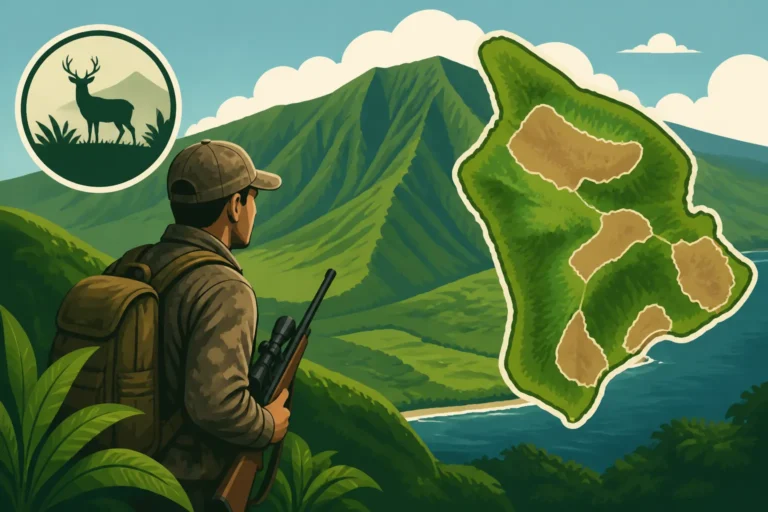
Unit A encompasses a significant portion of the upper slopes of Mauna Kea on Hawaii Island, often extending from roughly the 6,000-foot elevation mark all the way up to the astronomical observatories near the summit. This is high country, folks. We're talking about a landscape dominated by volcanic rock, cinder cones, and scattered mamane and naio forests, transitioning into alpine desert as you ascend. It’s a vast, open, and often stark environment, a far cry from the dense, humid jungle most people imagine when they think of Hawaii. Understanding its geographical boundaries and elevations is your first step to planning a successful hunt. Access points are typically found off the Saddle Road, which dissects the island between Mauna Kea and Mauna Loa. Knowing these entry points and studying detailed topographical maps is crucial, as the terrain can be deceptively challenging.
Seasons, Access, and Permit Requirements
Hunting Unit A is primarily known for its mouflon sheep season, though feral sheep can also be found. The seasons are specific and usually involve a lottery or drawn hunt system, especially for the coveted mouflon tags. You can't just show up any weekend; you need to be aware of the exact dates announced by the Department of Land and Natural Resources (DLNR), Division of Forestry and Wildlife (DOFAW). These seasons often run for limited periods, usually during specific weekends, and are strictly controlled to manage the population.
Beyond the hunting license itself, you'll need to apply for and secure a specific permit-tag for mouflon or feral sheep. This process typically involves applying through the state's online portal or designated offices. Make sure your Hawaii Hunting Licenses and What They Cost are up to date and that you understand the particular requirements for drawn hunts. It's not uncommon for these draws to be competitive, so getting your application in on time is paramount. Always check the current year's regulations because things can change. Access into Unit A also comes with its own set of rules, often requiring four-wheel-drive vehicles due to the rough, unpaved roads and cinder tracks that crisscross the unit. Some areas might even require you to hike in, so be ready for that long walk.
Why Unit A is Different from Other Hawaii Units
Compared to hunting for Hunting Hawaii's Feral Pigs in a wet gulch or chasing Axis Deer Hunting in Hawaii on the dry leeward side of Maui, Unit A on Mauna Kea offers a completely different experience. The primary difference is the elevation. While other islands might have high points, Mauna Kea offers sustained hunting at 8,000 to over 10,000 feet. This isn't just a scenic backdrop; it actively impacts your hunt. The thin air affects your physical exertion, your rifle ballistics, and even how quickly you get dehydrated.
Secondly, the terrain is distinct. You're dealing with vast expanses of lava rock, scattered cinders, and open slopes with limited cover. This means spot-and-stalk is the name of the game, demanding excellent optics and patience. The vegetation, primarily mamane and naio, is sparse compared to the dense forests found at lower elevations. Hunters accustomed to close-quarters hunting in thick brush will find this environment a stark contrast. The lack of constant humidity and lush undergrowth also changes how game animals move, feed, and react to pressure. It's a test of different hunting skills entirely, pushing you to truly embrace the open-country challenge.
Navigating the Unique Terrain and Climate
Venturing into Unit A isn't just about finding the animals; it's about surviving and thriving in an environment unlike almost anywhere else in Hawaii. The volcanic landscape and high-altitude climate demand respect and specialized preparation. If you underestimate Mauna Kea, it can quickly turn a dream hunt into a miserable ordeal.
The High-Elevation Challenge: Thin Air and Temperature Swings
Let's talk about the air. It's thinner up there, significantly so. For those coming from sea level, even a short hike can leave you winded and gasping. Your body simply isn't used to working with less oxygen. This can manifest as headaches, fatigue, and reduced physical performance. It's crucial to give yourself time to acclimatize if possible, even a day or two at a mid-elevation like Volcano Village or Waimea can help. Hydration is absolutely key in this dry environment. What feels like a comfortable temperature at sea level can be freezing with the wind chill up high, and then baking hot in direct sun without cloud cover. You'll experience extreme temperature swings, often from below freezing before dawn to comfortable T-shirt weather by midday, only to plummet again as the sun dips. This isn't a place for cotton; layers, and plenty of them, are your best friend.
Walking Rough Lava Without Wrecking Your Boots
The ground itself is a formidable opponent in Unit A. You'll be Walking Rough Lava Without Wrecking Your Boots, navigating loose cinder, sharp a'a lava flows, and uneven, broken terrain. This kind of ground devours footwear. Your casual hiking boots simply won't cut it. You need sturdy, high-quality hunting boots with stiff soles, good ankle support, and durable uppers. Look for boots designed for mountaineering or heavy-duty backpacking, not just trail walking. Investing in quality socks to prevent blisters is equally important, as is bringing moleskin and a robust first-aid kit for foot care. The sharp volcanic rock can also be tough on your knees and ankles, so trekking poles can be invaluable for stability and reducing impact, especially when descending steep, loose slopes. A good pair of gaiters can also prevent small, sharp cinders from working their way into your boots and causing discomfort.
Reading the Weather Patterns on Mauna Kea
Mauna Kea's weather is notoriously fickle and can change in an instant. What starts as a clear, sunny morning can quickly devolve into a whiteout fog, freezing rain, or even snow, even in summer. The trade winds, while often consistent on the lower slopes, can swirl unpredictably around the massive volcano, creating localized weather systems. Knowing Hunting Hawaii's High Elevation Alpine Ground requires an understanding of these microclimates. Pay close attention to weather forecasts, but always be prepared for the unexpected.
One moment you might be enjoying panoramic views, the next you could be shrouded in thick mist, drastically reducing visibility and making navigation challenging. A reliable GPS device, like one with the onX Hunt app, is absolutely non-negotiable here. A physical map and compass, and knowing how to use them, are also critical backups. Always tell someone your hunt plan, including your expected return time and exact route. Being caught unprepared for a sudden drop in temperature or visibility can be dangerous, making proper gear selection and constant vigilance paramount.
Game Animals and Hunting Strategies in Unit A
Unit A on Mauna Kea is synonymous with mouflon sheep hunting, a truly unique experience in the Hawaiian islands. While feral sheep also roam these slopes, the mouflon are the prize, offering a challenging pursuit in an unforgettable landscape.
Targeting Mouflon and Feral Sheep
The primary target in Unit A is the mouflon sheep, a striking animal with impressive curling horns on the rams. These aren't native to Hawaii, but were introduced and have adapted remarkably well to the high, arid conditions of Mauna Kea. They thrive on the sparse vegetation, particularly the mamane and naio trees and shrubs. Feral sheep, often a mix of domestic breeds that have gone wild, also inhabit the unit and can be hunted as well. Telling the difference in the field is important, as tags are often species-specific. Mouflon tend to be reddish-brown with a distinctive lighter saddle patch and a white belly, while feral sheep can vary widely in color and horn shape.
Hunting these animals requires patience and keen observation. They are well-camouflaged against the volcanic rock and can be surprisingly difficult to spot, even in open country. Their senses are sharp, and they are adept at using the terrain for cover, disappearing over a ridge or into a small gulch in seconds. Early mornings and late afternoons are often the best times to find them, as they may be moving between feeding and bedding areas. The middle of the day can find them bedded down, often in shaded areas or against the lee side of a cinder cone, making them harder to approach.
Glassing Lava Flows and Mamane Forests
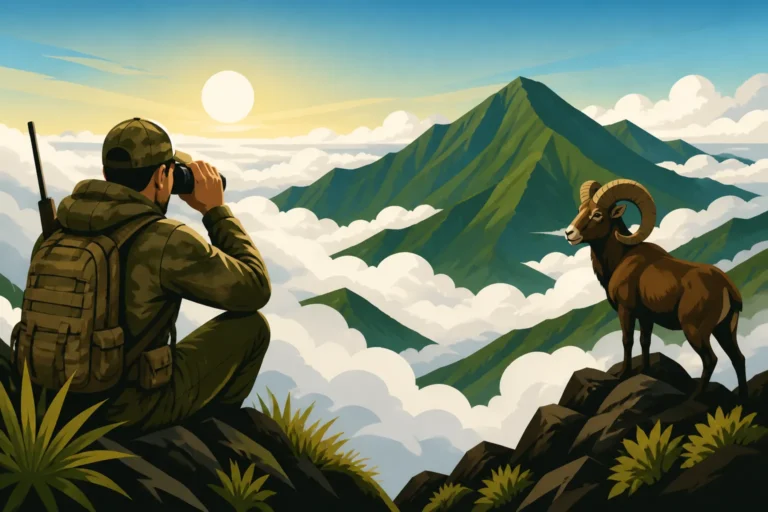
Given the vast, open nature of Unit A, effective glassing is paramount. You can't just walk around hoping to bump into an animal. You need to get to a vantage point and spend serious time behind your optics. A good pair of binoculars, 10x or 12x, is essential, and a spotting scope (20-60x or similar) on a stable tripod is invaluable for Glassing a Lava Flow for Mouflon Rams at long distances. You'll be scanning vast expanses of lava, cinder, and the scattered patches of mamane forest.
Mouflon often feed on the edges of these mamane stands or traverse the open slopes between them. Look for movement, subtle color differences, or the distinctive shape of a ram's horns against the skyline or volcanic rock. Don't just look for whole animals; look for parts of animals. A glint of horn, a patch of white rump, or a dark shadow in the sparse trees can give them away. Patience is key here. Settle in, systematically scan an area, then move to a new vantage point and repeat. The mouflon here can be very wary, so spotting them before they spot you is your best advantage. Hunting Mouflon in Hawaii's Mamane Forest can mean quieter stalking once you've located them, using the trees for cover.
Spot-and-Stalk Tactics in Open Alpine Country
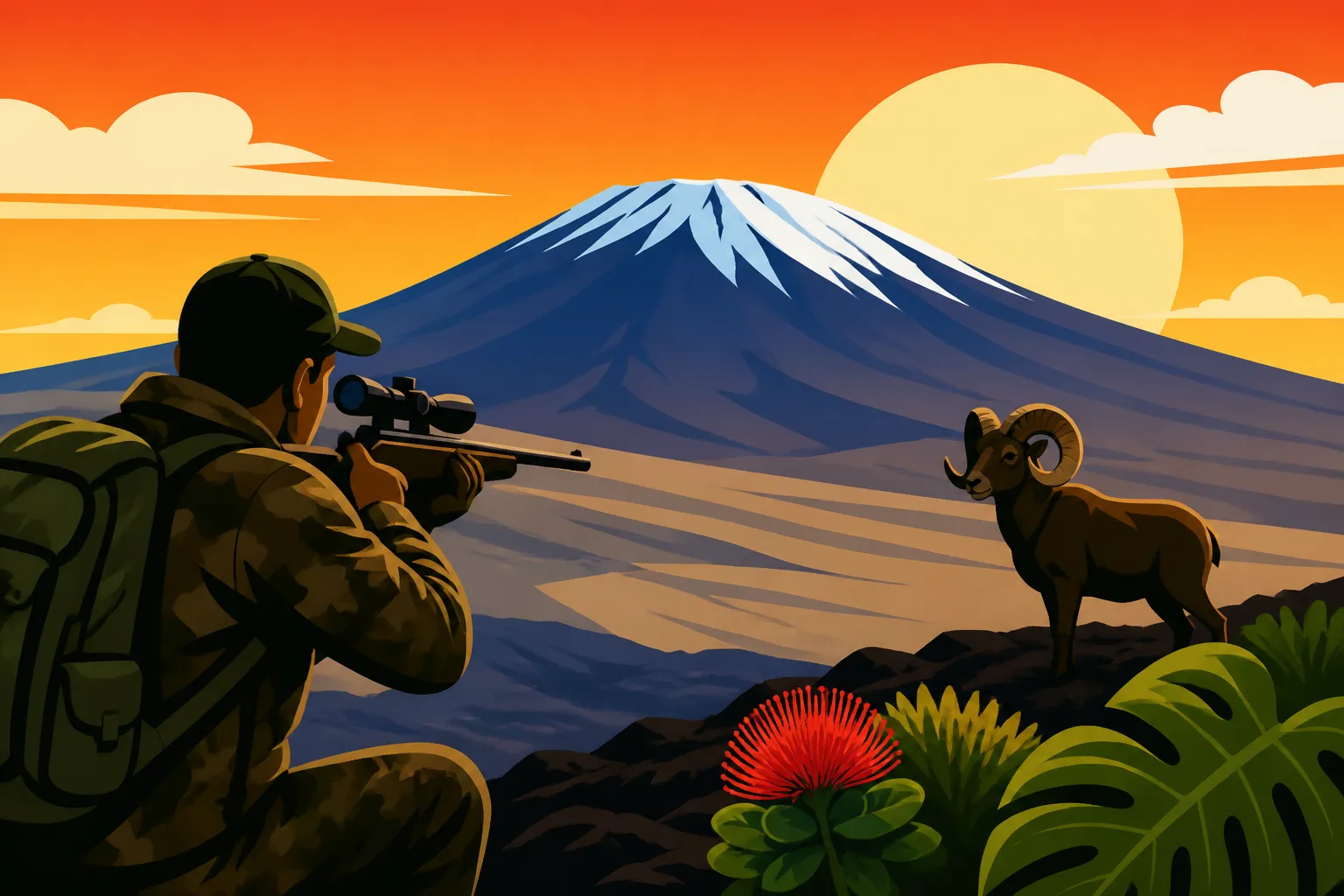
Once you've spotted your target, the real challenge begins: the spot-and-stalk. This open, rocky terrain offers limited cover, making stealthy approaches difficult. You'll need to meticulously plan your stalk, using every bit of terrain feature – a cinder cone, a lava ridge, a depression – to conceal your approach. Always be mindful of the wind, which can swirl unexpectedly at these elevations. A sudden shift in wind can carry your scent right to the animals, sending them bounding away. Reading the thermals, especially early and late in the day, is critical.
The distances can be long, so be prepared for a shot at extended ranges if necessary. Practice shooting at various distances before your hunt, especially accounting for elevation changes if you're not used to them. It's also important to be physically fit for this type of hunt. You'll be climbing, descending, and covering rough ground, often at a quick pace, all while battling the thin air. Having strong legs and good cardio will significantly increase your chances of a successful stalk and a successful pack out.
| Feature | Unit A (Mauna Kea) | Other Hawaii Units (e.g., lower elevation pig units) |
|---|---|---|
| Elevation | High (6,000 – 10,000+ ft) | Low to Mid (sea level – 4,000 ft) |
| Primary Game | Mouflon Sheep, Feral Sheep | Feral Pigs, Axis Deer, Goats, Game Birds |
| Terrain | Volcanic rock, cinder cones, open slopes, sparse mamane forest | Dense rainforest, kiawe flats, gulches, open pastures, cliffs |
| Climate | Extreme temperature swings, dry, thin air, unpredictable fog/snow | Humid, warm, frequent rain in windward areas, dry in leeward |
| Visibility | Generally open, good for glassing, but prone to fog | Limited by dense vegetation, close-quarters visibility |
| Hunting Style | Primarily spot-and-stalk, long-range opportunities | Stalking thick cover, dog hunting, still-hunting, ambushing |
| Physical Demands | High (altitude, steep climbs, rough footing) | Moderate to High (humidity, dense vegetation, steep gulches) |
Essential Gear and Preparation for a Mauna Kea Hunt
A successful and safe hunt in Unit A isn't just about skill; it's heavily dependent on having the right gear and being adequately prepared for the unique environment. Overlooking even a small detail can have big consequences on Mauna Kea.
Clothing and Layering for Extreme Conditions
As mentioned, the weather on Mauna Kea can go from one extreme to another within hours. This makes a proper layering system absolutely critical. Forget bulky, single-layer clothing. You need a base layer (synthetic or merino wool) to wick moisture, a mid-layer for insulation (fleece or puff jacket), and a waterproof, windproof outer shell. Your outer shell should be robust enough to handle sharp volcanic rock and provide protection against driving rain or even light snow. You'll likely be adding and shedding layers throughout the day as you exert yourself and as the sun moves across the sky.
Don't forget accessories. A warm hat, gloves, and sunglasses are non-negotiable. The sun at high elevation can be incredibly intense, even on a cloudy day, so proper eye protection and sunscreen are essential. Choose earth-toned or camouflage patterns that blend in with the grays, browns, and muted greens of the volcanic landscape and mamane. And, of course, your Hawaii Blaze Orange and Safety Rules will apply, so make sure you have the required amount of blaze orange visible on your outer layer.
Hydration, Food, and Emergency Planning
Given the dry air and physical exertion at altitude, staying hydrated is paramount. You will dehydrate faster than you realize. Carry significantly more water than you think you'll need, perhaps a hydration bladder in your pack combined with extra water bottles. Electrolyte supplements can also be beneficial. For food, pack calorie-dense, easy-to-eat snacks that don't require cooking. Think energy bars, nuts, dried fruit, and jerky. You'll be burning a lot of calories, and you won't want to carry cooking gear up there anyway.
Emergency planning goes beyond just telling someone where you're going. Carry a well-stocked first-aid kit specifically tailored for backcountry use, including items for blisters, cuts from sharp rock, and altitude sickness. A reliable headlamp with extra batteries is crucial, as is a fire starter and emergency blanket. Cell service can be spotty or non-existent in many parts of Unit A, so a satellite communication device like a Garmin inReach or a GoHunt enabled device for emergency messaging is a wise investment. Knowing basic first aid and self-rescue techniques could literally save your life or that of your hunting partner. No Cell Signal on a Hawaii Hunt is a reality you must prepare for.
Recommended Optics and Weapon Considerations
For optics, as previously discussed, a good pair of 10x or 12x binoculars and a high-power spotting scope are essential for locating mouflon across the vast distances. On Mauna Kea, where long shots are common, quality optics become even more critical for judging animals and making ethical shots. Your rifle choice should be one you're comfortable shooting accurately at longer ranges, and in a caliber appropriate for sheep, such as a .270, .30-06, or similar. Many hunters prefer a flat-shooting cartridge for the open country.
Remember to factor in elevation effects on ballistics; bullets will fly slightly higher in thinner air. Practice shooting from various field positions, as you likely won't have a bench rest out there. A bipod or shooting sticks can be incredibly helpful for stability on uneven ground. If you're considering Muzzleloader Hunting in Hawaii for mouflon, ensure your muzzleloader is accurate at extended ranges and that you have a way to keep your powder dry in case of unexpected weather. Always double-check Hawaii's Legal Rifle Calibers for Big Game and other weapon rules for the current season.
After a successful hunt, the work isn't over. You'll need to quarter your animal and get it off the mountain, often across rugged terrain. Having game bags, a strong frame pack, and knowing how to Packing Meat Out of a Hawaii Gulch will make the task much easier. Cooling the meat quickly is also important, even in the cooler high-elevation air.
Good luck on Mauna Kea, and hunt safe!
Disclaimer
This article is for general informational purposes only and does not constitute professional advice. Laws, prices and regulations vary by location and change over time. Consult a qualified professional for guidance on your specific situation.