Opening Weekend Crowds on Hawaii Public Land
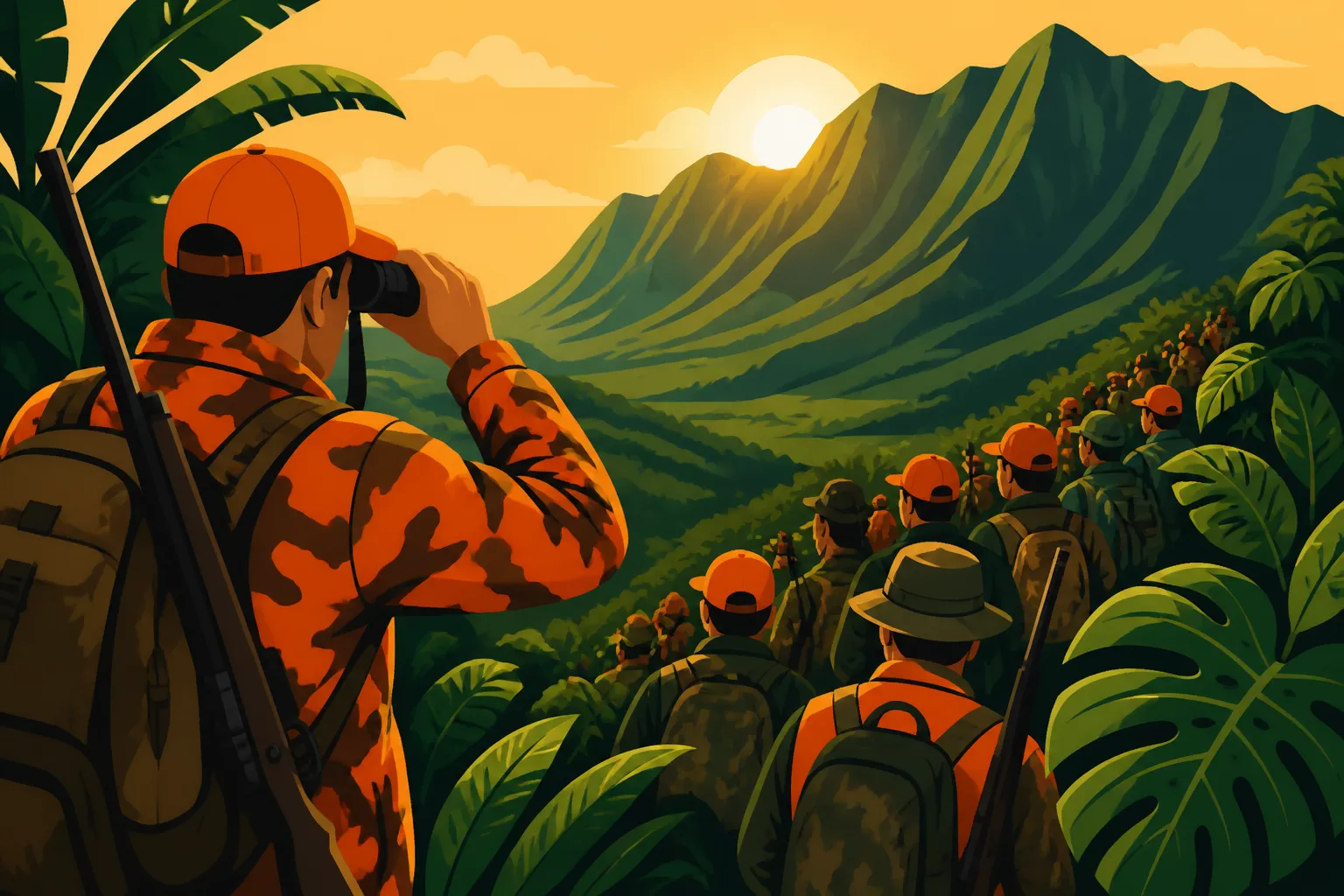
It's opening weekend. You've been waiting for months, maybe even a year, for this day. You’ve got your gear ready, your license and tags secured, and a unit chosen. But as you pull up to the check-in station or the trailhead, you see it: a dozen other trucks already there, headlights cutting through the pre-dawn dark. Your heart sinks a little, knowing that your peaceful, strategic hunt might just turn into a footrace with a crowd. This guide is all about understanding the reality of opening weekend hunting pressure on Hawaii's public lands and, more importantly, how to navigate it, minimize frustration, and still find success amidst the crowds.
The Reality of Opening Weekend Pressure in Hawaii
There’s no getting around it: Hawaii's public hunting lands, though incredibly diverse and often breathtakingly beautiful, are finite. When a new season opens, especially for popular game like Axis deer or feral pigs, these limited spaces can feel incredibly small. It's a natural human inclination to want to be there right when it starts, to get that "first crack" at the animals. But that enthusiasm, while understandable, creates a unique set of challenges that every hunter needs to anticipate.
Why Everyone Flocks to Opening Day
Think about it from a hunter's perspective: the anticipation leading up to opening day is immense. For many, it's not just about the kill, but the tradition, the camaraderie, and the sheer excitement of getting back into the bush. The idea that the game animals haven't been pressured yet, that they might be more predictable, is a huge draw. Plus, some seasons are short, making those initial days feel even more precious. For instance, specific rifle seasons for Axis Deer Hunting in Hawaii or limited weekends for Hunting Hawaii's Feral Pigs can mean hunters feel a real urgency to get out there immediately. There's a certain cultural aspect too, a shared enthusiasm that builds up in the community, and everyone wants to be a part of that initial surge.
However, this collective enthusiasm means that prime spots, easily accessible trails, and known watering holes or feeding grounds will see a significant influx of hunters. You might find multiple vehicles parked where you expected solitude, or hear distant shots long before the sun has fully risen. It’s not necessarily a bad thing – it shows a healthy hunting community – but it demands a different kind of strategy than a mid-week, mid-season hunt.
The Impact on Game Behavior
Game animals in Hawaii are incredibly resilient and smart. They might not be hunted year-round in every single unit, but they certainly aren't oblivious to human presence. When opening weekend hits, and a sudden wave of hunters, dogs, and vehicles descends upon their habitat, their behavior changes almost immediately. It’s like ringing a dinner bell that signals "danger."
Pigs, for example, which might have been rooting openly near trails during the week, will quickly shift to more nocturnal patterns or retreat deep into the thickest, nastiest tangles of guava or hau brush. Goats that were sunning themselves on accessible ridges will drop into steep, inaccessible gulches or move to the highest, most exposed cliffs, often seeking refuge in areas where human access is difficult or impossible. Axis Deer Hunting in Hawaii can be particularly affected; these animals are typically found in herds in more open country, but under pressure, those herds will scatter, break into smaller groups, and vanish into kiawe thickets or dense forest edges, often becoming much more wary and less likely to stand still for long. Even game birds, accustomed to quieter days, will become jumpy, flushing earlier and flying further. This change in behavior is a critical factor you need to account for when planning your approach.
Scouting and Strategy to Beat the Rush
Given the inevitable crowds, your best bet for a successful and less frustrating opening weekend hunt in Hawaii lies in superior preparation and a smart, counter-intuitive strategy. It’s not about competing with the crowds, but rather sidestepping them entirely, or at least positioning yourself where their presence benefits you.
Pre-Season Scouting: Your Best Defense
I can’t stress this enough: pre-season scouting is absolutely paramount when you know a unit will be pressured. Don’t just rely on old knowledge or general maps. Get out there, or if you can't physically, use every tool at your disposal. This means more than just looking for fresh sign. You should be identifying potential escape routes for game, areas of exceptionally thick cover that other hunters might avoid, and, crucially, less obvious access points. Think about those hidden trails, faint game paths, or even routes that require a longer, harder hike to get into. These are often the keys to finding unpressured animals.
Consider using mapping apps like onX Hunt. These tools are fantastic for pinpointing property boundaries, identifying terrain features like gulches or ridges that could hold game, and mapping out potential routes that avoid main trails. You can mark areas of dense vegetation where pigs might escape, or remote water sources where deer might head when the easily accessible ones are swarming with hunters. Scouting a Hawaii Hunting Unit Before Opening will show you the difference between success and frustration. By knowing the lay of the land, you’re not just looking for game; you’re looking for sanctuary for game, places where the opening weekend rush is less likely to penetrate.
Timing Your Attack: When to Go (Beyond Opening Morning)
Everyone thinks they have to be in their stand or hiking through the brush before first light on opening day. While that can certainly be productive in unpressured areas, it’s also when you'll encounter the most competition. Sometimes, the smartest move is to let the initial frenzy subside. Consider delaying your start until mid-morning. By then, many of the early birds have either filled a tag, gotten frustrated, or settled into their chosen spots. The woods might actually be quieter.
Even better, if your schedule allows, consider hunting later in the opening weekend, or even better, on a weekday shortly after. Many of Hawaii's units are open on weekends and holidays, but some also offer weekday hunting, as detailed in Hawaii's Weekend and Holiday Hunting Rules and Hunting Midweek Where Hawaii Allows It. The drop-off in hunter numbers on a Tuesday or Wednesday after opening weekend can be dramatic. The game animals will have been pushed, yes, but they will have settled into new patterns and often become more catchable in the relative calm. Patience here isn't just a virtue; it's a strategic advantage that allows you to capitalize on the animals that have been bumped out of accessible areas and are now looking for peace.
Seeking Out Remote Access Points
This is where your pre-season scouting really pays off. Instead of pulling up to the main gate or the most obvious parking area, look for alternative entry points. This might mean adding an extra mile or two to your hike, navigating rougher terrain, or finding an unmarked access road that requires a 4×4. The harder it is to get to, the fewer hunters you’ll find. Walking In to a Remote Hawaii Unit isn't just about fitness; it's a tactical choice to escape the crowds.
These remote access points often lead to "dead zones" — areas between popular hunting spots that get overlooked. Animals, particularly pigs and Axis deer, are masters at finding these overlooked pockets of security. Using topographic maps and satellite imagery (like what onX Hunt provides) can reveal small ravines, dense patches of forest, or remote ridges that are just far enough off the beaten path to deter most hunters. Don't be afraid of a long walk, or even planning an overnight camp-out if regulations allow and it gets you into truly unpressured ground. The extra effort is often directly proportional to your chances of success away from the maddening crowd.
| Strategy Component | Opening Weekend Approach | Counter-Strategy for Success |
|---|---|---|
| Access Points | Main gates, well-known trailheads, easy roads. | Remote, difficult, or unmarked access; long walk-ins. |
| Timing | Dawn, first hour of season. | Mid-morning, late afternoon, mid-week, later in the season. |
| Scouting | Relying on past knowledge, quick drive-by. | Extensive pre-season scouting, detailed mapping (onX Hunt). |
| Game Focus | Animals in accessible, known areas. | Animals pushed into dense cover, remote pockets, or escape routes. |
| Hunting Style | Fast-paced, covering ground. | Patient still-hunting, slow methodical glassing, ambushing. |
| Hunter Density | High concentration, frequent encounters. | Reduced encounters, greater solitude. |
Tactical Approaches for High-Pressure Areas
Even with the best scouting and timing, you might still find yourself in a unit with other hunters. This is where adapting your tactics becomes crucial. You can still be successful, but it requires a shift in mindset and a willingness to try different things.
Hunting the "Fringe" and Overlooked Areas
When hunters pour into a unit, animals don't just disappear; they get pushed. They'll move to the edges of the unit, to thick transition zones, or into pockets of cover that most hunters walk past. Think about the small, brushy gulch between two popular ridges, or the dense, thorny kiawe flat just behind the initial parking area. Many hunters walk through these areas quickly to get to what they perceive as "better" ground, effectively pushing game into the very places they overlook.
Your strategy here is to hunt these fringes, these little islands of dense vegetation, or the thickest, nastiest terrain that most people shy away from. While others are hiking miles in, try hunting 100-200 yards off the road in a thick tangle, moving slowly and quietly. Often, pigs will bed down just off an access road, knowing that most human activity is on the road or much further in. Axis deer might hold tight in a thorny thicket, listening to the commotion pass them by. It's counter-intuitive, but sometimes hunting close to the pressure, rather than trying to outrun it, is exactly what you need to do.
Adapting Your Hunting Style
The fast-paced spot-and-stalk often seen in open country for Axis deer might need to be modified on opening weekend. Instead of covering ground quickly, consider slowing down significantly. This is where still-hunting really shines. Move ten steps, stop, scan for several minutes, listen, then move another ten steps. This is particularly effective in Hawaii's dense rainforests or thick kiawe/guava tangles, where visibility is limited, and the animals are already on edge. Still-Hunting Pigs in Hawaii's Wet Forest is a perfect example of this.
For Axis deer, while Spot-and-Stalk Axis Deer in Hawaii is a classic approach, consider ambushing. If you know where deer are being pushed from, set up downwind in a funnel point or escape route with good cover. Patiently wait for the pressure to move them towards you. Similarly, for game birds, instead of walking blindly, target specific feeding areas or water sources and patiently wait, or work with a slow, methodical bird dog that can help pinpoint flushed birds that others have spooked. The key is to shift from actively pursuing to passively intercepting.
Using Technology and Local Knowledge
Modern hunting apps, particularly onX Hunt, can be incredibly valuable in high-pressure situations. Not only can you identify property boundaries and terrain, but you can also mark areas of dense cover, remote water sources, or less-traveled game trails that other hunters might miss. When you're scouting, mark these points on your app. Then, on opening weekend, if you encounter crowds in your primary spot, you can quickly consult your map for alternative, less-pressured areas you've already identified.
Furthermore, don't underestimate the power of respectful local knowledge. If you have friends or acquaintances who are seasoned local hunters, ask them about typical pressure points and how game reacts in certain units. They might offer insights into overlooked pockets or strategies that aren't widely known. However, always be respectful and don't expect them to reveal their secret spots; just a general understanding of game movement under pressure can be invaluable. It's about being resourceful and using all available information to make informed decisions.
The Mindset: Patience, Persistence, and Safety
Opening weekend on Hawaii's public lands can test the patience of even the most seasoned hunter. It's easy to get discouraged by the sight of other vehicles or the sound of distant shots. But maintaining a positive outlook and prioritizing safety are just as important as your hunting tactics.
Managing Expectations and Embracing the Challenge
Let's be real: you might not have the entire mountain to yourself. Accepting this reality from the outset will save you a lot of frustration. Instead of viewing other hunters as competition, see them as part of the dynamic. Sometimes, their movements can actually benefit you by pushing animals towards you. Embrace the challenge of hunting under these conditions; it hones your skills, forcing you to be quieter, smarter, and more observant.
Focus on the experience. The beauty of Hawaii's landscapes, the physical challenge of the terrain, and the sheer joy of being out in nature are valuable in themselves, regardless of whether you punch a tag. If you go in with the expectation that it will be crowded, and with a plan to work around that, any success will feel even more rewarding. It’s a marathon, not a sprint, and persistence often pays off more than brute force on high-pressure days.
Prioritizing Safety in Crowded Conditions
With more people in the woods, safety becomes even more critical. Always, always identify your target and what's beyond it. Assume there could be another hunter nearby, even if you haven't seen one all day. Wearing blaze orange is not just a good idea; it's often a legal requirement in many Hawaii units, as detailed in Hawaii Blaze Orange Requirements. Make sure you're visible, especially when moving through thick cover.
Communicate with your hunting partners, use clear signals, and know each other's positions. If you're hunting with dogs, ensure they are well-controlled and identifiable. If you hear shots, pause, assess the situation, and be extra cautious. The goal is to come home safely, and that means being hyper-aware of your surroundings and making smart, ethical decisions, especially when you know other hunters might be nearby.
Respecting Fellow Hunters and the Aina
A crowded opening weekend is also a prime opportunity to demonstrate aloha in the field. Be courteous to other hunters you encounter. If you see someone setting up in a spot you intended to hunt, find another one. Don't crowd them or disrupt their hunt. If you hear them calling or working game, give them space. A simple nod or wave, or a friendly "Good luck!" can go a long way. Remember, we're all out there for similar reasons, even if our methods differ.
Beyond respecting other hunters, always respect the 'aina (the land). Pack out everything you pack in, and then some. Leave no trace of your presence. Use designated check-in and check-out procedures, whether it's a paper card at the station or through an app like Using the OuterSpatial App to Check In. These systems help wildlife managers monitor pressure and harvest rates. When you show respect for the land and your fellow hunters, you contribute to a positive hunting culture that benefits everyone in the long run.
Disclaimer
This article is for general informational purposes only and does not constitute professional advice. Laws, prices and regulations vary by location and change over time. Consult a qualified professional for guidance on your specific situation.