Hawaii Blaze Orange Requirements
It's easy to get tangled up in the various rules and regulations when you're planning a hunt, especially in a unique place like Hawaii. One common question that comes up, and rightfully so, is about blaze orange. Do you really need it? When? And what exactly counts? This guide is here to untangle all those questions, helping you understand Hawaii's specific blaze orange requirements so you can stay safe and compliant in the field.
Why Blaze Orange Matters in Hawaii's Diverse Terrain
Hunting in Hawaii is unlike almost anywhere else. You're dealing with everything from dense, misty rainforests on the windward side to arid, rocky kiawe flats on the leeward side, and even high-altitude alpine zones. Each of these environments presents its own set of challenges, and paramount among them is visibility.
Safety First: More Than Just a Rule
Let’s be honest, we all want to come home safe after a hunt. The primary reason for blaze orange requirements isn't to cramp your style or make you stand out to the animals (they see color differently anyway, and most game mammals here are more sensitive to movement and scent). It's purely for human safety. Imagine still-hunting through a thick guava patch, or tracking pigs in a dark, wet gulch where visibility drops to mere feet. Another hunter, perhaps just as focused, might be doing the same. Without some form of high-visibility clothing, the chances of an accident increase dramatically.
Hawaii's public hunting areas, especially on popular islands like Maui or the Big Island, can see a fair amount of pressure, particularly on Opening Weekend on a Hawaii Hunting Unit or during peak seasons. Even if you're deep in the backcountry, you can never assume you're the only person out there. Other hunters might be moving through, or even hikers, and wearing blaze orange acts as a clear, unmistakable signal: "Hey, I'm here! And I'm a hunter." It's a simple, effective way to prevent tragic misunderstandings and ensure everyone goes home safely.
Understanding the Legal Mandate
Here in Hawaii, the Department of Land and Natural Resources (DLNR) Division of Forestry and Wildlife (DOFAW) sets the regulations, and they are quite clear about blaze orange for game mammal hunting. Generally, Hawaii Administrative Rules (HAR) Title 13, Subtitle 4, Part 2, Section 13-123-11, dictates these requirements. This rule aims to maximize safety across our public lands, where multiple users and diverse hunting methods might converge.
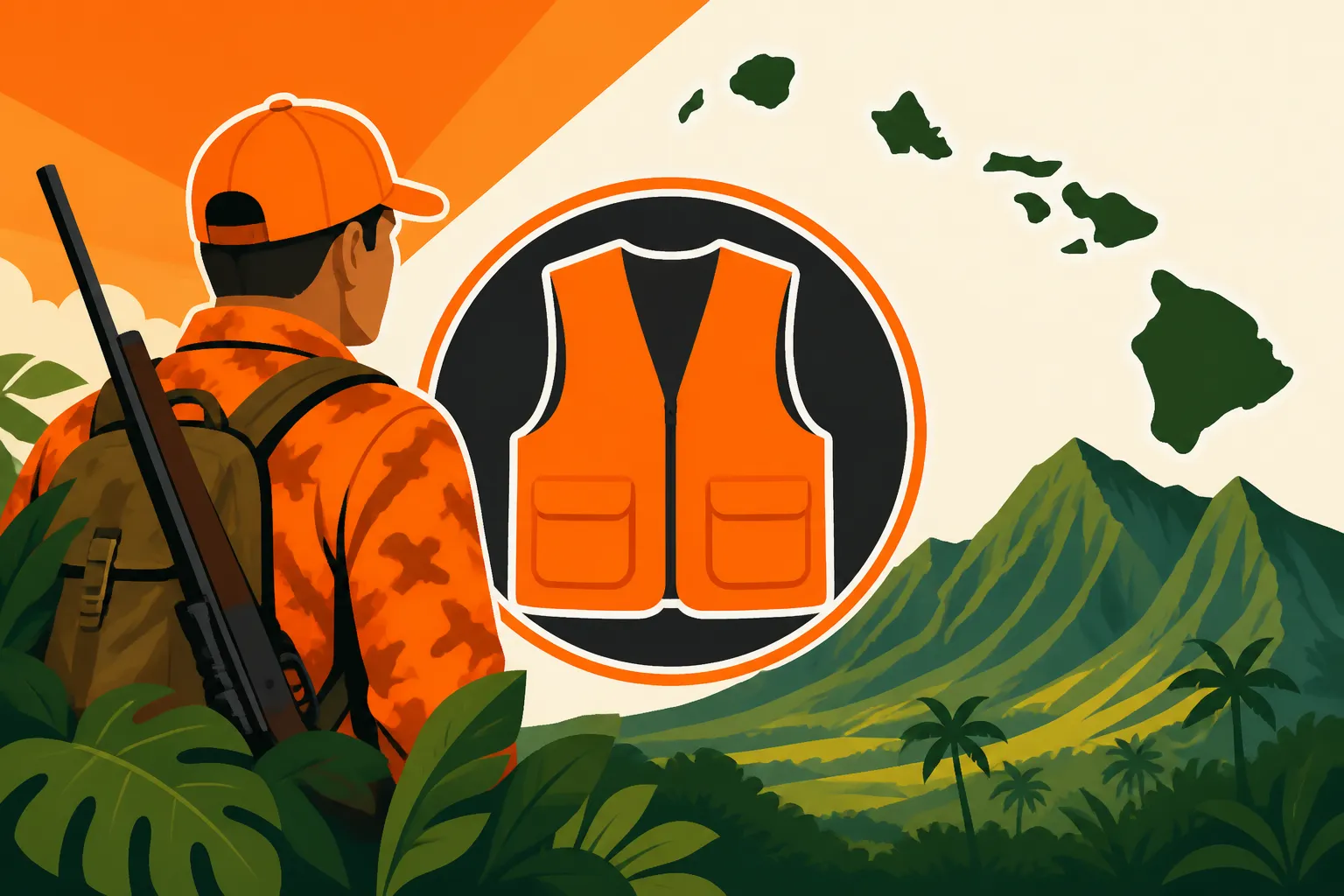
The core of the legal mandate is this: any person hunting game mammals with a firearm or bow on public hunting areas, except during established archery-only seasons, must wear an outer garment of solid blaze orange or fluorescent orange material. This isn't just a suggestion; it's a legal requirement designed to protect you and your fellow hunters. This means if you're out with your rifle for Axis Deer Hunting in Hawaii on Maui or hunting Hawaii's Feral Pigs with a shotgun on Oahu, you absolutely need to be sporting that orange. The "except during established archery-only seasons" clause is a significant detail many hunters overlook, and it's important to understand where it applies, and where it doesn't.
Specific Hawaii Blaze Orange Requirements
So, what exactly does "blaze orange" mean in Hawaii, and when does the rule kick in? It's not just any orange t-shirt you happen to have lying around. The regulations are fairly specific to ensure maximum visibility.
What "Blaze Orange" Truly Means
In Hawaii, when the regulations call for "blaze orange or fluorescent orange," they are talking about that very specific, bright, almost glowing shade that stands out vividly against natural backgrounds. It’s not safety yellow, international orange, or a muted rust color. It’s that unmistakable, eye-catching fluorescent orange.
More importantly, the rule often specifies a minimum amount of this material: at least 400 square inches of solid blaze orange or fluorescent orange material, including a hat. This means a small patch on your backpack isn't going to cut it. You typically need a vest, a jacket, or substantial panels on your outerwear that add up to this area, plus a hat in the same color. The material must be solid, meaning no camouflage patterns within the orange itself, although a camouflaged garment with solid blaze orange panels or a vest over it is perfectly acceptable.
Example Scenario:
Imagine you’re heading out to hunt Axis deer in Unit A on Mauna Kea. You’ve got your rifle, your pack, and you're ready to go. If it’s not an archery-only season, you'll need to make sure your outer layer, whether it's a vest over your camo jacket or a full blaze orange jacket, provides that 400 square inches, and you're wearing a blaze orange hat. It needs to be visible from all angles as you move through the mamane-naio forest or across open cinder.
When and Where It's Required by Species and Season
The "when and where" is where the most confusion often crops up. Let's break it down:
-
Game Mammals (Firearms & Bows): This is the core requirement. If you are hunting Axis deer, Mouflon sheep, feral goats, feral pigs, or black-tailed deer with a rifle, shotgun, muzzleloader, or a bow outside of an archery-only season, you and everyone in your hunting party (including non-hunting companions) on public lands must wear the specified blaze orange. This applies across all islands with these species, including Maui, Molokai, Lanai, Hawaii Island, and Kauai's deer units.
-
Archery-Only Seasons: This is the big exception. During designated archery-only seasons, archers themselves are typically not required to wear blaze orange. The rationale is often that archery hunting involves closer ranges and often requires more stealth, and there are fewer projectiles flying through the air. However, even in archery-only seasons, it is still highly recommended for safety, especially if you anticipate other hunters might be around or if you're with a group. Also, if you’re using a bow outside of a dedicated archery-only season (which is less common for big game but happens), the blaze orange rule would likely still apply. Always double-check the specific unit rules via the DOFAW website or the GoHunt portal, where you can purchase your Hawaii Hunting Licenses and What They Cost and check specific Hawaii Game Mammal Seasons.
-
Game Birds: Generally, for hunting Hawaii Game Bird Hunting, blaze orange is not legally mandated. Bird hunting often involves shotguns, and while safety is always paramount, the specific rules for bird hunting usually don't include a blaze orange requirement. However, wearing some visible color, especially if you're walking through tall grass or dense cover where visibility is poor, is always a smart personal safety choice.
-
Dog Hunting: If you are participating in Dog and Knife Pig Hunting in Hawaii or other dog hunts for game mammals, and you're using a firearm or bow (outside an archery-only season), then the blaze orange rule does apply to you and your party. The fast-paced nature of dog hunting, often in very thick cover, makes high visibility incredibly important.
To simplify, here’s a quick overview:
| Hunting Activity | Legal Blaze Orange Requirement | Recommendation |
|---|---|---|
| Game Mammals (Rifle, Shotgun, Muzzleloader) | YES (400 sq. inches + hat) | Always, no exceptions |
| Game Mammals (Bow – during Archery-Only Season) | NO (for the archer) | Still highly recommended for safety |
| Game Mammals (Bow – outside Archery-Only Season) | YES (400 sq. inches + hat) | Always |
| Game Birds (Shotgun) | NO | Consider a bright color for visibility |
| Dog Hunting (Game Mammals with Firearm/Bow) | YES (400 sq. inches + hat) | Crucial for safety in dense cover |
| Anyone accompanying a hunter (when orange is required) | YES | Essential for group safety |
Always refer to the most current DOFAW regulations for the specific unit and season you plan to hunt. These rules can change, and it’s your responsibility to be informed. You can usually find updated information on the official DOFAW website or through the GoHunt platform. When you're Checking In and Out of Hawaii Hunting Units, staff often provide reminders about safety regulations, including blaze orange.
Practical Tips for Wearing Blaze Orange in the Tropics
So, you know you need it. Now, how do you make sure your blaze orange gear actually works for you in Hawaii's unique climate and terrain, instead of becoming another burden?
Choosing the Right Gear for Hawaii's Climate
Hawaii is hot and humid, often surprisingly so, even at higher elevations. A heavy, insulated blaze orange hunting jacket that works great in a mainland deer stand will leave you drenched in sweat and miserable after five minutes of hiking through a guava thicket.
When selecting your blaze orange gear for Hawaii, prioritize:
- Breathability: Look for lightweight mesh vests. Brands like Gamehide or Allen Company offer minimalist mesh vests that provide the required coverage without adding significant heat. These can be easily layered over your existing hunting shirt.
- Durability: Hawaii's terrain is rough. Kiawe thorns will shred thin fabric, and lava rock can be abrasive. While mesh vests are breathable, ensure the binding or edges are reasonably sturdy. A blaze orange hat, ideally a baseball cap or boonie hat style, made from a quick-dry material, is also essential.
- Modularity: Sometimes it's better to have separate pieces. A good blaze orange vest and a separate hat are often more versatile than a single heavy jacket. You can easily remove the vest if you're in a non-hunting area or during a break (though remember to put it back on before hunting!).
- Backpack Panels: Some hunting backpacks come with integrated blaze orange rain covers or panels that can be deployed for increased visibility. This can be a great option for adding square inches without wearing another garment. However, ensure it meets the 400 sq. inch requirement for your outer garment, not just an accessory.
Insider Tip: When packing your What to Pack for a Hawaii Hunt, bring at least one blaze orange vest and a hat. Even if you're planning an archery-only hunt where it's not strictly required for you, having it as a backup or for a companion is a smart move.
Integrating Blaze Orange into Your Hunt Safely
Simply owning a blaze orange vest isn't enough; you need to wear it correctly and consciously integrate it into your hunting routine.
- Outermost Layer: Your blaze orange must be your outermost garment. Don't hide it under a camouflage jacket, even if you think you're being stealthy. Its purpose is visibility, so make sure it's fully exposed from all sides: front, back, and sides.
- Consistent Wear: Once you're in a public hunting area where blaze orange is required, wear it continuously. Don't take it off for a quick break or a short hike back to the truck. Accidents happen when vigilance slips.
- Communicate with Partners: If you're hunting with a buddy, constantly communicate your positions and always assume they might be behind that next bush. Your blaze orange is a visual cue to them, just as theirs is to you. This is especially vital when Hunting Hawaii's Volcanic Terrain or in areas with thick vegetation.
- Check Regulations on GoHunt: Before every hunt, even if it's a unit you know well, take a moment to check the current regulations on the GoHunt portal. Season dates, unit rules, and even safety requirements can sometimes be updated. It’s also where you'll register and check in and out of many units, like those on the Big Island or Maui, and is an excellent resource for confirming any specific Hawaii's Legal Weapons by Season information. You can access the official Hawaii hunting information and complete licensing and permit steps via the GoHunt Hawaii platform. It’s a fantastic tool to make sure you’re always up-to-date and compliant with the latest rules for Hawaii's Hunting Units and How They Work.
- Beyond the Legal Minimum: Even when blaze orange isn't legally required, like during archery-only seasons for archers, or if you're on private land where the rules might differ, seriously consider wearing some form of high-visibility clothing. It's a small concession for a significant boost in safety. You might not see another hunter, but what about a hiker, a farmer checking fences, or even a lost tourist? Being seen is always better than wishing you had been.
Remember, responsible hunting isn't just about ethical harvest; it's also about safety for yourself, your companions, and anyone else who might share the backcountry. Adhering to Hawaii's blaze orange requirements is a simple, effective way to uphold that commitment.
Disclaimer
Hunting is an inherently risky activity. The information provided in this guide is for general informational purposes only and does not constitute legal advice. Hunting regulations in Hawaii are subject to change by the Department of Land and Natural Resources (DLNR) Division of Forestry and Wildlife (DOFAW). It is the sole responsibility of each hunter to review and comply with all current federal, state, and local hunting laws and regulations before engaging in any hunting activities. Always prioritize safety and consult official sources for the most up-to-date information.