What to Pack for a Hawaii Hunt
Oh, the age-old dilemma of packing! You're staring at an empty suitcase, maybe a duffel bag, and your mind is racing. "Hawaii," you think, "that means board shorts and aloha shirts, right?" Then you remember you're going hunting, and suddenly that mental image shifts to dense jungle, lava fields, or chilly mountain slopes. It's a real head-scratcher trying to figure out what gear will tackle the truly unique and diverse environments Hawaii throws at hunters. This guide is here to cut through that confusion, helping you pack smart so you're ready for anything the islands might present on your next hunting adventure.
The Unique Challenges of Hawaii's Hunting Environments
Hawaii isn't your typical hunting destination, and anyone who's spent time here, especially in the backcountry, knows the weather can swing wildly from one extreme to another within a single hour, let alone a single island. It's not just the heat and humidity; it's the sheer variety of terrain and microclimates that makes packing a thoughtful exercise.
From Tropical Humidity to Alpine Chill
Imagine starting your morning hunt tracking pigs through a steamy, dripping rainforest on the windward side of the Big Island, the kind where the air hangs thick and moisture condenses on every leaf. You're sweating, your clothes are soaked, and it's barely 8 AM. By lunchtime, you might be driving up the slopes of Mauna Kea or Mauna Loa, heading for a mouflon sheep hunt, where the air thins, the sun beats down relentlessly, but the temperature can drop into the 40s or even lower, especially with the wind chill. Frost isn't unheard of at these elevations.
This drastic shift means your clothing strategy can't be one-dimensional. You can't just pack for "warm" or "cold." You need versatility. Quick-drying fabrics are paramount, because even if you start dry, you're likely to get wet – whether from sweat, rain, or pushing through dew-laden vegetation. Having layers that you can shed or add quickly without sacrificing pack space is crucial. Think about how a sudden rain shower can soak you to the bone, followed by scorching sun that can lead to rapid chilling if your clothes don't dry quickly. The goal is to avoid being either miserably hot and sweaty or dangerously cold and wet, and Hawaii will test both extremes.
Navigating Wet, Muddy, and Volcanic Terrain
The ground underfoot in Hawaii is just as varied and challenging as the weather above. One minute you could be walking on ancient, razor-sharp lava flows that will shred flimsy boots and inexperienced ankles in a heartbeat. The next, you might be slogging through knee-deep, slick mud in a low-elevation gulch, or crossing through dense, tangled fields of thorny kiawe brush in dry country.
Each type of terrain demands specific features from your footwear and outerwear. Those lava fields, for instance, are notoriously tough on soles, quickly wearing down soft rubber and easily puncturing lighter materials. You need robust, protective boots. In the wet rainforests or stream valleys, you're battling mud that sucks at your boots and makes every step an effort, demanding superior traction and waterproofing. And don't forget the dense thickets of guava, ginger, and other invasive plants that are constantly trying to snag your clothes, scratch your skin, and trip you up. Hunting Hawaii's Volcanic Terrain or Hunting Pigs in Hawaii's Rainforest Gulches are just a couple of examples of the varied landscapes you'll encounter. Your gear needs to be tough, resilient, and ready for a beating.
Essential Clothing and Footwear for Comfort and Safety
Now that we've talked about the "why," let's get into the "what." Packing smart for Hawaii hunting means prioritizing comfort, protection, and adaptability.
Layering Systems for Unpredictable Weather
A good layering system is your best friend in Hawaii. Forget heavy, bulky insulated jackets unless you're strictly hunting the highest elevations. Instead, think thin, breathable, and quick-drying.
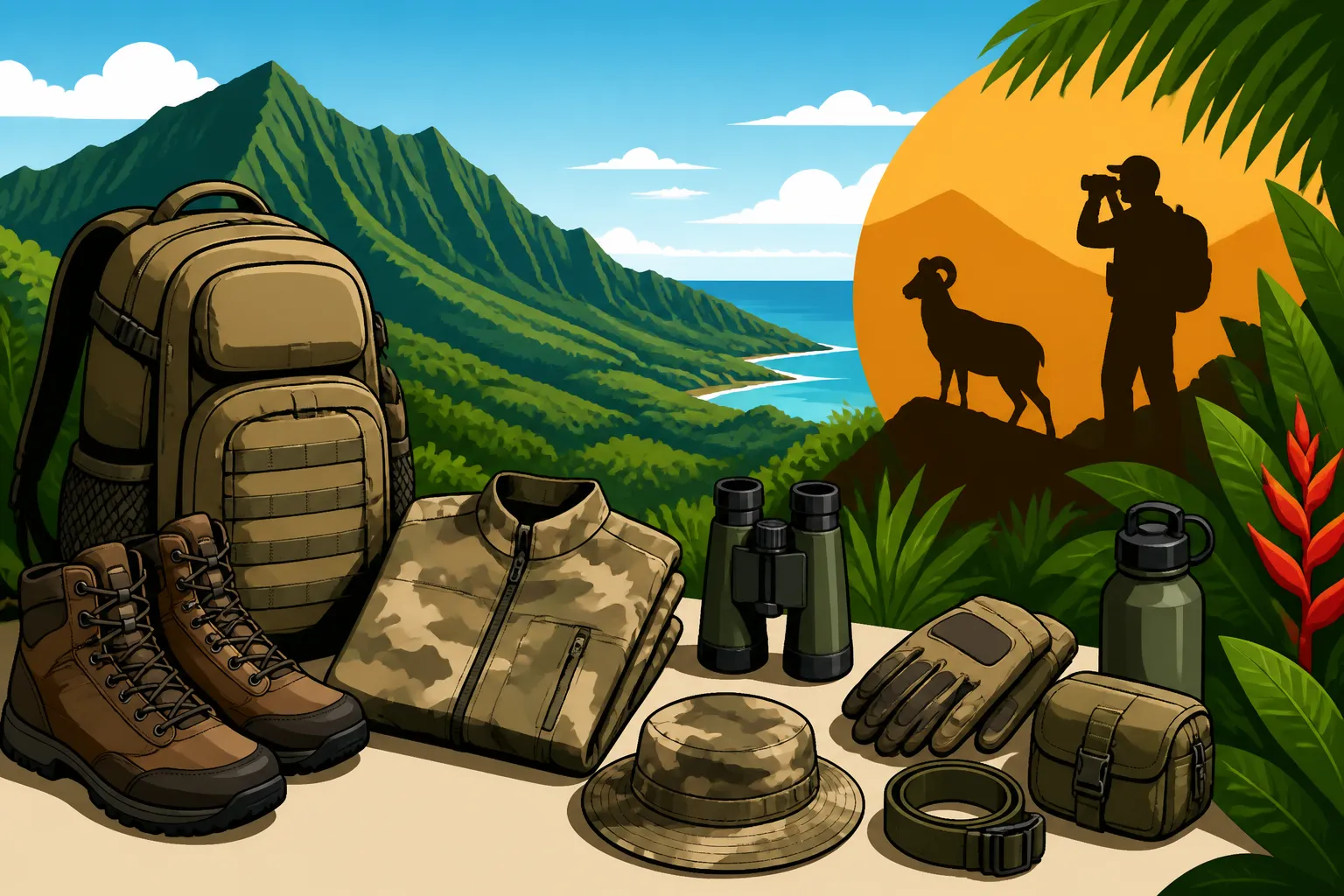
- Base Layer: This is your skin-contact layer, and it needs to wick moisture away effectively. Merino wool is a fantastic choice here, as it's naturally odor-resistant and still insulates when wet. Synthetic options are also great for their quick-drying properties and durability. I usually pack a couple of lightweight, short-sleeve base layers and one long-sleeve, just in case.
- Mid Layer: This provides insulation. A lightweight fleece or a puffy jacket with synthetic insulation is ideal. Again, quick-drying is key. You might wear this in the early morning chill or at higher elevations, then strip it off and stow it in your pack once the sun comes out and you're working hard. For example, when Hunting Mouflon in Mauna Kea's Thin Air, you'll definitely appreciate that extra warmth, but later in the day, you might be fine in just your base layer.
- Outer Layer: This is your protection from wind and rain. A good quality, lightweight, packable rain jacket and rain pants are non-negotiable. Look for something truly waterproof, not just water-resistant, and breathable. You might not wear them constantly, but when a sudden downpour hits (and it will hit, especially on the windward side), you'll be thankful. Camouflage patterns are popular, but functional, earth-toned greens and browns work perfectly well too.
Beyond these core layers, consider durable hunting pants made from a quick-drying synthetic blend that can stand up to brush. Jeans are generally a no-go; they get heavy when wet and take forever to dry. A sturdy belt is also essential for carrying gear.
The Right Boots for Rugged Hawaiian Ground
Your feet are your most important asset out here, and the wrong boots can ruin a hunt faster than anything. You need footwear that can handle the abuse and keep your feet protected and comfortable.
- Waterproof and Breathable: This seems contradictory, but it's vital. A good waterproof membrane (like Gore-Tex or similar) will keep stream crossings and muddy trails from soaking your socks. But it also needs to breathe, or your feet will be swimming in sweat, leading to blisters.
- Ankle Support: Hawaii's uneven, rocky, and often unseen terrain demands good ankle support. Look for boots that come up over your ankles. Twisted ankles are a common injury, especially when Walking Rough Lava Without Wrecking Your Boots or navigating slippery gulches.
- Aggressive Tread: Traction is paramount. Whether it's slick mud, loose volcanic scree, or wet roots, you need a sole that bites into the ground. VIBRAM soles are a popular choice for good reason.
- Durability: The sharp lava and abrasive vegetation will test your boots. Invest in a pair designed for rugged backcountry use, not just casual hiking. Many experienced Hawaii hunters opt for a stiff, durable boot.
Don't forget good quality wool or synthetic socks! Avoid cotton. Bring several pairs, as wet socks are a recipe for blisters and discomfort. Gaiters are also a brilliant addition, especially in thick brush or muddy conditions. They prevent debris, burrs, and mud from getting into your boots and offer an extra layer of protection for your lower legs from thorns and sharp grass.
Headwear, Handwear, and Eye Protection
These might seem like small details, but they make a huge difference in overall comfort and safety.
- Headwear: A wide-brimmed hat or a baseball cap is essential for sun protection, especially in open, exposed areas like the dry leeward slopes or high alpine country. Even on cloudy days, the UV index can be brutally high. For colder mornings or higher elevations, a lightweight beanie can provide crucial warmth.
- Handwear: Gloves might not be the first thing you think of for Hawaii, but a pair of lightweight, durable gloves can protect your hands from scrapes and cuts while pushing through brush or scrambling over rocks. If you're using a rope to descend into a gulch, they're invaluable. For colder conditions, a warmer glove might be needed.
- Eye Protection: Sunglasses are a must for reducing glare and protecting your eyes from UV rays. Additionally, clear or amber shooting glasses are a smart idea, not just for shooting, but for protecting your eyes from flying debris when pushing through thick vegetation.
Gear and Equipment Beyond Clothing
Once your body is covered, what else do you need to ensure a successful and safe hunt in Hawaii?
Optics and Navigation Tools
Having the right tools to see and know where you're going is critical, especially when hunting vast, open landscapes or dense, confusing forests.
- Binoculars: Quality binoculars are indispensable for spotting game, especially Glassing Lanai's Open Ridgelines for Axis deer or Glassing a Lava Flow for Mouflon Rams on the Big Island. Even in thick cover, they can help identify movement or small details. A 10×42 power is a great all-around choice.
- Rangefinder: For accurate shot placement, especially at longer distances common in Hawaii's open country or across deep gulches, a rangefinder is a valuable tool. Knowing your exact distance to an animal is crucial for ethical hunting.
- GPS Device/App and Maps: Relying solely on your phone's GPS can be risky in areas with no cell signal. A dedicated handheld GPS unit or a reliable hunting app like onX or Using the OuterSpatial App to Check In on your phone (download maps offline!) is crucial. Always carry a physical map and compass as a backup, and know how to use them. These islands, with their endless gulches and thick vegetation, can disorient you surprisingly quickly. No Cell Signal on a Hawaii Hunt is a real possibility in many remote units.
- Satellite Communicator: For truly remote hunts, or if you're venturing out alone, a satellite messenger (like a Garmin inReach or Zoleo) is a lifesaver. It allows you to send and receive messages, track your progress, and, most importantly, send an SOS signal in an emergency, even without cell service. This is not overkill; it's smart planning.
Hydration and Sustenance
The heat and humidity in Hawaii can quickly lead to dehydration, even on cooler days if you're exerting yourself. Proper hydration and fuel are non-negotiable.
- Water Bladder/Bottles: Carry plenty of water. Seriously, more than you think you need. A 2-3 liter hydration bladder in your pack is ideal, supplemented by a couple of water bottles. Electrolyte packets are also a great idea to replenish salts lost through sweat. Water and Heat Planning for a Hawaii Hunt is a critical step in preparing for any hunt here.
- High-Energy Snacks: Pack snacks that provide sustained energy and can withstand the heat without melting or spoiling. Think trail mix, energy bars, jerky, dried fruit, and nuts. Avoid chocolate bars unless you want a melty mess.
- Water Filtration: If you're planning a multi-day hunt or venturing into areas known to have natural water sources (though always filter!), a portable water filter or purification tablets can be a lifesaver, allowing you to lighten your load and resupply.
Field Care and Emergency Supplies
Things happen in the field, and being prepared for minor injuries or the immediate care of your harvest is part of responsible hunting.
- First-Aid Kit: A compact yet comprehensive first-aid kit is essential. Think beyond basic band-aids. You'll need items for cuts and scrapes (from lava, kiawe thorns, or just clumsy moments), blisters, insect bites, pain relief, and any personal medications. I always include medical tape, gauze, antiseptic wipes, and a small tube of antibiotic ointment.
- Game Bags: As soon as you harvest an animal, especially in Hawaii's heat, quick and proper field care is critical. Breathable game bags are a must for protecting the meat from flies, dirt, and helping it cool down faster. Field Dressing Axis Deer in Hawaii Heat means getting the hide off and the meat cooling as quickly as possible.
- Headlamp: Essential for early morning hikes, late evening packing out, or unexpected overnight stays. Make sure it has fresh batteries, and perhaps carry spares.
- Knife/Multi-Tool: A sharp, sturdy hunting knife is obvious for field dressing. A multi-tool can also be incredibly handy for various repairs and tasks.
- Fire Starter: Waterproof matches, a lighter, or a ferro rod – always have a way to start a fire for warmth or signaling if needed.
- Emergency Whistle: Can be used to signal for help if you're separated from your group or in distress.
Here's a quick look at some essential first-aid items:
| Item | Purpose |
|---|---|
| Band-Aids (various) | Minor cuts, scrapes |
| Gauze Pads/Roll | Larger wounds, compression |
| Medical Tape | Securing dressings |
| Antiseptic Wipes | Cleaning wounds |
| Antibiotic Ointment | Prevent infection |
| Pain Relievers (e.g., ibuprofen) | Headaches, muscle aches |
| Blister Treatment | Moleskin, blister pads |
| Tweezers | Removing splinters, ticks |
| Insect Repellent | Mosquitoes, no-see-ums |
| Anti-itch Cream | Insect bites, rashes |
| Personal Medications | Any required prescriptions, epi-pen, etc. |
| Small Trauma Shears | Cutting clothing, tape, etc. |
| Rubber Gloves | Field dressing, hygiene |
Specific Considerations for Different Hunt Types
The beauty of Hawaii hunting is its diversity. From chasing pigs with dogs to spot-and-stalk deer, your packing list might need slight tweaks depending on your target and method.
Dog Hunting for Pigs
If you're joining a traditional Hawaiian pig hunt with dogs, your gear needs to cater to fast-paced, often chaotic action in thick cover.
- Protective Clothing: Long sleeves and durable pants are even more critical here to protect against thorns, sharp cane grass, and the general rough-and-tumble nature of the pursuit. You'll be moving quickly through dense vegetation.
- Dog Gear: If you're bringing your own dogs, specialized gear is paramount. This includes durable, cut-resistant vests for your catch dogs. Fitting a Cut Vest on a Catch Dog is not just about protection; it's about proper fit so the dog can move freely. GPS collars for your dogs are practically mandatory, especially when they're baying a pig deep in a gulch where visibility is zero. GPS Collars for Pig Dogs in Thick Cover help you locate them quickly and efficiently.
- Weapon of Choice: Many dog hunters opt for a knife or spear once the pig is bayed. If this is your plan, ensure your knife is sharp, sturdy, and safely carried. Using a Knife or Spear on a Bayed Pig is a skilled technique that requires proper equipment and handling.
- Hydration for Dogs: Don't forget water for your canine companions, especially in the heat.
Archery and Muzzleloader Hunts
These specialized weapon types require their own considerations for packing.
- Bowhunting Accessories: If you're Bowhunting Hawaii's Public Units, you'll need your bow in a protective case, a quiver, plenty of sharp broadheads, field points for practice, a release aid, and any specific tools for minor bow adjustments. Rain protection for your bow and arrows is important – a wet string or fletching can drastically affect accuracy. Choosing an Arrow Setup for Axis Deer will dictate your broadhead choice, and you'll want to ensure you have the right tools for it.
- Muzzleloader Specific Items: Muzzleloader hunting can be a bit more finicky. You'll need your rifle, powder, primers (or caps), projectiles, patches, bullet starter, and cleaning supplies. Keeping your powder dry is absolutely crucial in Hawaii's often-wet conditions. Keeping Powder Dry on a Wet Forest Hunt often involves waterproof containers and meticulous attention to detail. Consider carrying a small, dry bag specifically for your powder and primers.
Backpacking into Remote Units
Some of Hawaii's most rewarding hunts are in its most remote units, requiring multi-day excursions into areas that might lack easy access.
- Lightweight Camping Gear: If you're planning to stay overnight, ultralight tent, sleeping bag (appropriate for the elevation and expected temps), and sleeping pad are vital. Every ounce counts when you're packing it in on your back.
- Cooking System: A compact stove, fuel, and dehydrated meals for sustained energy.
- Water Filtration/Purification: Even more critical for multi-day trips to avoid carrying all your water from the start.
- Pack Capacity: A larger capacity backpack (60+ liters) will be necessary to comfortably carry all your gear, food, water, and hopefully, meat on the way out. You'll need a pack that's comfortable for long hauls over rugged terrain. Hunting Hawaii's Remote Units and How to Reach Them often means carrying everything in on your back.
Travel Logistics and Packing Smart
Getting your gear to and around the islands requires careful planning, especially if you're flying in from the mainland.
Packing Your Rifle or Bow for Air Travel
This is where many mainland hunters get tripped up. Regulations are strict, and you need to be informed.
- Hard-Sided, Lockable Case: Your firearm must be in a locked, hard-sided case. The locks must be TSA-approved, and only you should have the key or combination. Flying Into Hawaii With a Rifle Case involves declaring it at the airline counter and understanding specific airline policies.
- Ammunition: Ammunition must be in its original packaging or a sturdy container designed for ammo. It cannot be in magazines or clips that are loaded into the firearm. It also needs to be in a separate, secure container within your checked luggage, usually not with the firearm itself. Always check current TSA and airline rules carefully, as they can change. Ammunition Rules Worth Knowing Before You Fly can save you a lot of headaches at the airport.
- Renting a Rifle: If the thought of flying with your own firearm is too much hassle, consider Renting a Rifle From a Hawaii Guide if you're on a guided hunt. This simplifies your travel significantly, but you'll still need to ensure you have all your necessary licenses and permits.
- Bows: Bows also need to be in a hard case for checked luggage. They are generally less complicated than firearms, but still subject to airline size and weight restrictions.
Inter-Island Travel and Gear Transfer
Once you land on Oahu (or whichever island you fly into first), if your hunt is on another island like Maui, Lanai, Molokai, or the Big Island, you'll face another layer of logistics.
- Island-Hopping Flights: Inter-island flights have their own baggage rules, and sometimes even stricter weight limits on smaller aircraft. If you're bringing a firearm, you'll need to re-declare it with each inter-island flight. This can add time and stress to your travel. Inter-Island Travel on a Hawaii Hunt means more check-ins and check-outs.
- Consolidate Bags: Try to consolidate your gear as much as possible to minimize the number of bags you're checking. This saves on baggage fees and reduces the chances of something getting lost.
- Local Transportation: Think about how you'll get your gear from the airport to your lodging and then to the hunting unit. Will you have a rental car large enough for all your bags and a harvested animal? Is your guide picking you up?
What to Leave at Home
Just as important as knowing what to bring is knowing what not to bring.
- Overly Bulky Clothing: Unless you know for certain you'll be at extreme high elevations, leave the heavy parkas and insulated snow pants at home. Layers are more versatile.
- Cotton Clothing: I've said it before, but it bears repeating: cotton is rotten. It absorbs moisture, dries slowly, and will make you cold and miserable.
- Unreliable Gear: If it's old, worn out, or you're not sure it will stand up to abuse, leave it home. Hawaii is not the place to test questionable gear. You're better off borrowing or investing in something durable.
- Unnecessary Electronics: While a phone and GPS are good, leave the gaming consoles, multiple tablets, and excessive camera equipment at home unless it's specifically for your hunt. Focus on the experience.
Packing for a Hawaii hunt is about being prepared for a unique and challenging adventure. With thoughtful planning and the right gear, you'll be able to focus on the hunt itself, rather than battling the elements or regretting your choices. Aloha and happy hunting!
Disclaimer
This article is for general informational purposes only and does not constitute professional advice. Laws, prices and regulations vary by location and change over time. Consult a qualified professional for guidance on your specific situation.