Keeping Powder Dry on a Wet Forest Hunt
Hawaii's lush, vibrant landscapes are undeniably beautiful, but for hunters, especially those with muzzleloaders, that beauty often comes hand-in-hand with persistent moisture. There’s nothing quite as disheartening as drawing a bead on a prime feral pig or axis deer, only to hear a dull click instead of a thunderous boom because your powder charge has gone damp. This guide is dedicated to equipping you with the knowledge and techniques to combat the relentless humidity and sudden downpours, ensuring your muzzleloader fires true when it counts most in Hawaii's wet forest environments.
Understanding Hawaii's Unique Wet Forest Challenges
Hunting in Hawaii isn't like hunting in many other places. Our islands present a unique blend of high humidity, diverse microclimates, and often unpredictable weather patterns that can turn a sunny morning into a torrential deluge in minutes. These factors conspire against the delicate nature of black powder and propellants, making it a constant battle to keep your muzzleloader primed and ready.
The Ever-Present Humidity Factor
Even when it's not actively raining, Hawaii's air is often saturated with moisture. This isn't just a minor annoyance; it's a significant threat to your muzzleloader's performance. Black powder, in particular, is hygroscopic, meaning it readily absorbs moisture from the air. Imagine spending hours stalking through a thick Hunting a Guava Thicket for Pigs where the air is heavy and still, trapping moisture. Your powder charge, even if seemingly protected, is slowly drawing in that humidity.
This subtle absorption can lead to a host of problems. A slightly damp charge might not ignite fully, resulting in a weak shot with reduced velocity and accuracy. Worse, it could lead to a hang fire – a delayed ignition that is incredibly dangerous – or a complete misfire, ruining your shot opportunity and potentially putting you in a difficult spot if an animal is wounded. The relative humidity on a typical Hawaii windward slope can hover between 70-90% for days, a constant invisible adversary working to degrade your powder.
Sudden Downpours and Persistent Drizzle
Anyone who's spent time hunting Hawaii knows how quickly the weather can shift. One minute, you're enjoying the "liquid sunshine," and the next, you're caught in a deluge that feels like a waterfall. These sudden, heavy downpours are especially common in the higher elevations and on the windward sides of the islands. While persistent, lighter drizzle might seem less threatening, it's often more insidious, slowly soaking your gear and finding its way into the smallest crevices of your muzzleloader.
These weather events aren't just about getting wet; they're about the stress they put on your gear and your ability to perform. A brief, heavy rain can overwhelm even well-prepared gear, while hours of light rain can saturate clothing and packs, making everything heavier and colder, and increasing the chances of moisture intrusion into your powder. It's a constant reminder that for a truly successful hunt, you need to be prepared for the worst kind of weather Hawaii can throw at you, especially when relying on a muzzleloader where a dry charge is non-negotiable. For a deeper dive into how to cope with these conditions, check out our guide on Rain Gear for a Windward Hawaii Hunt.
Essential Gear for Muzzleloader Protection
Successfully hunting with a muzzleloader in Hawaii’s wet forests demands a proactive approach to gear selection. It's not enough to simply hope for good weather; you need to equip yourself to definitively keep your powder dry and your rifle operational, come rain or oppressive humidity. This means investing in specialized protection for your firearm and ensuring your personal gear provides adequate waterproofing.
Muzzleloader-Specific Protection
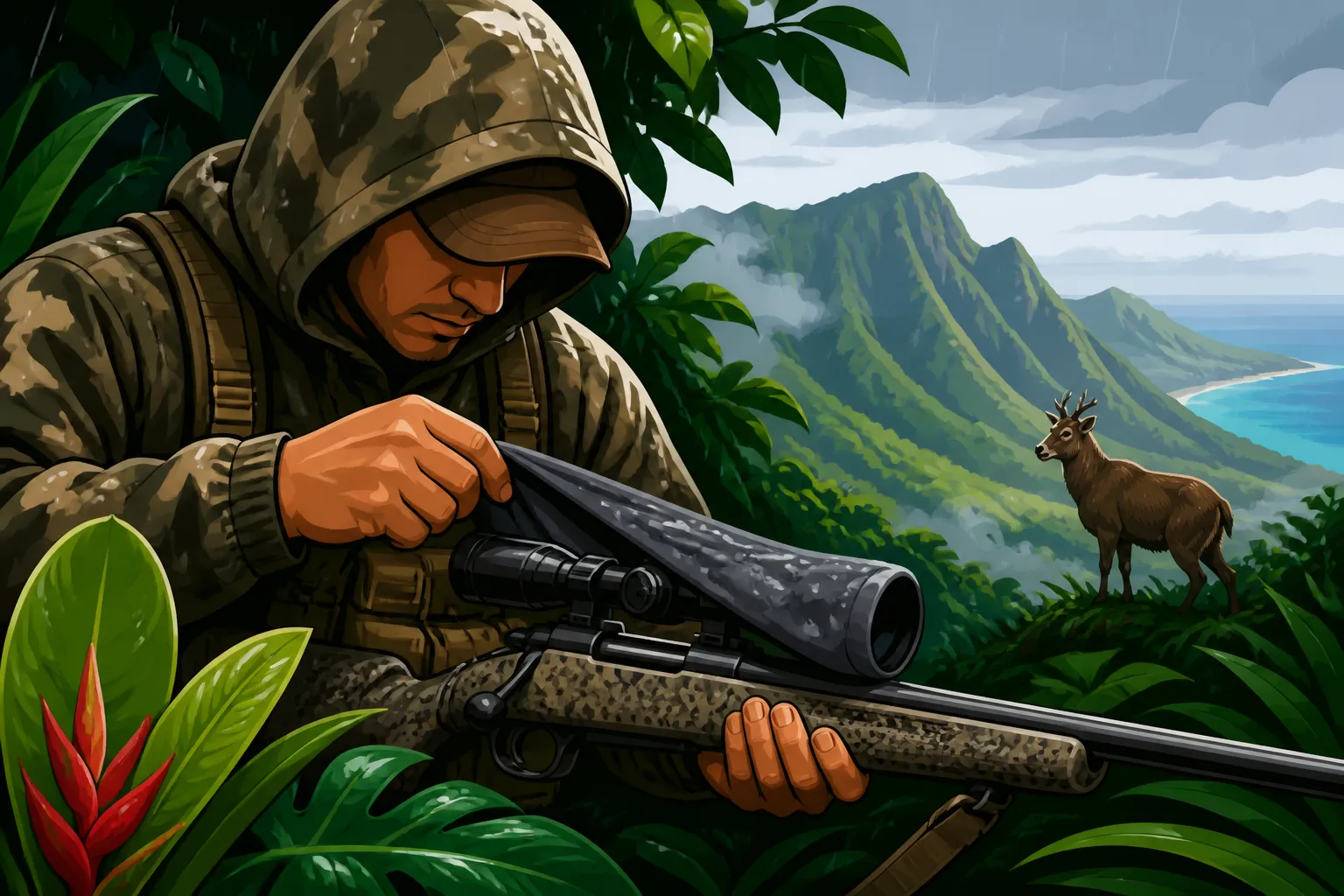
The most critical step in preventing a misfire is to directly protect the most vulnerable parts of your muzzleloader. The muzzle, where water can enter the barrel, and the breech, where the primer and powder meet, are the primary points of concern. For the muzzle, a simple, yet highly effective, trick is to use electrical tape or a balloon. A piece of electrical tape wrapped around the muzzle, easily punctured by the bullet upon firing, provides an excellent seal against water intrusion. Alternatively, a finger cot or a small balloon stretched over the muzzle works just as well. Some hunters even prefer specialized rubber muzzle covers designed for this purpose.
The breech area requires equal attention. For traditional percussion caps, a rubber finger cot slipped over the cap can offer a surprising amount of protection. For modern inline muzzleloaders, ensuring your primer is sealed is paramount. Many hunters use a thin layer of silicone grease around the primer pocket and breech plug threads to create a watertight seal. Consider carrying a spare breech plug or two, pre-greased and ready to go, especially if your hunt involves prolonged exposure to moisture. Remember, every little bit of protection helps, because once water gets in, it’s a difficult battle to fight in the field.
Overall Weatherproofing for You and Your Pack
While direct muzzleloader protection is key, your overall weatherproofing strategy for yourself and your hunting pack plays a massive supporting role. Think of it as concentric circles of defense. Your rifle is only as dry as the environment you’re keeping it in. Start with your hunting pack. A good quality, waterproof pack cover is non-negotiable. Even better, line the inside of your pack with a large heavy-duty contractor bag or individual dry bags for crucial items like spare powder, primers, maps, and electronic devices. These dry bags are fantastic for isolating critical gear from any moisture that might penetrate your pack.
When it comes to your own clothing, a truly waterproof and breathable rain suit is an investment that pays dividends. Look for brands that utilize Gore-Tex or similar advanced membrane technology to keep you dry without turning into a sauna. Remember, the less you're worrying about being soaked and miserable, the more you can focus on the hunt. Think about waterproof gloves, a wide-brimmed hat to keep water off your face and optics, and, of course, proper waterproof boots capable of handling the mud, streams, and rough lava fields that define Hawaii's hunting grounds. Ensuring your core gear is dry frees you up to concentrate on the crucial task of keeping your muzzleloader ready.
Field Tactics to Keep Your Powder Dry
Having the right gear is a fantastic start, but it's only half the battle. Knowing how to use that gear effectively and adapting your hunting techniques to the challenging wet conditions of Hawaii is what truly makes the difference. From how you load your rifle to how you move through the terrain, every decision impacts your muzzleloader's reliability.
Loading and Handling in Wet Conditions
Loading a muzzleloader is already a somewhat involved process, and adding rain, wind, and muddy hands to the mix only complicates it further. The key here is to minimize exposure time for your powder and primers. If possible, find natural shelter under a large tree or an overhang before attempting to load. Keep your pre-measured powder charges in sealed, waterproof tubes or vials. Many hunters swear by products like Speed Loaders, which allow you to carry pre-assembled bullet and powder charges, reducing the number of steps required in the field.
When you're ready to load, retrieve your powder charge last, exposing it to the air for the shortest possible duration. Carefully pour it down the barrel, then quickly follow with your bullet and ramrod. Once loaded, immediately replace your muzzle cover or tape. For inline muzzleloaders, ensure your primer is seated firmly and consider applying a fresh dab of silicone grease around the primer. Practice this process at home, even in dry conditions, so that muscle memory takes over when you’re cold, wet, and under pressure in the field. Even if you're using a modern inline muzzleloader, the principle of Muzzleloading in Hawaii's Humidity is paramount, and these steps are crucial.
Movement and Shelter Strategies
How you move through the forest can significantly impact your muzzleloader’s dryness. When traversing dense vegetation, avoid pushing the muzzle directly into wet leaves and branches. Carry your rifle with the muzzle slightly elevated or pointed downwards, depending on the terrain, to prevent water from running into the barrel. If you're using a sling, position the rifle to minimize direct rainfall on the action. Many hunters prefer a vertical carry, muzzle down, to naturally shed water.
Always be on the lookout for natural shelter. Large koa or ohia trees offer surprisingly good cover during sudden downpours. Rock overhangs or dense thickets can also provide temporary refuge to re-evaluate your situation, dry off essential gear, and check your rifle. When taking a break, lean your rifle against a tree or lay it on a waterproof pack cover, ensuring the muzzle isn't pointing towards the sky to collect rain. Even during a short pause, the cumulative effect of constant drizzle can compromise your setup, so mindful positioning is essential. This careful approach to movement and finding natural cover is a core principle when Hunting Hawaii's Volcanic Terrain or dense forest.
Emergency Drying Methods
Despite all your best efforts, sometimes moisture simply wins. Perhaps you slipped crossing a stream, or an unexpected gust of wind drove rain under your rain gear. If your muzzleloader gets wet, especially the powder or primer area, immediate action is necessary. First, carefully remove the primer (if possible and safe to do so) and the muzzle cover. If you suspect water has entered the barrel, do not attempt to fire it. You'll need to remove the powder charge safely.
A CO2 discharge kit is an invaluable tool for safely clearing a loaded muzzleloader in the field without firing. Once the charge is out, use a cleaning patch to swab out the barrel thoroughly. If you have a small, dry cloth or paper towel, you can try to carefully dry the breech area. Some hunters carry a small amount of desiccant packets or even a few cotton balls to absorb moisture. The goal is to get as much moisture out as quickly as possible. If you have spare pre-measured powder charges and primers, you might be able to reload. If not, it might be time to pack it in for the day, as a damp charge is an unreliable and potentially dangerous one.
After-Hunt Care and Storage in Hawaii
The hunt might be over, but your battle against moisture and corrosion in Hawaii is far from finished. The warm, humid environment, coupled with any residual moisture from your hunt, creates a perfect breeding ground for rust and degradation. Proper post-hunt care and storage are crucial to ensure your muzzleloader remains in top condition and ready for your next adventure.
Immediate Post-Hunt Actions
The moment you finish your hunt, especially if you’ve been in wet conditions, your muzzleloader demands immediate attention. Don’t wait until the next day. As soon as you return to camp or your vehicle, safely unload your rifle if it's still charged. Then, remove the breech plug and thoroughly clean the barrel. Black powder and its substitutes are notoriously corrosive, and leaving residue in a damp environment for even a few hours can lead to pitting and damage. Use a good quality muzzleloader solvent, followed by plenty of clean patches until they come out spotless.
Once the barrel is clean, dry it thoroughly with dry patches, then apply a thin layer of protective oil, like a high-quality gun oil. Pay close attention to the breech plug, nipple, and all external metal surfaces. Wipe down the stock and any synthetic components. Even if the rifle wasn't actively soaked, the high humidity can cause condensation inside the barrel and on metal parts. Think of it as a thorough "field care" process, similar to how you’d handle game meat in the heat and humidity, ensuring Field Care in Hawaii's Heat and Humidity extends to your gear as well.
Long-Term Storage in a Humid Climate
Storing a muzzleloader in Hawaii’s humid climate requires a bit more thought than in drier regions. Simply putting it in a gun safe or case without additional precautions is an invitation for rust. Once your muzzleloader is meticulously cleaned and oiled, consider adding desiccant packs to its storage environment. These moisture-absorbing packets (often silica gel) can be placed inside the barrel, the action, and within your gun case or safe. Regular replacement or recharging (by baking in an oven) of these desiccants is vital, as they will quickly become saturated in our humid air.
Another excellent option for long-term storage is a dehumidifying rod or an electronic dehumidifier if storing in a larger gun safe. These devices gently warm the air, preventing condensation and lowering the ambient humidity. Additionally, ensure good air circulation around your stored firearm, avoiding tightly sealed spaces that can trap moisture. Many local hunters in Hawaii utilize a combination of these methods to keep their firearms pristine. For hunters who purchase their licenses and permits online, the GoHunt Hawaii portal, accessed via the official GoHunt site, often has resources or links to local vendors who understand these unique challenges. Staying connected through platforms like GoHunt can also help you keep up with any new best practices or products for gun care in humid conditions.
| Muzzleloader Protection Method | Application Area | Benefits | Considerations |
|---|---|---|---|
| Electrical Tape / Finger Cot | Muzzle | Easy, cheap, effective seal against water. | Must be removed or shot through. |
| Silicone Grease | Breech Plug, Primer | Watertight seal, prevents corrosion. | Needs reapplication, can be messy. |
| Waterproof Tubes/Vials | Powder Charges | Keeps powder dry until loading. | Adds bulk, requires pre-measurement. |
| CO2 Discharge Kit | Barrel | Safely unloads wet or compromised charges. | Requires practice, extra gear. |
| Desiccant Packs | Storage Case/Safe | Absorbs ambient moisture. | Needs regular recharging/replacement. |
| Dehumidifier Rod | Gun Safe | Maintains low humidity, prevents condensation. | Requires power, for safe storage only. |
Disclaimer
The information provided in this guide is for general informational purposes only and does not constitute professional advice. Hunting can be a dangerous activity, and proper safety precautions, training, and adherence to all local, state, and federal laws and regulations are paramount. Always consult the official Hawaii Department of Land and Natural Resources (DOFAW) regulations before hunting. The author and publisher are not responsible for any accidents, injuries, or legal issues that may arise from the use of this information. Always prioritize safety and exercise good judgment in the field.