Hunting Pigs Without Dogs in Hawaii
Hunting feral pigs in Hawaii without the aid of dogs often feels like searching for a ghost in a jungle that actively wants to swallow you whole. The dense, unforgiving terrain and the pigs' incredible stealth can make it a deeply frustrating experience for many hunters. This guide aims to pull back the curtain on successful still-hunting strategies, offering practical, boots-on-the-ground advice for finding and harvesting Hawaii's elusive feral pigs when you're relying solely on your own two feet and keen senses.
Understanding the Feral Pig in Hawaii's Diverse Terrain
Before you even step foot in a unit, it's vital to grasp the nature of the beast you're after and the unique environments it calls home across the Hawaiian Islands. Unlike some mainland hunts, pigs here are often creatures of thick cover, not open fields. This profoundly influences how you approach a hunt without dogs.
Pig Behavior and Movement Patterns
Feral pigs in Hawaii are incredibly adaptable, but they generally follow predictable patterns related to food, water, and cover. They are largely nocturnal or crepuscular, meaning they're most active during dawn and dusk, especially in areas with high human pressure or warmer temperatures. During the day, they'll often bed down in the thickest, nastiest tangles of vegetation they can find—think dense guava, hau, or uluhe fern thickets that are nearly impenetrable for humans.
Their movement is dictated by their stomachs. You'll find them traveling between bedding areas, feeding grounds, and water sources. These travel routes, often called "pig trails," can be subtle or well-worn, depending on the number of animals using them and the density of the undergrowth. Pigs are also opportunists, constantly rooting for tubers, grubs, and fallen fruits. This rooting behavior is a significant sign of their presence and foraging habits. They'll also wallow in mud to cool off and rid themselves of parasites, creating tell-tale depressions filled with muddy water. Understanding these basic patterns is your first step to being a successful still-hunter. Without the nose and tenacity of a good dog team, you become the detective, piecing together these clues.
Prime Habitats for Still-Hunting Success
Hawaii's islands present a stunning array of microclimates, and pigs thrive in most of them. On the wetter, windward sides, you'll find them deep in the rainforest gulches, where continuous moisture ensures lush vegetation and abundant rooting opportunities. Areas like the Hilo Forest Reserve on Hawaii Island or parts of Maui's windward slopes are classic pig country. These areas offer incredible cover but also present challenges with constantly shifting winds and limited visibility. Consider how to navigate through these dense sections while still-hunting for pigs in Hawaii's wet forest.
Conversely, on the drier, leeward sides, pigs will concentrate around reliable water sources such as springs, seeps, or stock ponds, especially during extended dry periods. Places like the upper reaches of the Puu Waawaa Wildlife Sanctuary on Hawaii Island or specific gulches on Molokai can hold pigs, though they might travel further between food and water. Here, hunting a water source in dry Hawaii country becomes a viable strategy. Look for areas where dense kiawe or other thorny brush provides cover near these vital resources. The key is to identify these high-percentage areas on a map, often using topographic features like gulches, ridges, and saddles as natural travel corridors.
Mastering the Art of Scouting Without Dogs
Scouting is paramount when hunting pigs without dogs. You are essentially doing the dog's job of locating fresh sign and predicting where the pigs will be. This requires patience, a keen eye, and a willingness to cover ground.
Reading Pig Sign Like a Book
Your eyes are your most valuable tool. Look for fresh tracks, distinctive rooting patterns, and fresh droppings. Pig tracks are usually broad and round, with dewclaws often visible in softer ground. The larger the track, the bigger the pig. Rooting is perhaps the most obvious sign; pigs will turn over soil and leaf litter in search of food. Fresh rooting, where the soil is still moist and dark, tells you pigs have been there recently. Older, dry rooting still indicates use but doesn't guarantee current presence.
Look for rubs on trees, often low to the ground, where pigs scratch themselves. Wallows, as mentioned, are muddy depressions. The freshness of the mud, or if there's standing water and recent tracks around it, is key. When reading pig sign along a muddy trail, pay attention to the direction of travel and how recent the disturbance appears. Also, keep an eye out for flattened areas in dense cover, indicating bedding sites. The more fresh sign you find, the higher your chances of success.
Using Technology and Terrain to Your Advantage
Modern technology, especially GPS mapping apps like onX Hunt, has revolutionized scouting. While GoHunt Hawaii is your go-to for license and permit information, these mapping tools help you visualize the terrain, identify potential bedding and feeding areas, and mark fresh sign. You can pre-scout potential routes, identify natural funnels like saddles between ridges or narrow sections of gulches, and locate water sources that might concentrate animals.
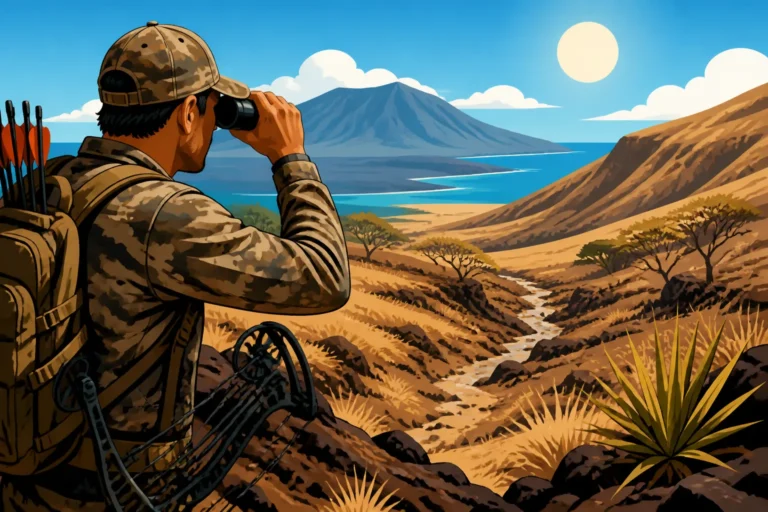
When you're out in the field, use the topography to your advantage. High vantage points allow you to glass large areas at first light or last light, looking for movement. Focus on edges – where dense cover meets more open feeding areas, or along the banks of a stream. Always hunt into the wind, or at least across it, to keep your scent from spooking animals. Hawaii's trade wind patterns are usually consistent, but thermals in gulches can be tricky, often drawing scent uphill in the morning and downhill in the evening.
Still-Hunting Techniques for Hawaii's Feral Pigs
Still-hunting is a slow, deliberate method of hunting where the hunter moves stealthily through the habitat, pausing frequently to observe, listen, and scan for game. This is where patience truly pays off.
Slow and Steady Wins the Race
The single most important rule of still-hunting for pigs in Hawaii is to move slowly. And when you think you're moving slowly enough, slow down even more. You should be taking one or two steps, then pausing for several minutes, scanning every shadow, listening for every rustle. This isn't about covering miles; it's about covering yards effectively. Focus your gaze not just forward, but left, right, up, and down, looking for the tell-tale shape or color of a pig. Their dark coats often blend seamlessly into the shadows of the forest floor. You're looking for an ear flicker, a twitch of a tail, or the slight movement of a patch of "ground" that isn't ground at all.
When you pause, listen intently. Pigs are surprisingly noisy feeders when they are rooting, but they can also be incredibly quiet. You might hear the faint crunch of leaves, a snort, or even the subtle sound of them moving through brush. Pay attention to the local birds and other animals; if they suddenly go silent or make alarm calls, it could indicate a pig is nearby. Moving quietly means carefully placing each foot, avoiding snapping twigs, and pushing aside dense vegetation rather than forcing through it.
Ambushes and Stalking in Dense Cover
While still-hunting involves constant movement, it often culminates in an ambush or a stalk. If you locate fresh sign leading into a thicket, rather than busting directly into it, consider setting up an ambush point downwind, overlooking the most likely exit routes. Pigs will often use established trails to enter and exit their bedding areas, especially at dawn and dusk. This is a great time for hunting pigs near a taro patch or other food source.
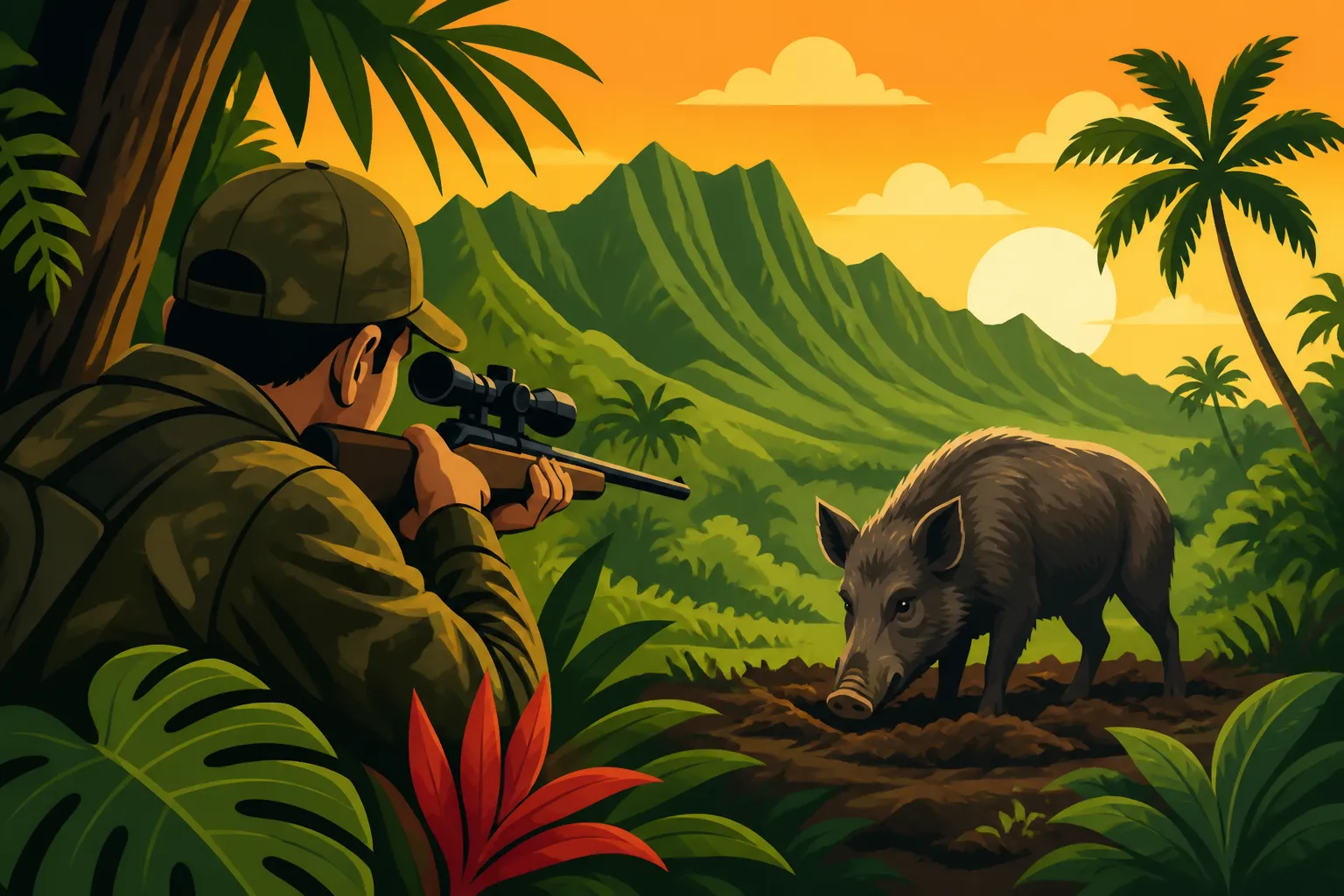
If you spot a pig from a distance, or hear one feeding, the stalk begins. This is where your slow movement becomes critical. Use every bit of available cover – fallen logs, large rocks, dense clumps of vegetation – to break up your silhouette. Move when the pig's head is down, or when it's distracted, just like you would when bowhunting Hawaii's public units. Pay extreme attention to the wind direction. A shift in the breeze, even a slight thermal eddy, can carry your scent directly to a pig, sending it crashing away before you even know it's there. Remember, these pigs have a phenomenal sense of smell.
Specific Considerations for Hawaii's Environments
Hunting pigs on Hawaii's wet windward side demands different tactics than the dry leeward. In the dense, often muddy conditions of the rainforest, tracks will be clearer, but visibility will be much more limited. Rain can also help mask your sound, but it can make footing treacherous. Conversely, on the dry side, the ground might be harder, making tracks less obvious, but the vegetation can be less dense in some areas, offering longer sightlines. However, the crunch of dry leaves and brush can be amplified, making quiet movement even more challenging.
When navigating a Hawaii gulch system, remember that pigs frequently use these natural funnels for travel and often bed on the steep sides for security. Hunting pigs in Hawaii's rainforest gulches often means navigating extremely steep and slippery terrain, where one misstep can send you tumbling. Be prepared for arduous climbs and descents, and always be mindful of where you're putting your feet. These animals are incredibly tough, and success without dogs is a testament to a hunter's skill and perseverance.
| Feature | Dog Hunting (Traditional) | Still-Hunting (Without Dogs) |
|---|---|---|
| Primary Tool | Scent (dogs) | Sight, Sound, Scent (human) |
| Pace | Fast-paced, dynamic | Slow, deliberate, methodical |
| Terrain Focus | Deep cover, often follows dogs | Travel corridors, feeding areas, bedding edges |
| Noise Level | High (dogs baying) | Minimal, stealthy |
| Physical Demand | High (running with dogs) | High (stealthy movement, long periods of focus) |
| Visibility | Often limited, dogs locate pig | Critical for spotting game |
| Success Factor | Dog ability, handler skill | Hunter's patience, observation skills, knowledge of pig behavior |
| Legal Weapons | Often knife/spear (once bayed), firearms allowed in some units | Rifle, bow, muzzleloader, shotgun (unit specific) |
It's important to always double-check the latest regulations on the GoHunt Hawaii portal, as unit rules and legal weapons can change. For instance, the legal weapons when hunting pigs with dogs can differ from what's permitted for still-hunting in specific areas.
After the Shot: Field Care and Extraction
So, you've patiently stalked, made a clean shot, and a wild Hawaiian pig is down. Congratulations! This is a huge accomplishment when hunting without dogs. But the work isn't over. The heat and humidity of Hawaii present unique challenges for field care.
Swift Field Dressing and Cooling
The moment the pig is down, time is of the essence. You need to field dress it immediately to start the cooling process. Get the guts out quickly, as this is where most of the internal heat is generated. If you can, split the sternum and pelvis to allow maximum airflow. Wipe the cavity clean with dry cloths or paper towels; avoid using water directly in the cavity unless absolutely necessary, as it can promote bacterial growth.
The goal is to dissipate heat as rapidly as possible to prevent spoilage. If you're near a stream or cold water source, you can try to cool the carcass in the water, but be cautious not to contaminate the meat. Opening the body cavity and propping it open with sticks will help. On a hot day, even 15-20 minutes can make a difference. If you can, get the hide off as soon as possible, especially if you plan to quarter the animal and pack it out. You can learn more about field dressing Axis deer in Hawaii heat, and many of those principles apply directly to pigs.
Packing Out Your Harvest
Packing out a whole pig, even a medium-sized one, by yourself in Hawaii's dense terrain is a Herculean task. Most still-hunters quarter their animals in the field. This means separating the four quarters, backstraps, and possibly the tenderloins and neck roast. Having a sturdy game bag for each section is crucial to keep the meat clean and allow it to breathe.
Invest in a quality hunting pack with a strong frame designed to carry heavy loads. You'll be traversing uneven, often steep, and slippery ground. Remember to lift with your legs, and take frequent breaks. If you're lucky enough to be hunting with a partner, taking turns carrying heavy loads makes the job much more manageable. Carrying meat out of a Hawaii gulch can be especially challenging, often requiring multiple trips or a significant amount of determination. Always check your unit's rules regarding vehicle access; some units allow 4WD on specific roads, which can be a lifesaver for extraction. For example, some parts of the Puu Anahulu Game Management Area on Hawaii Island might have more accessible trails.
Navigating Regulations and Ethical Hunting
Hunting in Hawaii comes with its own set of rules and a unique cultural context. Being a responsible hunter means understanding and respecting both.
Licenses, Permits, and Unit-Specific Rules
Before you even plan your hunt, ensure you have a current Hawaii hunting license and any required permits or tags for the specific island and unit you intend to hunt. The GoHunt Hawaii platform is your primary resource for purchasing licenses and checking in and out of units. It’s also where you'll find the most up-to-date information on specific unit regulations, season dates, and bag limits. Always check in and out of your hunting unit, whether through the OuterSpatial app or a physical check station, as this is a crucial requirement.
Familiarize yourself with the Hawaii's hunting units and how they work. Some units might be year-round, while others are weekend-only. Some may have specific weapon restrictions, like archery-only or muzzleloader seasons. For instance, while you might be still-hunting pigs, it's vital to know if you're in a unit that requires a special archery permit, or if rifles are currently allowed.
Respecting the Land and Other Hunters
Hawaii's public hunting lands are shared resources, often bordering private property, agricultural fields, or sensitive conservation areas. Always be aware of your surroundings, know your unit boundaries, and avoid trespassing. Leave no trace – pack out everything you pack in, including any trash, spent casings, or other refuse.
Ethical hunting also means making clean, humane kills. Practice regularly with your chosen weapon, know its capabilities, and understand your effective range. While hunting pigs in Hawaii, the dense cover often means shots are close and fast, so quick target acquisition and shot placement are critical. Be mindful of others in the field, whether they are other hunters, hikers, or conservation workers. A friendly wave and a respectful attitude go a long way in fostering good relationships between all users of Hawaii's beautiful wild spaces.
Disclaimer
Hunting is an inherently dangerous activity. This guide provides general information and recommendations but does not replace the need for individual research, proper training, adherence to all local, state, and federal laws, and sound judgment in the field. Always prioritize safety, understand your equipment, and be prepared for emergencies. Hunting regulations and conditions in Hawaii can change; always consult the official Hawaii Department of Land and Natural Resources (DLNR) Division of Forestry and Wildlife (DOFAW) resources for the most current and accurate information.