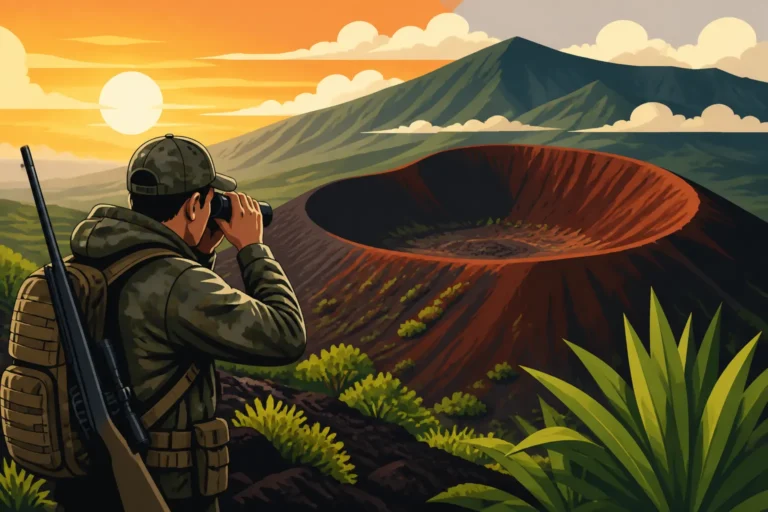
Hunting Lanai Without a Guide
The dream of hunting Lanai, especially for a majestic Axis deer, often comes with the hefty price tag of a guided trip or the daunting thought of navigating an unfamiliar island’s regulations alone. Many aspiring hunters feel stuck, wondering if a truly independent adventure is even possible. This comprehensive guide is designed to empower you with the knowledge and practical steps needed to confidently plan and execute a successful self-guided hunt on Lanai, making that incredible experience accessible on your own terms.
Understanding Lanai's Unique Hunting Regulations and Access
Venturing to Lanai for a self-guided hunt is an incredible experience, but it’s crucial to understand the island’s specific rules and access limitations right from the start. Lanai operates under a unique system, different from many other Hawaiian islands, and navigating it successfully is your first big challenge.
Navigating the Lanai Drawn Hunt System
First and foremost, it's vital to grasp that public land hunting on Lanai for Axis deer is primarily managed through a lottery or "drawn hunt" system. This isn't a walk-up, over-the-counter tag situation like some other parts of Hawaii. You must apply for these hunts well in advance, and success is not guaranteed. The Hawaii Department of Land and Natural Resources (DLNR), Division of Forestry and Wildlife (DOFAW) conducts these drawings, usually once a year. It's a system designed to manage animal populations and hunter pressure on an island with finite resources.
The application window is typically in the late spring or early summer, and results are announced a few months later. Missing the deadline means missing your chance for the entire year. Many hunters, especially those coming from off-island, find this frustrating because it requires significant pre-planning and flexibility. You can apply online through the GoHunt Hawaii portal, which is really the most convenient way to keep track of deadlines and submit your application. It’s also important to familiarize yourself with How the Lanai Axis Deer Draw Works to understand the nuances, such as applying as an individual versus a party, and the points system (if applicable) that might favor repeat applicants. Don't just assume you can show up; plan your application meticulously.
Public vs. Private Land: What You Need to Know
Lanai is famously known for its vast private land ownership, with most of the island belonging to Pulama Lanai, the company owned by Larry Ellison. While there are some areas of public hunting land managed by DOFAW, they are distinct and often operate under different rules than the private lands. When you apply for a drawn hunt, you are applying for access to these public units. These units are designated areas where hunters can pursue game animals, and they are typically very clearly marked.
The crucial distinction for self-guided hunters is that commercial guided hunts are generally conducted on private lands, sometimes requiring additional fees or special landowner agreements. If you are hunting without a guide, you will be exclusively hunting on the public land units allocated through the drawn hunt. This is a key reason why Hunting Lanai Without a Guide involves navigating the state’s system, not negotiating with private landowners. Don't confuse the two; attempting to hunt on private land without explicit permission is trespassing and carries severe penalties. Understanding the boundaries and staying within your designated unit is paramount for a legal and ethical hunt.
Permitting and Fees for Self-Guided Hunters
Beyond drawing a coveted hunt tag, there are other administrative hoops to jump through. Every hunter, resident or nonresident, must possess a valid Hawaii hunting license. The cost varies, with nonresidents paying a higher fee, but it's a non-negotiable first step. You can often purchase your license and stamps online through the GoHunt Hawaii website, making the process fairly straightforward. Remember that your license typically expires a year from the date of purchase, so ensure it’s valid for your planned hunt dates. You can also learn more about Hawaii Hunting Licenses and What They Cost to budget accordingly.
Once you draw a public land tag for Axis deer on Lanai, you'll also need to pay for the actual permit-tag itself. These fees are separate from your general hunting license. The specific cost can vary, and it's essential to check the current regulations for What One Either-Sex Tag Means on Lanai or other tag types. For non-residents, you might also need a Letter of Exemption if you haven't taken a Hawaii Hunter Education course, which can add another layer of paperwork. The bottom line here is that while you're saving on guide fees, there are still costs and administrative steps involved in securing your legal right to hunt. Don't overlook these details; they are critical to avoiding issues in the field.
Summary of Key Costs and Requirements for Self-Guided Lanai Hunt:
| Item | Requirement | Estimated Cost (Non-Resident) | Notes |
|---|---|---|---|
| Hawaii Hunting License | Mandatory for all hunters | ~$105 | Annual, check expiration. Purchase via GoHunt. |
| Wildlife Conservation Stamp | Mandatory with hunting license | ~$10 | Purchase via GoHunt. |
| Lanai Axis Deer Hunt Application | Required for public land access (drawn hunt) | $10 (application fee) | Non-refundable; applied through GoHunt. |
| Axis Deer Permit-Tag (if drawn) | Required per animal | ~$125 (either-sex) | Price varies; check current regulations. |
| Hunter Education Exemption Letter | Non-residents without Hawaii hunter ed certification | ~$10 | Required if you don't have a Hawaii Hunter Education card. |
| Transportation (Flight to Lanai) | Round trip airfare to Lanai (LNY) | $100-$200+ (from Oahu/Maui) | Book early; consider inter-island baggage rules for gear/firearms. |
| Vehicle Rental (Lanai) | 4×4 highly recommended for public unit access | $150-$300/day | Essential for self-guided access; limited availability. |
| Accommodation | Hotels, rentals, or camping (if allowed) | $200-$500+/night | Can be a significant cost; limited budget options. |
Note: Costs are estimates and subject to change. Always verify current fees with DOFAW Hawaii.
Planning Your Self-Guided Lanai Hunt: Logistics and Gear
Once you've secured your permit-tag for Lanai, the real fun of planning begins. A self-guided hunt demands meticulous attention to logistics and gear, as you won't have an outfitter smoothing over every detail. Lanai is a unique island, and being prepared for its specific challenges is key to a successful, enjoyable hunt.
Transportation and Accommodation on Lanai
Getting to Lanai involves a short flight, typically from Honolulu (Oahu) or Kahului (Maui) to Lanai Airport (LNY). When traveling to Hawaii for a hunt, especially with firearms, understanding Inter-Island Travel on a Hawaii Hunt is crucial. You'll need to follow strict TSA and airline regulations for checking firearms and ammunition. Upon arrival, transportation on the island itself is your next hurdle. A four-wheel-drive vehicle is absolutely essential for accessing most public hunting units on Lanai. The roads to these areas are often unpaved, rough, and can become impassable without proper clearance and traction, especially after rain. Rental car options are limited on Lanai, and securing a capable 4×4 can be both challenging and expensive, so book this far in advance. Don't underestimate this; trying to save money on a 2WD sedan will almost certainly strand you.
Accommodation on Lanai is also something to consider carefully. There are a few luxury resorts, which might be overkill for a budget-conscious self-guided hunter, and a limited number of vacation rentals. Camping permits are sometimes available, but often limited or restricted to certain areas, so check with DOFAW well in advance. Consider linking up with another hunter or two to split the cost of a rental vehicle and accommodation, which can significantly reduce your per-person expenses. Your lodging choice will also influence how easily you can Cooling Meat Fast on a Hawaii Hunt, as you'll need reliable refrigeration or ice access.
Essential Gear for Self-Guided Success
Your gear list for a self-guided Lanai hunt will need to be robust. Beyond your weapon, ammunition, and optics, think about the unique conditions of the island. Lanai can be incredibly dry and dusty in some areas, yet surprisingly damp and muddy in others, particularly during certain seasons or in higher elevations. Sturdy hiking boots that can handle rough, volcanic terrain and potentially thorny kiawe branches are a must. Layered clothing is also smart; mornings can be cool, but midday temperatures can soar, especially in the exposed, dry country where Axis deer love to roam. A good backpack capable of carrying water, food, first-aid, and ideally, meat from the field is non-negotiable.
Don't forget robust navigation tools. While paper maps are good, a GPS device or a smartphone app like onX Hunt (with downloaded offline maps) will be invaluable for staying within unit boundaries and locating yourself in unfamiliar terrain, especially when Glassing Lanai's Open Ridgelines. Water is critical on Lanai; pack more than you think you'll need, as natural sources are scarce and often unreliable. A good quality cooler, preferably a heavy-duty one, is also essential for immediate field care and transport of your meat, which is paramount in Hawaii's warmth.
Physical Preparation for Lanai's Terrain
Lanai might look small on a map, but its hunting units can encompass vast, challenging landscapes. Unlike a guided hunt where a vehicle might drop you closer to the action, self-guided hunting often means long walks and significant elevation changes. You could be traversing steep, rocky gulches, dense kiawe thickets, or open, rolling hills under the intense Hawaiian sun. The terrain, especially areas described when Hunting Lanai's Upper Ridgelines, can be deceptively demanding.
Therefore, physical fitness is not just a recommendation; it's a requirement. Start a regimen that focuses on cardio, leg strength, and carrying weight in a backpack well before your hunt. Practice hiking with your hunting boots and a loaded pack to get your body accustomed to the demands. If you manage to harvest an Axis deer, remember that you’ll be packing out all the meat, head, and hide yourself, potentially over long distances in hot conditions. This is where your physical preparation truly pays off. The more prepared you are, the safer and more enjoyable your self-guided adventure will be.
On the Ground: Tactics for Hunting Axis Deer on Lanai Without a Guide
You’ve got your tags, your gear is packed, and you're finally on Lanai. Now comes the exciting part: actually finding and harvesting an Axis deer without the benefit of a local guide. This is where your scouting skills, patience, and understanding of Axis deer behavior will be put to the test.
Scouting and Locating Deer Without Prior Knowledge
One of the biggest advantages of a guided hunt is the guide's intimate knowledge of the area and recent deer movements. As a self-guided hunter, you'll need to become your own scout. Start by thoroughly studying maps of your assigned unit. Look for natural funnels, potential bedding areas (often thicker cover or shaded areas on leeward slopes), and any signs of recent activity like tracks, droppings, or rubs. Even though you may not have previous experience, the internet can be a surprisingly useful tool, with satellite imagery (Google Earth, onX) allowing you to virtually "scout" from home before you ever set foot on the island.
Once in the field, dedicate your first day, or at least your first morning, to pure scouting. Drive or walk designated roads, stop frequently, and glass extensively, especially during the early morning and late evening hours when deer are most active. Axis deer are highly visible in Lanai's more open country, so long-range optics are your best friend for Glassing Lanai's Open Ridgelines. Look for herds, identify their general patterns of movement between feeding, bedding, and watering areas. Since you're hunting Lanai's public units, which might see more pressure, deer can become wary, so keep your movements slow and deliberate.
Stalking and Shot Opportunities in Open Country
Lanai’s landscape often means open, expansive views, which is great for spotting deer but can be incredibly challenging for getting close. Axis deer have exceptional eyesight and are notoriously alert. This environment is tailor-made for Spot-and-Stalk Tactics on Open Country. Once you’ve spotted a desirable animal or herd, the real work begins. Plan your approach carefully, using terrain features like gulches, ridges, or kiawe thickets to conceal your movement. Always keep the wind in your favor; Axis deer have a keen sense of smell.
A common mistake is trying to move too quickly. Take your time, sometimes crawling hundreds of yards to get into range. Patience is paramount. Often, the best strategy is to get into a good glassing position well before dawn, locate a herd moving to bed, and then plan an ambush along their expected route, or wait for them to enter an area with sufficient cover for a stalk. Remember, you're hunting without a guide, so every decision, every movement, is yours alone. Be confident in your shot placement and practice shooting from various field positions before your trip.
Water Sources and Food as Key Attractors
In Lanai’s often arid environment, water is gold for Axis deer. During dry periods, deer will be heavily concentrated around reliable water sources. Identifying these on your map and then physically scouting them out can provide huge dividends. Look for natural springs, man-made guzzlers, or even cattle troughs that might be in your unit. Set up observation points near these areas, particularly during the middle of the day or late afternoon, as deer will often come to drink when the sun is high. This is one of the most reliable strategies for Hunting a Water Source in Dry Hawaii Country.
Beyond water, food sources will also dictate deer movement. Axis deer are primarily grazers and browsers, favoring grasses, forbs, and the new growth of various shrubs and trees. Look for areas with fresh browse, especially after recent rains when new growth might be sprouting. Old pineapple fields or natural clearings that hold palatable vegetation can also be hot spots. Pay attention to fresh tracks and droppings; these are clear indicators that deer are actively using an area. The combination of water, food, and security cover will define where you'll find deer.
Post-Hunt: Meat Care and Departure
Congratulations! You’ve successfully navigated the challenges of a self-guided hunt on Lanai and harvested an Axis deer. This achievement comes with a new set of responsibilities, particularly regarding meat care and adhering to regulations for transporting your trophy off the island.
Field Dressing and Cooling Meat in the Tropics
Hawaii's warm climate presents a significant challenge for preserving game meat. Unlike hunting in colder climates, you don't have the luxury of time. As soon as your animal is down, the clock starts ticking. Prompt and thorough Field Dressing Axis Deer in Hawaii Heat is absolutely crucial. Get the animal gutted immediately to begin the cooling process. Remove all entrails, then ideally skin the animal and quarter it. The goal is to expose as much surface area of the meat to air as possible to dissipate heat rapidly.
Many hunters will bring game bags, often made of breathable synthetic material, to protect the meat from flies and debris while allowing air circulation. If possible, get the meat into coolers packed with ice as quickly as you can. This is where your planning for ice and cooler capacity pays off. You might need to make multiple trips to retrieve ice, especially if you're hunting in a remote gulch. Remember to keep the meat out of standing water in the cooler; use frozen water bottles or block ice, and drain melted water frequently. The quality of your venison depends entirely on how effectively you manage this initial cooling phase.
Transporting Your Harvest Off Lanai
Transporting your meat from the field to your accommodation, and then eventually off Lanai, requires careful planning. First, ensure your harvested animal is properly tagged according to DOFAW regulations. This usually means attaching your permit-tag to the carcass immediately after the kill. You’ll need to check out from your hunting unit at the designated check station or using the OuterSpatial app, reporting your harvest. This is a mandatory step that helps DOFAW manage game populations and ensure compliance.
For taking meat off-island, you'll need to pack it securely in coolers, preferably frozen solid, for your flight or ferry. Most airlines have specific rules for transporting game meat as checked luggage, often requiring it to be well-packed, leak-proof, and within weight limits. It's always best to call your airline in advance to understand their exact requirements. For horns or capes, you'll need to ensure they are cleaned of all tissue and foreign material to comply with agricultural inspection rules, especially if shipping them to the mainland. Some hunters opt to have a local taxidermist or processor handle this for them, which can simplify the process.
Respecting the Land and Local Community
Hunting on Lanai is a privilege, not a right, and maintaining a positive relationship with the island and its residents is paramount. This means practicing strict "Leave No Trace" principles. Pack out everything you pack in, including spent shell casings, trash, and any unused bait or attractants (though baiting is generally prohibited in Hawaii anyway). Avoid driving off designated roads, which can damage fragile ecosystems and create new, unauthorized trails. Always close gates behind you, respect private property boundaries, and be mindful of other land users, whether they are hikers, farmers, or other hunters.
Engaging respectfully with locals, whether it's at the airport, grocery store, or gas station, goes a long way. Visitors are often judged by their actions, and a poor impression from one hunter can reflect on the entire hunting community. By being a responsible, ethical, and respectful hunter, you not only ensure your own positive experience but also contribute to the long-term viability of self-guided hunting opportunities on Lanai for generations to come. Your actions speak volumes about our shared passion.
Disclaimer
Please remember that hunting regulations in Hawaii can change. It is always the hunter's responsibility to verify current laws, seasons, and permit requirements with the Hawaii Department of Land and Natural Resources (DLNR), Division of Forestry and Wildlife (DOFAW) before planning any hunt. This guide is for informational purposes only and does not supersede official regulations.