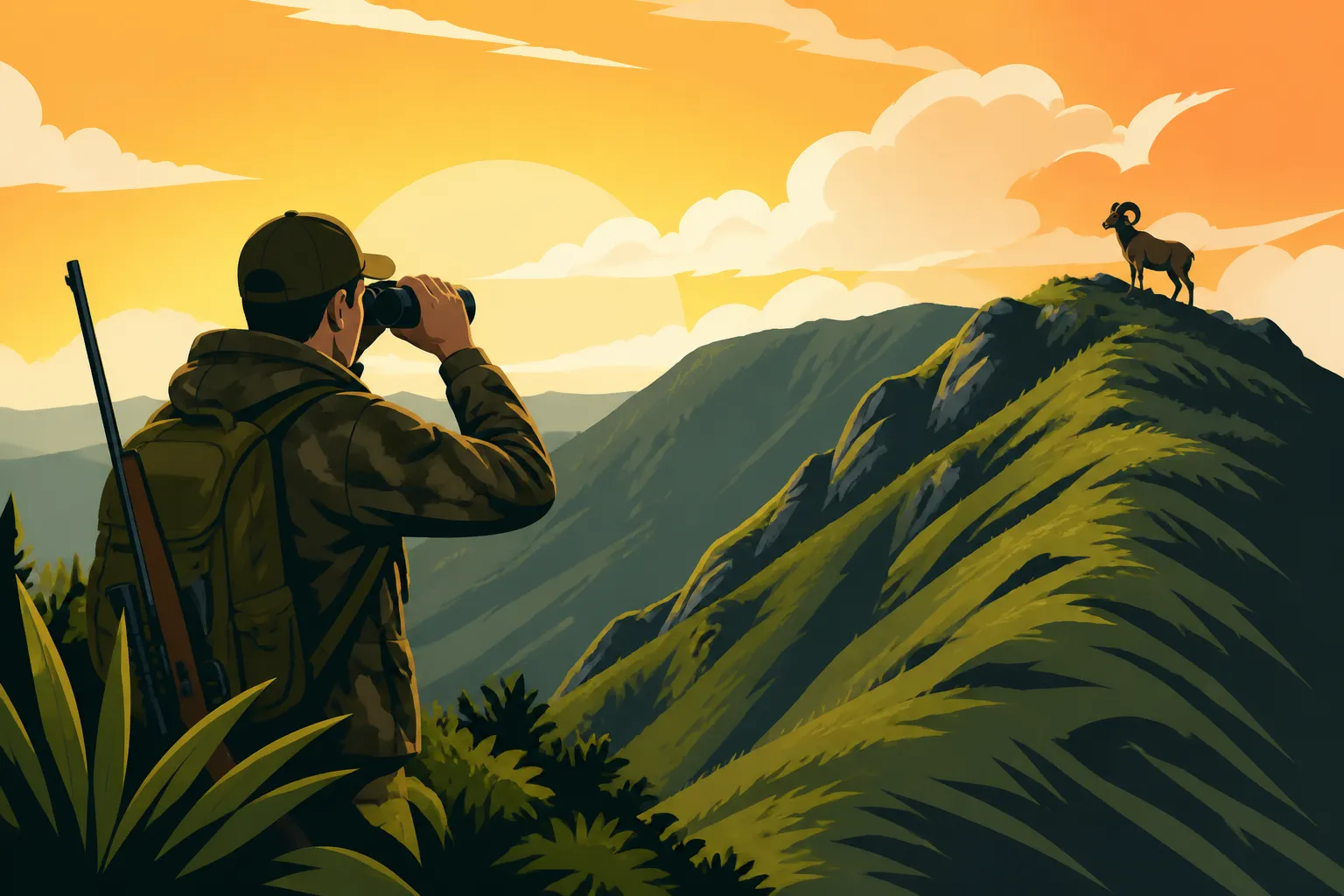
Hunting Lanai’s Upper Ridgelines
Hunting Lanai's upper ridgelines presents a unique challenge, often demanding more physical exertion and strategic thinking than lower elevation hunts. Many hunters arrive on the island eager to find game, only to discover that the high country plays by its own rules, characterized by steep climbs, unpredictable winds, and dense pockets of cover. This guide will take you through the specific considerations and tactics needed to successfully navigate and hunt these rewarding, yet demanding, high-elevation areas.
The Lay of the Land: What Defines Lanai's Upper Ridgelines
Lanai, often called the Pineapple Isle, boasts a spine of elevated terrain that dramatically influences hunting conditions. Unlike the more easily accessible kiawe flats and lower pastures, the upper ridgelines present a different world entirely. Understanding these geographical nuances is the first step to a successful hunt.
Topography and Elevation Changes
The ridgelines of Lanai aren't just gentle slopes; they're a complex tapestry of steep inclines, deep gulches, and volcanic outcroppings. As you gain elevation, the terrain becomes more broken, offering countless draws and saddles that game animals use for travel and cover. Elevations can climb significantly, meaning you'll be dealing with substantial vertical gain and loss throughout your day. This isn't flat-land hunting, and your legs will feel it. Hunters often underestimate the energy expenditure involved in traversing these ups and downs, especially when carrying gear and, hopefully, meat. The elevation changes also create natural funnels and pinch points that are excellent for ambushing game, if you can predict their movements.
Varied Vegetation and Cover
The vegetation on Lanai's ridgelines is remarkably diverse, shifting dramatically as you ascend. Lower down, you might start in dry, thorny kiawe forests, but as you climb, you'll encounter a transition to denser stands of introduced pines, eucalyptus, and native species like ohia and mamane. These higher elevation forests can be incredibly thick, reducing visibility to mere yards in some places. However, they also create open pockets, old logging roads, and natural clearings that game animals frequent for feeding and sunning. The mix of open country and dense brush requires hunters to be adaptable, switching between long-range glassing tactics and close-quarters still-hunting. Understanding these shifts in vegetation is key to knowing where animals will bed, feed, and seek refuge from the elements or hunting pressure.
The Whispering Wind and Shifting Thermals
One of the most critical, and often frustrating, aspects of hunting Lanai's upper ridgelines is the erratic nature of the wind. While the prevailing trade winds generally blow from the northeast, the complex topography of the ridgelines creates localized microclimates and thermal currents that can swirl unpredictably. In the mornings, as the sun warms the earth, thermals tend to rise, carrying your scent uphill. In the evenings, as temperatures drop, they reverse, pulling your scent downhill. Add to this the persistent cross-island trade winds, and you have a recipe for constantly shifting air currents. Hunting Downwind in Hawaii's Shifting Thermals explains just how challenging this can be. Maintaining proper wind advantage is paramount for deer and sheep with their keen sense of smell, so paying constant attention to wind direction, often with a simple puff bottle or milkweed, is non-negotiable.
Decoding Game: Axis Deer and Mouflon on the High Ground
Lanai's upper ridgelines are prime habitat for two of the island's most sought-after game species: Axis deer and Mouflon sheep. Their behavior and habitat preferences, however, differ significantly, requiring distinct hunting approaches.
Axis Deer: Masters of the Ridge
Axis deer, known for their striking spotted coats and impressive antlers, thrive in the diverse environments found on Lanai, including the higher elevations. While many associate Axis deer with the open, dry country, they frequently utilize the upper ridgelines for several reasons. During warmer parts of the day, or under heavy hunting pressure, they'll retreat into the cooler, denser cover of the higher forests, using the topography to their advantage. They'll bed on shaded slopes, often just below the crest of a ridge, allowing them to see and smell anything approaching from below or above. Their diet is also varied, and the mixed vegetation of the upper ridgelines provides a smorgasbord of grasses, forbs, and browse. Observing Reading Axis Deer Sign in Dry Country will give you clues, but on the ridgelines, look for fresh tracks along game trails that contour the slopes, rubbed trees, and fresh droppings in clearings. They will often travel along the spine of a ridge to move between bedding and feeding areas, offering excellent opportunities for intercepting them.
Mouflon Sheep: The Rugged Mountaineers
Mouflon sheep are true mountain dwellers, perfectly adapted to the rugged, steep, and often exposed terrain of Lanai's highest points. Unlike the more numerous Axis deer, Mouflon are often found in smaller, more elusive herds. They possess incredible eyesight and are masters of camouflage against the volcanic rock and sparse vegetation of the upper slopes. Hunting Mouflon on Hawaii's Highest Slopes provides great insights into their tendencies. You'll typically find them feeding on the native grasses and shrubs found on steep, windswept faces, often seeking out areas that offer both forage and escape routes into even steeper, inaccessible country. They are quick to detect danger and will use their agility to vanish over a ridge or down a sheer drop. Hunting Mouflon on Lanai's ridgelines requires immense patience, exceptional glassing skills, and a willingness to tackle extremely challenging terrain. Look for them feeding in the early morning or late evening, often in open, exposed areas, but always with an escape plan in mind.
Strategic Approaches for Ridgeline Success
Hunting Lanai's upper ridgelines demands a blend of physical endurance, keen observation, and strategic planning. You can't just wander aimlessly; every step needs to be deliberate.
The Art of Glassing and Spot-and-Stalk
Given the combination of open vistas and dense pockets on the ridgelines, glassing is your most potent tool. Find a vantage point that overlooks multiple slopes, draws, and potential feeding areas, and settle in with your binoculars or spotting scope. Glassing Lanai's Open Ridgelines details this approach. Systematically scan every inch of the landscape, looking for any flicker of movement, an unusual shape, or the tell-tale horizontal line of a deer's back in a sea of vertical trees. Once you spot an animal, the real work begins: the spot-and-stalk. This involves carefully planning your approach, using terrain features for cover, and constantly monitoring the wind. It's slow, deliberate movement, often taking hours to close the distance on an animal. You'll need to gauge distances accurately and anticipate where the animal might move, especially if it's feeding. Patience is the ultimate virtue here; rushing a stalk almost guarantees a blown opportunity.
Understanding and Playing the Wind
As mentioned earlier, the wind on Lanai's ridgelines is a constant factor. Successful hunters become obsessive about wind direction. Before planning any stalk, you must know where your scent is going. If the wind is swirling or unpredictable, it's often best to wait for more stable conditions or choose an entirely different approach. Thermals will typically push your scent uphill in the morning and downhill in the evening. Combining this understanding with the prevailing trade winds allows you to choose routes that keep your scent away from the animals as long as possible. Sometimes, this means taking a much longer, more arduous route to circle around to the downwind side. Always carry a wind checker, whether it's a small bottle of powder or some dry grass, and check it frequently. Your nose is nowhere near as good as a deer's or a sheep's, and one gust in the wrong direction can undo hours of effort.
Physical Demands and Safe Movement
Hunting Lanai's ridgelines is physically taxing. You'll be climbing steep slopes, navigating uneven terrain, and potentially hauling a heavy load of meat out. Excellent physical conditioning before your hunt is not just recommended, it's essential. Focus on cardio, leg strength, and endurance. While hunting, practice safe movement. Watch your footing, especially on loose rock or slippery wet ground in denser sections. When moving through thick brush, move slowly and deliberately to avoid making noise and to maintain your balance. If you're fortunate enough to harvest an animal, remember that Packing Meat Out of a Hawaii Gulch is a monumental task. Break down the animal into manageable loads, utilize game bags, and consider how you'll get it off the mountain before you even pull the trigger. Always let someone know your hunting plans, including your route and expected return time, especially when heading into remote ridgeline country where cell service is often nonexistent.
Essential Gear and Mental Preparation
Success on Lanai's challenging ridgelines hinges not only on strategy and physical prowess but also on having the right gear and the proper mindset. Being prepared for anything the island throws at you makes all the difference.
Footwear, Clothing, and Backpack Essentials
Your feet are your most important tool on a ridgeline hunt, so investing in high-quality, broken-in hiking boots with excellent ankle support and aggressive tread is crucial. You'll be traversing everything from dry, dusty trails to slick, mossy rocks, and thick vegetation. Waterproofing is a major plus, as sudden rain showers can occur, even in drier areas. For clothing, layers are key. Mornings can be cool at higher elevations, but midday sun can make for hot, strenuous climbing. Lightweight, breathable, moisture-wicking materials are ideal, with an outer layer that offers wind and rain protection. A comfortable, well-fitting backpack is essential for carrying water, food, extra layers, first-aid, navigation tools, and, hopefully, meat. Ensure it has enough capacity for a full day's worth of supplies and anything you might need for an unexpected overnight.
Optics, Navigation, and Communication
High-quality optics are non-negotiable for ridgeline hunting. A good pair of 10x binoculars is your constant companion, used for scanning the landscape from every vantage point. Many hunters also bring a spotting scope, especially for long-range glassing of distant slopes for Mouflon or evaluating Axis deer antler size from afar. For navigation, a reliable GPS device or a smartphone app like onX Hunt is invaluable. These tools allow you to pinpoint your exact location, track your movement, mark waypoints, and most importantly, clearly see unit boundaries and private land designations. Using the OuterSpatial App to Check In is also a good practice for checking into public units. Given the spotty cell service in remote areas, carrying a satellite communication device (like a Garmin inReach or Zoleo) for emergencies is a wise investment, providing peace of mind for both you and your loved ones. Always have a physical map and compass as a backup, and know how to use them.
Conditioning Your Body and Mind
Beyond the physical demands, ridgeline hunting can be mentally draining. Long hours of glassing without seeing game, the frustration of swirling winds, or a blown stalk can test your resolve. Developing mental toughness, patience, and resilience is as important as physical fitness. Break your hunt into smaller, manageable goals: "I'm going to glass this ridge for an hour," or "I'll make it to that next saddle." Celebrate small victories, like finding fresh sign or successfully navigating a tricky section of terrain. Stay positive, remain focused, and remember why you're out there. The rewards of a successful hunt on Lanai's upper ridgelines are immense, offering not just a trophy or meat, but an unforgettable experience in some of Hawaii's most wild and beautiful country.
Disclaimer
This article is for general informational purposes only and does not constitute professional advice. Laws, prices and regulations vary by location and change over time. Consult a qualified professional for guidance on your specific situation.