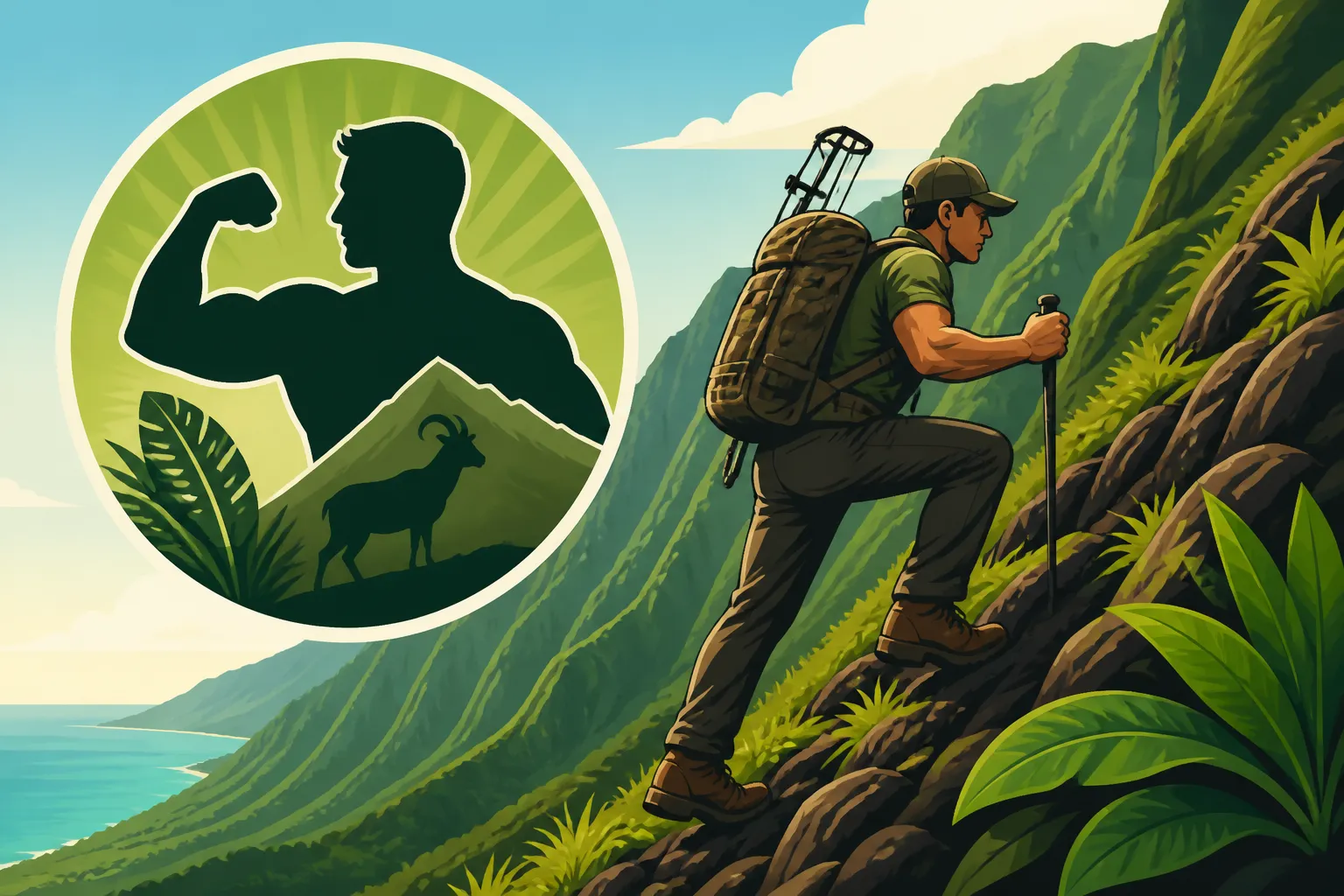
Fitness for a Steep Hawaii Hunt
Thinking about heading out for a hunt in Hawaii? It’s easy to picture paradise – swaying palms, gentle breezes, and maybe a quick stroll to bag your game. But the reality of hunting these islands, especially in the steep, rugged, and humid terrains, is a far cry from a leisurely beach walk. Many hunters arrive underprepared for the intense physical demands, leading to exhaustion, frustration, and even unsafe situations. This guide is here to give you the realistic lowdown on what it takes physically to tackle Hawaii's challenging hunting grounds and how you can prepare your body for a truly successful and enjoyable experience.
Why Hawaii's Terrain Demands Peak Fitness
Hawaii's beauty is undeniable, but beneath the postcard-perfect facade lies some of the most unforgiving hunting terrain you'll ever encounter. This isn't your average whitetail woodlot or open prairie. Here, the land itself is a major part of the challenge, demanding every ounce of your physical and mental conditioning.
The Brutal Reality of Steep Gulches and Lava Flows
Imagine descending into a gulch so steep you’re practically climbing down a ladder, only to face an equally brutal ascent on the other side. This is a common scenario when Navigating a Hawaii Gulch System or chasing pigs through tangled rainforests. The slopes here aren't gentle inclines; they are often abrupt, eroded, and covered in loose rock, slick mud, or dense, thorny vegetation. It's not just about vertical gain, it's about the instability underfoot. One moment you're traversing jagged lava rock, the next you're post-holing through thick, wet soil.
Then there are the lava flows themselves. Walking over ancient lava, whether the smooth, ropy pahoehoe or the sharp, broken a'a, is an absolute test of balance, ankle strength, and boot integrity. You might spend hours picking your way across fields of razor-sharp rock, constantly lifting your feet high, stepping carefully from one unstable chunk to another. It's slow, exhausting work that can quickly wear down even fit individuals. Many folks quickly realize that Walking Rough Lava Without Wrecking Your Boots is a skill in itself.
Heat, Humidity, and High Elevations: A Triple Threat
When people think of Hawaii, they often think of warmth, which is true at sea level. But head inland, especially into some of the prime hunting units, and you'll encounter a combination of heat, humidity, and surprising elevation that can quickly drain your energy. In the lower elevations, even a cloudy day can feel stifling, with the air thick and heavy, making every breath feel like an effort. Your body works overtime just to cool itself, leading to rapid dehydration and fatigue. This is especially true when Field Care in Hawaii's Heat and Humidity becomes necessary, adding stress to an already taxing situation.
Then there are the higher elevation units, like those found on Mauna Kea or Haleakala. Suddenly, you're dealing with thinner air that significantly reduces your oxygen intake, even as temperatures drop. Hunting Mouflon in Mauna Kea's Thin Air is a stark reminder that Hawaii isn't just tropical beaches. It combines the physical challenge of climbing at altitude with the ever-present island humidity. This forces your cardiovascular system to work harder, and if you haven't properly acclimatized, even moderate exertion can feel like an Olympic feat. It’s a unique blend of environmental stressors that few other hunting destinations can match.
Packing Out Meat: The Ultimate Test
You’ve finally connected with an animal – fantastic! But the real work has often just begun. Unlike many places where you can drive right up to your downed game, Hawaii's rugged public hunting units frequently require long, arduous packing trips. Whether it’s an axis deer deep in a kiawe flat on Maui or a pig in a dense rainforest gulch on the Big Island, that animal isn't getting back to the truck by itself.
Imagine quartering an animal, distributing the heavy, warm meat into your pack, and then facing a multi-hour trek back over the very terrain that exhausted you on the way in. This could mean Packing Meat Out of a Hawaii Gulch, scrambling up steep, muddy banks, traversing sharp lava, or pushing through thick brush, all with a significant amount of weight on your back. A mature axis buck can easily yield 60-80 pounds of boned-out meat, plus cape and antlers. That's a serious load, and the difficulty is exponentially increased by the terrain, heat, and humidity. This is where your fitness truly gets put to the test, and why planning for Water and Heat Planning for a Hawaii Hunt is so crucial, not just for the hunt itself, but for the recovery.
Tailored Training for Hawaii's Unique Challenges
Preparing for a Hawaii hunt isn't about simply "being in shape." It requires a focused training regimen that addresses the specific physical demands of the islands' unique environment. You need functional strength, robust cardiovascular endurance, and a body that can handle uneven, unstable terrain for hours on end.
Building Leg Strength and Endurance for Uphill Climbs
Hawaii's mountains and gulches will challenge your legs like never before. Forget flat ground; you’ll be constantly moving uphill or downhill, often on soft or loose surfaces. To prepare, focus on exercises that build powerful, resilient legs:
- Stair Climbing: This is perhaps the closest simulation to Hawaii's steep terrain. Find a stadium, a tall building, or a stair machine and spend serious time on it. Aim for sessions where you're climbing for 30-60 minutes, mimicking the sustained effort of an uphill climb. Vary your pace, including some bursts of speed to simulate chasing an animal or a quick ascent.
- Weighted Step-Ups and Lunges: Incorporate lunges and step-ups with added weight (a backpack filled with sandbags or books works great). This builds unilateral leg strength, crucial for stability on uneven ground. Aim for high repetitions to build endurance in your quads, hamstrings, and glutes.
- Hiking with a Loaded Pack: This is non-negotiable. Start with lighter weights and gradually increase the load to simulate packing out meat. Hike varied terrain – hills, rocky trails, even sandy beaches if you can – for extended periods. This helps condition your stabilizing muscles and prepares your shoulders and core for carrying weight. If you can find trails that mimic the inclines of Hunting Hawaii's High Elevation Alpine Ground, even better.
Cardiovascular Conditioning for Sustained Effort
The heat, humidity, and constant movement in Hawaii mean your heart and lungs will be working overtime. You need a cardiovascular base that can sustain effort for hours, recover quickly, and handle bursts of intensity.
- Interval Training: Incorporate high-intensity interval training (HIIT) into your routine. This could be short bursts of sprinting followed by active recovery, or intense efforts on a bike or rower. This builds your anaerobic capacity, essential for those moments when you need to quickly cover ground or make a final push.
- Long-Duration Cardio: Don't neglect steady-state cardio. Long walks, jogs, or bike rides (60-90 minutes or more) at a moderate pace build your aerobic base, which is crucial for overall endurance. Aim to do some of these with a weighted pack on your back to simulate real-world hunting conditions.
- "Brick" Workouts: If you can, combine activities. For example, a long hike followed immediately by a shorter, faster run. This trains your body to perform when already fatigued, mirroring the late stages of a strenuous hunt. Think about the grind of pushing through after hours in the field.
Core Strength and Balance for Uneven Ground
Walking over lava, traversing slick gulches, or pushing through dense vegetation – all demand a strong core and excellent balance. A weak core not only makes you more prone to falls but also puts extra strain on your back when carrying a pack.
- Planks and Side Planks: These foundational exercises build isometric core strength. Hold for increasing durations, and add variations like plank jacks or hip dips to engage more muscles.
- Stability Ball Exercises: Incorporate exercises like stability ball crunches, rollouts, and passes. These challenge your balance while strengthening your core.
- Single-Leg Balance Drills: Stand on one leg for 30-60 seconds, then switch. Do this with your eyes closed to increase difficulty. Progress to single-leg squats or pistol squats if you're able. This directly translates to navigating uneven, unpredictable terrain where one foot might land on a wobbly rock.
- Yoga or Pilates: These disciplines are excellent for improving overall flexibility, balance, and core strength, all of which are invaluable for navigating Hawaii's rugged landscapes.
Practical Tips for Pre-Hunt Preparation
Beyond the specific exercises, your overall lifestyle leading up to the hunt plays a huge role in your readiness. Think of your body as a high-performance vehicle – it needs the right fuel, proper maintenance, and sufficient rest to perform optimally.
Nutrition, Hydration, and Rest: Fueling Your Body
You wouldn't expect your truck to run on empty, and your body is no different. In the weeks and months leading up to your Hawaii hunt, prioritize a clean, nutrient-dense diet. Focus on whole foods, lean proteins, complex carbohydrates for sustained energy, and plenty of fruits and vegetables for micronutrients. Avoid processed foods, excessive sugar, and unhealthy fats.
Hydration is absolutely critical, especially in Hawaii's climate. Start increasing your water intake well before your trip, aiming for consistent hydration throughout the day. Dehydration not only saps your energy but can also impair your decision-making, which is dangerous in remote hunting areas. On the islands, you might be out for hours under the sun with limited water sources, so prepare your body to handle it. Many hunters realize the importance of Water and Heat Planning for a Hawaii Hunt only after they're already suffering.
Finally, don't underestimate the power of rest. Quality sleep is when your body repairs and rebuilds. Aim for 7-9 hours of sleep per night. Overtraining or burning the candle at both ends will diminish your physical and mental reserves, making you more susceptible to fatigue and injury when the hunt begins.
Gear Considerations: Boots, Packs, and Trekking Poles
Your gear can either be your best friend or your worst enemy in Hawaii. Investing in high-quality, purpose-built equipment is paramount, especially when it comes to what's on your feet and back.
- Boots: This is perhaps the most important piece of gear. You need sturdy, waterproof (or at least highly water-resistant) boots with excellent ankle support and aggressive traction. The terrain will be wet, slippery, sharp, and uneven. Blisters or a rolled ankle can quickly end your hunt. Break in your boots thoroughly before you arrive. Read up on Boots for Hawaii Lava and Wet Forest to understand what truly works.
- Backpack: A comfortable, well-fitting pack designed to carry heavy loads is essential. It needs enough capacity for water, food, emergency supplies, and crucially, enough space and robust construction to handle quartered meat. Practice hiking with your loaded pack to ensure it doesn't cause hot spots or undue strain.
- Trekking Poles: These are absolute game-changers for Hawaii's steep and uneven terrain. They provide crucial stability, reduce strain on your knees during descents, and offer extra points of contact on slippery or loose ground. They can literally save you from a fall. Don’t leave home without them. When considering What to Pack for a Hawaii Hunt, these should be at the top of your list.
Acclimatization and Smart Pacing During the Hunt
Once you're on the islands, give your body time to adjust. If you're coming from sea level or a colder climate, the heat, humidity, and elevation can be a shock. Try to arrive a day or two early if possible to simply relax and let your body acclimate.
During the hunt itself, smart pacing is key. Don't go out like a bullet from a gun on day one, burning yourself out. Start slow, especially on your first day. Listen to your body. Take frequent, short breaks to hydrate and fuel up. Don't wait until you're completely exhausted or parched. The hunt in Hawaii is a marathon, not a sprint. Remember, many of the public units require checking in and out via platforms like GoHunt or at hunter check stations, and you'll want to be able to make it back well before closing.
Mental Toughness and Realistic Expectations
Hunting in Hawaii isn't just a physical battle; it's a significant mental challenge. The terrain, the weather, the dense cover, and the sometimes elusive game can all wear you down. Cultivating mental toughness and having realistic expectations are just as important as your physical conditioning.
The Psychological Grind of a Hard Hunt
Imagine pushing through dense, thorny kiawe for an hour, dripping with sweat, only to find no fresh sign. Or spending hours glassing vast, steep slopes under a relentless sun, only to see distant animals disappear over a ridge. These moments test your resolve. The "psychological grind" of a tough Hawaii hunt is real. It's about maintaining focus when your body is screaming for a break, staying positive when the animals aren't cooperating, and making smart decisions when fatigue sets in.
This mental fortitude is what pushes you to take one more step, climb one more rise, or stay out for an extra hour when most would call it quits. It's about understanding that success isn't always guaranteed, and that the effort itself is part of the experience. It helps to review unit rules, and even hunt reports (which you might find via platforms like BookYourHunt from other hunters who’ve shared their experiences), to manage your expectations about typical success rates and the effort required.
Avoiding Injury and Knowing Your Limits
Being physically fit significantly reduces your risk of injury, but it doesn't eliminate it. Hawaii's terrain is unforgiving, and a sprained ankle, a deep cut from sharp lava, or heat exhaustion can quickly turn a hunt into a serious emergency. It's vital to know your personal limits and to hunt within them. Pushing too hard, especially when alone, can have dire consequences.
Carry a first-aid kit, and know how to use it. Be aware that cell service is often nonexistent in many remote hunting areas, so No Cell Signal on a Hawaii Hunt is a real possibility. Tell someone your hunting plan, including your expected return time and exact unit. Don't take unnecessary risks, especially when traversing steep cliffs or handling sharp knives when field dressing an animal. If you're feeling overly fatigued or dehydrated, call it a day and return to camp or your vehicle. No animal is worth a serious injury.
Don't Underestimate Hawaii: It's Not a Resort Walk
The biggest mistake many visiting hunters make is underestimating the physical demands of hunting in Hawaii. They see the beautiful beaches and assume the interior will be equally benign. This couldn't be further from the truth. Hawaii's hunting grounds are wild, rugged, and intensely physical. Whether you're chasing Axis Deer Hunting in Hawaii through dry, broken terrain, stalking Hunting Hawaii's Feral Pigs in deep, wet rainforests, or climbing for Mouflon Sheep Hunting on Hawaii Island in high-elevation volcanic landscapes, you will be challenged.
Prepare your body and your mind for a genuine adventure, a truly demanding hunt that will push your boundaries. When you plan your trip, consider checking detailed unit maps, often available through platforms like GoHunt, to get a visual sense of the topography you'll be tackling. Embrace the challenge, put in the work to get fit, and you'll be rewarded with an unforgettable Hawaii hunting experience.
Disclaimer
This article is for general informational purposes only and does not constitute professional advice. Laws, prices and regulations vary by location and change over time. Consult a qualified professional for guidance on your specific situation.