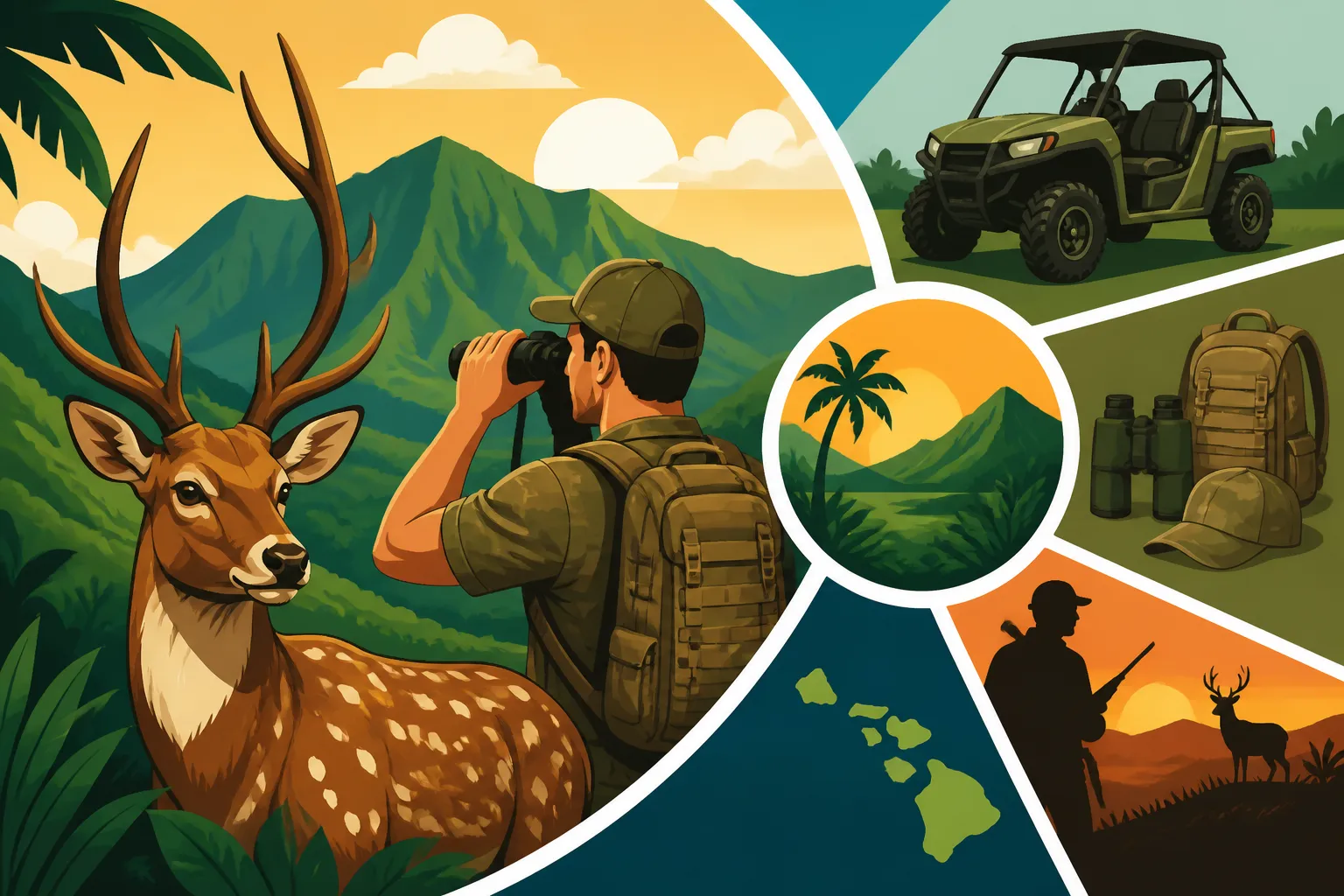
What a Hawaii Guided Axis Hunt Includes
The dream of hunting axis deer in Hawaii is incredibly appealing, but if you've ever started looking into it, you quickly realize it's not as simple as showing up with a rifle. The logistics, private land access, and understanding the local nuances can feel overwhelming. This guide is here to break down exactly what you can expect when booking a guided axis deer hunt in the islands, taking away some of that stress and confusion so you can focus on the excitement of the hunt.
Understanding the Basics of a Guided Axis Hunt
Hunting axis deer in Hawaii offers a unique challenge and reward, drawing hunters from all over. Unlike many mainland hunts where public land access is abundant, much of the prime axis deer habitat here is on private land. This is where a guided hunt really shines, simplifying a complex undertaking and opening doors you might not otherwise find.
Why Choose a Guided Hunt for Axis Deer?
Let's be real, planning a self-guided hunt in Hawaii for axis deer can be a monumental task. You're dealing with unfamiliar terrain, often dense jungle or rugged lava flows, incredibly specific land access rules that vary by island and unit, and a constantly moving target population that doesn't care about your vacation schedule. Many prime axis deer areas, especially on islands like Maui or Molokai, are privately owned ranches or managed lands where independent access is simply not an option without a prior arrangement. A guided hunt cuts through all that red tape. Your guide knows the land, the deer's patterns, and, crucially, has established relationships for access. They handle the permits, navigate the varied terrain, and interpret the subtle signs that a novice might completely miss. It's an investment, yes, but it often translates directly into a higher chance of success and a far less stressful experience, allowing you to actually enjoy the beauty of the islands while pursuing your game.
Beyond access, think about the deer themselves. Axis deer are notoriously cunning, with incredible senses and a tendency to vanish into cover the moment they detect a threat. They're not your typical whitetail. A seasoned guide brings years of experience observing these animals, understanding their preferred feeding grounds, watering holes, and bedding areas. They can differentiate between fresh tracks and old, know where to set up for an ambush, or how to execute a successful Spot-and-Stalk Axis Deer in Hawaii. Without that expertise, you could spend days walking around, seeing little more than beautiful scenery. For many, the peace of mind knowing you have an expert leading the way is invaluable.
What to Expect from a Typical Guided Package
When you look at different outfitters, you'll find a range of packages, but generally, a guided axis deer hunt includes the fundamental services needed to pursue these animals successfully. Most packages are structured around a day rate or a multi-day experience, designed to give you ample opportunity. You're paying for the guide's knowledge, the access to hunting grounds, and usually some essential gear and logistical support that would be difficult or costly to arrange yourself.
A typical package might start early in the morning, meeting your guide at a designated point, often near the hunting area. From there, you'll likely travel in a 4×4 vehicle to reach the specific section of land where the guide believes the deer are active. The actual hunt usually involves a combination of glassing open areas, still-hunting through cover, and strategic stalking. After a successful harvest, the package almost always includes field dressing and initial transport of the animal. It's a comprehensive service aimed at giving you the best chance at a trophy while managing the practicalities of hunting in such a unique environment.
The Core Inclusions: What Your Fee Typically Covers
When you book a guided axis deer hunt, you're investing in a suite of services designed to maximize your chances of success and minimize the logistical headaches. It's more than just pointing you in the right direction; it's a full experience orchestrated by someone who knows the lay of the land and the habits of the animals.
Guide Services and Expertise
At the heart of any guided hunt is the guide themselves. This isn't just someone with a truck; it's a local expert who lives and breathes hunting in Hawaii. They possess an intimate knowledge of the specific hunting unit you'll be in, understanding everything from the subtle changes in terrain that funnel deer, to the seasonal feeding patterns, and even how the trade winds affect game movement. Their expertise means they've spent countless hours in the field, honing their ability to read sign, track animals, and anticipate where a big axis buck might be feeding or bedding. They are your eyes and ears, often spotting game before you even know it's there.
Beyond finding the deer, your guide is there to ensure a safe and ethical hunt. They'll advise on shot placement, help you Judging an Axis Buck's Antlers in the Field, and provide hands-on assistance with every step of the process. From the moment you begin the stalk to the successful retrieval of your animal, they're there. Once the animal is down, their role extends to proper Field Dressing Axis Deer in Hawaii Heat, ensuring the meat is cared for immediately to prevent spoilage in the tropical climate. This critical step is often overlooked by first-timers, but it's vital for preserving the quality of your harvest. They'll also handle the initial transportation of the animal back to a vehicle or a cooler setup, which can be a real challenge in Hawaii's steep, rugged terrain.
Access to Private or Permitted Lands
One of the single biggest advantages of a guided axis deer hunt in Hawaii is the access it provides. As mentioned, many of the prime axis deer populations thrive on private ranches or lands managed under special permits. These lands are typically inaccessible to the general public, and without a guide, you simply wouldn't be able to hunt them. Outfitters often have long-standing agreements with landowners, securing exclusive hunting rights to vast tracts of land that harbor healthy populations of axis deer. This isn't just about getting onto land; it's about getting onto the best land.
This access translates into several key benefits for you as a hunter. First, it often means less hunting pressure compared to public units, leading to more relaxed animals and better opportunities. Second, these private lands are often managed with conservation in mind, resulting in healthier, larger deer. Your guide will know the specific boundaries and regulations of these private areas, ensuring you're always hunting legally and ethically. This is crucial because trespassing in Hawaii is taken seriously, and navigating property lines can be confusing, especially if you're not familiar with the landscape. Essentially, your guide acts as your key to unlocking some of Hawaii's most productive axis deer country.
Equipment and Logistics
While you'll typically bring your own personal hunting gear, many guided axis hunt packages include some essential equipment and logistical support that makes the hunt feasible. This commonly includes transportation within the hunting area, often in a rugged 4×4 vehicle capable of handling Hawaii's challenging roads and trails. Imagine trying to drive a rental sedan up a steep, muddy ranch road – it's not going to happen. Your guide's vehicle is built for the job, getting you deep into the hunting grounds efficiently and safely.
Furthermore, guides often provide specialized equipment like high-quality spotting scopes and binoculars for glassing distant hillsides, particularly useful for Glassing Lanai's Open Ridgelines or other open country. Some outfitters even offer rifle rentals, complete with appropriate ammunition, if you'd prefer not to fly with your own firearm or want to use a caliber better suited for axis deer. Post-harvest, they'll usually have coolers and ice ready to start the crucial process of Cooling Meat Fast on a Hawaii Hunt, especially important given the warm climate. They might also have a game cart or ATV for extracting the animal from difficult terrain, saving you a strenuous pack-out. These inclusions, though seemingly minor, drastically improve the overall hunting experience and reduce the amount of gear you need to haul yourself.
Beyond the Basics: Common Add-Ons and Exclusions
While guided hunts provide incredible value and convenience, it's important to understand that not everything is typically bundled into the base price. Many critical components of your Hawaii hunting trip will be your responsibility or come as an additional cost. Knowing what's included versus what's extra helps you budget accurately and avoid unpleasant surprises.
Licenses, Tags, and Fees
One of the most common exclusions from guided hunt packages are the required state hunting licenses and any specific permit-tags. These are personal to you and must be acquired by the hunter directly through the state's Division of Forestry and Wildlife (DOFAW). You'll need a valid Hawaii hunting license, and for axis deer on certain islands like Lanai or Maui, you'll also need an axis deer permit-tag. The process often involves applying online through the GoHunt Hawaii portal, and it's something you need to do well in advance of your trip. The cost for these licenses and tags varies depending on whether you're a resident or non-resident, and it's essential to factor these into your overall trip budget. Your guide can certainly advise you on the specific requirements for your hunt, but they won't typically purchase them for you. Always double-check the current regulations and apply for everything needed long before you step on the plane. You can find detailed information on Hawaii Hunting Licenses and What They Cost through official channels.
Meat Processing and Shipping
After the exhilaration of a successful harvest, the practicalities of what to do with the meat come into play. While your guide will handle the initial field dressing and getting the animal back to a staging area, the comprehensive butchering, packaging, and shipping of your axis venison home is almost always an additional cost and often handled by a third-party processor. Hawaii has excellent local meat processors that specialize in wild game, but their services are separate from the guide's fee.
If you plan to take your meat home, you'll need to coordinate directly with the processor for cuts, packaging, and shipping logistics. This can include specialized coolers, dry ice, and shipping via air freight, all of which add to the expense. It’s also crucial to understand the agricultural inspection requirements for shipping meat off-island or to the mainland. Some hunters choose to donate a portion of their meat locally, while others may opt to have just the cape and antlers processed for taxidermy. Discussing these options with your guide beforehand is always a good idea, as they can recommend trusted local services and help you understand the estimated costs for Shipping Meat Home From Hawaii.
Lodging, Meals, and Travel
Unless you've booked an all-inclusive lodge package, your guided hunt fee typically does not cover your accommodations, meals, or travel to and from Hawaii. You'll be responsible for booking your flights to the islands, any inter-island flights (if your hunt is on an island other than your arrival point), and your ground transportation outside of the hunting area. This means renting a car or arranging rides to and from your hotel or vacation rental.
Similarly, your meals before and after the hunt, and often during the hunt itself (beyond perhaps a packed lunch or snacks provided by the guide), are your responsibility. Some outfitters may offer recommendations for Hawaii Hunting Lodges and Where to Stay or local restaurants, but it’s up to you to secure these arrangements. Planning for these personal expenses is just as important as budgeting for the hunt itself. Consider the cost of a rental car for the duration of your trip, as public transport options can be limited, especially when trying to reach hunting units or meet your guide in remote areas.
| Category | Typically Included in Guided Hunt | Typically Excluded / Extra Cost |
|---|---|---|
| Guide Services | Professional guide, expertise | Tips for guide |
| Land Access | Private land access, permits | |
| In-Field Transport | 4×4 vehicle in hunting area | Rental car to/from hunting area |
| Basic Field Care | Field dressing, initial cooling | Full meat processing, butchering |
| Equipment | Spotting scopes, binoculars, ice | Personal gear (clothing, boots, pack) |
| Firearms | Rifle rental (sometimes an add-on) | |
| Licensing | Hawaii hunting license | |
| Tags | Axis deer permit-tag | |
| Meat Logistics | Initial haul out | Shipping meat home, taxidermy |
| Accommodation | Hotels, vacation rentals | |
| Meals | (Sometimes snacks/lunch) | All other meals |
| Travel | Flights (inter-island, mainland) |
Choosing Your Outfitter and What to Look For
Selecting the right outfitter for your Hawaii axis deer hunt is crucial for a successful and enjoyable experience. With various options available, knowing what questions to ask and what red flags to watch out for can make all the difference. It's an investment, so you want to ensure you're putting your trust (and money) in the right hands.
Vetting a Reputable Hawaii Guide
Start by doing your homework. A reputable outfitter will have a strong online presence, positive reviews, and clear communication. Look for guides who specialize in Axis Deer Hunting in Hawaii and have extensive experience specifically in the areas you're interested in, whether that's Maui's arid slopes or Molokai's dense brush. Ask for references from past clients and don't hesitate to call them. A good guide will be transparent about their operations, their success rates, and what exactly their packages entail. Sites like BookYourHunt can be a good starting point for finding guides, but always follow up with direct communication.
When you speak with potential guides, ask pointed questions:
- What is their primary hunting method (e.g., spot-and-stalk, still-hunting)?
- What type of terrain will you be hunting in? (e.g., Hunting Hawaii's Dry Kiawe Forest, open pastures, steep gulches)
- What is their policy if you don't harvest an animal?
- How many hunters do they take out at once? (A 1:1 guide-to-hunter ratio is ideal for big game.)
- What is their plan for adverse weather?
- Crucially, verify their licensing and insurance. A legitimate outfitter will be properly licensed by the state and carry liability insurance. This protects both you and them.
A guide who is hesitant to answer questions, pushes for a quick booking, or makes unrealistic promises should raise a red flag. Remember, you're looking for a professional relationship built on trust.
Understanding Success Rates and Expectations
Every hunter wants to bring home an animal, but it's important to approach a guided hunt with realistic expectations. No reputable guide can "guarantee" a kill; hunting involves too many variables. What they can guarantee is their best effort, their expertise, and access to prime hunting ground. When an outfitter talks about "success rates," clarify what that means to them. Is it opportunity rates (seeing legal animals)? Or harvest rates (animals taken)? There's a big difference. An 80% opportunity rate means you'll likely have a shot at an animal, but whether you connect is up to you.
Hawaii's axis deer are challenging. The terrain is often rugged, the weather can be unpredictable, and the deer themselves are wary. Be wary of guides promising 100% harvest rates, especially for mature bucks. A more honest outfitter will discuss their typical success rates for providing opportunities and acknowledge the inherent unpredictability of wild game hunting. They should also inquire about your hunting experience and physical conditioning to ensure you're a good fit for the type of hunt they offer. It’s also wise to understand What a Hawaii Guided Axis Deer Hunt Costs and how that aligns with the services and success rates advertised.
Reading the Fine Print: Deposits and Cancellations
Before you commit to anything, thoroughly read and understand the outfitter's booking policy, particularly regarding deposits, payment schedules, and cancellations. Most outfitters require a significant deposit to secure your hunt date, with the balance due closer to the hunt. Understand if the deposit is refundable and under what circumstances (e.g., natural disaster, guide cancellation vs. hunter cancellation). Life happens, and you want to know what your options are if you need to reschedule or cancel.
Ask about their policy if they have to cancel or reschedule the hunt due to unforeseen circumstances, like extreme weather or changes in hunting regulations. Will they offer a full refund, or a credit for a future hunt? Also, clarify what happens if you arrive and are unable to hunt due to personal reasons (e.g., illness, inability to complete hunter education). This transparency protects both parties and ensures there are no misunderstandings down the line. A clear contract or written agreement outlining these terms is a good sign of a professional operation. This is also where platforms like BookYourHunt can provide some structured policies, but direct communication with the outfitter remains paramount.
The Hunt Experience Itself: From Dawn to Dusk
A guided axis deer hunt in Hawaii is an adventure, a full-day experience that immerses you in the unique Hawaiian landscape while pursuing a magnificent animal. It's about more than just the moment of the shot; it's the entire journey, from the early morning strategizing to the trek back with your hard-earned venison.
The Morning Briefing and Strategy
Your hunting day with a guide usually begins well before sunrise. You'll meet at a pre-determined location, often a convenient spot close to the hunting area, where you'll have a brief but crucial morning briefing. This isn't just a friendly chat; it's where your guide outlines the plan for the day, taking into account current weather conditions, recent deer activity, and your preferences. They'll explain the target area, the expected terrain, and the specific tactics they intend to employ, whether it's setting up on a ridge to glass or carefully still-hunting a kiawe flat.
This is your chance to ask any last-minute questions, confirm your gear, and ensure your rifle is sighted in and ready. Your guide will also review safety protocols, emphasize silent movement, and discuss how to communicate effectively in the field, especially if you're hunting in dense cover or communicating over long distances. For instance, they might tell you how they plan to lead a Walking In to a Remote Hawaii Unit or position you perfectly for a shot opportunity. This morning ritual sets the tone for the day, building confidence and ensuring everyone is on the same page for a safe and productive hunt.
Spotting, Stalking, and the Shot Opportunity
Once you're in the hunting area, the real work begins. Your guide will often start by using optics to patiently scan open areas, ridgelines, and forest edges for signs of movement. Axis deer are masters of camouflage, so the guide's keen eye and knowledge of their habits are invaluable. They know where to look for a flicking ear, a patch of hide, or the distinct shape of an antler. When an animal is spotted, the next phase, the stalk, is arguably the most exciting and challenging part of the hunt.
Hawaii's terrain can be incredibly varied, from flat, dry pastures to steep, rocky gulches or dense, thorny kiawe forests. Each presents its own stalking challenges. Your guide will lead the way, using natural cover, reading the wind, and moving with incredible stealth to get you within shooting range. This often involves crawling, navigating thick brush, or making long detours to stay out of sight and downwind. The goal is to get you into a comfortable, ethical shooting position. When the opportunity arises, your guide will typically give you the signal, ensuring you've got a clear, safe shot at the animal. This moment, when all the planning and effort converge, is what a guided hunt is all about—a true test of skill, patience, and teamwork.
Field Care and Extraction
A successful shot is just the beginning. The next critical steps involve proper field care of the animal and its extraction from the hunting grounds. In Hawaii's warm climate, speed is of the essence to preserve the meat. Your guide will immediately assist with field dressing the axis deer, removing the entrails to allow the carcass to cool down as quickly as possible. This is a crucial step that directly impacts the quality of the venison. They'll also typically help you tag the animal correctly, adhering to state regulations.
Depending on where the animal was harvested, extraction can range from a relatively easy pack out to a serious physical challenge. If you're hunting in a steep gulch or a remote area, your guide might employ a game cart, an ATV, or even call for additional help to get the animal to the nearest road or vehicle. This is where the guide's local knowledge and prepared logistics truly shine. They understand the terrain and have a plan for getting your animal out efficiently and respectfully, ensuring your hard-earned meat doesn't go to waste. You might be surprised at the effort involved in Getting a Pig Out of a Hawaii Gulch, and the same often applies to deer. Once back at the vehicle, the guide will transfer the carcass into coolers with ice, setting the stage for further processing.
Making the Most of Your Investment
A guided hunt is an investment, not just of money, but of your time and effort. To ensure you get the absolute most out of your Hawaii axis deer hunting experience, a little preparation and clear communication go a long way. This isn't just about bringing the right gear; it's about being mentally and physically ready and working effectively with your guide.
Preparing Physically and Mentally
Hawaii's hunting terrain is famously rugged and can be surprisingly demanding. Even on what looks like a relatively flat ranch, you might find yourself navigating uneven ground, climbing steep hills, or traversing thorny brush. Axis deer are often found in areas that require significant walking and stalking, sometimes over several miles in a single day, often in warm, humid conditions. It's not a leisurely stroll. Being in good physical condition will not only make the hunt more enjoyable but will also increase your chances of success. Start a walking or hiking regimen in the months leading up to your trip, especially if you plan to hunt in more challenging units like Hunting Hawaii's High Elevation Alpine Ground or steep canyons.
Mentally, patience is your greatest ally. Hunting axis deer often involves long periods of glassing, slow stalks, and waiting for the right opportunity. Be prepared for early mornings and potentially long days in the field. Leave any preconceived notions or impatience at home. Trust your guide, listen to their advice, and maintain a positive attitude, even if the deer aren't cooperating immediately. A good hunt is about the experience, the challenge, and the connection with nature, not just the harvest.
Communication is Key with Your Guide
Your guide is your partner in this endeavor, and open, honest communication is paramount. Before, during, and after the hunt, don't hesitate to express your expectations, concerns, or physical limitations. If you're not comfortable with a certain type of terrain, or if you're struggling to keep up, tell your guide. They are there to help and can often adjust tactics or pace to accommodate you. Similarly, if you have specific trophy aspirations, discuss them early on. While no ethical guide can promise a specific size of animal, knowing your goals can help them prioritize opportunities.
During the hunt, pay close attention to their instructions, especially regarding movement, stealth, and shot opportunities. They know the ground and the animals better than anyone. After the hunt, provide constructive feedback. This helps good guides refine their services and helps future hunters. Remember, a successful guided hunt is a collaborative effort. By being prepared, communicating effectively, and embracing the adventure, you'll maximize your chances of a memorable and rewarding Axis Deer Hunting in Hawaii experience.
Disclaimer
This article is for general informational purposes only and does not constitute professional advice. Laws, prices and regulations vary by location and change over time. Consult a qualified professional for guidance on your specific situation.