Trail Camera Rules on Hawaii Public Land
Navigating Hawaii's public hunting lands is an adventure, but understanding all the rules can feel like trying to solve a complex puzzle, especially when it comes to modern hunting tools. Many hunters wonder if they can use trail cameras to scout for game on public ground, hoping to gain an edge in the dense forests or vast lava fields. The truth is, it's not always a straightforward "yes" or "no," and misunderstanding the regulations can lead to frustration, fines, or even the loss of your valuable equipment. This guide will cut through the confusion, helping you understand the current landscape of trail camera use on Hawaii's public lands so you can scout responsibly and legally.
Understanding the Legal Landscape for Trail Cameras on Hawaii Public Lands
When you’re preparing for a hunt in Hawaii, whether it’s for Axis Deer Hunting in Hawaii on Maui or Hunting Hawaii's Feral Pigs on the Big Island, you’re likely thinking about every advantage you can get. Trail cameras have become an invaluable tool for many hunters on the mainland, offering a peek into animal movement patterns, preferred trails, and even time-stamped activity. Naturally, the question arises: can you deploy these eyes in the woods on Hawaii’s public hunting units? The answer, like much of Hawaii's unique hunting environment, is nuanced and often dependent on specific unit rules and interpretation by local Department of Land and Natural Resources (DLNR) Division of Forestry and Wildlife (DOFAW) staff.
Generally speaking, there isn't a blanket statewide ban on trail cameras on Hawaii's public lands. However, that doesn't mean it's a free-for-all. Many rules regarding "structures" or "leaving items unattended" can, and often are, interpreted to include trail cameras. The overarching principle in Hawaii's conservation lands is to minimize human impact and maintain the natural state of the environment. This means any equipment you introduce should ideally be temporary, non-damaging, and not constitute a permanent fixture or an eyesore. It’s crucial to remember that what might be acceptable in one state or even one unit might be frowned upon, or even prohibited, in another here in Hawaii.
General Guidelines and DOFAW Interpretation
The DOFAW, which manages most of Hawaii's public hunting units, often operates under regulations that prioritize environmental protection and public safety. While specific language regarding "trail cameras" might be absent from the official rulebooks, they can fall under broader categories. For instance, rules against "constructing permanent stands or blinds," "leaving unattended property," or "damaging natural resources" could be used to address trail camera usage. Attaching a camera to a tree might be seen as damaging if not done carefully, or leaving it for weeks could be considered "unattended property." It's these interpretations that make it so tricky.
What this often boils down to is a conversation with the local DOFAW office for the island you plan to hunt. A quick call to the Maui, Hawaii Island, Kauai, Oahu, Lanai, or Molokai DOFAW branch before you head out could save you a lot of headache. They are the ones on the ground, familiar with the specific conditions and management objectives of each unit. Their guidance is invaluable and should always be your first point of reference. Relying solely on internet forums or assumptions from mainland hunting can lead to a rude awakening.
How Unit-Specific Rules Affect Camera Use
Hawaii's hunting units are incredibly diverse, from high-elevation mamane-koa forests to wet, dense rainforests and dry, coastal kiawe flats. Each unit, due to its unique ecosystem, wildlife, and management objectives, often has its own set of rules and nuances. A unit managed for rare native birds might have stricter regulations on human intrusion or equipment placement than a unit primarily managed for feral pig control. You might find explicit signage in some areas prohibiting the placement of any foreign objects, which would certainly include a trail camera.
For example, a unit with a heavy emphasis on primitive hunting, like some archery-only zones or those requiring long walks in, might inherently discourage leaving high-tech gear behind. Conversely, a unit bordering agricultural land might have different concerns entirely. This is where tools like onX Hunt can be incredibly helpful. While it won't tell you the exact trail camera rules, it can clearly show you unit boundaries and land ownership, allowing you to cross-reference with DOFAW regulations specific to that parcel. Being able to visualize the unit and then calling the local DOFAW office with a specific location in mind makes your inquiry much more targeted and effective.
Navigating Specific Restrictions and "Unwritten Rules"
Beyond the general legal framework, there are specific types of restrictions and "unwritten rules" that often govern trail camera use in Hawaii. These aren't always printed in bold letters on a hunting pamphlet but are vital to understand for a respectful and successful hunt. Breaking these unspoken codes can lead to friction with other hunters, land managers, or even local communities who hold strong views on how the 'aina (land) should be treated.
One common concern revolves around the idea of "claiming" a spot. When a hunter places a trail camera, especially in a popular public unit, it can sometimes be perceived as an attempt to monopolize a certain area or game trail. In a place like Hawaii, where public land access is precious and often shared among many users, this can lead to resentment. Other hunters might feel their experience is compromised by cameras, or that their own scouting efforts are being infringed upon. It’s a delicate balance of individual scouting needs versus community respect.
Prohibited Areas and Sensitive Habitats
Certain public hunting areas in Hawaii are designated as sensitive habitats, conservation areas, or areas with specific cultural significance. In these zones, the rules on human presence and introduced equipment can be much stricter. For instance, Natural Area Reserves (NARs) are set aside for the preservation of native ecosystems, and most forms of disturbance or equipment placement are heavily restricted, if not outright prohibited. Even within Game Management Areas (GMAs) or Forest Reserves (FRs), there might be sub-zones or particular valleys where sensitive species reside, leading to stricter regulations.
It's not uncommon for rules to be posted at trailheads or entry points to these specific areas, so always pay close attention to signage. For example, if you're Hunting Mouflon in Mauna Kea's Thin Air, you might be in an area adjacent to or within critical habitat for the endangered Palila bird, and cameras could be seen as an unnecessary intrusion. Always double-check with the local DOFAW office about any specific restrictions for your chosen unit, especially if you plan on deploying cameras near known sensitive ecological zones. Understanding Hawaii's Protected Species Hawaii Hunters Must Know is also crucial, as any activity that might disturb them is strictly forbidden.
Avoiding Damage and Respecting Public Resources
The act of attaching a trail camera itself can sometimes be a point of contention. Nailing or screwing cameras into trees is generally discouraged, as it can damage the tree and potentially introduce diseases. Using straps that cinch tightly around trunks can also girdle trees over time, especially young ones. The goal is always "leave no trace," and that extends to how you secure your equipment.
Furthermore, leaving cameras unattended for extended periods can also be an issue. In Hawaii's humid, wet environments, cameras can malfunction, degrade, or even become overgrown by vegetation if left too long. Lost or forgotten cameras become litter, contradicting the conservation principles. The weather, especially in a Hunting Hawaii Unit After Heavy Rain or prolonged wet season, can quickly turn a forgotten camera into a broken piece of plastic. Hunters are expected to be responsible stewards of the land, meaning any gear brought in should be promptly removed when the hunt or scouting period is over.
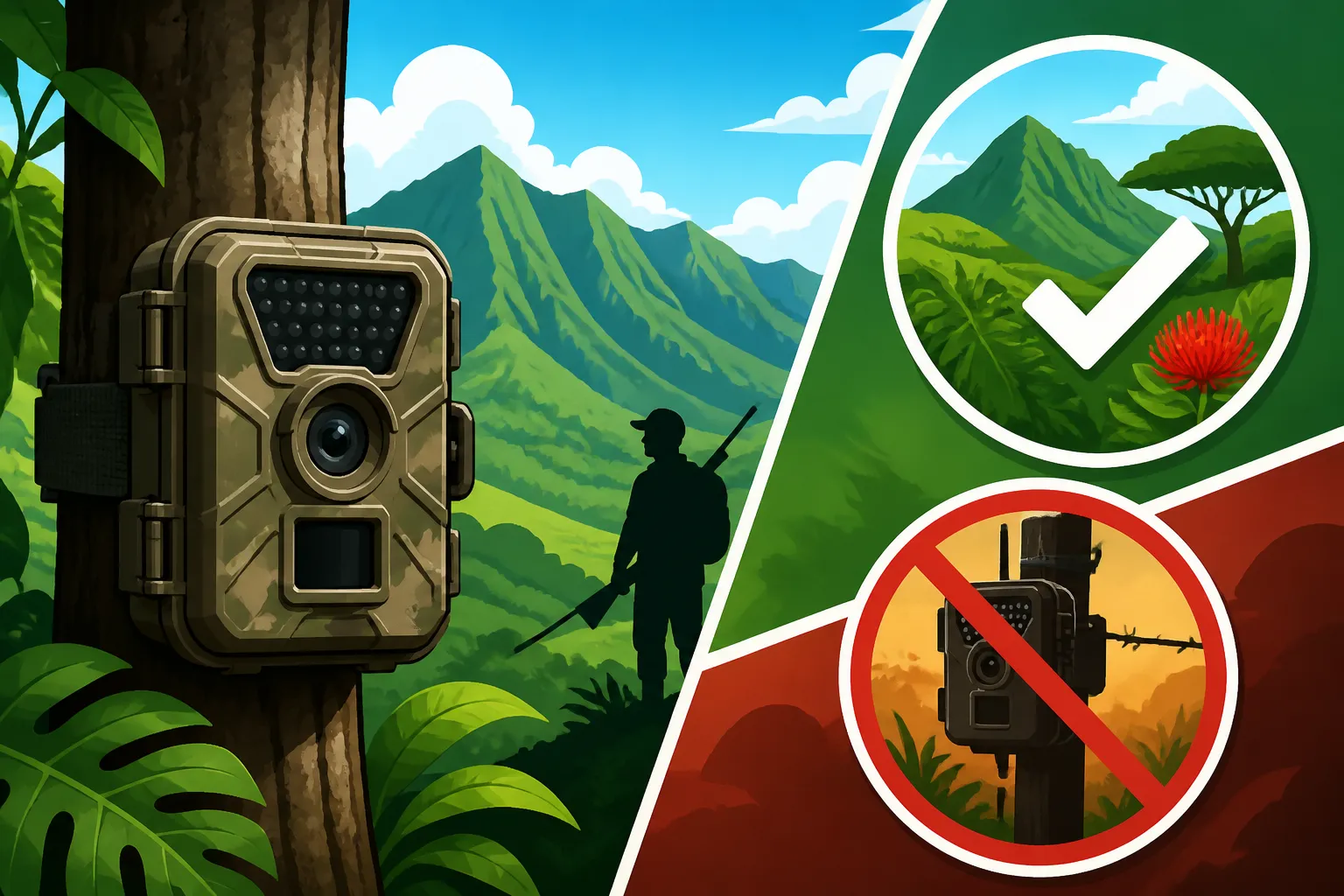
Here's a quick reference on common considerations:
| Aspect | Generally Acceptable (with caution) | Potentially Prohibited/Frowned Upon |
|---|---|---|
| Attachment | Camouflage straps, bungee cords (non-damaging) | Nails, screws, overtightened straps |
| Placement Time | Short-term scouting (days to a week) | Long-term, unattended for months |
| Location | Remote, less trafficked areas | Near trails, access roads, sensitive zones |
| Visibility | Concealed, camouflaged | Obvious, brightly colored |
| Impact | No lasting mark on environment | Tree damage, litter, perceived claim |
| Public Land Type | GMAs, FRs (check unit rules) | NARs, culturally significant sites, private land |
Ethical Use and Environmental Stewardship
Beyond the black-and-white rules, there's a significant component of ethical hunting and environmental stewardship when considering trail camera use in Hawaii. The islands are unique, and the concept of malama 'aina—to care for the land—is deeply ingrained in local culture and conservation efforts. Introducing technology, even seemingly benign cameras, requires a mindful approach to ensure you're not detracting from the experience of others or harming the very environment you seek to enjoy.
Think about the visual impact. While a small, camouflaged camera might seem inconspicuous to you, a non-hunter or another hunter might spot it and feel their wilderness experience is diminished by the presence of electronics. The feeling of being "watched" or that natural spaces are being monitored can be unsettling for some. This is particularly true in areas that are considered more pristine or remote, such as when you are Walking In to a Remote Hawaii Unit. Ethical hunting in Hawaii is not just about following the law, but also about respecting the diverse values and expectations of everyone who uses public lands.
Minimizing Impact on Wildlife and Ecosystems
The primary goal of DOFAW in managing Hawaii's public lands is to protect native ecosystems and control invasive species. While game animals like axis deer, feral pigs, and goats are indeed invasive, their control is often balanced with broader conservation goals. Trail cameras, if not deployed thoughtfully, can inadvertently become minor points of disturbance. Scent left behind, repeated trips to check cameras, or cameras placed directly on sensitive plants could all have small but cumulative impacts.
Consider the potential for game animals to react to a camera. While most modern cameras are fairly unobtrusive, scent contamination from human hands, or even the slight mechanical click, could theoretically alter animal behavior. While this is often a minor concern for game animals, it's part of the broader ethical consideration of leaving the environment as undisturbed as possible. The more you can blend your presence into the natural environment, the more you align with the spirit of malama 'aina. This means choosing unobtrusive locations, minimizing visits, and ensuring everything is packed out when you leave.
Respect for Other Users and Cultural Sensitivity
Hawaii's public lands are shared by a wide array of users: hunters, hikers, birdwatchers, researchers, and cultural practitioners. Each group has a right to enjoy these spaces, and your actions, including the placement of trail cameras, should not negatively impact their experience. Imagine a family hiking a remote trail who suddenly encounters a hidden camera – it could raise privacy concerns or simply feel out of place in a wild setting.
Furthermore, many areas in Hawaii hold significant cultural value. Ancient trails, sacred sites, or traditional gathering places might be located within or adjacent to hunting units. Placing modern equipment, even for hunting purposes, in such areas could be seen as disrespectful or inappropriate by local communities. When using resources like GoHunt or doing your initial scouting, always be mindful of cultural markers or known sensitive sites, and err on the side of caution. Cultural Etiquette on a Hawaii Hunt extends to all aspects of your time on the land, including how you use modern tools. If you're unsure, it's always better to consult with local resource managers.
Practical Strategies for Trail Camera Deployment in Hawaii
If, after your research and conversations with local DOFAW officials, you determine that trail camera use is permissible in your chosen unit, there are practical strategies to employ to ensure your deployment is effective, legal, and respectful of the unique Hawaiian environment. Hawaii presents distinct challenges that differ significantly from mainland hunting grounds, from extreme humidity to rampant invasive vegetation and potential theft.
The climate alone demands specialized gear. Hawaii's tropical environment, especially in the wet, windward forests, can be brutal on electronics. Humidity, heavy rain, and condensation are constant threats. Choosing a camera specifically rated for extreme weather, with robust seals and waterproofing, is paramount. You might also consider using desiccant packets inside the camera housing or a small protective casing to ward off moisture. Batteries will drain faster in cooler, wetter conditions, so factor that into your deployment schedule.
Selecting the Right Gear for Hawaii's Conditions
When it comes to trail cameras in Hawaii, "rugged" isn't just a marketing term – it's a necessity. Look for cameras with high waterproof ratings (IP66 or better), strong casing, and secure latches. The type of attachment system is also critical. Instead of nails or screws that damage trees, opt for heavy-duty, tree-friendly straps or even small, portable camera stands that can be camouflaged and removed easily. Remember, the goal is minimal impact.
Solar panels can be a game-changer for extending battery life in sunny areas, reducing the need for frequent checks and disturbances. However, in dense rainforests or deep gulches, consistent sunlight might be hard to come by. Considering these factors is vital for any extended deployment. Also, invest in security. Theft can be a real concern in some accessible public areas. Using lockboxes, python locks, and strategically concealing your camera can help protect your investment. Even then, there are no guarantees, so always weigh the risk versus reward of leaving expensive equipment unattended.
Strategic Placement and Concealment
Where and how you place your camera is key to both its effectiveness and its inconspicuousness. Hawaii's vegetation can be incredibly dense, particularly in pig country or along game trails in the rainforest. Still-Hunting a Guava Thicket for Pigs is tough enough without worrying about your camera being swallowed by the jungle. Look for natural openings, pinch points, or well-used game trails. Clear small lines of sight if necessary, but do so minimally and subtly.
Concealment isn't just about hiding it from humans, but also from curious animals or the elements. Position cameras to avoid direct morning or evening sun glare, which can lead to washed-out images. Angle them to capture animal movement effectively without being easily spotted. For axis deer in dry, open country, placement near water sources or along established Reading Axis Deer Sign in Dry Country can be highly effective. In contrast, for Hunting Pigs in Hawaii's Rainforest Gulches, you might need to find a spot that offers a clear view through the undergrowth, possibly elevated to look down into a natural funnel. Always remember to retrieve your camera and leave the area as undisturbed as you found it.
Conclusion
Using trail cameras on Hawaii's public hunting lands is possible, but it requires diligent research, respect for local regulations and culture, and smart practical strategies. There's no universal "go-ahead" across all units; instead, it’s about understanding the specific rules of the unit you plan to hunt and, most importantly, communicating directly with the local DOFAW office. By choosing appropriate gear, deploying it ethically, and adhering to the spirit of malama 'aina, you can leverage technology to enhance your scouting while remaining a responsible steward of Hawaii's precious natural resources. Always err on the side of caution, and when in doubt, make that call to DOFAW. Happy hunting!
Disclaimer
This article is for general informational purposes only and does not constitute professional advice. Laws, prices and regulations vary by location and change over time. Consult a qualified professional for guidance on your specific situation.