Hunting Oahu’s Kahuku Country
For many hunters, finding public land access on Oahu can feel like an endless search, leaving you wondering if a quality hunt is even possible amidst the island's bustling life. But don't despair; the wild, rugged expanse of Kahuku Country offers a genuine opportunity for serious hunters, particularly those keen on pursuing feral pigs. This guide will take you deep into what it's like to hunt in this unique area, helping you navigate its challenges and discover its rewards.
Understanding Kahuku's Unique Terrain and Challenges
Hunting in Kahuku is unlike almost anywhere else on Oahu. It's a place where the suburban sprawl quickly fades into dense, untamed wilderness, offering a true test of a hunter's skills and endurance. If you're picturing rolling hills and open fields, you're in for a surprise. Kahuku is raw, humid, and full of character.
The Landscape of Kahuku Country
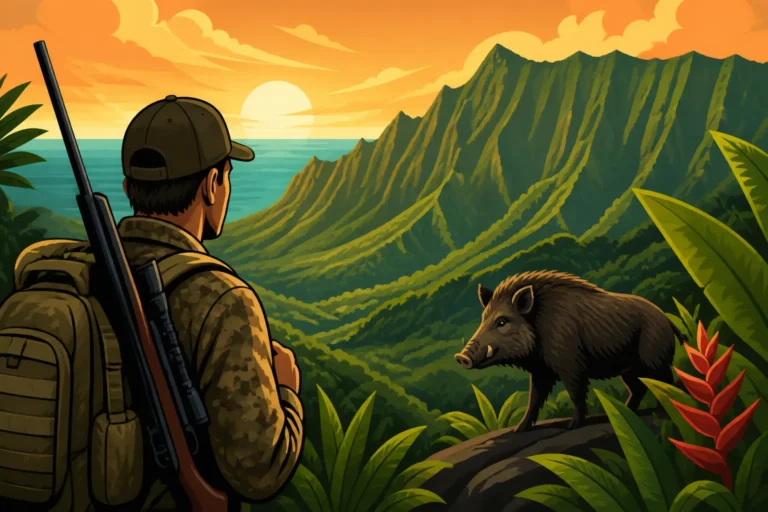
Kahuku Country, specifically the public hunting units managed by the Department of Land and Natural Resources (DLNR) Division of Forestry and Wildlife (DOFAW), is predominantly characterized by incredibly thick, tangled vegetation. You'll find yourself pushing through dense stands of strawberry guava, ironwood, hau, and a scattering of other invasive species that form a nearly impenetrable canopy. The ground beneath can be a mix of rocky lava, rich volcanic soil, or slippery mud, especially after a typical windward shower. As you move inland, you might encounter eucalyptus groves with their distinctive aroma, or even old pineapple field edges that have long since reverted to wild growth.
What makes Kahuku so challenging and rewarding at the same time is this sheer density. Visibility often drops to mere yards, forcing you to rely on your ears, nose, and tracking skills rather than long-range glassing. There are steep gulches and drainages that cut through the landscape, creating natural travel corridors and bedding areas for pigs, but also presenting significant physical obstacles for hunters. Navigating these features requires constant attention to your footing and a good understanding of the topography, something a reliable mapping app like onX Hunt can be indispensable for. Without a detailed map showing elevation changes and drainage patterns, you could easily find yourself in a deep, tangled ravine with no easy way out.
Common Hunting Challenges in Kahuku
The challenges in Kahuku are manifold, and they often begin before you even step foot in the unit. First, there's the heat and humidity, which can be relentless. Even on a seemingly cool morning, still-hunting through thick brush will quickly work up a sweat, making hydration absolutely critical. Water and Heat Planning for a Hawaii Hunt is not just a suggestion here; it's a survival guide. Then there's the cover itself. It's so thick that pigs can seemingly vanish into thin air, and tracking them becomes an art form. You're not just looking for tracks; you're looking for subtle disturbances, fresh rooting, rubbed trees, and even the scent of a nearby pig.
Another significant challenge is the sheer physical demand. Expect to be climbing, crawling, and pushing your way through brush for hours on end. This isn't a stand hunt where you sit and wait; it's an active, high-exertion hunt. Cell service can be spotty or non-existent in many parts of the unit, adding a layer of concern for safety and communication. No Cell Signal on a Hawaii Hunt means you need to have a backup plan, whether that's a satellite messenger, a whistle, or simply a detailed plan shared with your hunting partners and someone back home. Finally, Kahuku sees consistent hunting pressure, especially on weekends, so learning to navigate away from well-used trails and into less accessible areas can be key to success.
Species and Seasons: What You'll Find in Kahuku
While Hawaii boasts a variety of game animals across its islands, Kahuku Country on Oahu focuses almost exclusively on one robust and plentiful species. Knowing your target and its habits is paramount to a successful hunt.
Feral Pigs: The Primary Target
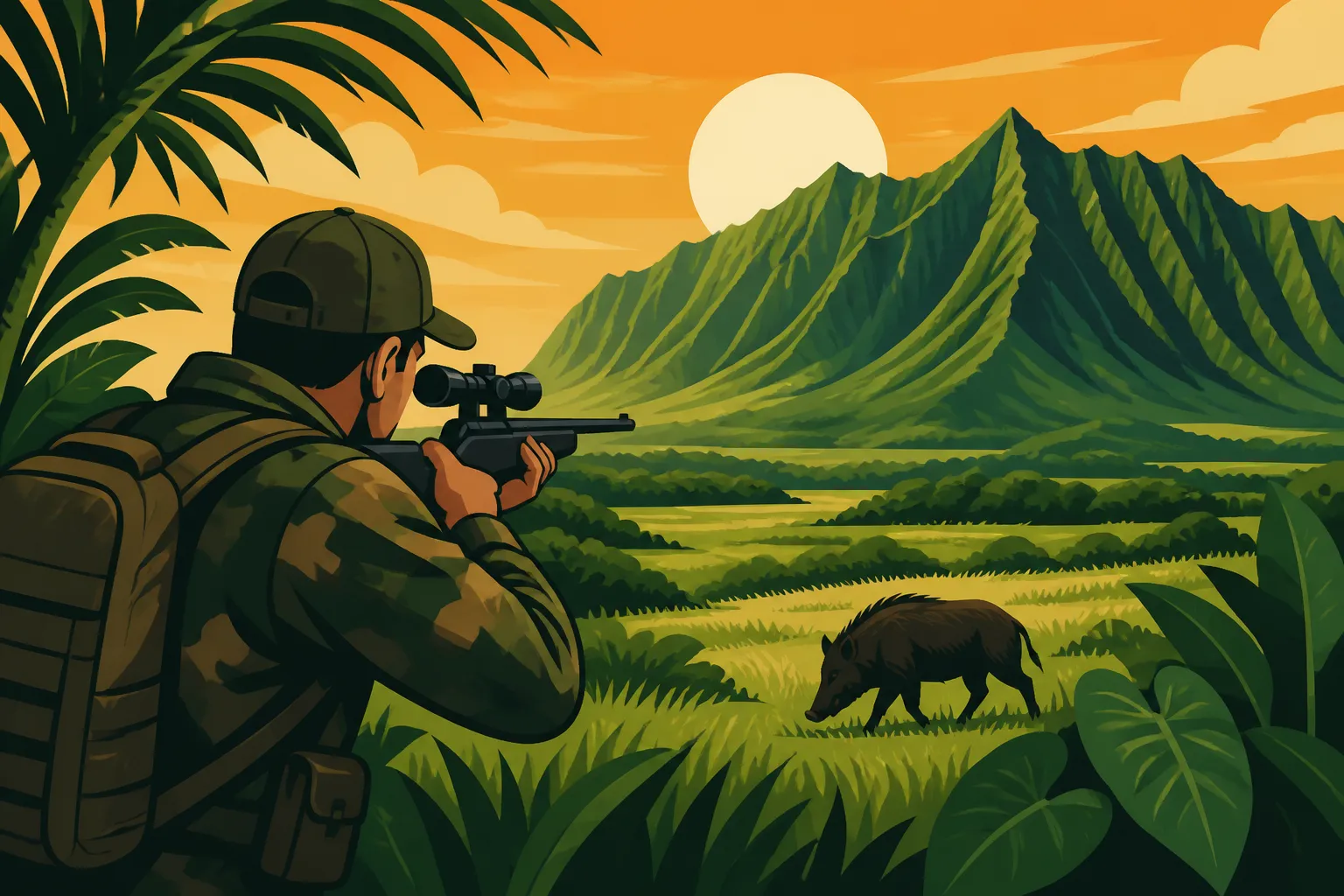
In Kahuku, as with most public hunting lands on Oahu, the feral pig is the undisputed king of game animals. These are not your docile farm pigs; they are tenacious, intelligent, and perfectly adapted to the island's challenging terrain. You'll encounter a mix of Polynesian pigs and European boar influences, often resulting in larger, hairier animals with impressive tusks. What a Hawaii Feral Boar Weighs can vary greatly, but a mature boar can easily exceed 200 pounds, making for a substantial challenge and a lot of meat.
Feral pigs thrive in Kahuku's dense cover and varied food sources. They root up the forest floor, seeking out roots, tubers, and fallen fruits, and leave tell-tale signs of their activity everywhere. Why Pigs Root Up Hawaii Rainforest isn't just a nuisance; it's a critical part of their foraging behavior that also impacts native ecosystems. They are primarily nocturnal or crepuscular, meaning they are most active at dawn and dusk, but in dense, shaded areas like Kahuku, they can move throughout the day, especially if undisturbed. You'll find them wallowing in muddy depressions to cool off and escape parasites, or bedding down deep in the thickest, nastiest tangles of guava you can imagine. Learning to interpret these signs and predict their movements is the key to getting within range.
Other Game Species and Opportunities
While feral pigs are the main attraction, it's worth noting that Kahuku doesn't offer the same diversity of big game as some other islands. You won't find Axis deer or Mouflon sheep here. However, there are limited opportunities for game bird hunting, depending on the specific unit and season. Species like Francolin, Pheasant, and Quail might be present in certain areas, particularly along the edges of more open country or near old agricultural fields.
For the most part, hunters heading into Kahuku are focused on pigs, and rightfully so. The dense cover and the challenging nature of the terrain lend themselves perfectly to still-hunting or dog hunting for these wily animals. If you're considering a bird hunt, it's always best to check the specific regulations and unit maps for designated bird hunting areas and seasons, as they often differ significantly from mammal hunting rules. However, for sheer primal hunting experience on Oahu, pigs in Kahuku are where it's at.
Navigating Access and Regulations in Kahuku
Before you even think about setting foot in Kahuku with your gear, you need to understand the local regulations and access procedures. Hawaii's hunting system can be a bit different from the mainland, and Oahu has its own nuances, so planning ahead is crucial.
Securing Your Hunting Permit and Checking In
First and foremost, you'll need a valid Hawaii hunting license. For both residents and non-residents, these can be purchased online through the DLNR DOFAW website or designated vendors. While websites like GoHunt can be a great resource for general hunting information and license acquisition across various states, for Hawaii specifically, you'll want to navigate directly to the state's wildlife division portals for the most accurate and up-to-date license purchase options. Hawaii Hunting Licenses and What They Cost will give you a detailed breakdown. Once you have your license, you'll need to understand the unit-specific requirements for Kahuku.
Many public hunting units in Hawaii, including those on Oahu, require hunters to check in and out. This is a vital safety measure and helps DOFAW monitor hunting pressure and harvest rates. Historically, this involved paper cards at hunter check stations, but increasingly, the state uses digital platforms. The OuterSpatial app has become a popular tool for this purpose, allowing you to check in and out right from your smartphone, even in areas with limited signal, as it often works offline. So, make sure you download the app and familiarize yourself with it before your hunt. Using the OuterSpatial App to Check In is a crucial step for any modern Hawaii hunter. Always confirm the specific check-in requirements for the Kahuku unit you plan to hunt, as rules can occasionally change.
Important Rules and Safety Considerations
Kahuku hunting, like all hunting in Hawaii, comes with a specific set of rules designed for safety, conservation, and respectful land use. Understanding these is non-negotiable. Weapon restrictions are a big one; generally, on Oahu, pig hunting in public units often restricts rifle use, favoring archery, muzzleloaders, or the traditional Hawaiian method of dog hunting with a knife or spear. Hawaii's Legal Weapons by Season will clarify what you can and cannot use. If you plan to hunt with dogs, you'll need to be intimately familiar with Hawaii Dog Hunting Rules, which cover everything from dog registration to the number of dogs allowed.
Safety, especially in Kahuku's dense cover, cannot be overstated. Visibility is low, and other hunters may be in the area. Hawaii Blaze Orange Requirements typically mandate a certain amount of blaze orange clothing to be worn, making you more visible to others. Always identify your target clearly and be absolutely certain of your background. Respecting unit boundaries is also critical. onX Hunt maps are excellent for showing property lines and unit boundaries, helping you avoid accidentally trespassing onto private land. There are frequently private holdings adjacent to public hunting areas, and straying across a fence can lead to serious consequences. Take the time to study maps and understand where you are at all times.
Effective Strategies for Hunting Kahuku Country
Hunting Kahuku is a masterclass in close-quarters hunting. It demands patience, keen observation, and a willingness to get down and dirty. Forget the long-range optics; here, it's about stealth and an intimate knowledge of pig behavior.
Tactics for Tracking and Approaching Pigs
The dense vegetation in Kahuku means that still-hunting is often the most effective method, especially if you're not using dogs. This means moving incredibly slowly, pausing frequently, and using all your senses. You're not walking; you're stalking. Every step should be deliberate, testing the ground before you commit your weight. Listen for the rustle of leaves, the snap of a twig, or the subtle grunts of feeding pigs. Still-Hunting Pigs in Hawaii's Wet Forest provides excellent foundational advice that translates well to Kahuku's humid, tangled environments.
Reading pig sign is an art in Kahuku. Look for fresh rooting, which indicates recent activity. Fresh tracks in mud or soft soil can tell you which direction a pig was moving and how recently. Wallows, rubbing posts, and even scat are all pieces of the puzzle. Reading Pig Sign Along a Muddy Trail can help you differentiate fresh sign from old and understand pig travel patterns. Pay close attention to the wind, as pigs have an incredible sense of smell. Always try to approach with the wind in your face, using thermals to your advantage, especially during the morning and evening hours when cool air sinks into gulches and warm air rises. If you bump a pig, freeze. They often won't bolt immediately, sometimes giving you a second chance if you remain undetected.
Essential Gear for Kahuku Hunts
Your gear choices can make or break a hunt in Kahuku. The environment is tough on equipment and even tougher on hunters who are unprepared. Start with your feet: durable, waterproof, high-ankled boots with excellent traction are non-negotiable. You'll be traversing slippery mud, sharp lava rock, and tangled roots. Good rain gear is also essential, even if the forecast looks clear; pop-up showers are common, and getting soaked miles from your vehicle is miserable.
Navigation is paramount. While a physical map is always a good backup, a robust GPS unit or a reliable mapping app like onX Hunt loaded with offline maps is critical. As mentioned, cell service is often unreliable. Hydration is another major consideration; carry more water than you think you'll need, along with electrolyte supplements. A quality fixed-blade knife, a headlamp, a basic first-aid kit, and game bags for quartering your harvest are also must-haves. For clothing, think tough, breathable fabrics that can withstand thorns and abrasion, in colors that blend with the forest. A comfortable, well-fitting pack is crucial for carrying your gear in and, hopefully, meat out.
Terrain and Challenge Comparison for Kahuku Hunting
Here's a quick look at the typical terrain you'll encounter in Kahuku and the challenges each presents:
| Terrain Type | Description | Common Challenges | Key Strategies |
|---|---|---|---|
| Dense Guava Thickets | Impenetrable walls of intertwined branches, low visibility, humid understory. | Extreme difficulty of movement, noise, limited shooting lanes, disorienting. | Slow still-hunting, use pig trails, focus on listening, short-range shots. |
| Steep Gulches/Drainages | Ravines cut through the land, often with rocky or muddy bottoms. | Treacherous footing, hidden pigs, thermals can be tricky. | Look for pig crossings, approach upwind, use ropes for safety. |
| Kiawe Flats | Drier, more open areas with thorny kiawe trees, often near coastal zones. | Razor-sharp thorns, open areas expose movement, heat. | Morning/evening hunts, move slowly, good protective clothing, watch for water sources. |
| Eucalyptus Groves | Areas with taller, more open trees but often dense undergrowth near edges. | Good for pig travel, but can be noisy due to falling bark/leaves. | Focus on edges, fresh sign, move quietly on softer ground. |
| Old Field Edges | Remnants of pineapple or sugar cane fields, reverting to brush. | Good food sources, can be very dense, often transition zones. | Hunt boundaries, fresh rooting, watch for pigs entering/exiting cover. |
Kahuku Country offers a truly wild hunting experience on Oahu, a world away from the island's famous beaches and resorts. It demands preparation, respect for the land, and a robust hunting spirit. Good luck out there!
Disclaimer
This article is for general informational purposes only and does not constitute professional advice. Laws, prices and regulations vary by location and change over time. Consult a qualified professional for guidance on your specific situation.