Hawaii Units You Can Hunt From a Road
It's no secret that some of Hawaii's hunting units require a truly epic hike just to reach the boundary, let alone get to any promising ground. The thought of slogging miles in the humid heat with all your gear can be daunting, especially for those with less time or physical limitations. This guide is all about making your life a little easier, focusing on those public hunting units across the islands where you can actually get within spitting distance of game animals by vehicle, allowing for more accessible and less strenuous hunts.
Understanding "Road Accessible" in Hawaii's Diverse Terrain
When we talk about hunting units that are "road accessible" in Hawaii, it's important to set realistic expectations. This isn't always about pulling off a paved highway and stepping directly into prime game country. Hawaii's terrain is wildly diverse, from dry, dusty kiawe flats to dense, wet rainforests and rugged volcanic slopes. What constitutes a "road" can vary dramatically, and understanding these differences is key to planning a successful, less physically demanding hunt.
What "Road" Actually Means on the Islands
On the mainland, a "road" often implies a well-maintained gravel or dirt track, sometimes even paved. In Hawaii, however, a "road" can be a much more primitive affair. You might encounter paved roads that give way to graded gravel, then to rough, rutted dirt tracks that demand a high-clearance 4WD vehicle. Sometimes, what's marked as a "road" on an older map might now be little more than an overgrown two-track or a washed-out path that hasn't seen regular vehicle traffic in years. There are also designated forest reserve roads that are actively used for management but are far from smooth. It's really about being prepared for anything. For example, some units on Maui's leeward side might have fairly decent roads leading into dry pastureland, while a unit on the Big Island's windward side could have slick, muddy tracks through dense forest that become impassable after a heavy rain.
Why Easy Access Can Be a Double-Edged Sword
The convenience of road access is undeniably appealing. It cuts down on strenuous packing, reduces travel time, and allows hunters to cover more ground by repositioning their vehicle. However, this ease of access often comes with a trade-off: increased hunting pressure. Units that are simple to drive into are naturally more popular, especially on opening weekends or during peak seasons. You'll likely encounter more vehicles, more hunters, and potentially more skittish animals. This doesn't mean these areas are devoid of game, but it does mean you'll need to adjust your tactics. Early mornings, late evenings, and mid-week hunts can help you avoid the crowds. Sometimes, even a short walk off a well-used road can put you into pockets of unpressured game. Remember, just because you can hunt from the road doesn't mean you should always stay right next to it. Hunting Hawaii on Foot Without a Truck is still a viable strategy for those willing to put in a little extra effort, even if you start from a road.
Identifying Road-Accessible Units Across the Islands
Locating these precious road-accessible units requires a bit of research and a good understanding of the local landscape. While some islands offer more straightforward options, others demand a keen eye for detail on maps and a willingness to explore.
Public Roads and Established Hunting Areas
Many of Hawaii's public hunting units, particularly those within Forest Reserves or Game Management Areas, have some form of vehicle access. On the Big Island, areas along the Saddle Road, like parts of Unit A on Mauna Kea or the Puu Anahulu Game Management Area, offer roads that allow you to drive into country where you can find Mouflon sheep and pigs. Similarly, Maui's Kula Forest Reserve and Polipoli Spring State Recreation Area provide road networks that get you into axis deer and pig habitat. On Oahu, certain sections of the Ewa Forest Reserve or Waianae Kai Forest Reserve have designated access roads.
It's crucial to consult the Hawaii Department of Land and Natural Resources (DLNR) Division of Forestry and Wildlife (DOFAW) website for the most current maps and unit rules. These maps will often indicate main access roads, though their condition isn't always detailed. For a general overview of how these areas operate, check out Hawaii's Hunting Units and How They Work.
Common Road-Accessible Unit Types & What to Expect:
| Unit Type | Typical Road Condition | Animals Commonly Found | Hunting Pressure Level | Notes |
|---|---|---|---|---|
| Dry Leeward Side Pastures | Paved to well-maintained gravel | Axis Deer, Goats | Moderate to High | Often ranch lands with public access, can be dusty. |
| Forest Reserve Roads | Graded gravel to rough dirt | Pigs, Goats, Birds | Moderate | Can be muddy; gates may close during wet periods. |
| Old Plantation/Ranch Tracks | Overgrown two-track, rutted | Pigs, Goats, Birds | Low to Moderate | Requires 4WD, often less frequented. |
| Volcanic/Cinder Cone Areas | Rough lava tracks, dirt | Mouflon, Goats | Moderate | Very abrasive on tires, can be remote. |
Using Digital Tools for Scouting Access
In today's age, digital mapping applications are your best friend for identifying road-accessible hunting units. Services like onX Hunt provide detailed satellite imagery, property boundaries (crucial for distinguishing public from private land), and often overlay public hunting unit boundaries. This allows you to visually trace roads and trails, identify potential parking spots, and assess the terrain before you even set foot on the island. You can zoom in and see the quality of the "road" – whether it looks like a well-traveled track or an abandoned overgrown path.
Another valuable resource is the GoHunt platform, which offers a comprehensive overview of regulations, season dates, and unit information. While not a mapping tool in the same vein as onX Hunt, it's an excellent place to gather intelligence on specific units that might mention vehicle access or common entry points.
When using these tools, pay close attention to:
- Public/Private Boundaries: Ensure the road you plan to use is on public land or has legal public access. Trespassing is a serious offense.
- Designated Access Points: Some units require you to enter through specific gates or check stations. Checking In and Out of a Hawaii Unit is a mandatory step for almost all public land hunts.
- Road Closures: Always double-check DOFAW announcements for temporary road closures due to weather, maintenance, or special events. This is especially critical for Reaching a Hawaii Unit by 4WD Road.
Strategies for Hunting from the Road (and What Not to Do)
Hunting from a road-accessible unit doesn't mean driving around with a rifle out the window – that's illegal and highly unsafe. It means using the road as a convenient starting point to access hunting grounds, glass clearings, or listen for sounds, then getting out of your vehicle and hunting on foot.
Ethical Considerations and Legal Boundaries
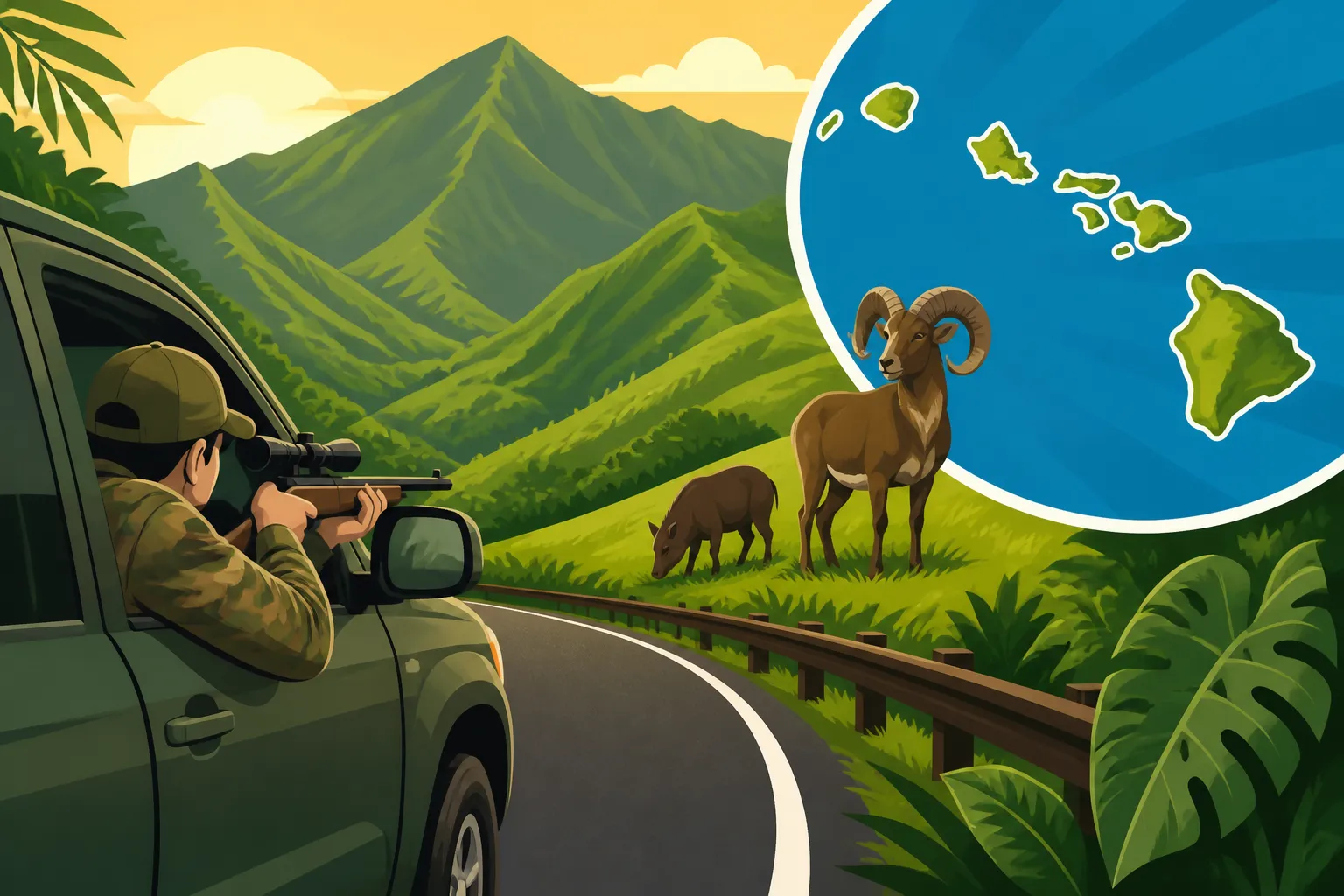
First and foremost, never, ever shoot from a vehicle or across a public road. This is not only unlawful but incredibly dangerous. Hawaii has strict rules about discharging firearms near roads and residences. Always know your target, what's beyond it, and ensure you have a safe backdrop. Road hunting, in the legal and ethical sense, means using vehicle access to get to the hunt, not perform the hunt from the driver's seat.
You should always be aware of Hawaii Blaze Orange and Safety Rules. Even if you're just stepping out of your truck for a quick look, wearing visible clothing is paramount, especially in popular units. Respect other hunters, hikers, and anyone else you might encounter. A little aloha goes a long way.
Tactics for Maximizing Roadside Opportunities
The beauty of road access is its flexibility. Here are a few tactics to employ:
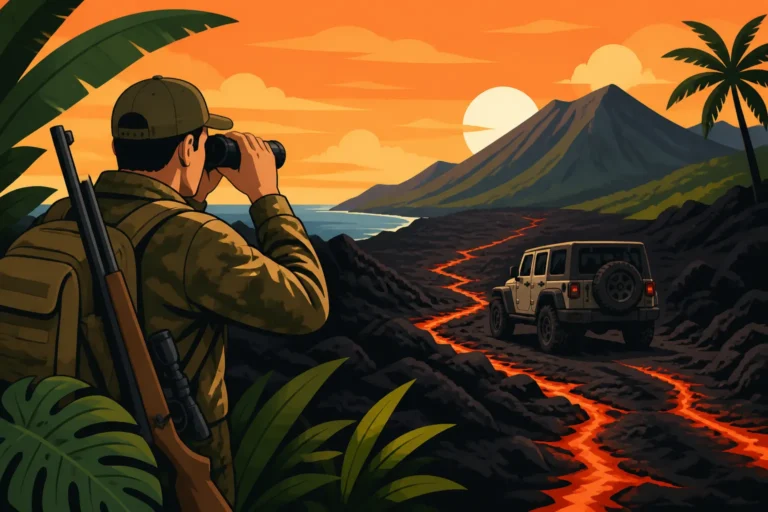
- Glassing: Drive slowly and stop frequently at vantage points along the road. Use binoculars or a spotting scope to scan distant hillsides, gulches, and clearings for animals. This is particularly effective in open country like many dry leeward units where axis deer and goats frequent. If you spot something, park safely off the road, grab your gear, and begin a careful stalk. Glassing a Hawaii Coastline for Goats or Glassing a Lava Flow for Mouflon Rams are specific examples where this technique shines.
- Still-Hunting Short Forays: Park your vehicle and embark on short, deliberate still-hunting walks along ridges, through sparse forest, or into small gulches just off the road. You don't have to hike five miles to find game. Often, animals will move into these fringe areas, especially during low light, to feed or avoid pressure deeper in. You can cover more ground by doing several short walks from different roadside parking spots than by one long, exhausting trek.
- Listen for Sounds: Especially for pigs in denser cover, listen for rooting noises, disturbed vegetation, or distant grunts. Axis deer might bark, and birds will chatter. Roadsides can often act as natural clearings or edges where sounds carry further.
- Focus on Low Light: Animals are often most active at dawn and dusk. Driving into a unit before first light and being ready to step out and hunt as the sun rises, or hunting until the last legal shooting light, can greatly increase your chances. Hunting Axis Deer at First Light in Hawaii is a prime example of this strategy.
- Reading Sign: Stop at muddy sections of road or trail crossings and look for fresh tracks, droppings, or rub signs. These can tell you what animals are in the area and how recently they've passed through. A fresh pig track crossing a forest road is a pretty good indicator you should start still-hunting that area.
Vehicle Choice and Preparation for Road Hunts
Your choice of vehicle and how you prepare it can make or break your road-accessible hunt in Hawaii. While "road accessible" might sound easy, the reality often demands a little more ruggedness than your average sedan can provide.
The Role of Your Vehicle: 2WD vs. 4WD
For some truly accessible spots, a reliable 2WD vehicle with decent ground clearance might suffice, especially on paved or well-maintained gravel roads that lead to trailheads. Think of areas like certain state park access roads or main thoroughfares that skirt hunting units.
However, if you want to push deeper into many of Hawaii's "road-accessible" units, particularly those in the forest reserves or old ranch lands, a 4WD vehicle is almost mandatory. Many tracks quickly degrade into rutted, rocky, muddy, or even washed-out paths. Without 4WD, you risk getting stuck, damaging your vehicle, or being forced to turn back early. Always remember that Vehicle Rules on Hawaii Public Land can vary, and some areas may restrict certain types of vehicles.
Consider these factors when choosing your vehicle:
- Ground Clearance: This is paramount. High centers and low bumpers will get hung up on rocks, roots, and ruts.
- Tires: All-terrain or mud-terrain tires offer better traction on loose dirt, gravel, and mud, and are more resistant to punctures from sharp lava or kiawe thorns.
- Reliability: Getting stranded miles from cell service is no fun. Ensure your vehicle is in good working order before heading out.
Essential Gear for Roadside Hunting Safety and Success
Even when hunting close to roads, a thorough gear list is critical for safety, success, and convenience. Don't assume proximity to your vehicle negates the need for proper planning.
- Navigation Tools: A physical map (and compass!) is always a good backup, but a reliable GPS device or a smartphone with downloaded offline maps (like
onX Hunt) is invaluable. Cell service is spotty at best in many Hawaii hunting areas, so don't rely on live data. - Water and Snacks: Dehydration can set in quickly in Hawaii's heat and humidity, even on short walks. Always carry more water than you think you'll need.
- First-Aid Kit: Accidents happen, and even a simple scrape can become problematic in a tropical environment. Include basics for cuts, blisters, and insect bites.
- Field Dressing Kit: Knives, gloves, game bags. If you're successful, you'll need to field dress your animal quickly, especially in the heat. Field Dressing Axis Deer in Hawaii Heat is a skill you'll want to have down.
- Recovery Gear (for your vehicle): If you're in a 4WD, consider a tow strap, shovel, and traction boards. Better to have them and not need them.
- Appropriate Footwear: Even for short walks, sturdy, comfortable hiking boots with good ankle support are essential for navigating uneven terrain, rocks, and mud.
- Rain Gear: Weather can change rapidly in Hawaii, especially in windward or higher elevation units. A lightweight, packable rain jacket is always a good idea.
- Headlamp/Flashlight: If you're hunting at dawn or dusk, you'll inevitably be walking in the dark at some point.
- Hunting License and Permits: Always carry your valid Hawaii hunting license and any required permit-tags. You can check the details on Hawaii Hunting Licenses and What They Cost and How Hawaii's Permit-Tag System Works.
- Communication Device: A fully charged cell phone (for emergency calls if you find service), or better yet, a satellite messenger (like a Garmin inReach) for truly remote areas, can be a lifesaver. No Cell Signal on a Hawaii Hunt is a common reality.
Being prepared ensures that your road-accessible hunt is not only productive but also safe and enjoyable. The convenience of a nearby vehicle is a luxury, but it doesn't replace the need for sound hunting practices and wilderness preparedness.
Disclaimer
This article is for general informational purposes only and does not constitute professional advice. Laws, prices and regulations vary by location and change over time. Consult a qualified professional for guidance on your specific situation.