Hawaii Unit Rules That Change by Island
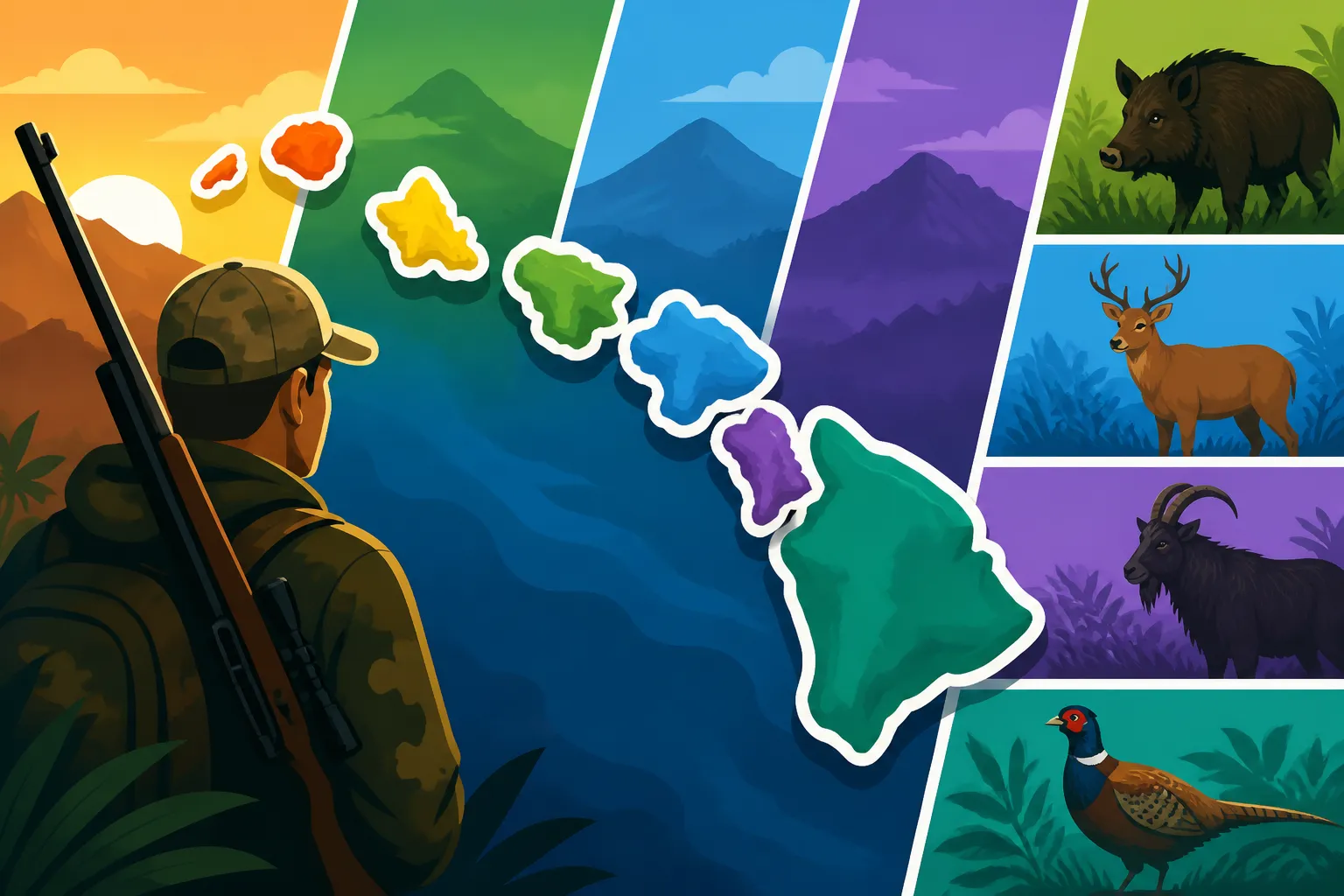
One of the biggest head-scratchers for hunters looking to explore Hawaii's diverse public lands is just how much the rules can shift from one island to the next. You might think a hunting license covers you universally, but the reality is that bag limits, season dates, weapon restrictions, and even check-in procedures can change dramatically depending on whether you're chasing pigs on Oahu or axis deer on Maui. This guide is here to untangle those complexities, helping you understand why these island-specific nuances exist and how to navigate them so your hunt goes smoothly.
Why Rules Vary Across the Islands
It's easy to assume that a single set of hunting regulations should cover all the Hawaiian Islands, much like how a state's hunting laws usually apply statewide on the mainland. However, Hawaii is a unique archipelago, and its hunting rules reflect that distinct geography and ecology. Each major island presents its own set of challenges and opportunities, leading to management strategies that are highly localized. This isn't just bureaucratic red tape; it's a deliberate approach to conservation and wildlife management.
The Landscape and Species Differences
Think about the incredible variation in Hawaii's landscapes. You have the vast, arid lava flows and high-elevation mamane forests of Hawaii Island, contrasting sharply with the dense, wet rainforests of the windward side or the steep, unforgiving sea cliffs of Molokai. Each of these environments supports different populations of game animals, and sometimes even different species. For instance, axis deer are abundant on Maui, Lanai, and Molokai, but you won't find them on Hawaii Island, where mouflon sheep and feral goats are the primary big game in certain units. Axis Deer, Hawaii's Signature Big Game This ecological patchwork means that a season structure designed for deer in dry kiawe flats wouldn't make sense for pig hunting in a taro patch. Managers must consider the specific habitat, the population dynamics of the local game species, and the unique pressures on that particular island's native ecosystems when setting rules.
Beyond the major game mammals, even game bird populations vary. Chukar partridge thrive in the high, dry country of Hawaii Island, while francolin and pheasant might be found in agricultural areas or lower elevation forests on other islands. Hawaii Game Bird Hunting The land available for public hunting also differs greatly. Some islands have extensive public hunting units, while others have very limited access, which directly impacts how many hunters can participate and what species they can pursue. This mosaic of land types and species distribution necessitates a flexible regulatory framework, rather than a one-size-fits-all approach that would likely be ineffective or even detrimental to local wildlife.
Historical Context and Local Management
The history of game introduction and land use also plays a significant role in today's varied rules. Many of Hawaii's game animals were introduced over centuries, often for food, sport, or pest control, and their populations have since spread differently across the islands. Why Every Hawaii Game Animal Was Introduced For example, feral pigs have a long and complex history on all the islands, but the specific challenges they pose to native forests might be more acute on an island like Oahu, where urban interface is greater, compared to a more remote area of the Big Island. Local communities also have varying relationships with hunting and wildlife, and these perspectives can influence management decisions.
Furthermore, the Hawaii Department of Land and Natural Resources (DLNR) Division of Forestry and Wildlife (DOFAW) manages these resources, but often works closely with local advisory committees and community groups on each island. This localized input helps ensure that regulations are not only scientifically sound but also culturally sensitive and responsive to the needs of the community and the unique conditions of that particular island. What works for managing goats on Kauai's canyons might not be suitable for managing them on the cliffs of Maui. The result is a system that, while sometimes complex for the hunter, aims to provide the best balance of hunting opportunity and conservation for each specific island environment.
Island-Specific Regulations You Need to Know
Understanding that rules differ is one thing, but knowing how they differ is crucial for a successful and legal hunt. It’s not just about seasons and bag limits; it extends to specific unit entry requirements, weapon restrictions, and even vehicle access. Ignoring these nuances can lead to citations, or worse, the forfeiture of your hard-earned game.
Big Island (Hawaii Island) Rules
Hawaii Island, the largest in the chain, offers a vast array of hunting opportunities, primarily for feral pigs, goats, and mouflon sheep. The sheer size of the island means a wide range of habitats, from sea level up to the slopes of Mauna Kea and Mauna Loa. Consequently, its hunting units often have distinct seasons and rules. For instance, high-elevation units like Mauna Kea Game Management Area (GMA) are prime mouflon country and have specific drawn hunt seasons, often with archer-only periods. Hunting Mouflon in Mauna Kea's Thin Air Other units might be open year-round for pigs and goats with specific weapon type restrictions on different days of the week.
One key difference on the Big Island is the prevalence of feral sheep, often intermixed with mouflon, particularly in areas like Puu Waawaa. Bag limits for these species can vary by unit and season, sometimes distinguishing between hybrid sheep and pure mouflon. Mouflon and Feral Sheep Hybrids Vehicle access can also be highly restricted in certain forest reserves or watershed areas, often requiring walk-in access or specific 4WD permits, if allowed at all. Check-in procedures on the Big Island are often managed through physical check stations or the OuterSpatial app, and knowing which method is required for your chosen unit is paramount. Always double-check the DOFAW website or use an app like onX Hunt to ensure you have the most current information for your specific Big Island unit.
Maui Nui (Maui, Lanai, Molokai) Complexities
The islands of Maui, Lanai, and Molokai, collectively known as Maui Nui, are renowned for their axis deer populations, which are a major draw for hunters. However, the rules for hunting these coveted deer, as well as pigs and goats, vary significantly across these three islands.
Maui: On Maui, certain units like Kahikinui are known for year-round axis deer hunting, often with different rules for rifle, muzzleloader, and archery seasons. Hunting Maui's Year-Round Axis Deer Units Other units, such as Kula Forest Reserve, might have more restricted seasons for pigs and goats. Maui also has ongoing efforts to manage the axis deer population, leading to potential changes in bag limits or specific hunt opportunities. Hawaii's Maui Nui Deer Control Program
Lanai: Lanai is famous for its highly sought-after axis deer and mouflon drawn hunts. These hunts are strictly regulated, often with specific weekend dates and very limited tags. How the Lanai Axis Deer Draw Works Public hunting on Lanai for these species is typically through an annual lottery, and once you have a tag, the rules around weapon type and specific unit access are very precise. You absolutely cannot hire a guide for public land hunts on Lanai, which is a major difference from other islands where guided hunts are common. Hunting Lanai Without a Guide
Molokai: Molokai is known for its large-bodied axis deer and its more rugged, remote hunting experience. While Molokai also has drawn hunts for axis deer, there might be private land opportunities that work under different rules. Hunting Molokai's Big-Bodied Axis Bucks Access to certain Molokai units can be particularly challenging, sometimes requiring local knowledge or even boat access to coastal areas for goat hunting. The regulations here often emphasize respectful land use, given the close-knit community and significant private land holdings.
Kauai and Oahu's Unique Approaches
Kauai and Oahu, while both populated islands, have very different hunting landscapes and corresponding regulations.
Kauai: Kauai is unique for being the only island with a population of black-tailed deer, in addition to pigs and goats. The black-tailed deer hunt is a popular event, typically held over specific weekends with rifle, muzzleloader, and archery seasons. Black-Tailed Deer Hunting in Hawaii Units like Kekaha and Na Pali-Kona Forest Reserve are primary hunting grounds, and their rules for deer often involve specific check-in times and designated hunting zones. For pigs and goats, some units on Kauai allow dog hunting, which comes with its own set of rules regarding dog registration and behavior. Hunting Goats in a Kauai Canyon Understanding the specific unit maps and boundaries is critical here, as conservation areas and private lands are often interspersed with public hunting grounds.
Oahu: Oahu is perhaps the most surprising in terms of its hunting regulations, primarily because it does not have an axis deer population, and thus no permit-tag system for deer. Hunting on Oahu is focused almost exclusively on feral pigs and goats, often in dense, wet forest reserves like Ewa Forest Reserve or Waianae Kai. Hunting Oahu's Public Ridges These hunts are typically year-round in designated units, with regulations often focused on preventing impacts to native ecosystems and ensuring public safety in areas closer to population centers. Dog hunting for pigs is very common on Oahu, and the rules around dog use, weapon types, and check-in procedures are tailored to these specific conditions. It's often more about managing a nuisance species than a trophy hunt, though big boars are definitely found. What Oahu Hunters Do Without Tags
| Island | Primary Big Game Species (Public Land) | Typical Season Structure | Special Considerations | Example Check-in/Out |
|---|---|---|---|---|
| Hawaii Island | Mouflon Sheep, Feral Pigs, Feral Goats, Feral Sheep | Year-round (pigs/goats), Drawn (mouflon) | High elevation units, diverse habitats, some archery-only. | Physical check stations or OuterSpatial app. |
| Maui | Axis Deer, Feral Pigs, Feral Goats | Year-round (axis deer), Seasonal (pigs/goats) | High hunting pressure, specific weapon restrictions. | OuterSpatial app, some physical stations. |
| Lanai | Axis Deer, Mouflon Sheep | Drawn Hunt (seasonal, limited tags) | No guides on public land, very limited access, high demand. | Online check-in via GoHunt, specific unit entry points. |
| Molokai | Axis Deer, Feral Pigs, Feral Goats | Drawn Hunt (axis deer), Year-round (pigs/goats) | Remote access, rugged terrain, focus on respectful use. | OuterSpatial app, or manual forms at check stations. |
| Kauai | Black-Tailed Deer, Feral Pigs, Feral Goats | Seasonal (deer), Year-round (pigs/goats) | Only island with black-tailed deer, common dog hunting. | Physical check stations or OuterSpatial app. |
| Oahu | Feral Pigs, Feral Goats | Year-round (pigs/goats) | No axis deer, dog hunting prevalent, closer to urban areas. | OuterSpatial app, often no physical stations. |
Practical Steps for Navigating Island-Specific Rules
Feeling a bit overwhelmed? That's totally normal! The good news is that with a bit of proactive research and the right tools, you can confidently navigate Hawaii's island-specific hunting regulations. The key is to never assume that what you learned for one island applies to another, or even that last year's rules are the same this year.
Leveraging Technology for Current Information
In this day and age, technology is your best friend for staying informed. The Hawaii Department of Land and Natural Resources (DLNR) Division of Forestry and Wildlife (DOFAW) manages the official information, and their website is the primary source. However, sifting through PDFs can sometimes be a chore.
This is where specialized hunting apps really shine. Tools like onX Hunt are invaluable for overlaying public land boundaries, unit lines, and even private land parcels directly onto a topographic map on your phone. This visual aid makes it much easier to understand where you can and cannot hunt, and to identify specific units mentioned in the regulations. Many hunters use onX Hunt to confirm their location in the field, especially in areas with unmarked boundaries or thick vegetation. It's truly a game-changer for avoiding accidental trespass or ensuring you're in the correct unit for your drawn tag.
Another excellent resource is the GoHunt Hawaii portal. This online platform is often where you'll go to purchase your Hawaii Hunting Licenses and What They Cost, apply for drawn hunts, and check in and out of units, particularly on islands like Lanai. Beyond just transactions, GoHunt often provides links to the most current regulations, season dates, and maps for each island. It’s also the place where DOFAW posts important announcements about Why Hawaii Cancels or Shifts Seasons or changes to unit access, so it's wise to check it regularly as your hunt approaches. Getting familiar with these digital tools before you even arrive on island can save you a lot of headaches and keep you compliant with the ever-changing rules.
The Importance of Direct Communication
While technology is fantastic, nothing beats direct communication when you have specific questions or need clarification. Always remember that the folks at DOFAW are there to help, and they genuinely want hunters to be safe and compliant. Don't hesitate to reach out to the DOFAW office on the island you plan to hunt. Their local staff often have the most up-to-date information on subtle changes, temporary closures, or specific access routes that might not be immediately obvious in a general regulation pamphlet.
For example, if you're planning a pig hunt in a specific gulch on Oahu, calling the Oahu DOFAW office can clarify current conditions, recent changes in access roads, or any localized rules that might apply to that particular area. Similarly, if you're traveling from the mainland, confirming specific firearm transport rules with the local police department in your port of entry, in addition to DOFAW, can prevent issues at the airport. Registering a Firearm After Arriving in Hawaii Building a relationship with local hunters, if possible, can also be incredibly beneficial. They often have firsthand knowledge of current animal movements, unit conditions, and any unwritten rules or local etiquette that might enhance your experience. While it's crucial to always verify information with official sources, local insights can provide valuable context and help you interpret the regulations more effectively.
Disclaimer
This article is for general informational purposes only and does not constitute professional advice. Laws, prices and regulations vary by location and change over time. Consult a qualified professional for guidance on your specific situation.