Hunting an Old Sugar Plantation Field
Hunting old sugar plantation fields in Hawaii presents a unique challenge, often leaving hunters scratching their heads about where to even begin in these overgrown, forgotten landscapes. It's easy to feel overwhelmed by the dense thickets, remnants of old irrigation, and a general sense of history that seems to swallow up any obvious game trails. This guide is here to unravel the mysteries of these historical hunting grounds, helping you understand the terrain, identify the game, and develop effective strategies to make your hunt a success.
Understanding the Landscape: What Makes Old Sugar Lands Unique
Imagine vast tracts of land that were once meticulously cultivated, rows of cane stretching for miles, fed by intricate irrigation systems and traversed by narrow gauge rail lines. Now, fast forward decades, and much of that infrastructure is reclaimed by aggressive invasive species, creating a truly distinct environment. These areas aren't like pristine native forests or open lava fields; they're a hybrid of human history and wild nature, and understanding this blend is key to hunting them effectively.
The Ghost of Agriculture Past: Residual Crops and Features
Even though the sugar cane itself might be long gone, the legacy of its cultivation profoundly impacts the current landscape. You'll find areas where soil composition was altered for agriculture, often supporting a different kind of vegetation than surrounding wildlands. Sometimes, you'll even stumble upon volunteer plants or remnants of other crops that were interplanted or followed the sugar. These can be incredible attractants for game. For instance, patches of wild guava, haole koa, or even volunteer fruit trees that once served a plantation camp can become prime feeding grounds. The old furrows, though now smoothed by erosion and vegetation, can still subtly influence water flow and animal movement, creating linear travel corridors that might not be immediately obvious. Pay attention to changes in vegetation density and type; these often correspond to former planting areas or access roads.
Overgrown Alleys and Abandoned Infrastructure
The pathways that once allowed workers and machinery to navigate the cane fields are now often choked with thorny kiawe, tough uluhe ferns, or towering albizia trees. These "overgrown alleys" and the skeletal remains of irrigation flumes, water pipes, and even small concrete foundations create incredible cover and natural funnels for game. While they can be a nightmare to traverse, for the cunning hunter, they're invaluable. Animals will use these dense, often linear features for bedding, travel, and escape cover, especially during daylight hours. A crumbling concrete wall might offer a pig a cool spot to bed down, while a dense thicket growing along an old ditch line provides perfect cover for an axis deer to sneak through unnoticed. Learning to read these historical scars on the landscape, and recognizing how game animals adapt to and utilize them, is a fundamental skill for success in these units. Hunting a Hawaii Pineapple Field Edge or Hunting a Macadamia Orchard Edge often presents similar challenges with overgrown infrastructure.
Water Sources: Irrigation Ditches and Reservoirs
Water was, and still is, life for these former agricultural powerhouses. The old irrigation systems—ditches, channels, and sometimes even small reservoirs or stock ponds—can be absolute magnets for game, especially in the drier leeward areas. Many of these systems, though no longer actively managed for sugar, still collect rainwater or seep spring water, creating crucial hydration points. During dry spells, these become even more vital, drawing animals from miles around. Scouting these water sources, looking for fresh tracks, scat, and rubs, can tell you a lot about the local game population and their movement patterns. Sometimes, an old dirt tank that once irrigated acres of cane is now a muddy wallow and the center of pig activity. Always approach these areas carefully, as game animals are often wary near their watering holes. Hunting a Water Source in Dry Hawaii Country covers some specific strategies for these critical areas.
Targeting Game: What Animals Thrive Here?
While you might envision pristine wilderness when thinking of hunting, Hawaii's old sugar lands host a surprising array of introduced game animals. These resilient species have adapted incredibly well to these transformed environments, often finding food, water, and cover in abundance. Knowing what to expect and where to focus your efforts is paramount.
Feral Pigs: The Ultimate Plantation Resident
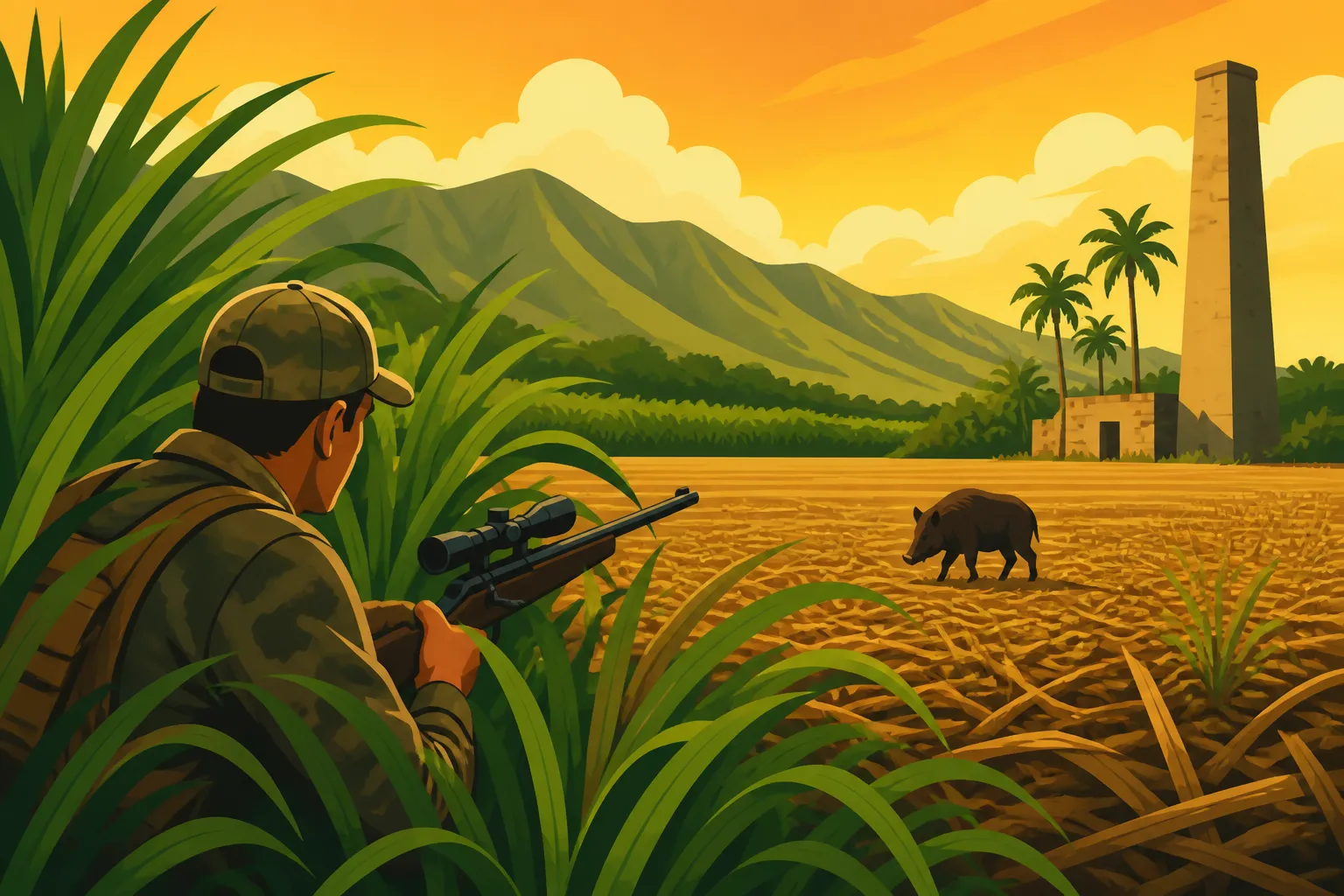
If there's one animal that absolutely thrives in old sugar plantation fields, it's the feral pig. These intelligent and adaptable creatures find an endless buffet in the varied vegetation that takes over these lands. They'll root up anything from wild ginger to invasive grasses, feast on fallen fruits from guava and mango trees, and wallow in the muddy remnants of old irrigation ditches. The dense, often thorny tangles that grow in these fields offer ideal bedding and escape cover, making them notoriously difficult to spot until you're right on top of them. You'll find fresh rooting, distinct tracks, and rub marks on trees and rocks where they've scratched. Look for their presence around water sources, in the thickest parts of the overgrown alleys, and anywhere there's a good food source. Hunting Hawaii's Feral Pigs goes into more detail about these tenacious creatures, and if you're planning a quiet hunt, Hunting Pigs Without Dogs in Hawaii might be helpful.
Goats and Axis Deer: Edge Dwellers
While pigs love the thick stuff, feral goats and axis deer tend to utilize the edges of these fields, or areas where the cover isn't quite so impenetrable. Goats, with their incredible agility, will often browse along the steepest banks of old ditches or on rocky outcrops adjacent to the fields, munching on tough shrubs and grasses. Axis deer, particularly on islands like Maui or Molokai, will move into the fringes of these former plantations to feed on new growth, especially at dawn and dusk. They appreciate the mixed cover—dense enough for concealment but open enough for their excellent eyesight to scan for threats. Look for their sign, like browsed vegetation, tracks, and droppings, in areas where the dense thickets meet more open patches or along the boundaries with neighboring forests or pastures. They often use the old overgrown roads as travel corridors, moving between bedding areas and feeding grounds. Axis Deer Hunting in Hawaii and Hunting Hawaii's Feral Goats are excellent resources for understanding these species.
Game Birds: A Different Kind of Hunt
Beyond the hoofed game, old sugar plantation fields can also offer fantastic opportunities for game bird hunting. Species like francolin, pheasant, and quail often flourish in the varied habitat these fields provide. The mix of open grassy patches, dense brush for cover, and scattered water sources creates ideal bird habitat. You might find Francolin scuttling through tall grasses, pheasants bursting from a cane stubble field now overgrown with weeds, or coveys of quail exploding from underfoot near a hedgerow. Unlike the stealthy approach often required for pigs or deer, bird hunting in these areas usually involves walking out birds with or without a dog. Pay attention to areas with good seed sources, thick ground cover, and access to water. Hawaii Game Bird Hunting provides a broad overview of the various game birds you might encounter.
| Game Animal | Typical Habitat in Sugar Fields | Primary Food Sources | Common Sign to Look For |
|---|---|---|---|
| Feral Pig | Dense thickets, old irrigation ditches, wallows, overgrown roads | Roots, tubers, fruits, invertebrates, fallen cane | Rooting, tracks (cloven hoof, often dewclaws visible), scat, mud wallows, rubs on trees |
| Axis Deer | Edges of fields, transitions to forest/pasture, overgrown roads | Grasses, forbs, browse from shrubs | Tracks (smaller cloven hoof), scat (pellets), rubs on small trees, fresh browse marks |
| Feral Goat | Steep banks, rocky areas, open patches, field edges | Woody browse, grasses, forbs | Tracks (small cloven hoof, often distinct on rocky ground), scat (small pellets), browse lines on shrubs |
| Game Birds | Grassy patches, dense brush, edges, open fields with seed crops | Seeds, insects, tender shoots | Dusting bowls, tracks (three forward toes, one back), droppings, audible calls |
Strategies for Success: Navigating and Hunting These Fields
Hunting these historical areas isn't like hunting a pristine forest. It requires a specific mindset, a good understanding of the terrain, and robust planning. The challenges are many, from dense vegetation to hidden hazards, but with the right approach, they can be incredibly rewarding.
Scouting the Terrain: Tools and Techniques
Before you ever set foot in an old sugar plantation field with your weapon, you need to scout. This is non-negotiable. Online mapping tools are your best friends here. Brands like onX Hunt are invaluable for identifying property boundaries, old roads, and topographic features that might hint at former agricultural layouts. Zoom in and look for straight lines that might indicate old field edges, subtle depressions that could be irrigation ditches, or circular patterns that suggest old reservoirs. Pay attention to how these features intersect with natural gulches or forested areas, as these interfaces are often prime game corridors.
Once you're on the ground, walk the area. Look for trails that animals are actively using, even if they're barely visible. These game trails often follow the path of least resistance, which might be along the remnants of an old service road or through a less dense part of a thicket. Check for fresh tracks, droppings, and feeding signs. Remember, these lands are constantly changing as vegetation reclaims them, so what was a passable trail last year might be a thorny maze this year. Scouting a Hawaii Hunting Unit Before Opening will give you more general tips that apply well here.
Stalking Tactics in Mixed Cover
Hunting in these fields often means close-quarters encounters. The mixed cover—dense brush interspersed with more open patches—requires a blend of stealth and patience. Still-hunting, moving slowly and deliberately, pausing frequently to observe and listen, is often the most effective method. Use the dense vegetation to your advantage, breaking up your silhouette and masking your movements. However, be prepared for sudden encounters; game can appear out of nowhere in these environments.
When you do spot an animal, use the cover to close the distance. This often means taking a circuitous route to get downwind and into a shooting position. Be mindful of the noise you make; snapping twigs or rustling through dry leaves can instantly alert wary game. If you're bowhunting, practice shooting in tight windows and at odd angles, as a clear shot might be fleeting. For rifle hunters, remember that dense cover can deflect bullets, so ensure you have a clean line of sight to your target.
Safety First: Hidden Hazards and Property Lines
Old sugar plantation fields are rife with hidden hazards. Uneven ground, crumbling concrete foundations, rusty rebar, and abandoned farm equipment can all pose serious risks. Always watch your footing, especially when pushing through thick vegetation. Wear sturdy boots with good ankle support.
Property lines are another critical consideration. Many old plantation lands have been subdivided over the years, or border active agricultural operations. It is absolutely crucial to know where you are at all times. Use your onX Hunt app or a physical map and GPS to ensure you are on public hunting land or private land for which you have explicit permission. Accidentally trespassing or shooting onto private property can lead to severe consequences. Always be aware of your backdrop and what lies beyond your target, as dwellings, roads, or other hunters might be nearby, even if not immediately visible.
Permits and Access: How to Hunt These Historical Areas
Navigating the administrative side of hunting in Hawaii, especially on these unique former plantation lands, can sometimes feel like a hunt in itself. It's crucial to understand the permit system and access rules before you even think about stepping into the field.
Public Access Versus Private Land Challenges
Many of Hawaii's former sugar plantation lands are now either state-managed public hunting units or privately owned parcels. The distinction is vital. Public hunting lands are managed by the Department of Land and Natural Resources (DLNR) Division of Forestry and Wildlife (DOFAW) and require a valid Hawaii hunting license and any necessary unit-specific permits or tags. These lands are often checkerboarded with private holdings, creating complex boundaries that necessitate careful attention to your location. Some private landowners might also lease hunting rights or offer guided hunts on their property, which comes with its own set of arrangements and fees. Without specific permission, hunting on private land is trespassing and illegal. It's always a good idea to research specific units thoroughly to understand the land ownership patterns. Getting Onto Hawaii Private Land will give you more insight into this complex topic.
Checking Unit Regulations and Boundaries
Before any hunt, you must check the specific regulations for the unit you intend to hunt. These regulations dictate season dates, bag limits, legal weapons, and check-in/check-out procedures. Unit boundaries can be tricky in former plantation areas, as they often follow old fence lines, roads, or natural features that may now be obscured by vegetation.
The GoHunt website, or the State of Hawaii's official DLNR/DOFAW site, is your authoritative source for current regulations, public hunting area maps, and any special announcements or closures. You'll typically need to purchase your Hawaii hunting license and any required game mammal tags through a system often linked to the DOFAW website or through vendors. For checking in and out of units, the OuterSpatial app has become a critical tool for many hunters, though some units still use paper check-in stations. Make sure you understand the check-in and check-out procedures for your chosen unit. For a deeper dive into the overall system, check out Hawaii's Hunting Units and How They Work and Hawaii Hunting Licenses and What They Cost.
The bottom line is that while hunting old sugar plantation fields offers a unique and often productive experience, it demands respect for the land's history, diligent preparation, and strict adherence to regulations. Do your homework, scout effectively, and stay safe out there.
Disclaimer
This article is for general informational purposes only and does not constitute professional advice. Laws, prices and regulations vary by location and change over time. Consult a qualified professional for guidance on your specific situation.