Hunting Near a Hawaii Conservation Fence
Stepping into Hawaii’s mountain hunting units often means running directly into tall, wire-woven ungulate fences that stretch for miles across steep gulches and dense rain forests. Navigating these boundaries can be frustrating when game trails seem to disappear behind steel mesh, leaving you uncertain about legal access and animal movements. This guide breaks down how conservation fences alter game behavior, how to stay strictly legal on public ground, and how to use these physical barriers to improve your hunting strategy.
The Reality of Conservation Fences in Hawaii Watersheds
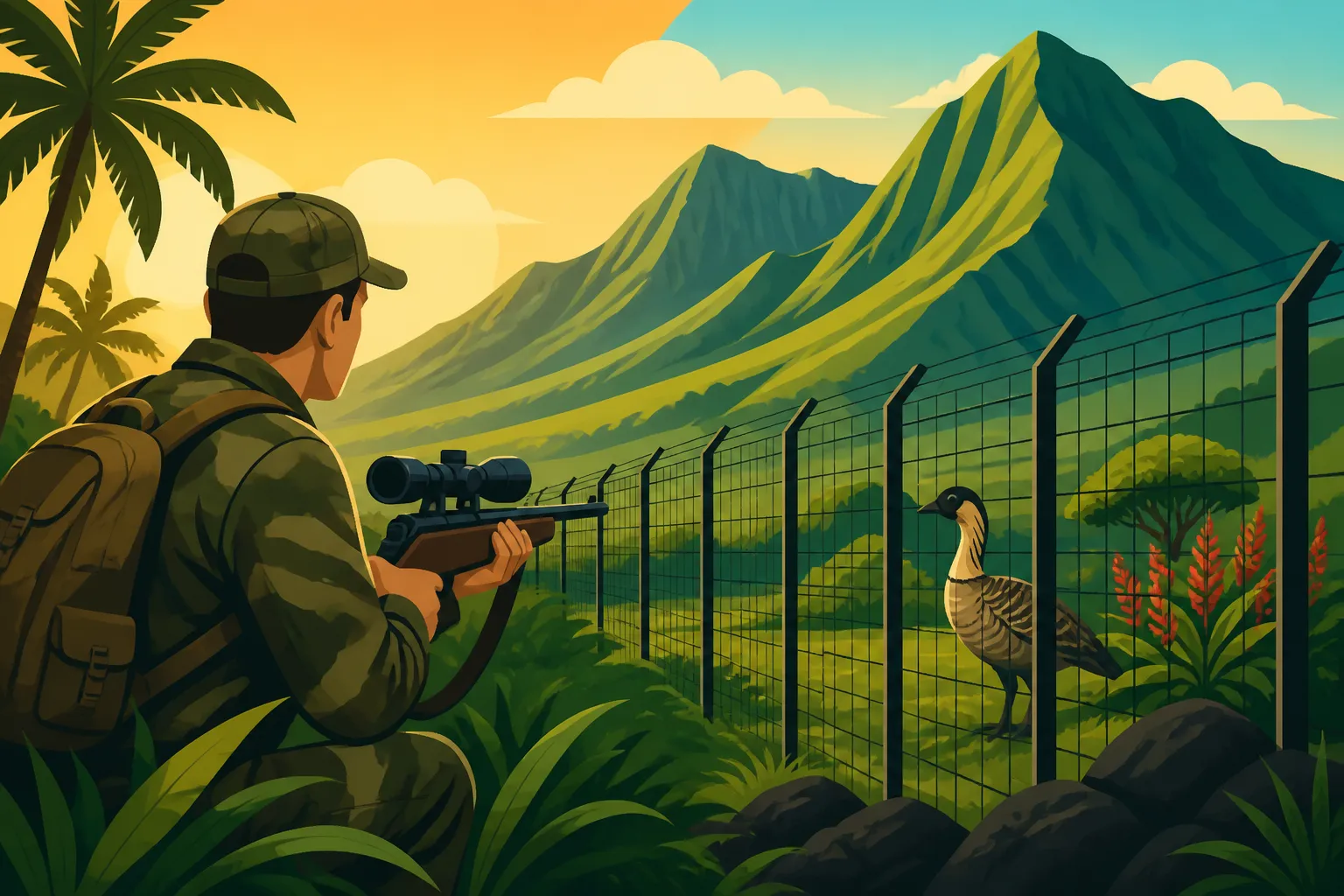
Conservation fences have permanently altered how big game moves across the Hawaiian Islands. State agencies, watershed partnerships, and native forest restoration projects construct high, woven-wire barriers to exclude non-native ungulates—such as feral pigs, goats, axis deer, and mouflon sheep—from sensitive native habitats. For hunters, these long fence lines are not just property boundaries; they act as massive, artificial funnels that completely reshape how animals navigate the landscape.
Why Fences Are Built and How They Alter Animal Patterns
Understanding the purpose of a conservation fence helps you anticipate where animals go when they hit a barrier. Invasive ungulates strip understory vegetation, destabilize delicate topsoil, and accelerate erosion across steep volcanic drainages. To preserve pristine forest ecosystems and protect native watersheds, natural resource managers build heavy-duty ungulate fencing designed to keep animals completely out of specific restoration zones. When animals encounter these impenetrable walls, their daily movements change instantly.
Instead of browsing across wide, open slopes, game animals are forced to travel parallel to the fence wire, creating heavily beaten trails right along the perimeter. Animals looking for feeding grounds, bedded cover, or water will walk the wire until they find a corner, a natural gap, or an open public hunting section. You can learn more about these behavioral shifts by reviewing Why Fences Change Where Animals Go and exploring the ecological context of Why Hawaii Fences Out Pigs and Goats across different islands.
Identifying High-Traffic Pinch Points and Pinch-Lines
Because a fence acts as a physical wall, it creates predictable travel corridors that hunters can exploit. Animals running from pressure or moving between feeding and bedding areas will follow the line of least resistance. Where a fence line intersects a steep gulch, a rocky ridgeline, or a dense thicket of strawberry guava, game will concentrate in high numbers.
Look for areas where two fence lines meet to form a funnel or where a fence forces animals down into a narrow gulch bottom. Deeply worn hooftracks, fresh droppings, and rubbed bark along the fence posts reveal active travelways. Pay special attention to muddy sections where feral pigs root under the fence wire or attempt to push through low spots. Examining these areas closely gives you clear clues about movement timing, which you can read more about in Reading Pig Sign Along a Muddy Trail.
Legal Regulations Access Rules and Land Status
Hunting near a conservation fence requires strict attention to land status and boundary rules. Conservation fences often mark the boundary between open public hunting areas, closed Natural Area Reserves (NARs), military installations, or private ranch property. Crossing a fence line unintentionally can turn a successful hunt into a serious legal violation.
Boundary Protocols and Checking Unit Limits
It is vital to recognize that a fence does not always represent the exact legal property line, though it frequently serves as a practical boundary between management zones. In many public hunting units, one side of the fence is legally huntable while the opposite side is strictly off-limits to hunting and entry. Shot placement becomes critical when hunting close to these boundaries; an animal hit near a fence line may hop over or drop on the wrong side.
Before setting up near wire, verify whether the boundary permits entry for game retrieval or if step-over access is illegal. Never cross a fence onto private land or into a closed natural reserve without explicit authorization. Reviewing What to Do at a Fenced Unit Boundary will help you handle fence encounters properly, while studying Hawaii Trespass and Closed Area Rules ensures you stay compliant with state and county land laws.
Using E-Mapping and GPS Tools for Legal Compliance
Navigating dense rainforest canopy or vast volcanic slopes makes physical boundary signs easy to miss. Topographic shifts and overgrown foliage can obscure fence lines until you are standing right on top of them. Modern digital mapping applications have become essential equipment for staying legally compliant while hunting around fenced management zones.
Using dedicated mobile mapping tools allows you to cache satellite imagery and public land boundaries directly to your smartphone before losing cell service in deep gulches. Platforms like onX Hunt show exact public unit overlays, reserve boundaries, and private land lines relative to your live GPS location. Pairing these layers with detailed scouting data from GoHunt helps you identify public access corridors that lead right up to fenced boundaries. Running onX Hunt offline ensures you know precisely which side of the wire you are standing on, while cross-referencing topographic terrain features on GoHunt allows you to plan your approach without accidentally stepping onto restricted ground. You can find more detail on setting up digital boundary layers in Using onX for Hawaii Land Status.
Field Tactics for Hunting Fencelines
Fenceline hunting requires a different tactical approach than traditional open-ridge glassing or deep-forest still-hunting. The fence itself acts as a terrain feature, meaning your movement, glassing positions, and wind awareness must account for both the wire and the surrounding cover.
Glassing Wind and Thermal Considerations along Fencelines
Because animals spend significant time pacing fence boundaries, positioning yourself downwind of high-use corridors is critical. Trade winds in Hawaii generally blow from the northeast, but local thermals in steep gulches can shift dramatically as the sun warms the mountain slopes. If your scent blows across the fence line into bedding cover, animals will back off long before they come into range.
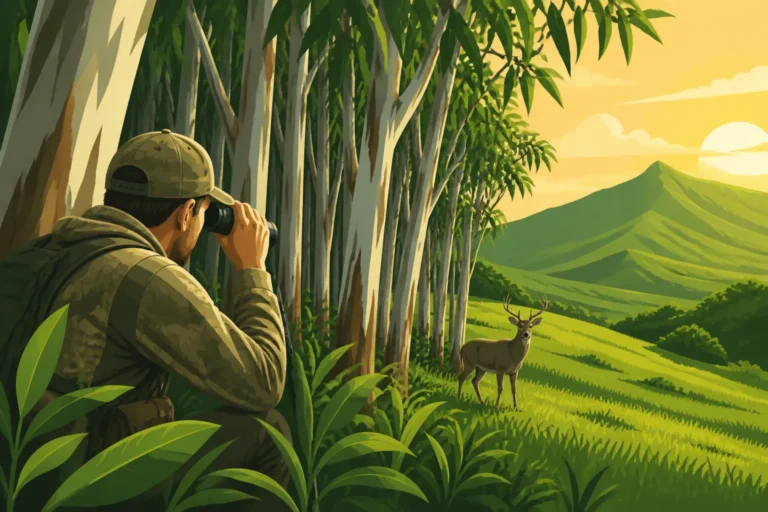
Set up glassing vantage points above the fence line on an adjacent ridge or knoll where you can look down onto the perimeter path. Use binoculars to scan the shadowed vegetation right along the wire, as game will often hug the brush line while moving along the fence. Always check thermals when hunting near ridgeline fences, as wind spilling over a ridge can carry your scent straight into game corridors below. Learn more about managing breeze shifts in steep country by checking Reading Hawaii’s Trade Wind Patterns.
Still-Hunting Rain-Soaked Forest and Scrub Boundaries
In wet forest reserves or dense koa and ohia cover, still-hunting along fence maintenance trails can offer quiet, efficient foot travel. Natural resource crews often keep a narrow strip clear along the fence line for inspections, creating a ready-made walking path for hunters. Walking this path allows you to move silently through thick brush where stepping off-trail would make too much noise.
Move at a slow, methodical pace, taking two or three steps before stopping to scan the brush ahead and across the wire. Pay attention to low spots where water collects, as feral pigs and axis deer frequently use these areas to drink or wallow. When moving through dense vegetation, read Still-Hunting a Guava Thicket for Pigs to refine your short-range stalking techniques in heavy brush.
Comparing Open Terrain vs Fenceline Hunting Strategies
Understanding the distinct advantages and challenges of hunting open country versus managed fencelines helps you select the right tactics for your target unit.
| Tactical Factor | Open Terrain Hunting | Fenceline Corridor Hunting |
|---|---|---|
| Animal Movement Patterns | Dispersed across broad slopes and feeding areas | Highly concentrated along artificial barriers |
| Pinch Points & Funnels | Relies on natural terrain like saddles and gulches | Created by fence corners, ends, and wire breaks |
| Navigational Difficulty | High reliance on landmarks and broad map reading | Very straightforward following physical wire lines |
| Scent & Thermal Management | Wind moves predictably across open faces | Micro-climates and fence brush trap scent |
| Legal Risk Level | Low, provided you remain within broad unit bounds | High, requires constant awareness of boundary wire |
| Visibility & Shots | Long-range glassing and open shooting lanes | Short-range, fast shooting through thick cover |
Safety Gear and Game Recovery Near Fences
Hunting dense vegetation and sharp terrain along fence lines introduces specific physical challenges. Heavy steel wire, sharp barbs, and steep drop-offs adjacent to fence posts require extra caution when traversing boundaries and packing out meat.
Retrieving Animals Near Protected Reserves
If an animal is shot legally on public land but runs across or onto a conservation fence, taking the correct steps for retrieval is critical. Never cut, climb, or damage conservation wire to access an animal, as damaging fence infrastructure carries steep fines and harms habitat protection efforts.
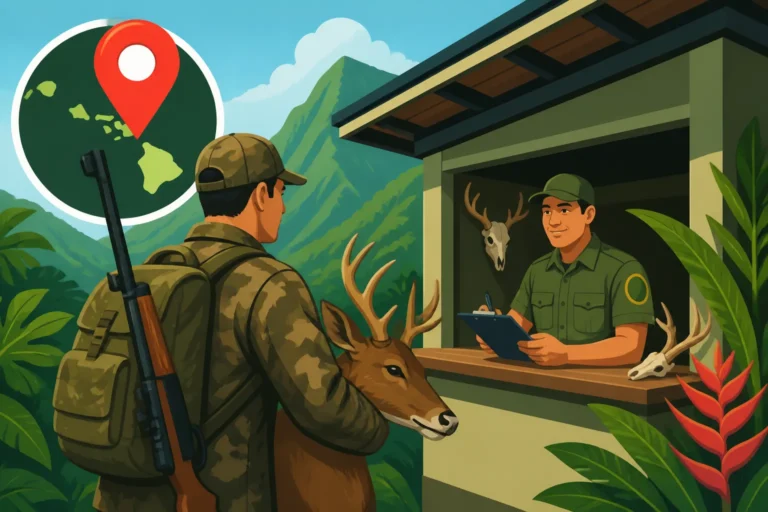
If the fence marks a boundary into a closed Natural Area Reserve or private land, contact local division of forestry officers or the private landowner before retrieving the carcass. Always mark the shot location and trailing blood sign clearly with flagging tape before seeking authorization. Knowing proper field packing methods makes transporting game back across difficult terrain much easier; see Packing Meat Out of a Hawaii Gulch for practical advice on heavy pack-outs.
Field Care and Environmental Hazards in Dense Cover
The microclimate along fenced rainforest corridors can be intensely hot and humid. Game meat spoils quickly when left in warm, airless gulch bottoms, making fast field dressing essential once an animal is legally down. Carry clean game bags, a sharp field knife, and synthetic cordage to hang meat off the ground while processing.
Watch out for loose fence wire, rusted staples, and old barb wire hidden in deep grass, which can easily trip you up or snag your hunting gear. Keep a small first-aid kit handy to treat minor scrapes or cuts from rusty wire and sharp vegetation. For step-by-step guidance on keeping harvest meat clean and cool under tropical conditions, read through Field Care in Hawaii’s Heat and Humidity.
By pairing smart mapping technology like onX Hunt and GoHunt with a solid understanding of how artificial barriers concentrate game movement, you can hunt fenceline corridors safely, legally, and effectively. Respect the boundaries, plan for shifting thermals, and make the most of Hawaii’s unique public hunting landscapes.
Disclaimer
This article is for general informational purposes only and does not constitute professional advice. Laws, prices and regulations vary by location and change over time. Consult a qualified professional for guidance on your specific situation.