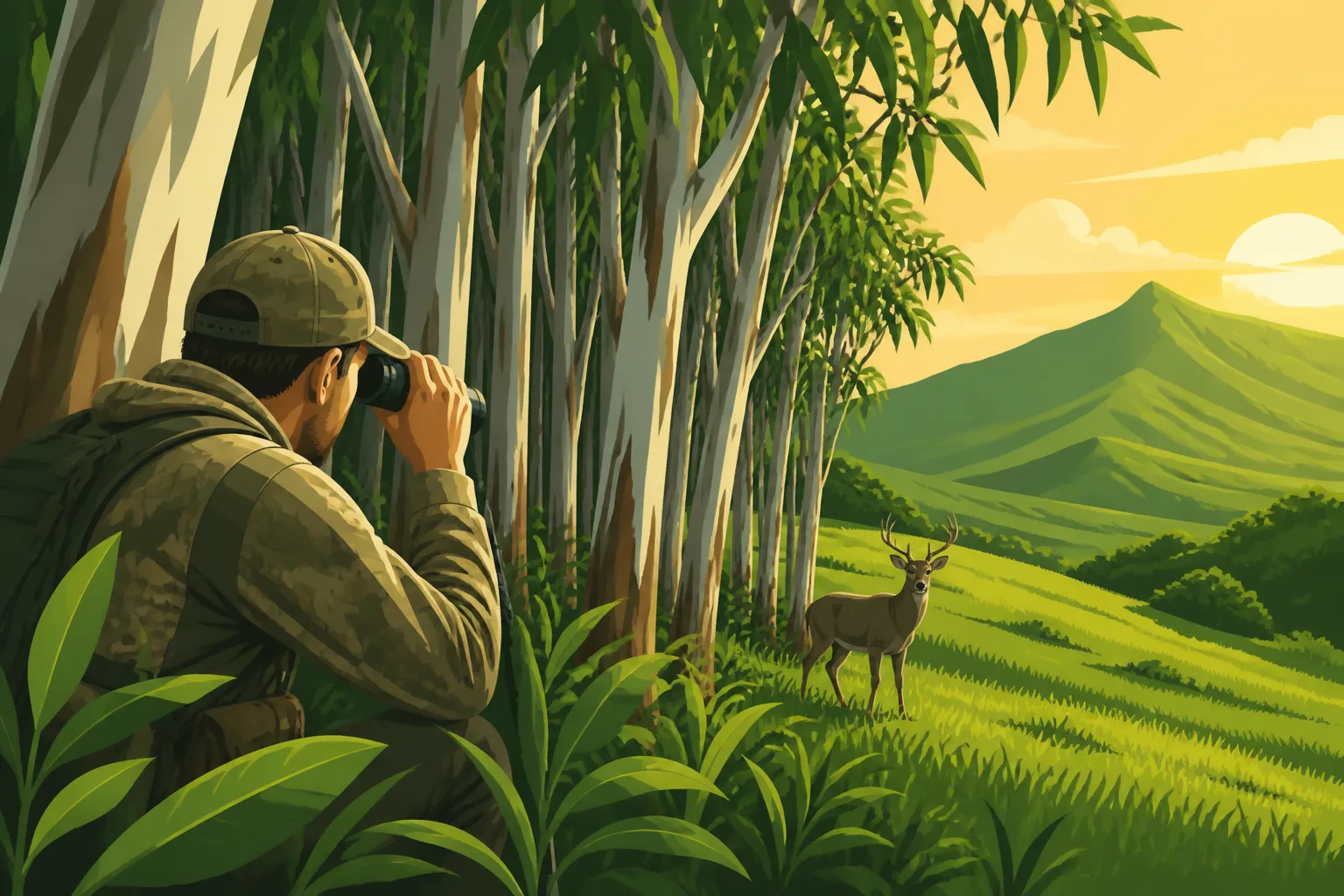
Hunting a Eucalyptus Stand Edge
There’s something uniquely Hawaiian about the dappled light under a towering eucalyptus canopy. These non-native, fast-growing trees, often planted in vast stands, create a specific kind of environment that hunters in Hawaii quickly learn to appreciate – and sometimes, to dread. Hunting the edge of a eucalyptus stand can be one of the most productive strategies, but it also comes with its own set of challenges, from navigating the slippery leaf litter to understanding how animals use this distinct habitat. This guide will walk you through everything you need to know to successfully hunt these unique forest boundaries.
Why Eucalyptus Edges Are Hunting Hotspots
You might not think of a eucalyptus grove as prime hunting habitat, especially since the trees themselves aren't typically a food source for most game animals here. But it's not the tree itself that draws them in; it's the edge and the micro-environment it creates. These edges are where different worlds meet, creating a vibrant zone of activity that no savvy hunter should overlook.
Shade, Cover, and Forage
In Hawaii's often relentless sun, the dense canopy of a eucalyptus stand provides welcome, deep shade. This isn't just a comfort for us hunters; it's a critical refuge for animals. During the warmer parts of the day, particularly mid-morning through late afternoon, pigs, goats, and even axis deer will seek out these cool, shadowy havens. The air temperature can drop noticeably under those tall trees, offering a much-needed respite.
Beyond just shade, the sheer density of eucalyptus, especially where it's mixed with other invasive species like guava or albizia, creates incredible cover. A pig can vanish completely within feet of you. Goats might bed down along these sheltered lines, and axis deer will often loaf in the deeper parts of the stand during the day, feeling secure from prying eyes. While the eucalyptus leaves aren't a primary food source, the consistent shade and unique soil chemistry often allow other, more palatable plants to thrive underneath or right at the edge. Think about ferns, grasses, and various weeds that pop up, offering a convenient snack for passing game. It's a subtle buffet, but one the animals certainly notice.
Natural Travel Corridors
Perhaps the biggest reason why eucalyptus edges are so valuable is their function as natural travel corridors. Imagine a vast, open pasture or an agricultural field. Now, picture a long, dark line of eucalyptus trees running alongside it. Animals, being creatures of habit and efficiency, will often use these linear features as highways. They provide cover, concealment, and a clear path from one feeding area to another, or from bedding grounds to water sources.
For a hunter, this is gold. These edges funnel animal movement, creating predictable routes. A pig might travel the same stretch of eucalyptus edge every evening, moving from a thick gulch to a taro patch. A goat herd might follow an edge that runs along a steep pali (cliff), using the trees for cover as they traverse. Axis deer, particularly on islands like Maui where these stands are common, will often skirt the perimeter of a eucalyptus plantation as they move between open kiawe flats and thicker forest. Hunting a Hawaii Eucalyptus Plantation Edge is a classic tactic for a reason. Understanding these natural funnels is key to anticipating where animals will emerge or pass by, allowing you to set up for a shot.
Identifying and Scouting Productive Eucalyptus Edges
Spotting a eucalyptus stand on a map is one thing; understanding how animals actually use its edge is another. Successful hunting relies on meticulous scouting, both from afar and on the ground. You need to become a detective, reading the subtle clues the animals leave behind.
Reading the Landscape
The first step in any Hawaii hunt is a good map. Tools like onX Hunt are invaluable for identifying eucalyptus stands, which often appear as distinct, uniformly textured blocks of forest on aerial imagery. But don't just look for the trees themselves; pay close attention to what the eucalyptus borders. Is it an open pasture where axis deer might graze at night? Is it a dense, wet native forest where pigs might bed down? Or maybe a steep gulch that provides another layer of cover and an escape route? The "seam" where the eucalyptus meets a different habitat type is often where the most action occurs.
Once you're in the field, it's time to put boots on the ground, or at least eyes to binoculars. Look for signs of animal activity along the edge. Fresh tracks in soft dirt or mud are a dead giveaway. Scat can tell you what animals are using the area and how recently. Rub lines on smaller trees or saplings indicate deer or goat activity, especially if it's during rutting season. For pigs, disturbed soil from rooting is a huge sign – they love to tear up the ground looking for roots and insects, particularly after a rain. Reading Pig Sign Along a Muddy Trail along a eucalyptus edge can tell you if they're feeding or just passing through. Pay attention to game trails entering or exiting the stand, especially at natural breaks or where the density changes.
Time of Day and Weather Considerations
Animals are creatures of routine, and their movements are heavily influenced by the sun and the weather. Along a eucalyptus edge, these factors become even more critical.
You'll generally find the most animal movement along these edges during low-light conditions – dawn and dusk. This is when pigs emerge from their bedding areas in the thick cover to feed, when deer might move out to graze, and when goats transition between cliffs and more vegetated slopes. During midday, they're often seeking the shade and cover deeper within the stand or in adjacent dense areas.
Rain can also be a game-changer. A light, steady rain can sometimes increase animal movement, as the sound masks their approach and makes fresh vegetation more appealing. Animals might move more freely without the worry of detection. However, heavy downpours might send them seeking the thickest shelter, reducing activity until the rain lets up. Conversely, in dry conditions, animals might congregate near any available water source, and the eucalyptus edge could be a travel corridor to and from that water. Hunting a Hawaii Unit After Heavy Rain or Hunting a Water Source in Dry Hawaii Country can be highly effective strategies when combined with knowledge of eucalyptus edges.
Wind direction is always critical in Hawaii hunting, and even more so along an edge where thermals can be tricky. As the sun rises, warm air pushes up; as it sets, cool air flows down. These thermals, combined with prevailing trade winds, can make scent control a nightmare. Always try to hunt with the wind in your favor, positioning yourself downwind of where you expect animals to appear. This often means carefully circling to approach the edge from the correct direction, even if it adds extra walking. Hunting Downwind in Hawaii's Shifting Thermals is a skill you'll hone quickly when working these dynamic zones.
Hunting Strategies for Eucalyptus Edges
Hunting eucalyptus edges isn't just about showing up; it's about understanding how to move, how to wait, and how to use the terrain to your advantage. Whether you prefer a quiet stalk or a patient ambush, these areas offer unique opportunities.
Still-Hunting the Edges
Still-hunting is a classic tactic that works exceptionally well along eucalyptus edges, especially for pigs and axis deer. The key is slow, deliberate movement. Think in terms of "three steps, stop, look, listen." Take a few quiet steps, then pause. Scan the edge, look for horizontal lines that don't belong (a pig's back, a deer's leg), and listen for any rustle, grunt, or snapping twig. The leaf litter under eucalyptus can be notoriously crunchy and slippery, so good boots with decent grip are essential. Boots for Hawaii Lava and Wet Forest are often ideal for this kind of varied terrain.
Always try to still-hunt into the wind. This isn't always possible with Hawaii's shifting thermals, but it's the ideal. Use the vegetation along the edge – smaller trees, ferns, thickets – as natural cover to break up your silhouette. Focus your attention on the transition zones where the eucalyptus meets another habitat type, as animals often feel most comfortable moving in these areas. Don't be afraid to sit for a while in a promising spot, letting the woods settle down around you before continuing. You might be surprised at what emerges once you're still. This deliberate approach is also very effective when Still-Hunting Pigs in Hawaii's Wet Forest, as the moisture can help quiet your footfalls.
Setting Up Ambush Points
If still-hunting isn't your style, or if you've done your scouting and identified a particularly hot travel corridor, setting up an ambush can be incredibly effective. Look for natural pinch points along the edge – perhaps where the eucalyptus stand narrows, or where a game trail crosses a small stream or gulch. These are prime locations where animals are likely to pass by within shooting range.
When choosing an ambush point, consider three things: wind, cover, and visibility. You want to be downwind of the expected travel route, well-concealed, and have a clear shooting lane. Sometimes, an elevated position, such as a low ridge overlooking the edge, can provide a fantastic advantage, allowing you to spot animals before they spot you. Early morning or late afternoon are the prime times for ambushes, as animals are most active during these periods. Patience is paramount. Sometimes, you might wait for hours without seeing anything, only for a pig or a nice axis buck to appear seemingly out of nowhere. GoHunt's resources can be excellent for understanding specific unit patterns that might inform your ambush strategy.
Dog Hunting Considerations
For many local hunters, particularly those targeting pigs, dogs are an indispensable part of the hunt. Eucalyptus stands present both opportunities and challenges for dog hunters. The dense cover that makes still-hunting difficult can be exactly what a good pack of pig dogs needs to bay a hog.
However, the thickness of eucalyptus, combined with its unique acoustics, can make tracking dogs challenging. GPS collars are almost a necessity here, allowing you to keep tabs on your dogs even when they're out of sight and earshot. GPS Collars for Pig Dogs in Thick Cover are invaluable. The sheer noise of dogs moving through the crunchy leaf litter can also make it harder to hear the bay, so being able to visually locate them via GPS is a huge advantage. Safety is paramount: ensure your dogs are wearing protective vests, and always be aware of your surroundings and your dogs' positions. When the dogs do bay a pig, be prepared for a fast, intense encounter in dense cover, where quick decisions and clear communication are key. This is a very different experience than Dog and Knife Pig Hunting in Hawaii in more open terrain, requiring a specific skill set and awareness.
Species You'll Encounter and Gear Tips
Eucalyptus edges are ecological magnets, drawing in a variety of Hawaii's game animals. Knowing what to expect and having the right gear can make all the difference in turning a challenging hunt into a successful one.
Common Game Animals
You'd be surprised by the sheer diversity of game that uses these unique edges.
- Feral Pigs: Without a doubt, feral pigs are the most common residents of eucalyptus edges. They love the dense cover for bedding, the shade for cooling off, and the transition zones for foraging. They'll root along the edges, seeking grubs and roots, and use the stands as safe corridors to move between food sources and deeper cover. Hunting Hawaii's Feral Pigs is a pursuit often made more productive by targeting these edge habitats.
- Feral Goats: While goats prefer more open, rocky, or cliff-side terrain, they will often use eucalyptus edges that border these areas for cover and travel. If an edge runs along a steep gulch or a lava field, you'll likely find goats using it to move unseen. A big billy might be lurking just inside the tree line, assessing the open country before venturing out. Hunting Hawaii's Feral Goats often involves observing their transition zones.
- Axis Deer: On islands like Maui, Molokai, and Lanai, axis deer are masters of using varied terrain. They will absolutely use eucalyptus edges, especially for bedding down during the day or moving under cover during feeding forays. They might browse on undergrowth that benefits from the shade, or simply use the concealment to feel secure as they travel. Axis Deer Hunting in Hawaii often means understanding how they utilize these linear cover systems.
- Game Birds: Don't forget the feathered game! Species like francolin and pheasant, particularly Erckel's Francolin and Ring-necked Pheasant, will often utilize the dense understory and edges of eucalyptus stands. They provide excellent cover from predators and hunters, and the transition zones can offer diverse forage. If you're Hunting Francolin and Pheasant in Hawaii, these edges are definitely worth investigating, especially with a good bird dog.
Essential Gear for Eucalyptus Hunts
Hawaii hunting, especially in varied terrain like eucalyptus stands, demands specific gear considerations.
- Sturdy, Grippy Boots: As mentioned, the leaf litter can be treacherous. Invest in high-quality, waterproof boots with aggressive tread. You'll encounter slippery leaves, potential mud, rocky sections, and sometimes uneven ground. Ankle support is key.
- Layered Clothing: Even with the shade, Hawaii can be hot and humid. Dress in layers that you can shed or add as needed. Lightweight, breathable materials are best. Blaze orange is often a requirement in public hunting units, so make sure you have it.
- Navigation Tools: A reliable GPS device or a smartphone app like onX Hunt is non-negotiable. Knowing your exact location relative to unit boundaries, private land, and your vehicle is critical. Cell service is unreliable in many hunting areas. You might also use the OuterSpatial app to check in and out of units, so ensure your devices are charged.
- Hydration: Always carry more water than you think you'll need. Even in the shade, you'll be exerting yourself, and dehydration can set in quickly.
- Quiet Clothing: When still-hunting or ambushing, noisy clothing can give you away instantly. Opt for soft, quiet fabrics that won't rustle as you move.
- Compact Optics: A good pair of binoculars (8x or 10x) is invaluable for scanning the dense shadows and picking out movement. You might only get a small window to identify your target.
- First-Aid Kit: Accidents happen, especially in rugged terrain. A basic first-aid kit with essentials for cuts, scrapes, and blisters is a must.
| Game Animal | Primary Use of Eucalyptus Edge | Best Strategy | Key Sign to Look For | Gear Tip |
|---|---|---|---|---|
| Feral Pig | Bedding, travel, foraging | Still-hunt, dog hunt | Rooting, fresh tracks, muddy wallows | GPS collar for dogs, sturdy knife |
| Axis Deer | Bedding, travel, concealment | Still-hunt, ambush | Fresh tracks, rubs on small trees | Quiet clothing, good binoculars |
| Feral Goat | Travel, occasional bedding | Ambush, spot-and-stalk | Tracks, droppings, browse lines | High-power optics, secure footing |
| Game Birds (Francolin, Pheasant) | Cover, foraging | Walk-up, bird dog hunt | Dust baths, droppings, calls | Shotgun, bird vest, good bird dog |
Hunting a eucalyptus stand edge offers a fantastic opportunity to engage with Hawaii's diverse game animals. It requires patience, careful observation, and the right approach, but the rewards of a successful hunt in these unique, beautiful environments are well worth the effort.
Disclaimer
This article is for general informational purposes only and does not constitute professional advice. Laws, prices and regulations vary by location and change over time. Consult a qualified professional for guidance on your specific situation.