Hunting a Cattle Pasture Boundary
For many hunters in Hawaii, the idea of hunting a vast, open cattle pasture boundary might seem less appealing than the deep gulches or thick kiawe forests. But don't let those wide-open spaces fool you; these areas, where managed pasture meets wilder, unmanaged land, are often secret hotspots for a variety of game. This guide will help you understand the unique challenges and incredible opportunities these boundaries present, equipping you with the knowledge to turn a seemingly barren landscape into a productive hunting ground.
Understanding the Landscape of a Hawaii Cattle Pasture Boundary
Hunting a cattle pasture boundary in Hawaii isn't like hunting the deep woods of the mainland. Our islands offer a unique blend of open ranch land, dense native and introduced forests, and often, rugged volcanic terrain right up against those fences. It's a fascinating ecosystem where animals thrive by utilizing both the plentiful forage of the pastures and the protective cover of the wilder edges.
The Dynamics of Pasture Edges: Why Animals Congregate There
Imagine a lush green pasture, meticulously managed by a rancher. It's full of nutritious grasses and legumes – a literal buffet for grazing animals like axis deer, feral sheep, and even pigs. But these animals are also wild; they need cover for safety, for bedding, and for escape routes from predators (even if those predators are just us hunters!). This is where the pasture boundary becomes gold.
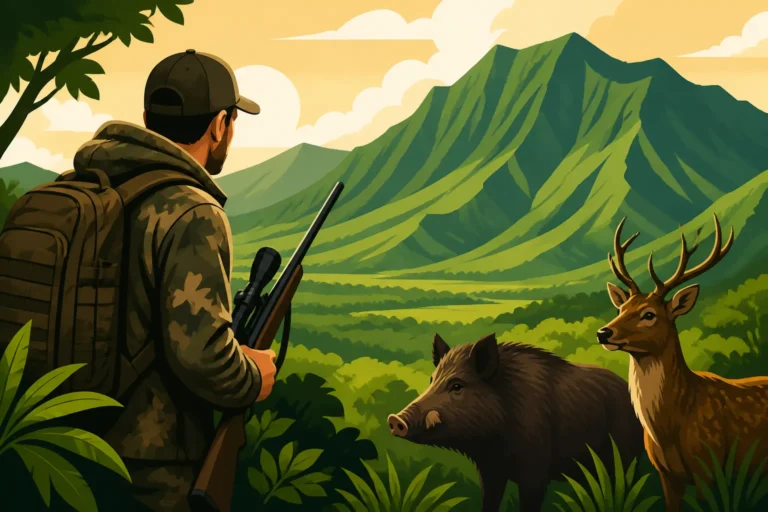
The transition zone, where the fence line separates the open pasture from dense kiawe thickets, ʻōhiʻa forests, or steep, brushy gulches, creates an "edge effect." This edge provides everything a game animal needs: easy access to high-quality feed in the pasture, immediate refuge in the thicker vegetation, and often, reliable water sources like stock ponds or natural seeps that might be just inside or just outside the fence. Pigs, in particular, love to root up the softer ground along these edges, searching for invertebrates and plant roots, then quickly retreating to the impenetrable jungle when disturbed. Axis deer will often spend the cooler parts of the day bedded just inside the cover, emerging into the pasture at dawn and dusk to feed. Hunting Axis Deer at First Light in Hawaii is a prime example of timing your hunt to this behavior.
Identifying Key Features Along the Boundary
Not all pasture boundaries are created equal. You need to become a detective, looking for specific features that concentrate animal movement.
- Fencelines: While they define the boundary, animals often have preferred crossing points, or "crawls," under or through the fence. Look for worn-down paths, hair snagged on barbed wire, or fresh tracks.
- Tree Lines and Gulches: Any line of trees, particularly dense stands of kiawe, guava, or even eucalyptus, running alongside a pasture offers crucial cover. Gulches, even dry ones, act as natural travel corridors, providing shade and a hidden path for animals moving between feeding areas and bedding grounds. Hunting a Kiawe Flat for Axis Deer can be extremely productive if it borders an active pasture.
- Water Sources: Stock ponds, natural springs, or even muddy wallows for pigs, are magnets, especially in Hawaii's dry leeward areas. Animals will often stage in cover near these water sources before moving in to drink, or feed nearby after slaking their thirst. Hunting a Water Source in Dry Hawaii Country strategies are often perfectly applied here.
- Topographical Changes: A slight rise, a hidden dip, or a small cinder cone along the boundary can offer animals a vantage point or a place to escape the wind or sun. These subtle changes can create microhabitats that animals favor.
- Game Trails: The most obvious sign is a well-worn game trail, indicating consistent travel. Look for these trails leading from cover directly into the pasture or connecting different patches of cover along the boundary. These are your highways for game.
Seasonal Changes and Their Impact
Hawaii's "seasons" aren't as dramatic as temperate climates, but they still influence animal behavior along pasture boundaries.
- Dry Season: During the drier months, typically summer and fall, the managed pastures often retain more green forage than the surrounding wilder lands, making them even more attractive to grazing animals. Water sources also become critical, and animals will travel further to reach them. This can concentrate game around fewer, more reliable waterholes along the pasture edge.
- Wet Season: When the rains arrive, the wilder forests and gulches burst with new growth, and more temporary water sources become available. Animals might disperse more, but they still appreciate the consistent forage of the pastures. The wet conditions can also make tracking easier along muddy fence lines and trails. Pigs might be found rooting in newly softened ground, even farther from traditional water.
- Rutting Seasons: For axis deer, the rut can happen almost year-round, but there are peaks. During these times, bucks become more vocal and less cautious, often cruising the edges of pastures looking for does. Knowing Why Axis Deer Rut Timing Is Different for our islands can give you an edge. For pigs, breeding also occurs throughout the year, but large boars may become more territorial and active, especially at the edges of prime feeding areas.
Strategic Approaches to Hunting Pasture Boundaries
Hunting these pasture boundaries successfully requires a blend of patient observation, strategic movement, and understanding animal behavior. It's often a game of "cat and mouse" where the hunter tries to intercept animals as they transition between feeding and cover.
Scouting and Planning Your Hunt
Before you even step foot in the field with your weapon, thorough scouting is paramount. This isn't just about finding animals; it's about understanding how they use the landscape.
- Pre-Season Reconnaissance: Drive or walk the public-access perimeter if possible (respecting all private property boundaries, of course!). Use binoculars or a spotting scope from a distance to observe animal patterns. Look for feeding times, bedding areas, and travel corridors. Pay close attention to any areas where the wild land offers deep cover close to the pasture.
- Map Research: This is where modern tools shine. An app like onX Hunt is invaluable for identifying property lines, public access points, and topographical features. You can clearly see where public hunting units (like a Game Management Area or Forest Reserve) abut private ranch land. This helps you plan legal entry and exit points and understand exactly where you can hunt without trespassing. Use these maps to pinpoint potential pinch points, saddles, or areas where dense cover funnels into the pasture. You'll also want to confirm unit boundaries and access points, often managed by the state's DOFAW.
- Sign Reading: Once you're on the ground, look for fresh tracks, droppings, rubs (especially during rut), and active feeding areas. Check under trees for fresh droppings, indicating bedding. Look for torn grass and muddy wallows for pigs. Reading Axis Deer Sign in Dry Country is a skill that will serve you well.
- Wind and Thermals: Hawaii's trade winds are a constant factor, but thermals often dictate scent dispersal at dawn and dusk, especially in hilly or gulch country. Animals will use the wind to their advantage, so you must too. Plan your approach to keep the wind in your face or quartering to you as you move towards potential feeding areas. In the mornings, thermals often draw air up the slopes, while in the evenings, they pull air down. This is critical when hunting ridges or gulches that border pastures.
Movement and Stalking Techniques
Hunting pasture boundaries demands a quiet, patient approach. You're often dealing with open sightlines and animals that are constantly aware of their surroundings.
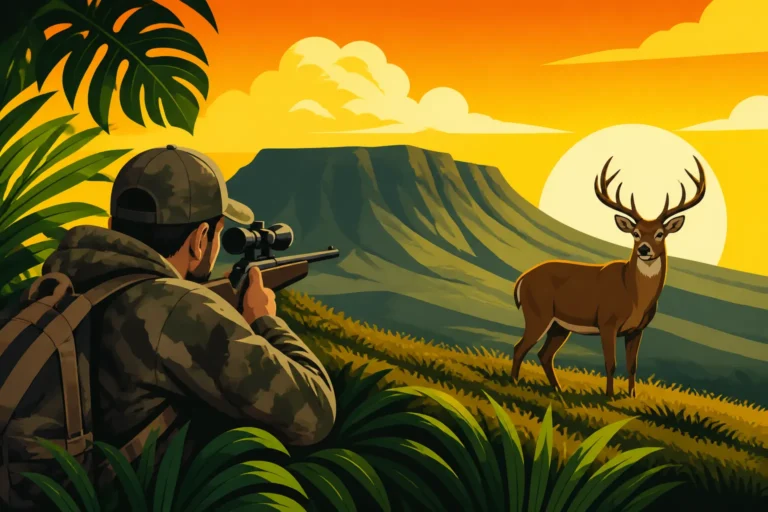
- Dawn and Dusk Patrols: The golden hours are your best bet. Animals are most active during these times, moving from bedding to feeding and vice-versa. Find a strategic vantage point overlooking a likely entry point or feeding area along the boundary well before first light, or settle in for the evening hunt as the sun begins to drop.
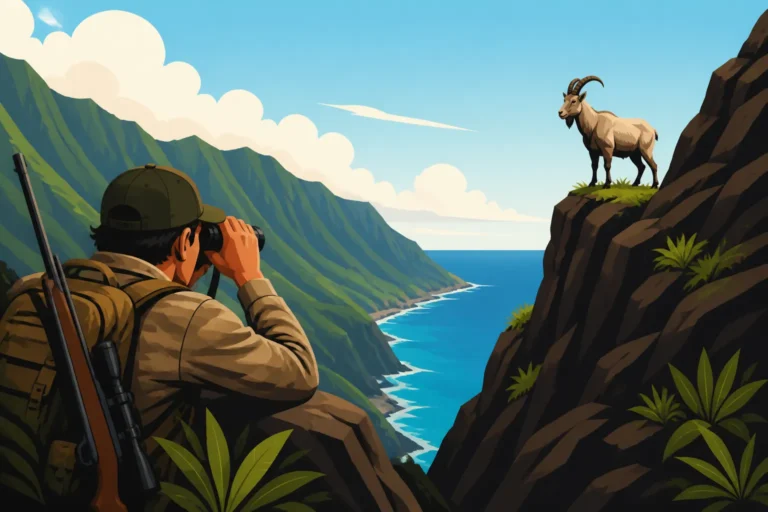
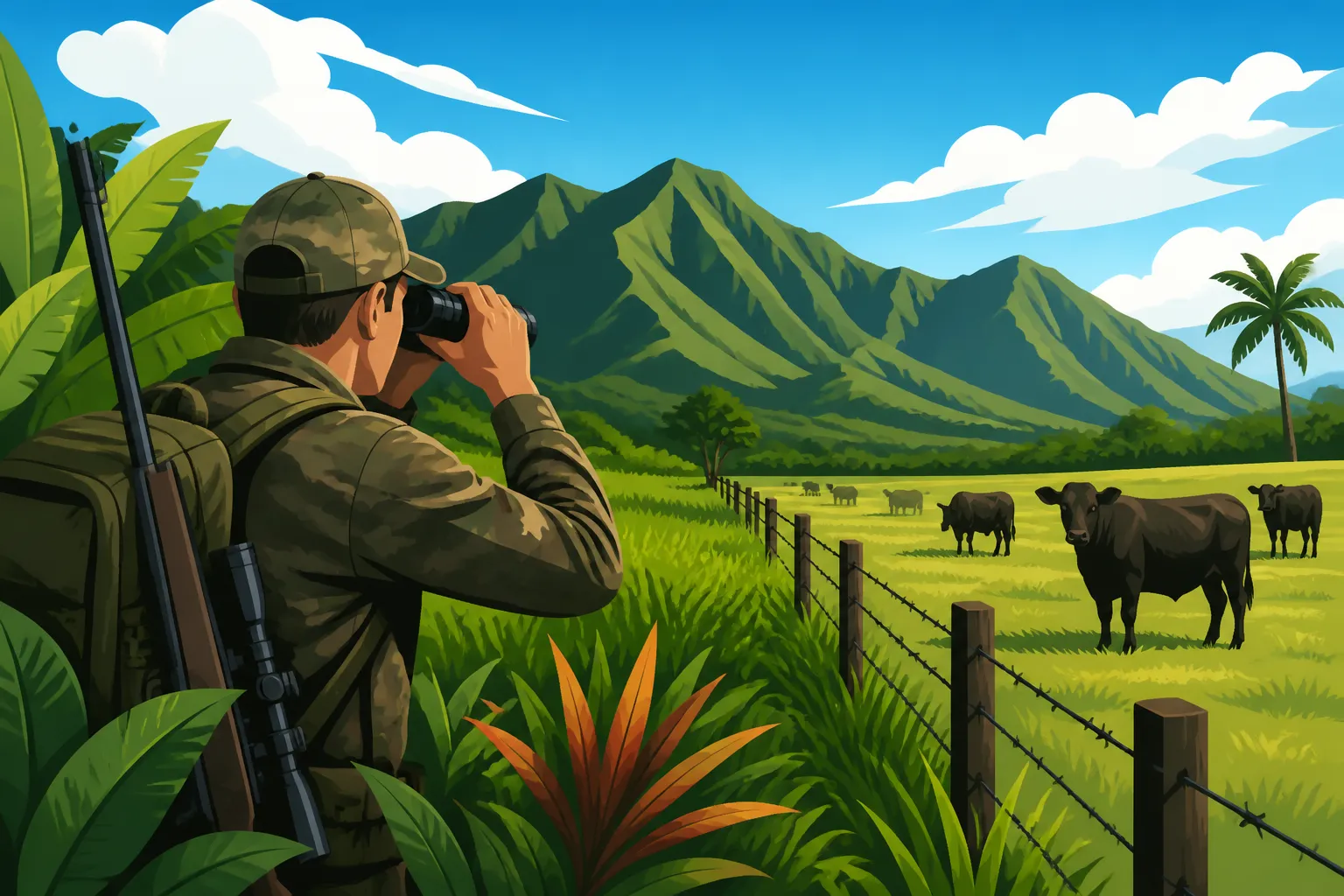
- Glassing: Use good optics. In open country, you can glass vast areas of pasture edge from a distance, identifying animals before they see you. Set up where you have good cover yourself but can clearly see the transition zones. Look for ears, antlers, or the flicker of a tail. This is especially useful for Spot-and-Stalk Axis Deer in Hawaii.
- Slow, Deliberate Stalking: If you spot an animal, plan your stalk carefully. Use any available cover – a line of shrubs, a small rise, or even the shadows of large trees – to break up your outline. Move slowly, deliberately, and be prepared to freeze if the animal looks your way. Focus on using terrain features that create blind spots for the animals.
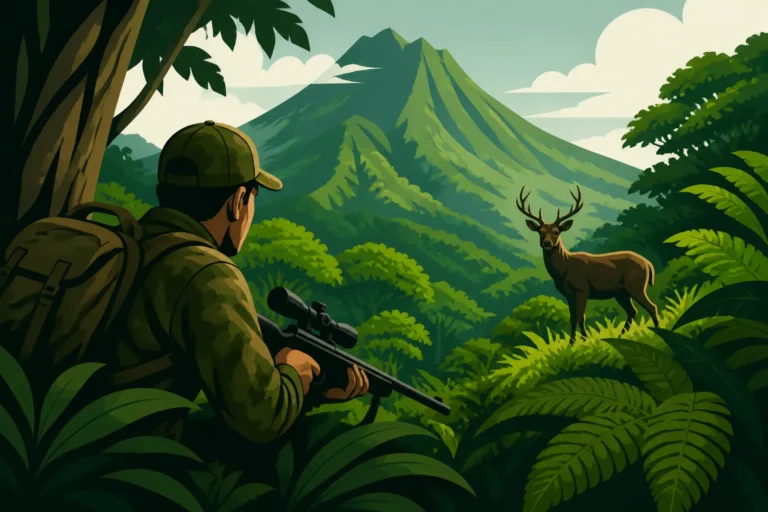
- Ambush Points: Identify natural funnels or pinch points where animals are likely to cross from cover to open pasture. This could be a narrow section of woods between two pastures, a single break in a thick brush line, or a well-used trail that crosses the fence. Setting up a still-hunt or ambush at these locations can be highly effective.
Timing Your Hunt for Success
Beyond the daily dawn and dusk movements, consider broader timing factors.
- Weekend vs. Midweek: Public hunting units that border private pastures often see heavy pressure on weekends. If you can hunt midweek, you might find animals more relaxed and less pushed back into deep cover. Opening Weekend on a Hawaii Hunting Unit can be busy, but often, by Tuesday or Wednesday, things calm down considerably.
- Weather Patterns: A light rain can often get pigs moving, as it softens the ground for rooting and dampens human scent. Cloudy days might encourage deer to stay out in the open pastures longer than on bright, sunny days. Hunting a Hawaii Unit After Heavy Rain can be surprisingly productive.
- Moon Phase: While hotly debated, some hunters find animals more active on darker nights around a new moon, leading to less daytime activity. Conversely, a full moon might see animals feeding more at night, and then bedding down early during daylight hours. Hunting Axis Deer Under a Full Moon sometimes means adjusting your daylight strategy.
Gear and Safety Considerations for Boundary Hunting
Hawaii's unique environment means your gear choices are crucial, and safety around pasture boundaries has its own set of rules.
Essential Gear for Hawaii's Varied Terrain
You're likely to encounter a mix of open pasture, rocky ground, and possibly dense, wet vegetation.
- Optics: A good pair of binoculars (10×42 or 12×50) is non-negotiable for spotting game in open and transitional areas. A spotting scope can be useful if you're glassing very large areas from a fixed position.
- Footwear: Sturdy, comfortable hiking boots with good ankle support are a must. You'll be walking on uneven ground, potentially through thorny kiawe, over lava rock, or in muddy conditions. Ensure they're broken in! Walking Rough Lava Without Wrecking Your Boots is an art form.
- Rain Gear: Even on the leeward side, pop-up showers are common, especially in the mountains. Lightweight, breathable rain gear will keep you comfortable and dry.
- Hydration: Always carry plenty of water, even for a morning hunt. Hawaii's heat and humidity can lead to dehydration quickly.
- Navigation: While you should know the area, a GPS device or a smartphone with a mapping app like onX Hunt is essential for staying found and, critically, for knowing where property lines are. No Cell Signal on a Hawaii Hunt is a real possibility in many remote units, so don't rely solely on cell service.
- Blaze Orange: In many Hawaii hunting units, wearing blaze orange is mandatory, especially during rifle seasons. Always check the specific regulations for your unit and season. Hawaii Blaze Orange Requirements are important to follow.
Navigating Fences and Property Lines
Respect for private land is paramount, and understanding exactly where public hunting land ends and private ranch land begins is your most important responsibility.
- Know Your Boundaries: Use your maps (like onX Hunt) to confirm you are on legal hunting ground. Ranch property lines are often well-marked with fences, but sometimes it's just a boundary line on a map. Always err on the side of caution.
- Fence Etiquette: If you must cross a fence on public land (where allowed), do so respectfully. Climb over posts, not wires, to avoid damaging them. If there's a gate, close it behind you. Never cut fences.
- Trespass Laws: Hunting on private land without permission is illegal and severely punishable. What Hawaii Trespass Law Requires is something every hunter needs to understand thoroughly. If a private pasture borders a public hunting unit, game animals may move freely across, but you cannot. You must harvest an animal while it is on legal hunting land. This often means waiting for an animal to clear the fence and enter the public portion of the boundary before taking a shot.
- Hawaii Private Ranch Hunting Access: If a pasture looks particularly promising, consider seeking permission from the landowner. Some ranchers offer guided hunts or pay-to-hunt access, which can be an excellent way to ethically and legally hunt these productive areas. Getting Permission on a Hawaii Ranch is a skill that can open up amazing opportunities.
Safety Around Livestock and Other Hunters
Pasture boundaries often mean you're near working ranches and other outdoor enthusiasts.
- Identify Your Target: Always be 100% sure of your target and what is beyond it. Distinguish clearly between game animals and cattle. Never shoot towards livestock or ranch buildings.
- Other Hunters: On public land, you're likely not alone. Be aware of other hunters, communicate if necessary, and use common sense to ensure everyone's safety.
- Ranch Operations: Be mindful that ranching is an active business. You might encounter cowboys, vehicles, or working dogs. Give them ample space and avoid interfering with their operations.
- Emergency Preparedness: Carry a first-aid kit, and let someone know your hunting plan, including your exact location and expected return time. In areas with no cell signal, a satellite messenger or personal locator beacon can be a lifesaver. Emergency Plans on a Remote Hawaii Hunt are not optional.
Common Challenges and Troubleshooting
Hunting pasture boundaries comes with its own set of frustrations, but with a bit of foresight and adaptability, you can overcome them.
Dealing with High Pressure and Spooked Animals
On heavily hunted public units bordering pastures, animals quickly learn to avoid open areas during daylight hours, retreating into dense cover at the first sign of human activity.
- Hunt the "Hard to Reach" Spots: Animals will seek refuge in the thickest, steepest, or most remote sections of the boundary. If you're willing to put in the effort to access these areas – whether it's Walking In to a Remote Hawaii Unit or navigating a particularly dense section of forest – you might find less pressured game.
- Focus on Transition Times: Even pressured animals have to eat. Concentrate your efforts precisely at dawn and dusk, when their need to feed outweighs their caution, often pushing them just out of cover into the pasture.
- Deep Cover Still-Hunting: Instead of waiting on the pasture edge, try still-hunting just inside the dense cover that borders the pasture. Move slowly, listening and looking for subtle signs of movement. Animals often stage within this cover before breaking out.
- Midweek Advantage: As mentioned, if your schedule allows, hunting on weekdays when pressure is lower can dramatically increase your chances of seeing more relaxed animals.
Overcoming Visibility Issues in Mixed Cover
Pasture boundaries are rarely a clear line; they often involve a mix of open grass and dense, low-visibility cover.
- Elevated Vantage Points: If the terrain allows, find a slightly elevated position that offers a clear view of a section of the pasture boundary. This could be a small hill, a lava knoll, or even a sturdy tree (if tree stands are allowed in your unit). From here, you can glass the mixed cover and open ground more effectively.
- Patience and Optics: In areas where cover is broken, patience is key. Settle into a good position, and spend a long time methodically glassing the edge, looking for small details – a flick of an ear, a patch of hide, a glint of antler. Animals can disappear into surprisingly sparse cover.
- Follow the Light: Pay attention to how the sun and shadows play on the landscape. Early morning or late afternoon sun can highlight animals emerging from shadow, or conversely, create glare that makes spotting difficult. Adjust your position accordingly.
What to Do When a Boundary Goes Cold
Sometimes, despite your best efforts, a once-active pasture boundary seems to go quiet.
- Re-Evaluate Food and Water: Has there been a change in forage availability or water sources? Perhaps a new rain has opened up fresh green growth elsewhere, or a spring has dried up. Animals will always follow the best food and water.
- Check Adjacent Areas: Animals might simply have shifted their patterns slightly. Expand your scouting to the next gulch over, or the adjacent section of forest. They might still be in the general vicinity, just not directly on that particular stretch of boundary.
- Consider Pressure: If you've been hunting the same spot repeatedly, or if there's increased activity (ranching, other hunters), the animals might have simply moved deeper into sanctuary. Give the area a rest for a few days or weeks, and try a different section of the boundary.
- Consult Unit-Specific Info: Always check the Hawaii Department of Land and Natural Resources (DLNR) Division of Forestry and Wildlife (DOFAW) website or local offices for any changes to unit regulations, season dates, or even localized animal control efforts that might impact game distribution. They sometimes post information on shifting animal patterns. Services like GoHunt can also provide valuable insights into specific unit information and drawing odds, helping you choose productive units. Where DOFAW Posts Season Announcements is crucial information for any Hawaii hunter.
Hunting a cattle pasture boundary in Hawaii is an exercise in understanding the delicate balance between wild game and human activity. It's challenging, but incredibly rewarding when you finally intercept that mature axis buck stepping out of the kiawe into the green pasture at first light.
Disclaimer
This article is for general informational purposes only and does not constitute professional advice. Laws, prices and regulations vary by location and change over time. Consult a qualified professional for guidance on your specific situation.