Emergency Plans on a Remote Hawaii Hunt
Stepping into the remote reaches of Hawaii's wildlands for a hunt is an incredible adventure, but it comes with a serious, often unspoken truth: cell service is a myth, help is far away, and things can go wrong fast. Many hunters, especially those visiting from the mainland, underestimate just how quickly a minor sprain or a sudden change in weather can turn into a life-threatening situation when you're miles from a road. This guide is all about preparing you for the unexpected, helping you create robust emergency plans that could truly save your life or the life of a hunting partner when you're deep in Hawaii's challenging terrain.
Pre-Hunt Preparation: The Foundation of Safety
Before you even think about lacing up your boots and heading into the thick guava or across a jagged lava flow, your emergency plan needs to be firmly in place. This isn't just about packing a first-aid kit; it's about a systematic approach to mitigate risks and ensure you have viable options if something unexpected happens. The remote nature of many Hawaiian hunting units, whether on the slopes of Mauna Kea or in the dense forests of Kauai, demands a higher level of preparedness than many mainland hunters might be used to.
Essential Gear for Remote Hunts
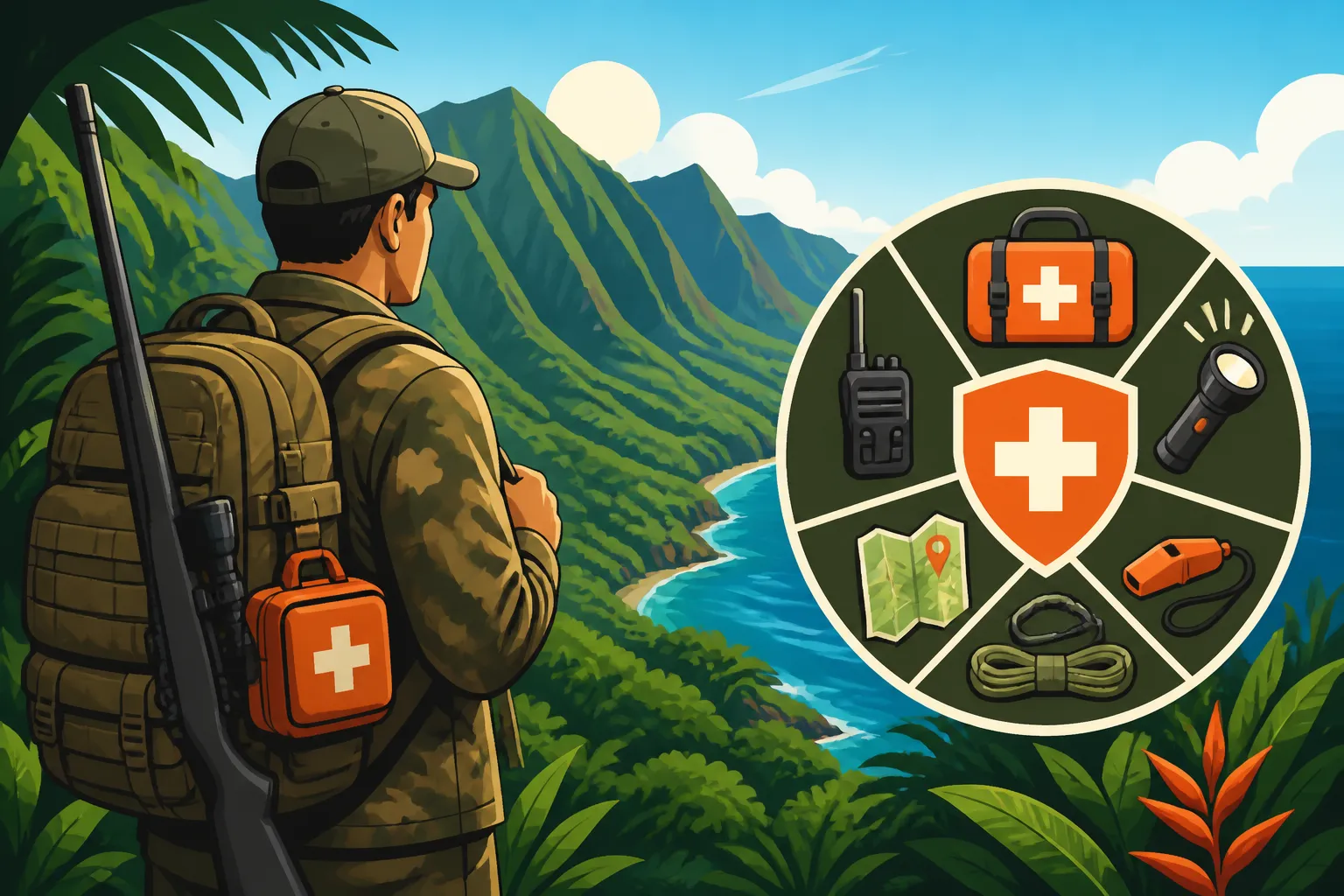
When planning for a remote Hawaiian hunt, your gear list takes on an elevated importance. Forget the minimal approach; here, redundancy and reliability are key. Beyond your weapon, ammunition, and basic hunting essentials, consider what you'd need if you had to spend an unplanned night out, or if you had to signal for help. Water purification, extra layers for unexpected cold at higher elevations or after getting wet, and fire-starting materials are non-negotiables. A robust first-aid kit, tailored not just for cuts and scrapes but also for more serious injuries like sprains, breaks, or deep lacerations, is paramount. Remember, help isn't just around the corner, and you might be administering care for hours.
Think about the unique challenges of Hawaii: volcanic rock can shred boots and knees, dense jungle can hide pitfalls, and steep gulches are everywhere. A good quality, durable backpack that can handle abuse is critical, as is reliable rain gear, even in what looks like dry country—weather can change in an instant, especially on the windward sides. Don't skimp on a powerful headlamp with extra batteries, as navigating even familiar terrain in the dark can be treacherous. And always, always pack more water than you think you'll need, or have a reliable way to filter local sources, keeping in mind that some areas might be devoid of fresh water.
Communication Beyond Cell Service
This is arguably the most critical aspect of emergency planning for Hawaii's remote hunts: assuming you will have no cell service. Because, frankly, you probably won't. Relying on your smartphone for emergencies here is a recipe for disaster. This means investing in and knowing how to use alternative communication methods. A satellite messenger, like those offered by Garmin inReach or Zoleo, is your best friend. These devices allow you to send SOS signals to emergency services, communicate via text messages with loved ones, and share your location, all without cell towers. Make sure it's fully charged and you're familiar with its operation before you leave home.
Another option, often overlooked but incredibly valuable, is a Personal Locator Beacon (PLB). These devices transmit a distress signal directly to satellites, alerting search and rescue forces to your exact location. Unlike satellite messengers, PLBs are generally one-way communication for emergencies only, but they are highly reliable. While services like BookYourHunt or GoHunt might help you find an outfitter, they don't solve the communication gap in the field. Having a plan for when to activate one of these devices, and ensuring your hunting partners know how to use it too, is a crucial part of your pre-hunt briefing. No Cell Signal on a Hawaii Hunt is a reality you must prepare for.
Sharing Your Hunt Plan
Before you ever step foot into a Hawaii hunting unit, someone trustworthy needs to know exactly where you're going and when you expect to return. This is your "float plan" for land. Detail your specific unit, your planned route, where you expect to park, and your estimated time of return. Include the names and contact information of everyone in your party. Leave this information with a responsible friend or family member who is not on the hunt, and ideally, with local authorities or your outfitter if you're using one.
Make it clear what they should do if you don't check in by your agreed-upon time. This could involve contacting local Department of Land and Natural Resources (DLNR) or Hawaii State Parks officials, depending on where you're hunting. Don't be vague; specific instructions are vital. Even if you're checking in and out of a unit through the OuterSpatial app, as is required in many areas, having a human backup is an added layer of safety. This simple step turns a potential lost hunter scenario into a search-and-rescue operation with a much clearer starting point.
What to Do When an Emergency Strikes
Even with the best preparation, emergencies can and do happen. When they do, clear thinking and decisive action based on your pre-planned protocols are essential. Panic is your enemy. Taking a moment to assess the situation, control your breathing, and remember your training can make all the difference.
Medical Emergencies in the Field
Imagine a scenario: you're Walking Rough Lava Without Wrecking Your Boots and a partner twists an ankle, badly. Or perhaps while Hunting Pigs in Hawaii's Rainforest Gulches, someone takes a nasty fall and sustains a deep cut. First and foremost, secure the scene to prevent further injury. Stop, breathe, and evaluate the injury. Your first aid kit, as detailed earlier, should contain supplies for splinting a limb, stopping severe bleeding, and addressing shock. Knowing basic first aid or having someone in your party with wilderness first responder training is invaluable.
If the injury is severe and impairs movement or consciousness, your priority shifts to keeping the patient stable and activating your emergency communication device. This is when that satellite messenger or PLB becomes critical. Describe the injury clearly, provide your exact GPS coordinates, and explain the patient's condition. Follow any instructions given by emergency responders. Keep the injured person warm, comfortable, and hydrated while awaiting help, which could be many hours or even a day away depending on your location and weather conditions.
Getting Lost or Disoriented
Hawaii's dense forests, undulating lava fields, and confusing gulch systems can disorient even experienced hunters. One minute you're following a pig trail, the next you realize the canopy looks the same in every direction. If you realize you're lost, the very first thing to do is STOP. Don't wander further, potentially making the situation worse. Take out your map and compass or GPS device. Try to retrace your steps if it's safe to do so. If you have a GPS, mark your current location immediately.
If you cannot regain your bearings, stay put. Signal for help using three blasts on a whistle (the universal distress signal), or by building a signal fire if safe and conditions allow. If you have a satellite messenger, send a message to your emergency contact with your coordinates and explain you are lost. Conserve your energy and water. Remember that your chances of being found are significantly higher if you stay in one place rather than continuing to move randomly. Staying Found in Dense Hawaii Rainforest often means trusting your map and compass over your intuition.
Encountering Dangerous Wildlife or Terrain Hazards
While Hawaii doesn't have large dangerous predators like bears or mountain lions, feral pigs can be aggressive, especially sows with piglets or boars cornered by dogs. If you're on a Pig Hunting With Dogs in Hawaii trip, pay close attention to your guide and dogs. Know how to react if a pig charges. Steep terrain and loose volcanic rock also pose significant dangers, leading to falls or rockslides. Be constantly aware of your footing, especially when traversing ridgelines or crossing gulches.
When it comes to terrain, never underestimate the power of Hawaii's ocean cliffs or steep valleys. If you're Hunting Goats on a Sea Cliff Safely, always evaluate your footing and the stability of the ground. Avoid soloing extremely challenging sections. If you encounter an uncrossable gulch or dangerous cliff face, don't try to force your way through. Find an alternative route, even if it means a significant detour. A few extra miles are always preferable to a dangerous fall.
Post-Incident Actions and Reporting
Once an emergency has passed, or help is on the way, your responsibilities aren't over. The actions you take immediately after the incident, and in the following days, are crucial for ensuring proper care, reporting, and learning for future hunts.
Initiating a Rescue or Calling for Help
If you've activated your satellite messenger or PLB, emergency services will be notified. It's critical to understand that even with immediate notification, a rescue operation in Hawaii's remote areas can take a very long time. Helicopters might be dispatched, but weather conditions, dense canopy, or difficult terrain could delay their arrival or ability to land. Ground crews will also face similar challenges. Be patient and be prepared to hunker down.
When communicating with rescuers, provide as much detail as possible. Be clear about the type of emergency, the number of people involved, the nature of injuries, and your exact location. Keep your communication device charged and accessible. If you're using a satellite messenger, try to conserve battery by sending messages sparingly once a rescue is confirmed, only when providing updates or responding to questions. Your pre-shared hunt plan will be invaluable here, giving rescuers a baseline of where to start looking if your device fails.
Aftermath and Prevention for Next Time
After a successful rescue or if you manage to self-rescue, take time to debrief thoroughly. What went wrong? What went right? What could have been done differently? This isn't about assigning blame but about learning. Evaluate your gear: did anything fail? Did you have enough of certain supplies? Did your communication device work as expected? This feedback is essential for refining your emergency plan for future hunts.
You should also be prepared to file a report with the authorities, such as the DLNR or local police, especially if there was a serious injury, a search was initiated, or if you had to use a firearm for self-defense against an aggressive animal. This is a standard procedure and helps them understand incident patterns and improve safety for all users of public lands. Reflecting on Getting the Most From a Hawaii Weekend Unit includes learning from challenges, not just successes.
Specific Considerations for Hawaii's Unique Environment
Hawaii's volcanic origins and tropical climate present a unique set of challenges that differ significantly from many other hunting destinations. Ignoring these specific environmental factors in your emergency planning would be a critical oversight.
Dealing with Heat, Humidity, and Dehydration
The tropical sun can be relentless, and even at higher elevations, the heat combined with high humidity can quickly lead to dehydration and heat exhaustion. This is especially true when you're physically exerting yourself, climbing steep hills or Packing Meat Out of a Hawaii Gulch. Your water planning needs to be meticulous. Carry a significant amount of water – often more than you'd think – and consider electrolyte supplements. Know the signs of dehydration (headache, dizziness, fatigue, reduced urination) and heatstroke (confusion, rapid pulse, hot dry skin).
If a partner shows signs of heat-related illness, get them into shade immediately, loosen clothing, and apply cool water to their skin. Have them drink water or electrolyte solutions slowly. Prevention is key: wear light, breathable clothing, take frequent breaks, and stay hydrated throughout the day. Remember that Water and Heat Planning for a Hawaii Hunt isn't just a suggestion, it's a critical safety measure.
Navigating Steep, Wet, or Lava Terrain
Hawaii's geology means you'll encounter everything from slick, muddy rainforest trails to razor-sharp a'a lava flows, and incredibly steep pali (cliffs). Each presents its own set of dangers. Wet, muddy trails are notorious for slips and falls, leading to sprains or worse. Good quality hiking boots with excellent ankle support and aggressive tread are essential. Consider trekking poles for added stability, particularly when descending steep, wet slopes or navigating Hunting Hawaii's Volcanic Terrain.
Lava fields, especially the jagged a'a, can shred boots, trip you up, and cause deep lacerations if you fall. Move slowly and deliberately. Look for stable ground. If you're hunting in areas like the Big Island's Hunting Hawaii Island's Lava Flow Sheep, understand that every step requires attention. Always carry a headlamp or flashlight, as even a small sprain that occurs just before dusk can leave you stranded in impossible terrain in the dark. Be honest with yourself and your partners about your physical capabilities; pushing beyond them in such unforgiving environments is a recipe for disaster.
| Emergency Type | Immediate Action | Communication Method | Prevention Tips |
|---|---|---|---|
| Injury/Medical | Stabilize patient, administer first aid. | Satellite Messenger/PLB | Comprehensive first-aid kit, WFR training, physical conditioning. |
| Lost/Disoriented | STOP, use map/compass/GPS, stay put if unable to orient. | Satellite Messenger | Detailed map, reliable GPS, knowing how to use both, shared hunt plan, Staying Found in Dense Hawaii Rainforest. |
| Weather Related | Seek shelter, monitor conditions, stay warm/dry. | Satellite Messenger (if needed) | Quality rain gear, extra layers, checking forecast, Reading Hawaii's Trade Wind Patterns. |
| Animal Encounter | Stay calm, assess threat, avoid confrontation. | N/A (Self-defense if necessary) | Hunter education, awareness of animal behavior, carrying appropriate weapon. |
| Equipment Failure | Have backups, know how to improvise. | N/A (Impacts other emergencies) | Redundant gear, maintenance checks, packing repair kit. |
Remember, the goal isn't to be paranoid, but to be prepared. Hawaii offers some of the most unique and rewarding hunting experiences in the world, but respect for its raw power and unpredictability is non-negotiable for a safe and successful adventure.
Disclaimer
This article is for general informational purposes only and does not constitute professional advice. Laws, prices and regulations vary by location and change over time. Consult a qualified professional for guidance on your specific situation.