Hawaii Day Hunts Versus Multi-Day Packages
Planning a hunting trip to Hawaii often brings a unique set of challenges and considerations, chief among them being how to balance your budget, available time, and desired experience. One of the biggest decisions you'll face is whether to opt for a single-day guided hunt or invest in a more extensive multi-day package, each offering a distinct approach to pursuing game in these incredible islands. This guide will walk you through the ins and outs of both options, helping you understand what to expect, weigh the costs, and ultimately decide which adventure suits you best.
Understanding Day Hunts in Hawaii
Day hunts are often seen as the quick and efficient way to experience Hawaii's unique hunting opportunities. For many, it's about fitting a significant outdoor adventure into a shorter timeframe, perhaps as an add-on to a family vacation or a business trip. But don't let the "day" in day hunt fool you; these can be incredibly intense and rewarding experiences.
The Allure of a Quick Trip
There's a definite appeal to a single-day hunt, especially for those new to hunting in the islands or visitors with limited time away from other commitments. It's typically a more contained commitment, both financially and time-wise, making it accessible to a broader range of hunters. You wake up early, meet your guide, spend a full day in the field, and by evening, you're often heading back to your accommodations, perhaps with fresh game meat in the cooler. This streamlined approach can feel less daunting than a multi-day expedition, offering a taste of the unique challenges and rewards of Hawaiian hunting without demanding a significant chunk of your travel itinerary. It allows you to focus intensely on that single day's pursuit, giving your all to the moment without worrying about the next day's logistics just yet.
For example, if you're on Maui for a family vacation and have one "free" day, a guided Hunting Maui's Upcountry Axis Deer day hunt could be perfect. Your guide picks you up before dawn, you spend the day glassing open ridges, stalking through kiawe, and by sunset, you've hopefully taken an Axis deer and are making plans for the butcher. It’s a concentrated burst of hunting action that can be incredibly satisfying.
What to Expect on a Single-Day Outing
When you book a day hunt in Hawaii, you should generally expect a full day of hunting activity. This isn't a half-day affair; most guides will aim to get you out well before first light and keep you in the field until legal shooting hours end or you achieve success. The day often starts with an early rendezvous, sometimes as early as 4 or 5 AM, followed by a drive to the hunting area, which could be anything from a private ranch to public access land. Once there, you'll typically focus on one primary game animal, be it Axis Deer, Hawaii's Signature Big Game, Hawaii's Feral Pigs, Island by Island, or Hawaii's Feral Goats and Why They Matter, depending on the permit and location.
Your guide will lead the way, interpreting sign, glassing for animals, and orchestrating stalks. Lunch is often a packed affair eaten in the field, allowing you to maximize hunting time. The intensity can be high, as you're trying to make the most of every minute. If you harvest an animal, the guide will assist with field dressing and getting the animal out. It’s a physically demanding experience, often requiring good Fitness for a Steep Hawaii Hunt, as the terrain can be challenging, from steep gulches to thick jungle or rough lava flows. Post-hunt, the guide will usually help arrange for initial meat care and transport, though the responsibility for full processing and shipping often falls to the hunter.
Ideal Scenarios for Day Hunts
Day hunts are particularly well-suited for several types of hunters and situations. First, they are excellent for those with limited vacation time or who are combining a hunt with other travel plans. If you only have a small window, a day hunt maximizes your opportunity efficiently. Second, they can be a fantastic "sampler" for hunters who are new to Hawaii and want to get a feel for the unique environment and hunting styles before committing to a longer trip. It’s a great way to test the waters, understand the challenges, and decide if you want to pursue a more in-depth experience later.
Third, day hunts are often more budget-friendly as an upfront cost, making them a good entry point into guided hunting in the islands. While the per-day cost might be higher than part of a package, the total outlay is usually less. Finally, if your target species has strong, predictable patterns in a specific area, a guide might feel confident in finding success within a single day. For instance, a quick morning Hunting Axis Deer at First Light in Hawaii on a particular ranch might yield results if the deer are consistently moving to feed in that area. However, it's important to remember that hunting success is never guaranteed, and a single day can sometimes feel like a race against the clock, especially if conditions are tough or animals are scarce.
Exploring Multi-Day Hunting Packages
In contrast to the quick hit of a day hunt, multi-day hunting packages in Hawaii offer a much deeper, more immersive experience. These are designed for hunters who want to fully commit to the pursuit, allowing for greater flexibility, more diverse hunting opportunities, and a more intimate connection with the land and the local hunting culture.
The Depth of an Extended Experience
A multi-day package allows for a far more comprehensive hunting experience. Instead of a single sprint, you get the opportunity for a marathon. This extended time means you can hunt different areas within a unit, adapt to changing weather conditions, and really learn the habits of the animals you're pursuing. Imagine spending a few days tracking Hunting Hawaii's Feral Pigs through dense rainforest, learning their trails, and understanding their movements. This kind of nuanced understanding simply isn't possible in a single day. The longer duration builds a greater bond and understanding between you and your guide, allowing them to better assess your strengths and weaknesses, tailor tactics, and truly give you a personalized experience.
You might start one morning Still-Hunting Pigs in Hawaii's Wet Forest, then shift to a different elevation or habitat in the afternoon based on animal sign or weather patterns. The luxury of multiple days means you can shake off any initial nerves, learn from mistakes, and simply enjoy being present in Hawaii's incredible wild spaces, rather than constantly feeling the pressure of the clock. This deep immersion is truly what sets multi-day hunts apart and often leads to a more fulfilling and memorable adventure.
Components of a Multi-Day Package
Multi-day hunting packages can vary widely, but they typically include more than just the daily guiding fee. Many outfitters offer all-inclusive or semi-inclusive options that cover accommodation, meals, and sometimes even local transportation once you arrive on the island. For example, a multi-day Axis deer hunt on Molokai might include lodging at a remote cabin, home-cooked meals, and all ground transportation to and from the hunting areas. This takes a lot of the logistical burden off your shoulders, allowing you to focus entirely on the hunt.
Packages might also include multiple species options, allowing you to pursue Axis deer one day and then switch to pigs or goats on another, creating a diverse hunting portfolio. Some outfitters, like those you might find listed on platforms such as BookYourHunt, will clearly outline what their packages include – from field care of animals to initial meat cooling, and sometimes even assistance with trophy preparation and shipping. Equipment rental, such as a rifle and ammunition, is often an add-on, but some packages might bundle it in. Be sure to clarify what is and isn't covered before you book, paying close attention to meals, lodging, and whether permits and tags are part of the price or if you're responsible for obtaining those separately.
When Multi-Day Makes More Sense
Booking a multi-day hunt is generally the smarter choice for several reasons. Firstly, it significantly increases your chances of success. Hunting is inherently unpredictable, and having multiple days to hunt through different weather patterns, observe animal behavior, and make adjustments greatly improves your odds of harvesting an animal. If one day is slow, you have the next. This is especially true for elusive game or in challenging terrain, such as Hawaii Island's high elevation slopes or deep rainforest gulches where Hunting Pigs in Hawaii's Rainforest Gulches can be tough.
Secondly, if you're traveling a significant distance to Hawaii, the added investment in a multi-day hunt makes the long journey more worthwhile. You've already invested in flights and time off; why rush the core experience? Thirdly, for trophy hunters, more time in the field means more opportunities to glass and evaluate animals, increasing the likelihood of finding that mature buck or ram you're looking for. Lastly, a multi-day hunt often provides a richer cultural and natural experience, allowing you to delve deeper into the local environment, learn more from your guide, and create more lasting memories. It's an investment in the entire adventure, not just the harvest.
Cost Considerations: Breaking Down the Investment
When it comes to guided hunts in Hawaii, the sticker price is just the beginning. Understanding the full financial picture, from guide fees to licenses and logistics, is crucial for making an informed decision between a day hunt and a multi-day package.
Day Hunt Expenses Versus Multi-Day Per Diem
On the surface, a day hunt will almost always have a lower total cost than a multi-day package. You're simply paying for one day's worth of guiding services. However, if you break it down to a per-day rate, multi-day packages can sometimes offer better value. For instance, a single day hunt might be X dollars, but a three-day package might be 2.5X dollars, effectively reducing the daily guiding cost. This isn't always the case, but it's common for outfitters to offer a slight discount for longer bookings.
The immediate cost savings of a day hunt are appealing, especially if your budget is tight. You pay for the guide, maybe a nominal land access fee if on private property, and your Hawaii Hunting Licenses and What They Cost and permit-tags. With a multi-day hunt, you're looking at the guide's daily rate multiplied by several days, plus the costs for accommodation, meals, and potentially other services like caping and initial meat handling, which are often bundled into the package price. It’s important to ask for a detailed breakdown from any outfitter you're considering. Many excellent outfitters list their various package options clearly, and you can often find comparisons on hunting booking sites.
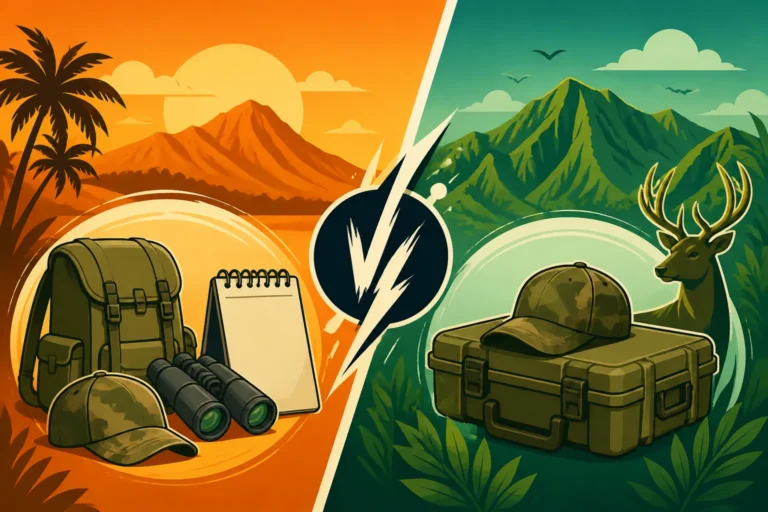
| Feature / Consideration | Single Day Hunt | Multi-Day Package |
|---|---|---|
| Upfront Cost | Generally Lower | Generally Higher |
| Per-Day Value | Often Higher | Potentially Lower |
| Success Odds | Lower | Higher |
| Flexibility | Limited | High (weather, areas) |
| Immersion | Minimal | Deep |
| Accommodation | Not included | Often included |
| Meals | Not included | Often included |
| Species Diversity | Limited (1 main) | Possible (multiple) |
| Guide Relationship | Brief | Developed |
| Physical Demands | Intense (1 day) | Sustained (multiple days) |
Hidden Costs and What to Budget For
Beyond the advertised rates, both day and multi-day hunts come with potential "hidden" costs that can quickly add up. These are crucial to budget for to avoid surprises. First, there's always the travel to Hawaii itself – flights, rental cars, and non-hunting accommodation. For non-residents, there's the cost of a Hawaii Nonresident Hunting License Options and specific permit-tags for certain islands or species. Don't forget gun rental fees if you're not bringing your own firearm, and the cost of ammunition.
Then there are the post-harvest expenses. Getting Meat Processed on a Hawaii Hunt can be significant, especially for a larger animal like an Axis deer, and shipping that meat home, or even inter-island, adds another layer of cost. If you're planning a taxidermy mount, add those fees and shipping costs as well. Tips for your guide are a customary expectation and should be factored into your budget – generally 15-20% of the hunt cost for good service, whether it's a day or multi-day trip. Finally, consider incidental costs like snacks, drinks, and any extra gear you might need. A responsible outfitter or platform like GoHunt will help you understand these additional expenses, but it's always best to ask for a full picture upfront.
Value Beyond the Dollar Amount
While cost is a major factor, the "value" of a hunt extends far beyond the monetary investment. The experience, the memories, the skills learned, and the connections made are priceless. A multi-day hunt, for example, often provides greater educational value. You're not just shooting an animal; you're learning about Hawaii's unique ecosystems, tracking methods, and the local hunting heritage. Your guide can share stories, teach you about the flora and fauna, and truly enrich your understanding of the islands.
The opportunity to forge a stronger bond with your guide and the land over several days often results in a more profound and satisfying experience. Even if success isn't immediate, the process of hunting itself, the sunrises over volcanic slopes, the calls of native birds, and the quiet moments of anticipation, hold immense value. For some, the chance to truly disconnect and immerse themselves in the wild for several days is worth the extra expense. It's about investing in an adventure that resonates deeply, leaving you with more than just a trophy, but a lifetime of vivid recollections.
Logistics and Planning: Making Your Choice Easier
Once you've considered the type of experience and the financial implications, the practical logistics of planning your Hawaii hunt come into play. These considerations can heavily influence whether a day hunt or a multi-day package aligns better with your overall trip.
Travel and Accommodation Impact
Your travel plans and accommodation choices are significantly impacted by the length of your hunt. For a day hunt, you'll likely need to secure separate lodging in a town or resort close to your hunting unit. This means managing check-in/check-out dates, dining arrangements, and transportation independently. If you're staying at a resort with family, a day hunt requires you to coordinate your early morning departures and late evening returns without disrupting their plans too much. You'll also need a rental car capable of reaching the rendezvous point, and possibly the hunting unit, if the guide isn't providing full transport from your lodging.
Multi-day packages, especially those that are all-inclusive, simplify this immensely. Your accommodation, whether it's a lodge, a guest house, or a rustic cabin near the hunting grounds, is typically provided by the outfitter. Meals are often cooked for you, or provisions are supplied. This removes the stress of daily logistics, allowing you to focus solely on the hunt. You might still need to fly into the island and arrange transport to a designated meeting point, but once with the outfitter, many of the daily planning worries vanish. This can be a huge benefit when Traveling to Hawaii for a Hunt, as it allows for a seamless transition into the hunting experience.
Permit-Tags and Licensing Differences
Regardless of whether you choose a day hunt or a multi-day package, securing your Hawaii Hunting Licenses and What They Cost and any necessary permit-tags is non-negotiable. There's no "express" license for a day hunt, nor do multi-day packages waive these requirements. The process for obtaining them remains the same. You'll need to complete Hawaii Hunter Education requirements or obtain an exemption if you're a nonresident with a valid hunter education card from another state. You can usually purchase your license online through the GoHunt Hawaii portal.
The main difference might be how the outfitter assists you. For a day hunt, you're usually expected to have all your paperwork in order when you arrive. For a multi-day package, some outfitters might offer guidance through the application process or remind you of deadlines, but they won't purchase the license or tags for you. It's always your responsibility to ensure you are legally able to hunt. Be especially mindful of specific island requirements, like the Lanai Axis Deer Tag Cost for Residents and nonresidents, or the Kauai Hunting Permit Costs, which vary depending on your residency and the target species. Always check the current regulations well in advance of your trip.
Gear and Equipment for Different Hunt Lengths
Your gear list might also shift depending on your hunt duration. For a day hunt, you can often get away with a more minimalist approach. You'll need your rifle or bow, ammunition, a day pack with water, snacks, basic first aid, and appropriate clothing and Boots for Hawaii Lava and Wet Forest. If you're renting a firearm, the outfitter will handle the weapon itself.
For a multi-day package, especially one in a remote area, you'll need to be more self-sufficient or at least more prepared. While the outfitter might provide some camp gear, you'll still need enough clothing for multiple days (especially if it's a wet environment), personal hygiene items, and potentially more robust rain gear or layers if hunting higher elevations like Hunting Hawaii's High Elevation Alpine Ground. Consider what extra batteries you might need for electronics, or a small solar charger. A good What to Pack for a Hawaii Hunt list for a multi-day trip will be more extensive, factoring in the need for sustained comfort and capability in potentially varied conditions over several days. The guide's vehicle will likely carry more supplies for a multi-day trip, but your personal items will need to be well-organized and durable.
Success Rates and Hunter Experience
The ultimate goal for most hunters is a successful harvest, but the definition of success often evolves with experience. How long you spend in the field, whether it's a day or a multi-day trip, can significantly impact not just your harvest odds, but also the overall quality of your hunting experience and what you take away from it.
Pressure, Patience, and Opportunity
In hunting, patience is often rewarded, and more time in the field inherently increases your opportunities. A single day hunt can feel like a high-pressure sprint. If you encounter bad weather, or animals aren't moving, or your initial stalk goes awry, you might run out of time before getting another chance. This doesn't mean success is impossible, but it demands near-perfect conditions and execution. Guides on day hunts work incredibly hard to put you on game quickly, but even the best guide can't control animal behavior or the elements.
A multi-day hunt, on the other hand, allows for much more patience and adaptability. If the first day is rainy, animals might be bedded down, but by day two or three, conditions might clear, and the game could be on the move. Your guide can then adjust tactics, explore different sections of the hunting unit, or simply wait out a slow period. This reduces the pressure on any single moment, fostering a more relaxed yet persistent approach. It allows you to truly immerse yourself in the natural rhythms of the hunt rather than rushing every decision. It's the difference between trying to solve a puzzle in an hour versus having a weekend to work on it; more time usually leads to a better outcome.
The Learning Curve of Hawaii's Terrain
Hawaii's hunting terrain is unlike almost anywhere else in the world, presenting unique challenges that take time to navigate. From the steep, often slippery Hunting Hawaii's Rainforest Units on the windward side to the rocky, sparse Hunting Hawaii's Dry Leeward Country and volcanic landscapes, it's an environment that demands specific skills and knowledge. On a day hunt, you'll get a crash course, but you'll likely rely heavily on your guide's expertise to get through it. You'll spend most of your energy simply keeping up and focusing on the immediate task of finding game.
A multi-day hunt provides a much better opportunity to learn and adapt. You'll become more familiar with the type of ground you're covering, how to read the subtle changes in animal sign, and how Hawaii's ever-present trade winds affect thermals for Hunting Downwind in Hawaii's Shifting Thermals. Over several days, your guide can explain the nuances of the ecosystem, how different plants indicate pig activity, or where Axis deer tend to bed during certain times of day. You'll learn to walk the rough Walking Rough Lava Without Wrecking Your Boots more efficiently, understand the sounds of the forest, and potentially even help spot game yourself. This isn't just about bagging an animal; it's about gaining a deeper appreciation and understanding of hunting in Hawaii, transforming you from a passive participant into a more engaged hunter.
Post-Hunt Logistics: Meat and Memories
While the thrill of the harvest is paramount, what happens after the shot is a significant part of the hunting experience, especially in Hawaii's warm climate. Field Care in Hawaii's Heat and Humidity is critical to prevent meat spoilage. On a day hunt, the immediate focus is on field dressing, quartering (if necessary), and quickly getting the meat to a cooler. Your guide will assist, but the turnaround time is often tight to ensure quality.
With a multi-day package, especially those offering lodging near the hunting grounds, the post-hunt logistics can be less rushed. You might have access to an on-site cooler or a more structured system for getting the meat to a processor. Your guide might also spend more time with you going over the details of skinning, caping, or preparing the meat for transport or taxidermy. This extended time allows for better planning of Shipping Game Meat Between Hawaii Islands or even Flying Home With Game Meat From Hawaii, ensuring your hard-earned trophy and venison are handled properly. Ultimately, both options deliver memories, but the depth and detail of those memories, particularly around the cultural and practical aspects of the hunt, are often richer and more profound with a multi-day commitment.
Choosing What's Right for Your Hawaii Adventure
Deciding between a day hunt and a multi-day package isn't just about cost or time; it's about aligning the hunt with your personal expectations, goals, and desired level of engagement. It’s a very individual choice, and there’s no single right answer for everyone.
Assessing Your Priorities
Before you even start looking at outfitters, sit down and honestly assess your priorities. What do you really want out of this Hawaii hunting trip? Are you simply looking to check a specific animal off your bucket list with a quick, efficient outing? Then a day hunt might suffice. Do you crave a deep, immersive experience where the journey is as important as the destination, allowing for multiple opportunities and a chance to truly learn the land? In that case, a multi-day package is likely your best bet.
Consider your physical condition. Day hunts can be incredibly demanding, a concentrated burst of energy. Can you sustain that for 8-10 hours, often in challenging terrain and heat? Multi-day hunts also demand stamina, but they allow for a rhythm, some recovery between hunting days, and the flexibility to adjust pace. Think about your companion situation too: if it's a family trip, a day hunt might be easier to carve out without impacting others significantly. If you're traveling specifically for hunting, then the longer, more dedicated multi-day experience might be more appropriate. Companies like BookYourHunt or GoHunt provide various listings that cater to different priorities, making it easier to compare.
Guide-Client Relationship and Continuity
The relationship you build with your guide is a critical, often understated, aspect of a successful hunting trip, particularly in a new and challenging environment like Hawaii. On a day hunt, this relationship is necessarily brief. You meet your guide, spend a day together, and then part ways. While a good guide will do everything possible to provide a great experience, there's limited time to truly connect, understand each other's styles, or adapt to your specific preferences.
With a multi-day package, you have the luxury of continuity. You spend several days with the same person, building rapport, trust, and a deeper understanding. Your guide learns your shooting ability, your pace, your communication style, and what motivates you. You, in turn, become more comfortable with their methods and insights into the local game. This deeper connection often translates into a more personalized and ultimately more effective hunting experience. The guide can tailor the hunt more precisely to you, and you can more openly communicate your needs and observations, leading to a much richer and more collaborative adventure. This continuous interaction enhances safety, enjoyment, and often the overall success of the hunt.
Maximizing Your Time in the Islands
Hawaii is a destination that offers so much more than just hunting. When planning your trip, consider how the hunt fits into your broader island experience. If you're on a two-week family vacation and hunting is just one activity among many, a carefully chosen day hunt might be the perfect fit, allowing you to get a taste of the wild side without monopolizing your entire trip. You might combine it with exploring a volcano, visiting a beach, or enjoying local cuisine.
However, if hunting is the primary purpose of your journey to Hawaii, then a multi-day package is the clear choice for maximizing that specific experience. It allows you to dedicate yourself fully to the pursuit, increasing your chances of success and providing a more profound immersion into the island's unique hunting culture and wilderness. It's about getting the most out of your investment, both in terms of time and money, for the activity you care about most. Whether it's chasing Axis Deer Hunting in Hawaii on Maui or Hunting Hawaii's Feral Pigs on the Big Island, make sure your choice aligns with your ultimate vision for your Hawaii adventure. Don't be afraid to ask potential outfitters for testimonials or details on how they cater to different types of hunters – a good outfitter will be happy to help you find the right fit.
Disclaimer
This article is for general informational purposes only and does not constitute professional advice. Laws, prices and regulations vary by location and change over time. Consult a qualified professional for guidance on your specific situation.