Shipping Game Meat Between Hawaii Islands
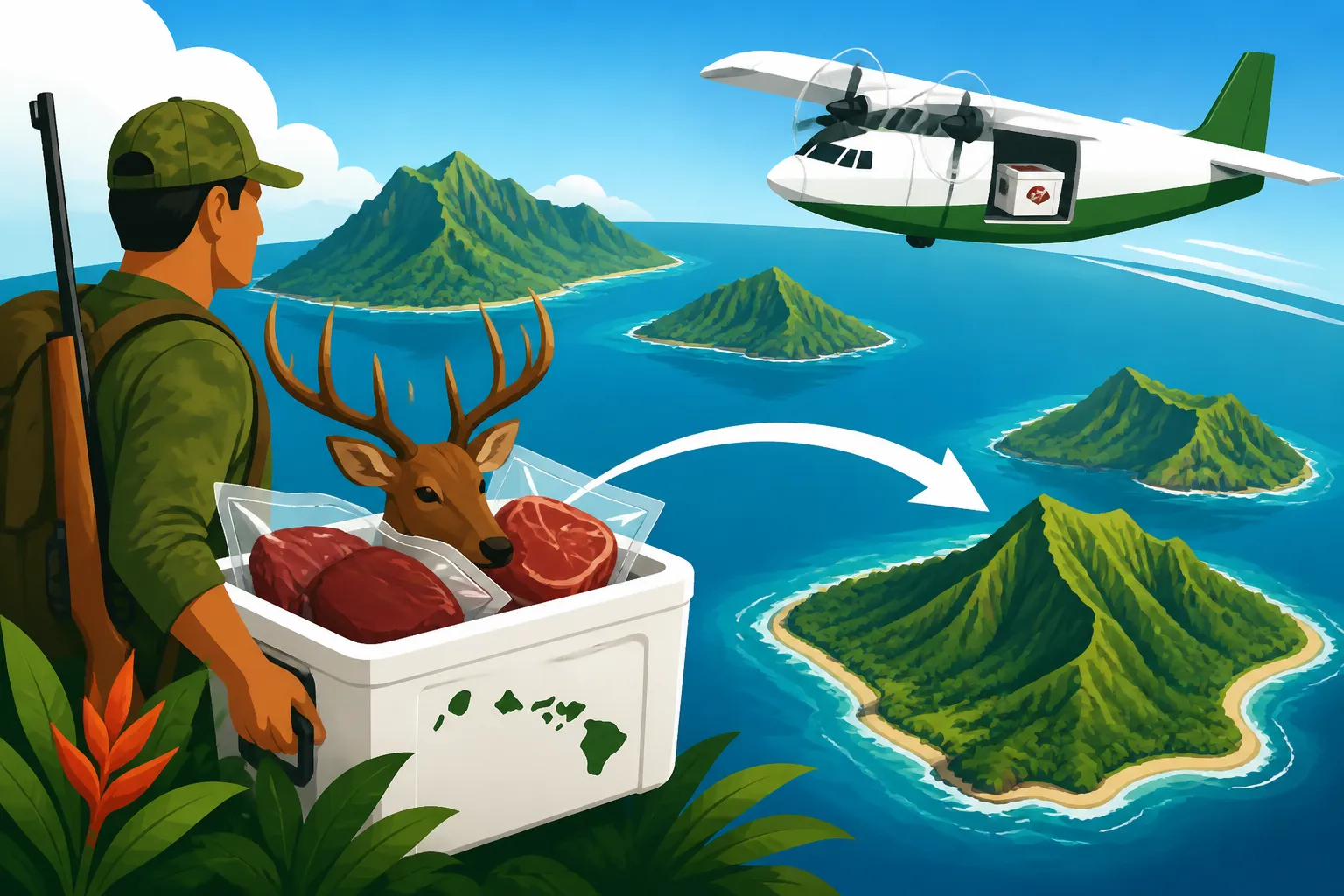
You've just finished a successful hunt on a Neighbor Island – maybe a trophy Axis deer on Maui or a big boar on Molokai – and the hard work of the harvest is done. That feeling of accomplishment is incredible, but often, the reality of getting that precious, hard-earned game meat back to your home island can quickly turn into a headache. It's not as simple as throwing it in a suitcase, and dealing with regulations, perishable goods, and carrier logistics can be daunting. This guide is here to walk you through everything you need to know about successfully shipping your game meat between Hawaii islands, ensuring your venison or pork arrives safely.
Understanding the Regulations for Inter-Island Meat Transport
Before you even pack your cooler, it's absolutely crucial to understand the rules and regulations governing the movement of game meat within Hawaii. Each island has its own unique ecosystem and agricultural concerns, and the state takes biosecurity very seriously. Don't let ignorance turn your triumphant hunt into a regulatory nightmare.
Hawaii Department of Agriculture HDOA Requirements
The Hawaii Department of Agriculture (HDOA) is primarily concerned with preventing the spread of invasive species and diseases between islands. While game meat harvested legally in Hawaii from common species like Axis deer, feral pigs, and goats is generally permitted for inter-island transfer, there are specific conditions that must be met to ensure it's free from pests or pathogens.
First and foremost, the meat must be clean and free of excessive dirt, plant material, or insects. This means meticulous field dressing and processing are non-negotiable. Any foreign organic matter could be deemed a biosecurity risk. While you don't typically need a specific HDOA permit for basic inter-island meat transport for personal consumption, the animal must have been legally harvested with appropriate licenses and tags. It's always a good idea to keep a copy of your hunting license and any relevant tags with your meat, just in case an inspection occurs or questions arise. For complex situations or if you're ever in doubt, reaching out to the HDOA directly for clarification before you travel is the smartest move.
Airline and Cargo Carrier Policies
Beyond state regulations, the individual airlines and cargo companies operating between islands have their own strict policies regarding the transport of perishable goods, especially meat. This is often where hunters run into the most issues if they haven't planned ahead. Each carrier's rules can differ significantly in terms of packaging, weight limits, dry ice allowances, and labeling.
For instance, Hawaiian Airlines Cargo is a popular choice for many hunters, offering relatively frequent flights between major islands. They will have specific guidelines on how much dry ice is permitted (often limited to 5.5 pounds per package, properly vented) or if gel packs are preferred. They'll also specify acceptable cooler types – usually sturdy, hard-sided coolers that are leak-proof. Mokulele Airlines, serving many of the smaller inter-island routes, often has tighter restrictions on cargo size and weight due to the smaller aircraft they operate. Their dry ice policies might be different, and sometimes they prefer frozen gel packs instead. It's not uncommon for airlines to require advance notification if you're shipping a significant amount of dry ice.
Then there's Young Brothers, Hawaii's primary inter-island freight company, which moves goods by barge. While less common for a hunter to ship a single cooler of game meat, it's an option for larger quantities or if you're not in a rush. Their rules will focus more on palletization and overall freight safety. The key takeaway here is to call your chosen carrier directly well in advance of your hunt to confirm their current policies. Don't rely on old information or what another hunter did last year, as rules can change. Be ready to discuss the type of cooler, estimated weight, and whether you plan to use dry ice or frozen gel packs.
Preparing Your Harvest for Inter-Island Journey
Successfully getting your meat from one island to another starts long before you reach the cargo counter. It begins the moment you make that shot. Proper field care, processing, and packaging are the unsung heroes of inter-island meat transport, ensuring your hard-earned protein arrives in prime condition. Neglecting these steps can lead to spoilage, which is truly heartbreaking after all that effort.
Field Care and Initial Processing
The Hawaiian climate, with its warm temperatures and often high humidity, is notorious for accelerating meat spoilage. This means rapid cooling is not just recommended, it's absolutely essential. As soon as your animal is down, the clock starts ticking. The first step is to gut the animal quickly and cleanly to allow the carcass to begin cooling internally. For larger animals like Axis deer or even big feral pigs, quartering the animal in the field is often necessary, especially if you have a long hike out of a remote unit or are Hunting Hawaii's Volcanic Terrain. This also helps to reduce the meat's mass, allowing it to cool down faster.
Once back at camp or your vehicle, the goal is to get the meat on ice as soon as humanly possible. Think about the advice often given for "Cooling Meat Fast on a Hawaii Hunt." Many hunters opt for large plastic bins or coolers filled with ice to submerge the quarters. Ensure any blood is thoroughly rinsed off to prevent bacterial growth. The meat should be kept on ice, ideally in a slurry of ice water that is drained and replenished frequently, until it's completely chilled through – usually for at least 24-48 hours. This process helps to draw out heat and allows for better rigor mortis resolution, resulting in more tender meat. For more detailed information on this crucial step, you might want to read up on "Field Dressing Axis Deer in Hawaii Heat."
Packaging for Transport
Once your meat is thoroughly chilled, the next critical step is proper packaging. This is where you create a barrier against spoilage and meet carrier requirements.
- Double Bagging: Individually wrap each cut or quarter in heavy-duty freezer bags, then place these into another, larger freezer bag. This double layer prevents any leaks, which is a major concern for airlines. Nobody wants a leaky cooler on the cargo plane! Use high-quality bags that won't tear easily.
- Vacuum Sealing: If you have access to a vacuum sealer, this is the gold standard. Vacuum-sealed meat lasts longer, prevents freezer burn, and reduces bulk. It also creates a completely leak-proof package.
- Sturdy Cooler: Invest in a high-quality, hard-sided cooler known for its insulation properties. Brands like Yeti, RTIC, or similar heavy-duty coolers are worth their weight in gold for inter-island transport. They maintain temperature far better than thin-walled picnic coolers. Make sure the cooler is in good repair, with latches that secure tightly and a drain plug that won't leak.
- Insulation Material: Once the meat is bagged and placed in the cooler, fill any empty space with additional insulation. Crumpled newspaper, towels, or even extra layers of cardboard can help minimize air pockets and maintain a consistent cold temperature.
- Dry Ice vs. Gel Packs:
- Dry Ice: Provides superior cooling and keeps meat frozen solid for longer periods. However, it requires special handling. It must be placed on top of the meat (cold air sinks) and the cooler must be clearly labeled "Dry Ice" with the net weight of the dry ice. Crucially, the cooler must be vented (e.g., by slightly loosening the drain plug or leaving the lid a tiny bit ajar) to allow the carbon dioxide gas to escape, preventing pressure buildup that could rupture the cooler. Remember, most airlines have a strict limit on the amount of dry ice allowed.
- Frozen Gel Packs: A safer alternative to dry ice if you're concerned about venting or exceeding dry ice limits. They don't require venting and are reusable. However, they don't get as cold as dry ice, so your meat might not stay perfectly frozen for extended periods. They are excellent for keeping already frozen meat cold.
- Labeling: Clearly label your cooler with your name, contact information, the contents (e.g., "Frozen Game Meat"), and your destination. If using dry ice, explicitly label "Dry Ice" and its net weight.
Think of it this way: your cooler is a miniature freezer. The better you pack it, the higher the chance your meat will arrive in the same condition it left. When you're "Packing Meat Out of a Hawaii Gulch," you're already thinking about the short-term preservation; inter-island shipping just extends that challenge.
Choosing the Right Shipping Method Between Islands
Once your meat is meticulously prepared and packed, the next hurdle is deciding how to get it across the water. The two main options are air cargo and ocean freight, each with its own set of pros, cons, and logistical considerations that can impact your planning and your wallet.
Air Cargo Services
For most individual hunters looking to transport game meat between Hawaii's islands, air cargo is the preferred method. It's fast, often taking just a few hours to a day, which is critical for perishable goods.
- Speed is King: This is the primary advantage. A quick flight minimizes the risk of spoilage, even if there's a slight delay. You drop your cooler off, and within hours, it could be on the other island, ready for pickup.
- Major Carriers: Hawaiian Airlines Cargo is widely used, offering services to most major airports across the islands (Honolulu, Kahului, Lihue, Kona, Hilo). Mokulele Airlines also offers cargo services, particularly useful for smaller regional airports and less frequent routes.
- Cost Considerations: Air cargo can be expensive, especially for heavier coolers. Prices are typically based on weight, and sometimes dimensions. It's not uncommon for a cooler full of Axis deer quarters to cost $50-$100 or more to ship, depending on the distance and weight. Factor this into your overall hunt budget.
- Logistics: You'll need to drop off your cooler at the cargo facility, which is often separate from the main passenger terminal. Be aware of their cut-off times for same-day shipping, which can be several hours before flight departure. On the receiving end, someone needs to be available for pickup shortly after the flight arrives, as cargo facilities have limited cold storage, if any. Ensure the recipient knows the flight number and tracking information.
- Weight Limits: Each carrier has strict weight limits for individual cargo pieces. For instance, Hawaiian Airlines generally has a 70-pound limit per piece, though heavier items can sometimes be accepted with prior arrangement and additional fees. Be sure to confirm this. If you harvested a large Axis buck, you might need to split the meat into two coolers to stay within limits.
When you're planning your hunt, especially if you're traveling to a Neighbor Island, always check the cargo schedules and policies of carriers like Hawaiian Airlines and Mokulele. Platforms like GoHunt are fantastic for mapping out your hunting units and seasons, but don't forget to extend that detailed planning to your post-hunt logistics, specifically contacting the airlines about their perishable goods policies.
Ocean Freight via Young Brothers
While less common for individual hunters transporting a single animal, Young Brothers, Hawaii's inter-island barge service, is an option for very large quantities of meat or if time is not a critical factor.
- Bulk Transport: If you were part of a large-scale culling operation, or perhaps hunting multiple animals and processing a significant amount of meat, Young Brothers could be more economical for bulk shipping.
- Slower Service: Barges move much slower than planes. You're looking at days, not hours, for transit between islands. This significantly increases the risk for perishable goods unless the meat is deep-frozen and packed with a substantial amount of dry ice in a highly insulated container.
- Different Logistics: You'll drop off and pick up at Young Brothers' port facilities, which are industrial and require different access than airport cargo terminals. Their requirements for packaging will also be focused on freight standards, potentially needing crating or palletization for very large shipments.
- Cost-Effective for Volume: For sheer volume, ocean freight can be cheaper per pound than air cargo, but the trade-off in speed and the extra effort needed for extreme insulation often makes it impractical for typical hunter harvests.
Most hunters will find air cargo the most practical and reliable choice for preserving their meat, even with the higher cost. The peace of mind knowing your hard-won meat is traveling quickly is often worth the extra expense.
Comparing Inter-Island Meat Shipping Options
To help you make an informed decision, here's a quick comparison of the two main shipping methods:
| Feature | Air Cargo (e.g., Hawaiian Airlines Cargo, Mokulele) | Ocean Freight (e.g., Young Brothers) |
|---|---|---|
| Speed | Hours to 1 day | 2-5 days or more |
| Cost | Higher, based on weight/dimensions | Lower per pound for bulk, but potentially higher overall |
| Perishability | Best for fresh/frozen meat; minimal spoilage risk | Requires deep-frozen meat, extensive insulation |
| Packaging | Sturdy, leak-proof coolers (vented for dry ice) | Industrial packaging, potentially crating/palletization |
| Weight Limits | Strict per-piece limits (e.g., 70 lbs) | Higher bulk limits, less restrictive per-piece |
| Logistics | Airport cargo terminal drop-off/pickup, quick turnaround | Port facility drop-off/pickup, longer lead times |
| Best Use | Individual hunter's harvest, urgent shipments | Large quantities, commercial operations, less urgent |
Common Pitfalls and How to Avoid Them
Even with the best intentions, things can go sideways. Shipping game meat between islands isn't without its challenges, and understanding these common pitfalls can help you sidestep them.
Spoiled Meat and Poor Temperature Control
This is arguably the biggest fear of any hunter. Imagine all that effort, all that hard work, only for your meat to arrive soft, warm, and unusable. It’s a gut-wrenching thought. The primary culprit here is inadequate temperature control during the entire chain of custody.
- The Fix: Start with immaculate field care and rapid cooling. Don't skimp on ice or chilling time. For transport, use a top-tier insulated cooler. If using dry ice, ensure you have enough to last the expected transit time plus several hours of contingency. Always vent the cooler for dry ice, but ensure the meat itself is sealed to prevent freezer burn from direct dry ice contact. For journeys with possible delays, opting for maximum dry ice (within carrier limits) or super-frozen meat is wise. Remember, once the meat starts to warm, it's a race against bacteria. Reading "Field Care in Hawaii's Heat and Humidity" can offer more foundational advice on preventing spoilage.
Missed Flights or Unexpected Delays
You plan your drop-off, race to the cargo terminal, only to find out your flight is delayed, or worse, your cooler misses its connection. While less common for direct inter-island flights, it can happen, especially with weather or operational issues.
- The Fix: Build in a buffer. Don't plan to drop off your cooler at the absolute last minute. Aim for early morning flights, giving you more options if the initial flight is canceled. Call the cargo office on the day of travel to confirm schedules and cut-off times. Always have extra ice or dry ice on hand, especially if you're traveling from a remote area where resupply is difficult. If you're on a weekend hunt, consider the increased volume and potential for delays, especially around holidays. "Getting the Most From a Hawaii Weekend Unit" can help you strategize your hunt timing, which implicitly helps with post-hunt logistics.
Packaging Not Meeting Carrier Requirements
This is a common frustration at the cargo counter. You’ve packed your meat, driven to the airport, and then they tell you your cooler isn’t properly sealed, or you have too much dry ice, or it’s not labeled correctly. This can lead to refusal of shipment, forcing you to repack or discard meat on the spot.
- The Fix: Call the specific cargo carrier ahead of time. I can't stress this enough. Ask about their current policies for perishable goods, dry ice limits, venting requirements, and acceptable cooler types. Ask about labeling specifics. Write down the information and follow it precisely. Having your meat double-bagged and using a quality hard-sided cooler that latches securely are almost universally accepted best practices. Don't assume. This meticulous planning is an extension of what you'd do when preparing for "Hawaii Hunting Licenses and What They Cost" or researching "Hawaii's Hunting Units and How They Work."
Agricultural Inspection Challenges
While rare for legally harvested game meat, agricultural inspectors at either end of the journey have the authority to inspect packages. If they find plant material, excess dirt, or signs of pests, your shipment could be delayed or even rejected.
- The Fix: Ensure your meat is meticulously clean. Remove all dirt, blood, and any plant material during field dressing and processing. Keep your hunting license and tag information handy. While you're generally moving local game, maintaining the highest standard of cleanliness avoids any questions or delays. For more general guidelines on animal transport, you can refer to "Hawaii Rules on Transporting Game Meat."
Shipping game meat between Hawaii's islands doesn't have to be a source of anxiety. With careful planning, adherence to regulations, and meticulous preparation of your harvest, you can ensure that your hard-earned game arrives safely and ready for your dinner table back home. Enjoy the bounty of the islands!
Disclaimer
The information provided in this guide is for general informational purposes only and does not constitute legal or professional advice. Hunting regulations, carrier policies, and agricultural rules in Hawaii are subject to change without notice. Always consult the most current regulations from the Hawaii Department of Land and Natural Resources (DLNR), the Hawaii Department of Agriculture (HDOA), and your chosen air or ocean cargo carrier before planning any hunt or meat transport. The author and publisher are not responsible for any actions taken based on the information provided herein.