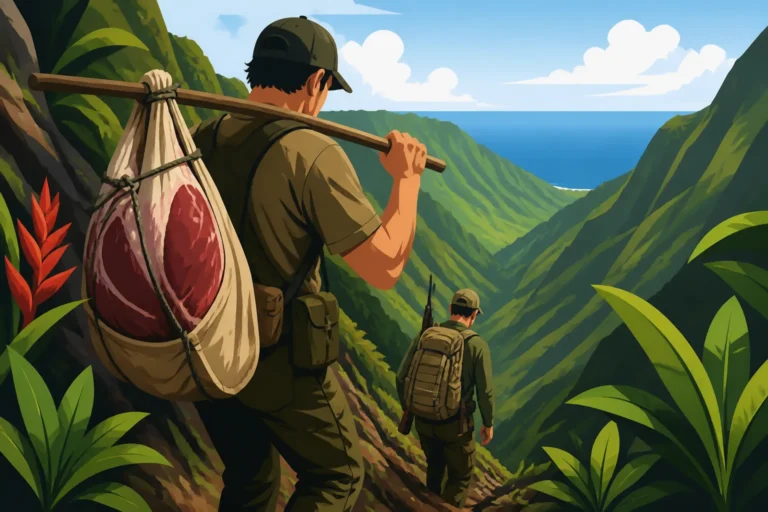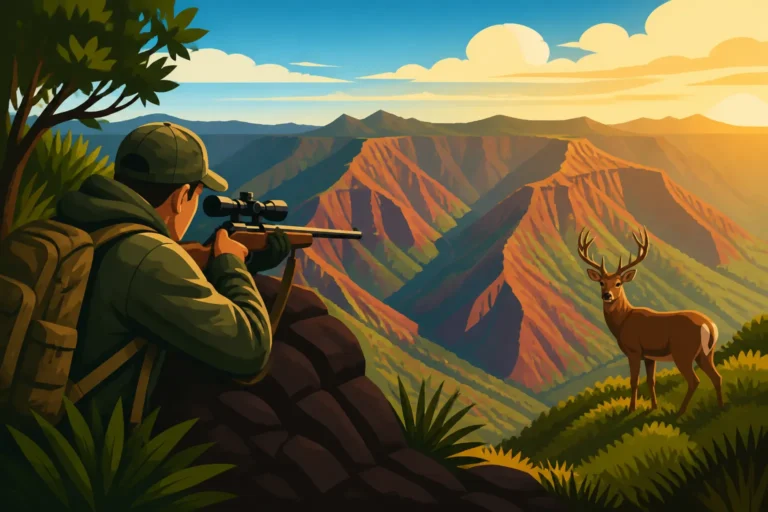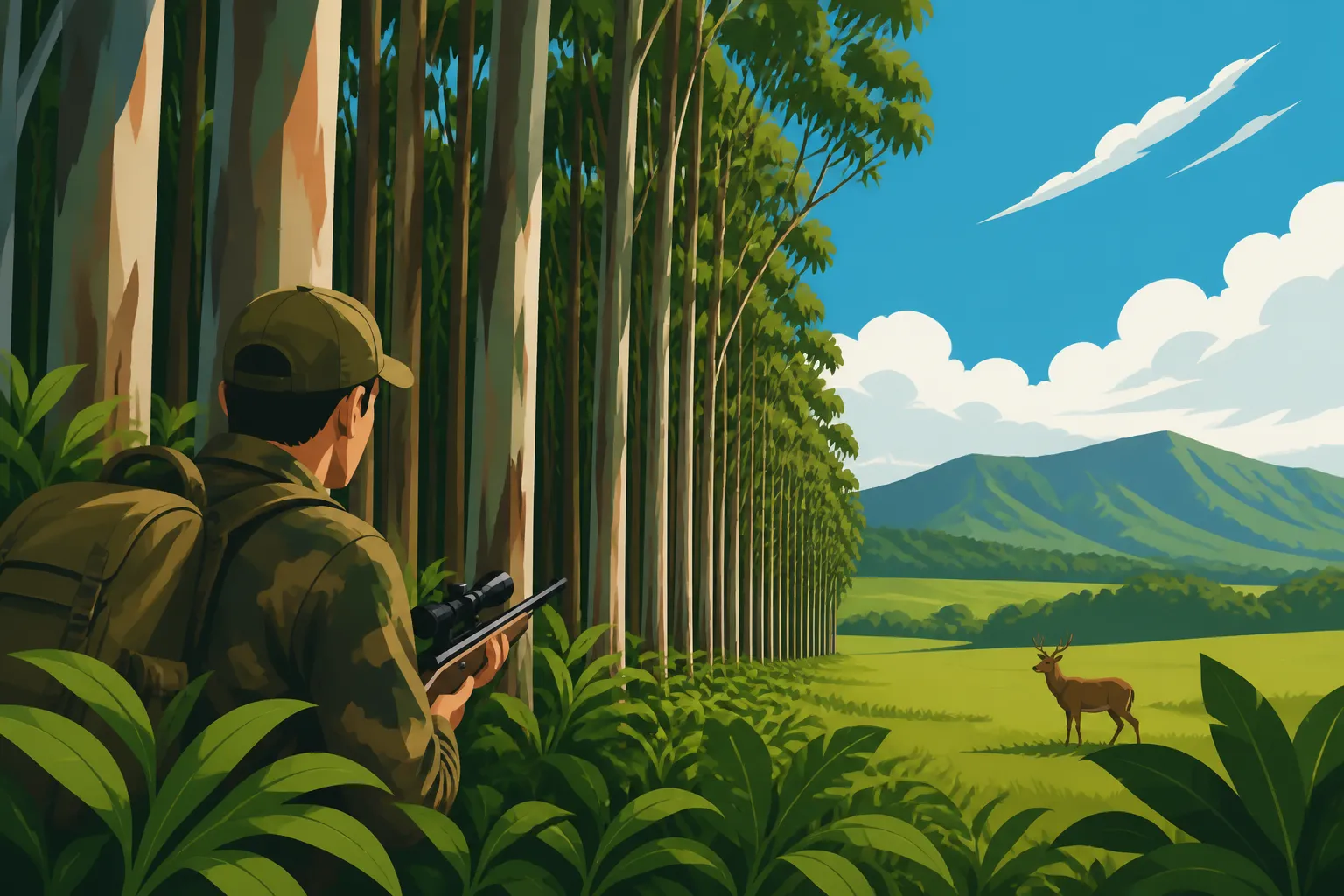
Hunting a Hawaii Eucalyptus Plantation Edge
Trying to navigate Hawaii's diverse hunting landscape can be a real head-scratcher, especially when you encounter those dense, often uniform eucalyptus plantations. It's easy to feel overwhelmed, wondering if any game actually lives in there, or how you'd even begin to approach such thick cover. This guide is here to demystify hunting the edges of these unique forest plantations, helping you understand how game animals use them and the best strategies to find success.
Understanding the Eucalyptus Edge Ecosystem
Eucalyptus plantations, while not native to Hawaii, have become a significant part of the landscape on many islands. These fast-growing trees, often planted for timber or watershed management, create a distinct environment that game animals have learned to utilize. The "edge" of these plantations, where they meet native forests, open pastures, or even lava fields, is where you'll often find the most action.
Why Game Animals Use Eucalyptus Edges
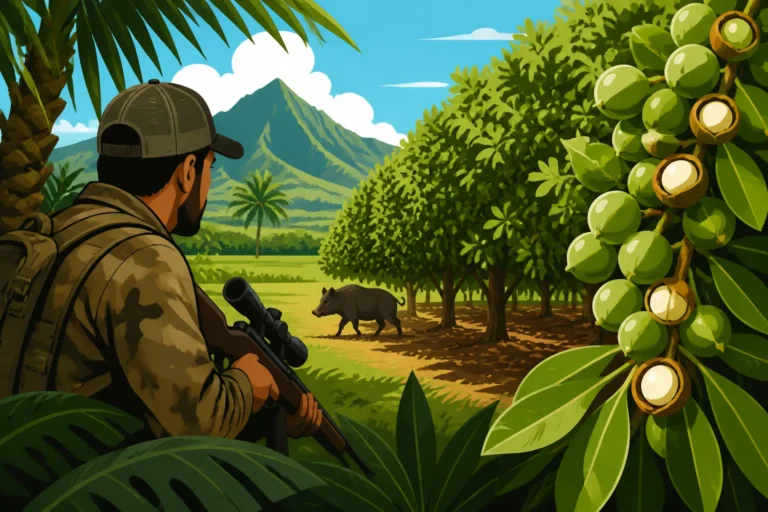
The reasons game animals like feral pigs, goats, and even axis deer, gravitate towards these edges are pretty straightforward, though often overlooked. Think of it from their perspective: the dense canopy of a eucalyptus plantation provides incredible thermal cover, offering shade from the intense Hawaiian sun and shelter from heavy rains. It's a sanctuary, a place where they feel safe from predators (namely, us hunters).
The thick undergrowth that often develops along these edges, or just inside the plantation boundary, provides a consistent food source. While eucalyptus leaves themselves aren't typically a primary food, other plants thrive in the filtered light and slightly more open conditions of the transition zone. Pigs, in particular, will root along these boundaries, digging for tubers and invertebrates. Goats might browse on the various shrubs and smaller trees that grow where the eucalyptus thins out. Axis deer, if present, will use the cover for bedding down during the day, emerging at dawn and dusk to feed in adjacent open areas.
Water sources, even small seeps or muddy wallows, become critical focal points. Eucalyptus trees are thirsty, and their presence can often indicate areas with higher soil moisture, which in turn supports the growth of other plants that hold water. Animals will also use the dense edges to travel unobserved between feeding grounds and water. These transitions are basically animal highways.
Common Game Species Found on These Edges
While specific game species can vary by island and unit, you're primarily going to be looking for two main types when hunting eucalyptus edges: feral pigs and feral goats. On islands like Maui, you might also encounter axis deer utilizing these areas.
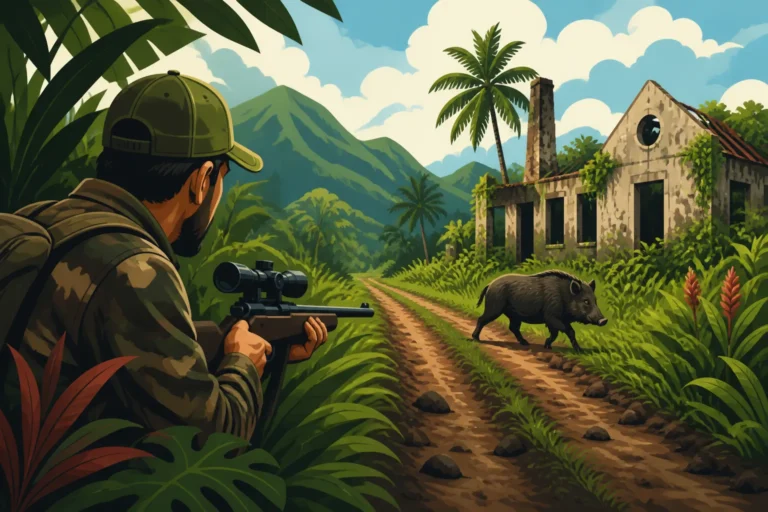
Feral Pigs: These are perhaps the most common inhabitants of eucalyptus edges, especially where the plantation abuts a wetter, more diverse forest or a taro patch. Pigs love thick cover, and the dense nature of eucalyptus offers them an ideal hiding spot. They'll push through the undergrowth, creating tunnels and trails that can be easily identified. You'll often find signs of their rooting activity along the edges as they search for food. If you're hunting for Hawaii's Feral Pigs, these edges are prime real estate.
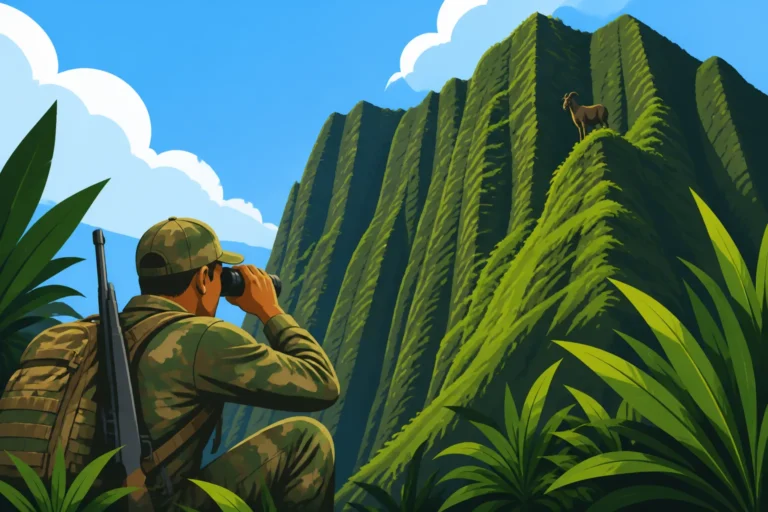
Feral Goats: Goats are incredibly adaptable and, while often associated with rocky cliffs and dry country, will readily use the edges of eucalyptus plantations, particularly if there's a good vantage point or a transition into brushy terrain. They appreciate the browse and the ability to disappear into the dense foliage if startled. If the plantation is on a slope, the goats will use the cover to traverse the hillside. For more on these agile animals, check out our guide on Hunting Hawaii's Feral Goats.
Axis Deer: On Maui, Molokai, and Lanai, axis deer might utilize eucalyptus edges, especially if the plantation is near their preferred open country grazing areas. They'll use the dense cover for bedding during the hotter parts of the day and for travel lanes. They're more likely to be found on the edges at dawn and dusk when they're moving to and from feeding. If your focus is Axis Deer Hunting in Hawaii, don't overlook these boundary areas.
Strategic Approaches for Hunting Eucalyptus Edges
Hunting these edges effectively requires a blend of patience, keen observation, and understanding animal movement patterns. It's not a place for sky-lining or long-range shooting; it's about close-quarters hunting, reading the subtle clues, and often, getting in deep.
Still-Hunting and Stalking the Perimeter
Still-hunting is often the most effective tactic along eucalyptus edges. This involves moving slowly, taking a few steps, and then pausing for several minutes to observe, listen, and scan for movement. The goal is to move silently enough that you don't spook game, but also to give yourself time for animals to reveal themselves. This is particularly crucial in areas where the undergrowth is thick and visibility is limited to just a few yards.
When still-hunting, pay close attention to the wind. Eucalyptus trees can create strange wind currents, especially if the canopy is dense. Always try to hunt into the wind or with a crosswind that carries your scent away from where you expect animals to be. Your eyes should constantly be scanning for horizontal lines in a vertical world – the back of a pig, the curve of a goat horn, or the white spots on an axis deer's flank.
Stalking takes this a step further. Once you've identified fresh sign or spotted an animal, the stalk begins. This demands extreme stealth, using every bit of cover available, and moving only when the animal is looking away or its attention is diverted. Remember that the dry eucalyptus leaves on the ground can be incredibly noisy underfoot, so pick your steps carefully, placing your foot down heel first and slowly rolling to your toe to avoid snapping twigs.
Utilizing Established Trails and Crossings
Game animals are creatures of habit, and they will establish well-worn trails, especially along the edges of dense cover like eucalyptus plantations. These trails are your key. Look for areas where the ground is matted down, where vegetation is pushed aside, or where you see fresh tracks. Pigs, in particular, will create obvious "pig trails" that are often narrower than deer trails but can be surprisingly distinct. Reading Pig Sign Along a Muddy Trail can give you an edge here.
Crossings are another vital element. These are specific points where animals regularly move from the cover of the eucalyptus into an open area, or from one section of dense cover to another. This could be a break in a fence line, a narrow finger of trees extending into a field, or a natural dip in the terrain. Identifying these crossings during scouting (or even using aerial maps via platforms like GoHunt) can help you set up for an ambush at prime times like dawn and dusk.
Setting up a stand or waiting near a well-used trail or crossing can be incredibly effective, especially if you know the animals are moving during specific hours. Just ensure you have a clear shot lane and a solid backdrop for safety.
Dealing with the Unique Scent of Eucalyptus
Eucalyptus trees have a very distinct, strong aromatic scent. While it might smell pleasant to us, it can be a double-edged sword for hunters. On one hand, the strong natural odor might help mask some of your own scent, particularly if you're covered in the crushed leaves and oils from pushing through the brush. On the other hand, it can also make it harder for you to pick up the natural scent of game animals, especially pigs, which have a musky odor.
The key here is to not rely on scent alone. Use your eyes and ears just as much, if not more. Pay attention to changes in the eucalyptus aroma – a sudden shift might indicate a breeze change or the presence of something else. While wearing scent-masking sprays is always a good idea, remember that the best scent control is often simply staying downwind.
Gear and Safety for Eucalyptus Plantation Hunting
Hunting in eucalyptus plantations, with their dense undergrowth and often slippery conditions, requires specific gear and a strong emphasis on safety. Being prepared can make the difference between a successful, safe hunt and a frustrating, potentially dangerous one.
Essential Clothing and Footwear
Forget your lightweight open-country gear; hunting eucalyptus edges calls for durable, protective clothing. Long sleeves and pants are an absolute must, even in Hawaii's warmth, to protect against scrapes, thorns, and insects. Look for ripstop fabrics or heavier canvas that can stand up to constant abuse from brush. Camouflage patterns that break up your outline in varied green and brown environments will serve you well.
Footwear is paramount. The ground can be uneven, covered in slippery leaves, and often damp or muddy. You need sturdy, waterproof boots with excellent ankle support and aggressive tread. Brands like Kenetrek or Crispi make boots that excel in tough, varied terrain, providing the stability and protection you'll need. Don't skimp on quality here; blown-out boots in the middle of a remote unit are a miserable experience. You'll want to review our guide on Boots for Hawaii Lava and Wet Forest for more specific recommendations.
Consider carrying gaiters to keep debris out of your boots and protect your lower legs from scrapes. A good pair of work gloves will also save your hands from sharp branches and rough bark.
Navigation and Communication Tools
It's incredibly easy to get turned around in the dense, often featureless interiors of a eucalyptus plantation, even if you're sticking to the edges. A reliable GPS device or a smartphone app like OuterSpatial or Gaia GPS is non-negotiable. Download offline maps of the area before you lose cell service. Mark your entry point, key landmarks, and any game trails you discover. This is critical for Staying Found in Dense Hawaii Rainforest, which these areas often mimic.
Beyond GPS, a physical compass and a topo map of the unit are excellent backups. Batteries die, and electronics fail. Knowing how to orient yourself with a map and compass can be a lifesaver.
For communication, cell service can be spotty or nonexistent in many remote Hawaiian hunting units. A satellite messenger device (like a Garmin inReach or Zoleo) is a smart investment, allowing you to send messages and, more importantly, trigger an SOS in an emergency. Always let someone know your hunting plan, including your expected return time and exact location, even if you're just doing a day hunt.
Weapon Selection and Marksmanship
For close-quarters hunting in dense cover, shot placement is king. A fast-handling rifle in a moderate caliber (like .30-30, .308, or 6.5 Creedmoor) with a low-power variable scope or even iron sights can be very effective. Lever-action rifles are particularly popular in thick Hawaiian brush for their quick follow-up shots and compact size. Ensure your rifle is zeroed correctly and you are proficient with it at typical engagement distances of 50-100 yards, as longer shots are rare in such tight cover.
Archery hunters will find the dense cover challenging but rewarding. A compound bow set up for quick, quiet shots is ideal. Ensure your broadheads are sharp and your arrow setup is robust enough to punch through thick hide and bone. For bowhunters, stealth and patience are even more critical.
For those engaging in Dog and Knife Pig Hunting in Hawaii, remember the importance of legal weapon choices and safe handling in close quarters. Always be aware of your surroundings and any dogs present.
First Aid and Emergency Preparedness
Accidents happen, especially when navigating uneven terrain and dense vegetation. Carry a well-stocked first aid kit that includes bandages, antiseptic wipes, pain relievers, and any personal medications. Consider adding a tourniquet and clotting agents if you're hunting alone in remote areas.
Beyond basic first aid, think about survival essentials: a fire starter, a small water filter or purification tablets, an emergency blanket, and a whistle. Even a short day hunt can turn into an unexpected overnight stay if you get lost or injured. Remember to plan for Water and Heat Planning for a Hawaii Hunt, as dehydration is a real risk.
Reading Sign and Locating Game in Eucalyptus Country
Successfully hunting eucalyptus edges comes down to reading the subtle language of the forest. Animals leave clues everywhere, and knowing what to look for can significantly increase your chances of success.
Identifying Fresh Tracks and Trails
Tracks are your primary indicator of recent game activity. Along the soft edges of a plantation, or where trails lead into an adjacent muddy area, you're looking for fresh hoof prints. For pigs, look for cloven hooves, often with dewclaws showing in softer mud. Goat tracks are similar but typically smaller and more pointed. Axis deer tracks will be distinct, usually larger and more rounded than goat tracks.
Fresh tracks will have sharp, well-defined edges, with no dry, crumbly dirt inside. Look for consistency in the size and direction of the prints to determine if it's a single animal or a group. Follow these trails slowly and quietly, as they will often lead you directly to feeding or bedding areas. Pay attention to how the trails intersect, especially near water sources or preferred food plots, like an old sugar cane field.
Recognizing Feeding and Bedding Areas
Feeding Sign: Pigs are voracious rooters. You'll often find patches of turned-up earth where they've been digging for roots, tubers, and grubs. This fresh rooting is a strong indicator of recent activity. Goats will leave browse marks on various shrubs and small trees, often tearing leaves rather than making clean cuts. Axis deer will leave droppings (pellets) and browse marks on preferred vegetation, especially at dawn and dusk. Look for preferred food sources: ferns, guava, and certain grasses are all on their menu.
Bedding Areas: Game animals seek out thick, sheltered spots to bed down during the day. In eucalyptus plantations, this will often be in the densest part of the edge, or just inside the main stand of trees where the canopy is thickest. Look for flattened areas in the undergrowth, particularly under large ferns or dense brush. These "beds" might have hair or droppings nearby. These areas are excellent spots for a slow, methodical still-hunt, as you might jump an animal out of its daytime hideout.
Scrapes, Rubs, and Wallows
Beyond tracks and feeding sign, there are other, more specific indicators of game presence:
- Rubs: Particularly from pigs and sometimes goats, these are areas where animals have rubbed against trees or rocks. For pigs, this is often to remove mud or parasites, leaving behind a smooth, sometimes muddy, patch on a tree trunk. Axis deer bucks will also rub their antlers on saplings and small trees, especially during the rut, to remove velvet and mark their territory.
- Wallows: Pigs love to wallow in mud. These muddy depressions, often near water sources, are tell-tale signs of pig activity. Fresh wallows will be wet and churned up, sometimes with pig hair clinging to the edges. A wallow can be an excellent place to set up for an evening ambush, especially in dry periods where Hunting a Water Source in Dry Hawaii Country becomes crucial.
- Scrapes: While more common with deer, pigs and goats can also create small scrapes with their hooves or snout, particularly around communal areas or feeding spots.
By meticulously observing these signs, you'll start to piece together the puzzle of animal movement and habits within and around the eucalyptus plantations. Remember to check in and out of your hunting unit, often using systems like the GoHunt Hawaii platform or the OuterSpatial app, to ensure you're compliant with all local regulations.
| Sign Type | Primary Species | What to Look For | Best Time to Check | Significance |
|---|---|---|---|---|
| Tracks | Pig, Goat, Axis | Fresh, sharp prints in mud/soft ground, dewclaws (pig) | Early Morning | Recent movement, direction of travel |
| Rooting | Pig | Patches of turned-up earth, disturbed soil | Any time | Active feeding area |
| Browse Marks | Goat, Axis | Torn leaves (goat), clean cuts (deer) on shrubs/saplings | Any time | Current food sources, recent feeding |
| Bedding Areas | All | Flattened vegetation, often in dense cover, hair/droppings | Day (for scouting) | Daytime hideouts, potential ambush points |
| Wallows | Pig | Muddy depressions, churned up, pig hair | Any time | Water/cooling spots, evening ambush potential |
| Rubs | Pig, Axis | Smooth, muddy patches on trees (pig); antler rubs (axis) | Any time | Territorial marking (axis), cooling/scratching (pig) |
| Droppings | All | Pellets (deer/goat), irregular clumps (pig) | Any time | Recent presence, dietary clues |
Disclaimer
Hunting in Hawaii involves inherent risks. This guide provides general information and should not replace proper training, local regulations, or common sense. Always consult the Hawaii Department of Land and Natural Resources (DLNR) Division of Forestry and Wildlife (DOFAW) for the most current rules, regulations, and unit specific conditions before planning any hunt. Be aware of private land boundaries, obtain necessary licenses and permits, and prioritize safety above all else.