Hunting a Pali Face From Below
If you've spent any time hunting in Hawaii, you know that the terrain here isn't just "hilly" – it can be brutally vertical. Those towering pali (cliffs or steep slopes) that make for stunning photographs can also hold elusive game, but trying to hunt them from the bottom up feels like staring at a fortress wall. Many hunters feel overwhelmed just looking at the sheer impossibility, but with the right approach and a healthy respect for the land, these challenging faces can be incredibly rewarding. This guide will walk you through how to tackle hunting a pali face from below, focusing on strategy, safety, and success in these unique Hawaiian landscapes.
Understanding the Pali Environment and Its Challenges
Hawaii's pali faces are some of the most striking and formidable geological features in the islands. These aren't just steep hills; they're often vertical or near-vertical cliffs, carved by millennia of erosion, rainfall, and volcanic activity. Hunting such terrain presents a unique set of obstacles, but also offers incredible opportunities for solitude and undisturbed game if you know how to navigate them.
Defining a Pali Face and Its Unique Challenges
A "pali" in Hawaii refers to a cliff, escarpment, or very steep slope, often dropping hundreds or even thousands of feet. Think of the breathtaking Nā Pali Coast of Kauai, or the sheer cliffs on Molokai's north shore – while not all are huntable, they exemplify the type of extreme verticality we're talking about. Even on the huntable public lands, you'll encounter smaller, but no less daunting, pali faces.
The challenges are multifaceted. First, there's the sheer physical exertion required. You're not just walking; you're climbing, scrambling, and often hand-over-foot ascending. Then there's the unpredictable ground underfoot: loose scree, wet clay, jagged lava rock, or dense, slippery vegetation like uluhe fern or guava thickets. Visibility can be extremely limited in the dense brush, making spotting game difficult and maintaining your bearings a constant struggle. Wind can swirl violently, making scent control a nightmare, and thermals can shift dramatically as the sun hits or leaves a slope. Lastly, the mental game is huge – managing fear of heights, maintaining focus under physical stress, and making sound decisions when exhaustion sets in are paramount. It’s a completely different beast than flat ground, and a misstep can have serious consequences.
Why Game Animals Seek Out Pali Faces
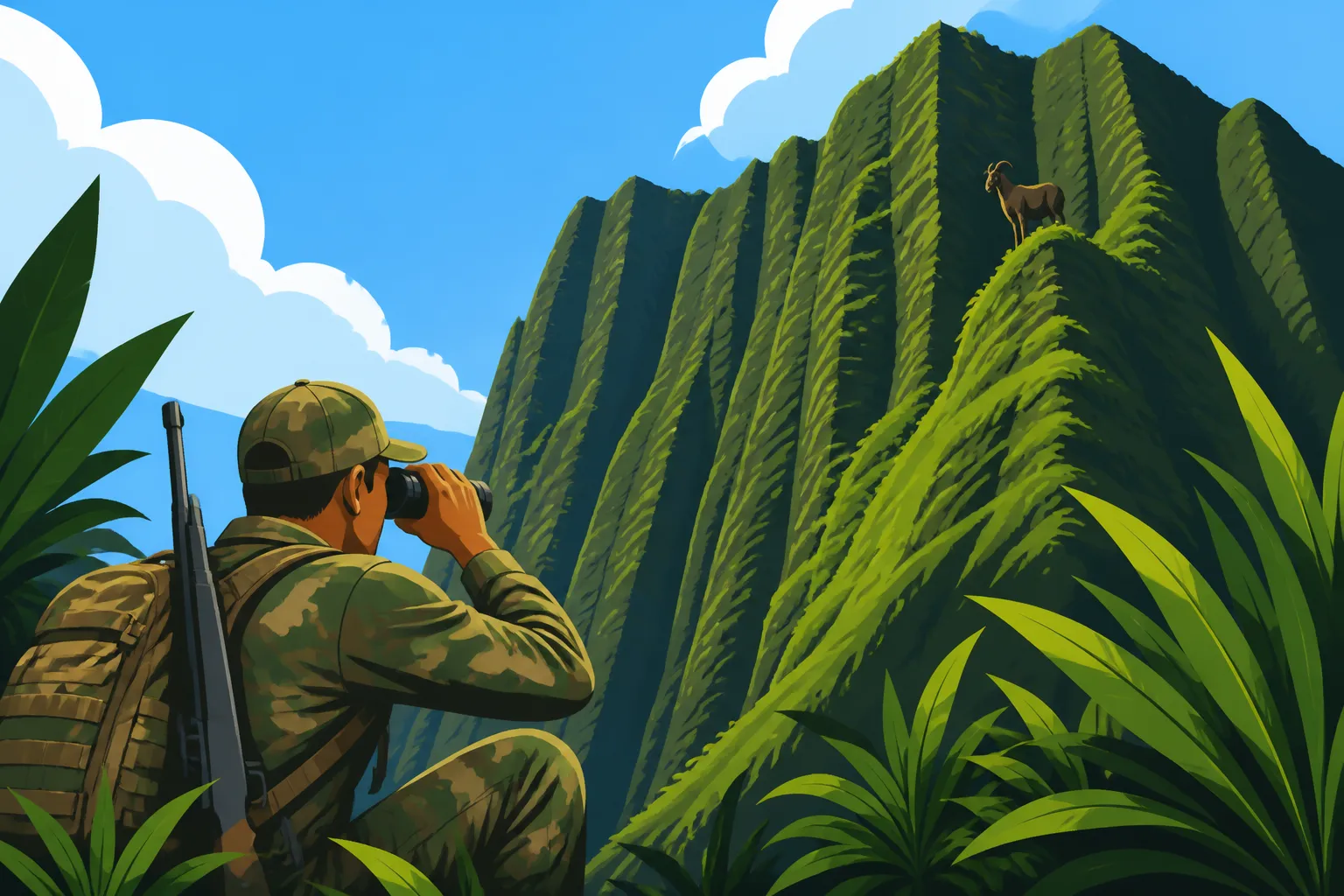
Despite their treacherous nature, pali faces are often magnets for game animals, especially feral goats and pigs. For goats, it’s a matter of survival and natural inclination. Goats are masters of vertical movement, their specialized hooves providing incredible grip on narrow ledges and rocky outcrops. They use these cliffs as natural fortresses against predation (even from wild dogs) and human disturbance. From their high vantage points, they can spot danger approaching from below or across a valley, giving them ample time to disappear into inaccessible pockets. You'll often find them browsing on the sparse vegetation that clings to these slopes, feeling completely secure in their elevated domain.
Feral pigs, surprisingly, also frequent less extreme pali slopes, particularly those with dense cover or access to water sources in the gulches below. While not as agile on sheer rock as goats, pigs will use steep, brushy slopes for bedding and escape cover. The thick vegetation on these faces provides excellent concealment, and the effort required for hunters to penetrate these areas often means pigs go undisturbed. They might not be on the most exposed, vertical rock faces, but rather in the steep, vegetated ravines and ledges that are still part of the broader pali system. Understanding this behavior is key to anticipating where they might be bedded or moving. You'll find good information on specific behaviors in our guide on Hunting Hawaii's Feral Goats and Hunting Hawaii's Feral Pigs.
Reading the Landscape for Game Sign
Before you even consider making a vertical ascent, you need to become a master at reading the subtle clues the pali offers from a distance and on its lower reaches. Game animals, no matter how tough, leave sign.
- Trails and Rubs: Look for faint trails traversing ledges or switchbacking up less steep sections. Goats often leave distinct paths, worn smooth by generations of travel. Pig trails will be wider, muddier, and often show signs of rooting along the edges. Keep an eye out for rubs on small trees or bushes, especially at the edge of thickets where animals might scratch themselves.
- Beds: Goats will often bed on small, flat ledges with good visibility, often under a slight overhang for protection from rain or sun. Look for flattened grass or disturbed dust/soil. Pigs will create deeper, more concealed beds in dense undergrowth on shelves or in protected pockets within the slope.
- Droppings: Fresh droppings are a dead giveaway for recent animal activity. Goat droppings are typically small, pelleted, and dark. Pig scat varies more but is generally larger and softer when fresh. The amount and freshness of the sign will tell you if the area is currently being used.
- Vegetation Damage: Goats browse specific types of vegetation, stripping leaves and bark. Pigs root extensively, turning over soil in search of roots and invertebrates. Patches of disturbed earth or cleanly browsed branches can indicate recent feeding activity.
- Water Sources: Even on steep pali faces, small seeps or damp pockets can exist, especially in wetter, windward areas. Animals will gravitate towards these, so look for greener patches of vegetation or areas where water might collect in crevices. Always consider how important water planning is when you are Water and Heat Planning for a Hawaii Hunt.
Using high-quality optics is crucial for this initial scouting phase. Spotting scopes and powerful binoculars allow you to pick apart distant slopes, identifying potential game trails, bedding areas, and feeding zones without putting yourself in harm's way prematurely. Before you step foot on any public land, ensure you've checked into the unit using the GoHunt Hawaii website or the OuterSpatial app, especially since regulations can be very specific depending on the island and unit. This kind of diligent scouting is the bedrock of successful and safe pali hunting.
Tactics for Approaching and Ascending Pali Terrain
Approaching a pali face "from below" is a fundamentally different challenge than descending into a gulch. You're constantly fighting gravity, and every step needs to be deliberate. This isn't a race; it's a calculated climb where strategy and safety take precedence over speed.
Strategic Scouting from a Distance
You absolutely cannot rush a pali hunt. The first, and arguably most important, tactic is to scout thoroughly from a safe distance. Utilize vantage points across a valley or from a neighboring ridge to glass the pali face during various times of day. This will reveal animal travel patterns, bedding locations, and potential access routes.
- Identify Game Movement Patterns: Watch for goats moving along ledges at first light or last light. Where do they enter and exit the steeper sections? Do they use particular chutes or benches? Pay attention to how they use cover.
- Pinpoint Potential Access Routes: From afar, look for the "easiest" lines of ascent. These might be old goat trails, dry streambeds, or sections with less dense vegetation. What looks easy from a distance might be brutal up close, but it gives you a starting point. Avoid any route that looks like a sheer vertical climb without adequate handholds or footholds.
- Note Escape Routes: Just as important as how you'll get up is how the animals will get away. If you push an animal, where will it go? Knowing their escape options can help you anticipate their movements and position yourself accordingly.
- Sunlight and Thermal Study: Observe how the sun hits the pali face. Animals often prefer shaded slopes during the heat of the day. More critically, watch for how thermals behave. In the mornings, air often rises up a slope; in the evenings, it falls. This is vital for scent control. Hunting Downwind in Hawaii's Shifting Thermals will give you even more insights on this critical aspect of hunting.
- Digital Tools: Modern mapping apps like onX Hunt or even the GoHunt Hawaii platform can provide topographical overlays that help visualize contour lines and steepness, aiding in identifying potential routes and estimating distances.
Don't be afraid to spend hours glassing. A day spent scouting from afar can save you days of wasted effort and prevent dangerous situations on the cliff face itself.
Safe and Quiet Ascent Techniques
Once you've identified a target area and a potential route, the actual ascent demands meticulous care and a steady pace.
- Slow and Deliberate: Rushing is your enemy. Every step should be intentional. Test footholds and handholds before committing your weight. Look for stable rocks, roots, or compact earth. Loose scree, wet leaves, or mossy rocks are notorious for unexpected slips.
- Three Points of Contact: Whenever possible, maintain three points of contact with the slope – either two hands and one foot, or two feet and one hand. This provides stability and prevents uncontrolled falls.
- Mind Your Muzzle: If carrying a rifle, ensure the muzzle is always pointed in a safe direction, typically towards the ground or sky, away from yourself and any hunting partners. A sling that allows for hands-free climbing is non-negotiable.
- Manage Noise: Loose rocks clattering down the slope will broadcast your presence far and wide. Pay attention to foot placement to minimize noise. Dense vegetation can be your friend for concealment but can also be incredibly noisy if you're crashing through it. Try to weave through, rather than bulldoze.
- Follow Game Trails (Cautiously): Animals, especially goats, are experts at finding the path of least resistance on steep terrain. Their trails can be invaluable, but always verify the stability of the trail yourself. What holds a goat might not hold a human, especially with a pack.
- Rest Frequently: Climbing steep terrain is exhausting. Take short, frequent breaks to catch your breath, hydrate, and reassess your route and surroundings. This also helps you stay sharp mentally.
- Communication with Partners: If hunting with a partner, maintain clear communication about your route, any hazards you encounter, and animal sightings. Yelling is out, but clear, quiet verbal cues or hand signals are important.
Remember that the steepest, most direct route isn't always the best. Sometimes a slightly longer traverse that offers more stable footing and better cover is the smarter choice. Prioritize safety above all else. When you are looking for secure footing, our guide on Walking Rough Lava Without Wrecking Your Boots can provide some practical tips, even if you aren't on lava, the principles of careful foot placement remain.
Dealing with Variable Wind and Thermals
The wind and thermals on a pali face are notoriously fickle and can change with startling speed. This is a critical factor because your scent can easily give you away.
- Understanding Thermal Dynamics: In the early morning, as the sun warms the earth, air typically rises up valleys and slopes (upslope thermals). In the late afternoon and evening, as the air cools, it often flows down (downslope thermals). However, a pali face, especially one with complex ravines and features, can create micro-thermals that defy these general rules.
- The "Swirling" Effect: Strong trade winds hitting a large cliff face can create chaotic eddies and swirls. Your scent might be carried up, then pushed sideways, then even sucked back down, creating a scent cone that's impossible to predict.
- Visual Cues: Carry a small bottle of unscented powder or a puff bottle to constantly check the wind direction. Watch for how leaves on trees or tall grasses are moving, or observe smoke from distant fires (if any) or even small dust devils.
- Strategic Pauses: As you ascend, pause frequently, especially before breaking over a ridge or approaching a likely bedding area. Spend time observing the wind, and adjust your route if necessary. Sometimes, waiting a few minutes for a thermal to stabilize or shift is the smartest move.
- Using Topography to Your Advantage: Valleys and ravines within the pali can channel wind, often creating more predictable flows than an exposed face. Conversely, breaking out onto an exposed point can put you at the mercy of swirling gusts. Try to use the natural contours to mask your scent as much as possible.
- Early Mornings and Late Evenings: These are often the times when animals are most active and when thermals might be slightly more predictable, though still challenging. Hunting at first light, while thermals are still mostly going downslope, can be advantageous if you can position yourself correctly below the game.
Hunting a pali face means you're almost always battling the wind. Patience and constant vigilance are your best allies in this struggle.
Essential Gear and Physical Preparation
Tackling a pali face from below is physically demanding and potentially dangerous. Your gear isn't just about comfort; it's about safety and efficiency. Equally important is your physical and mental readiness for such an arduous task.
Essential Footwear and Clothing for Hawaii's Steep Slopes
The wrong gear here isn't just an inconvenience; it can be a liability.
- Footwear: Grip is King: Forget your typical flat-lander hunting boots. You need sturdy, high-ankle boots with aggressive, deep-lugged soles that can grip wet rock, mud, and loose scree. Look for boots designed for mountaineering or serious backpacking with stiff soles to prevent foot fatigue on uneven terrain. Brands like Crispi, Kenetrek, or even some robust Scarpa models are often favored by hunters in rugged country. Make sure they are waterproof but breathable, as your feet will sweat, and you'll inevitably encounter damp sections. Good boots can literally save your life.
- Clothing: Layering and Durability: Hawaii's weather can change quickly, especially on slopes. Start with moisture-wicking base layers to manage sweat. Add a durable, abrasion-resistant mid-layer – something that won't tear easily on sharp rocks or thorns. For your outer layer, a lightweight, waterproof and windproof shell is non-negotiable. You’ll be working hard, so breathability is crucial to prevent overheating. Long pants, preferably reinforced, are essential to protect your legs from cuts and scrapes from sharp vegetation and rocks. Blaze orange, while not always required in Hawaii for all hunt types, is always a good idea for safety on public land, especially if other hunters are around. Refer to Hawaii Blaze Orange and Safety Rules for specific requirements.
- Gloves: Durable work gloves or climbing gloves are invaluable for protecting your hands from sharp rocks, thorns, and rough vegetation when scrambling.
- Headlamp/Flashlight: Even if you plan to be out before dark, an unexpected delay or a longer-than-anticipated recovery can leave you in the dark. A reliable headlamp with fresh batteries is a must.
Packing Light but Prepared
Every ounce in your pack feels like a pound on a steep climb. Pack only what's essential, but don't compromise on safety or recovery tools.
- Water, Water, Water: This cannot be stressed enough. Carry more water than you think you'll need. Dehydration in Hawaii's heat and humidity is a real danger, exacerbated by physical exertion. Consider a hydration bladder for easy access.
- First-Aid Kit: A comprehensive kit with bandages, antiseptic wipes, pain relievers, blister treatment, and any personal medications. Accidents happen, and on a pali, they can be serious.
- Navigation Tools: A reliable GPS device (like a Garmin inReach or a handheld GPS unit) with pre-loaded maps, along with a compass and physical map as a backup. Cell service is often non-existent on these remote slopes, so don't rely on your phone alone. See No Cell Signal on a Hawaii Hunt for more on this.
- Emergency Whistle/Signal Mirror: For attracting attention in an emergency.
- Knife/Multi-tool: Essential for field dressing, cutting rope, or general utility.
- Game Bags: Lightweight, breathable game bags are crucial for protecting meat from flies and dirt. You'll likely be dealing with Field Dressing Axis Deer in Hawaii Heat or similar game, so proper care is critical.
- Cordage/Small Rope: 25-50 feet of sturdy cordage (e.g., paracord) can be invaluable for securing gear, creating improvised handholds, or assisting with animal recovery on steep ground.
- Food/Snacks: High-energy snacks like trail mix, energy bars, or dried fruit to keep your energy levels up throughout the day.
- Emergency Shelter (Optional but Recommended): A lightweight emergency blanket or tarp can provide crucial protection if you get stuck overnight.
Physical and Mental Conditioning
Hunting pali faces is not for the faint of heart or the out of shape. It demands peak physical and mental conditioning.
- Cardiovascular Endurance: Start a consistent cardio routine months before your hunt. Hiking steep trails with a loaded pack, running, and stair climbing are excellent ways to build the necessary stamina.
- Strength Training: Focus on leg strength (squats, lunges, calf raises), core strength for stability, and upper body strength for scrambling and pulling yourself up.
- Flexibility and Balance: Yoga or stretching can improve flexibility and balance, both critical for navigating uneven, slippery terrain.
- Heat Acclimation: If you're coming from a cooler climate, spend time acclimating to Hawaii's heat and humidity before your hunt. Exercise in similar conditions to prepare your body.
- Mental Toughness: This is perhaps the hardest to train, but crucial. You will face moments of extreme fatigue, frustration, and perhaps even fear. Practice positive self-talk, visualize success, and develop strategies for pushing through discomfort. Knowing when to push and when to back off is a mark of a truly experienced hunter. Practice making clear-headed decisions when tired.
- Practice with Gear: Don't wait until the hunt to use your new boots or pack. Wear them, break them in, and understand how they perform under stress. Hike local steep trails with your loaded pack to get accustomed to the weight and feel.
Remember, a successful hunt on a pali face is often a testament to months of preparation. This isn't just about bagging an animal; it's about pushing your limits and safely experiencing some of Hawaii's most wild and challenging landscapes.
Executing the Hunt and Safe Recovery
You've done the scouting, geared up, and conditioned your body. Now comes the moment of truth: the actual hunt and, hopefully, a successful recovery from the steep, unforgiving terrain.
Spot-and-Stalk in Vertical Country
Spot-and-stalk hunting on a pali face requires an extreme level of patience, precision, and stealth. Unlike flatter ground, where you might have more options for approach, your movement up a cliff is often restricted to specific lines.
- Patience is Paramount: Animals on a pali are often vigilant. Take your time, move incredibly slowly, and pause frequently to glass ahead and rest. Never assume a slope is clear just because you don't immediately see anything.
- Use Every Speck of Cover: Rocks, thickets, dips, and rises – use anything and everything to break up your silhouette and conceal your movement. Move from cover to cover.
- Glass, Glass, Glass: Continually glass the terrain above you, to your sides, and even behind you if possible. Animals on a pali often have the advantage of elevation, so you need to be constantly scanning. Pay particular attention to sunny spots in the early morning or shaded areas later in the day where animals might be bedding.
- The Power of the Traverse: Rather than always climbing straight up, look for opportunities to traverse horizontally along contours or ledges. This can sometimes put you in a better position for wind or a more stealthy approach, mimicking how animals often move.
- Anticipate Movement: Based on your scouting, you should have an idea of how animals might react to pressure. If you bump an animal, anticipate its escape route. On a pali, this often means moving higher or into thicker, more inaccessible areas.
- Calling (Cautiously): For goats, a well-placed bleat might sometimes stop a curious animal, but it can also alert every animal in the vicinity. Use it sparingly and only when you have a clear shot opportunity or need to stop a moving animal. For pigs, soft grunts might work, but they are often more wary.
Remember, the goal is to get within an ethical shooting distance without being detected. This will often mean excruciatingly slow movement, sometimes taking hours to cover what might be a short distance on flat land.
Shot Placement and Recovery Considerations
Taking a shot on a pali face adds layers of complexity. The angle will almost always be steeply uphill, and recovery can be incredibly dangerous.
- Uphill Shot Angles: When shooting significantly uphill, the bullet will often strike higher than your crosshairs if you don't account for gravity. Practice shooting uphill at steep angles to understand your rifle's ballistics in these conditions. A rangefinder with angle compensation is a huge asset.
- Ethical Shot Placement: Focus on broadside or quartering-away shots to the vitals. A marginal hit on a pali-dwelling animal is a recipe for a lost animal and a dangerous recovery. Aim for the heart-lung area.
- Animal Reaction: Be prepared for the animal to fall and tumble. A shot animal, especially a goat, will often drop or roll down the slope, sometimes hundreds of feet. Try to visualize where it might come to rest if it rolls.
- Don't Rush the Follow-Up: After the shot, take a moment to breathe and observe. If the animal is still standing, be prepared for a quick follow-up shot if safe and ethical.
- Marking the Spot: Immediately after the shot, pick a distinct landmark near where the animal was standing and where it fell. This is crucial for recovery. The terrain can look completely different once you start moving.
- Safety First for Recovery: A downed animal on a steep slope presents a significant hazard. Never rush down to a dead animal on a dangerous incline. Take your time, verify it's expired, and carefully plan your descent. Consider how you would approach Getting a Pig Out of a Hawaii Gulch, as many of the principles apply here.
Safety First: Descending with an Animal
Recovering an animal from a pali face is often more challenging and dangerous than the hunt itself. This is where teamwork and proper technique are absolutely critical.
- Assess the Situation: Before you touch the animal, take a step back. Is the ground stable? Are there loose rocks above you? What is the safest path to and from the carcass?
- Field Dress and Quarter: Field dress the animal as quickly as possible to begin cooling the meat, especially in Hawaii's warm climate. For larger animals like pigs or goats, quartering the animal and putting the meat into game bags will make it much more manageable for transport. See Cooling Meat Fast on a Hawaii Hunt for more tips.
- Pack Animal Out in Sections: Unless it's a very small animal on a relatively mild slope, attempting to drag or carry a whole animal down a pali is incredibly dangerous and often impossible. Quarter it and make multiple trips or carry manageable loads.
- Use Ropes (If Necessary and Trained): For extreme slopes, a strong rope can be used to lower quarters of meat, or even to provide a handline for hunters to descend safely. Only do this if you are properly trained in rope work and mountaineering safety. Improvised rope techniques on steep terrain can lead to serious accidents.
- Teamwork is Key: If you're hunting with a partner, work together. One person can steady the load while the other scouts the path or provides a hand. Clear communication is vital.
- Descending Safely: Descend slowly, facing inwards towards the slope if it's very steep, using hands and feet for balance. Watch for loose rocks that could dislodge and fall on your partners or yourself.
- Stay Hydrated and Rested: The descent, especially with weight, is incredibly taxing. Maintain your hydration and take breaks. Exhaustion increases the risk of mistakes.
- No Trespassing: Always be aware of your unit boundaries and avoid trespassing onto private land. Make sure your route for Packing Meat Out of a Hawaii Gulch keeps you on legal ground. Use resources like GoHunt to understand land designations.
Hunting a pali face from below is a true test of a hunter's skill, endurance, and judgment. It’s an adventure that will push you to your limits, but the rewards—a hard-earned animal and the unparalleled satisfaction of conquering such formidable terrain—are truly unforgettable.
Disclaimer
Hunting is an inherently dangerous activity. The information provided in this guide is for informational purposes only and should not be taken as professional instruction. Always prioritize safety, adhere to all local, state, and federal hunting regulations, and ensure you have the necessary skills, experience, and equipment for the terrain and conditions you plan to hunt. It is highly recommended to seek professional guidance and training for advanced hunting techniques and backcountry travel. The author and publisher are not responsible for any accidents, injuries, or legal issues that may arise from the use of this information.