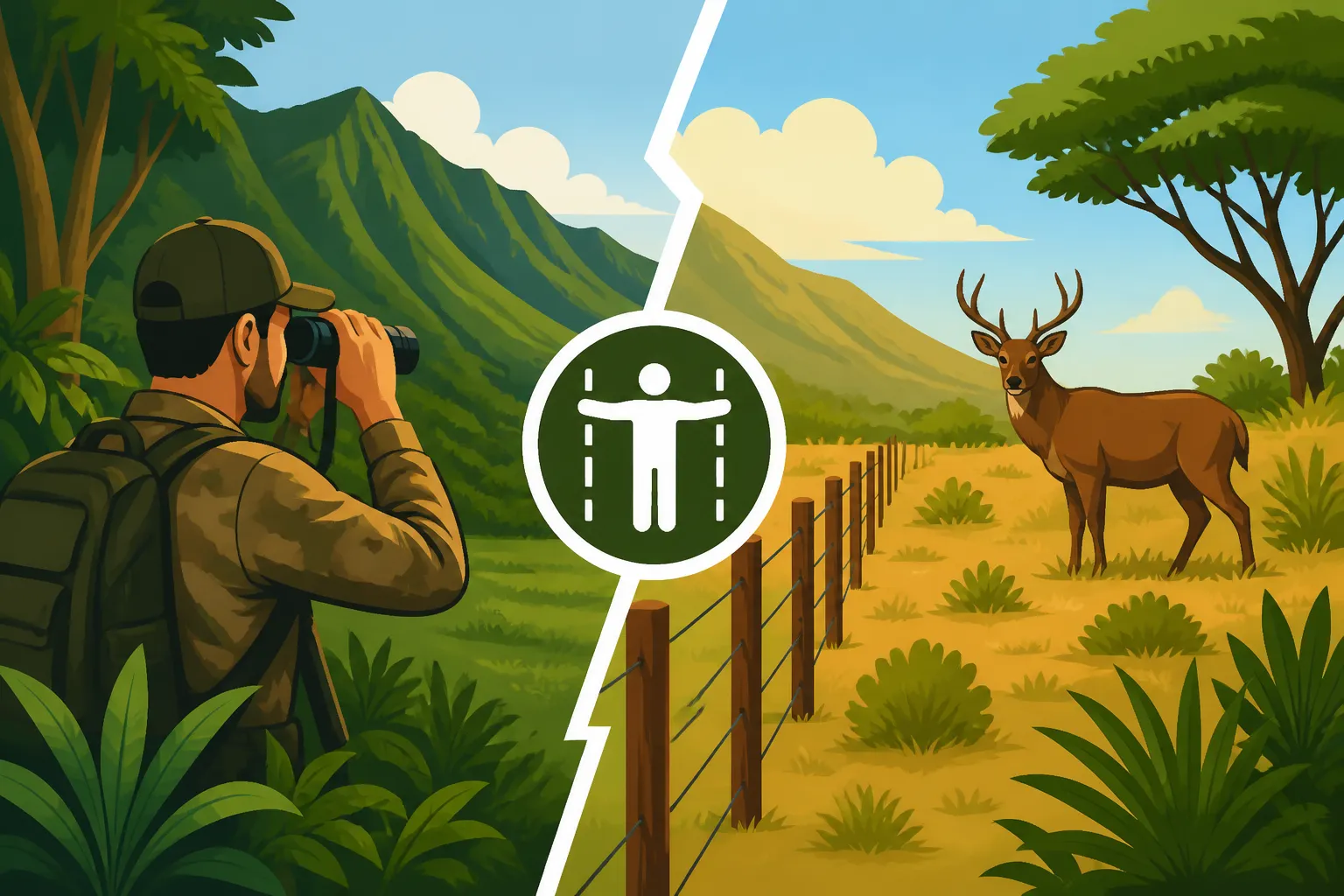
What to Do at a Fenced Unit Boundary
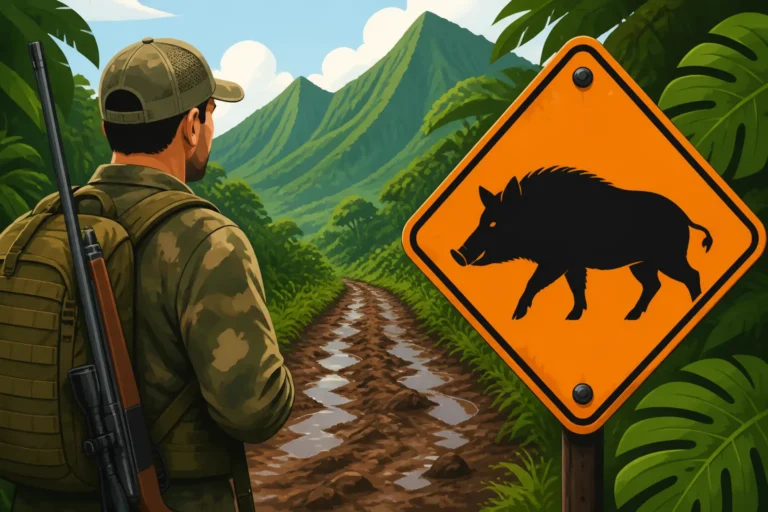
There’s nothing quite like the feeling of finally hitting your stride on a Hawaii hunt – the wind in your face, the smell of damp forest or dry kiawe, and the absolute focus of tracking game. Then, seemingly out of nowhere, you encounter a fence. Maybe it's a rusting strand of barbed wire barely holding up, or perhaps it's a tall, sturdy chain-link barrier. Regardless of its condition, that fence can stop you dead in your tracks, raising immediate questions and a fair bit of frustration. Is this the unit boundary? Can I cross it? What does this mean for the game I was pursuing? Navigating these fenced unit boundaries in Hawaii's diverse terrain is a crucial skill for every hunter, and this guide is here to walk you through exactly what you need to know to stay safe, legal, and successful.
Understanding Hawaii's Fenced Unit Boundaries and Their Purpose
Fences in Hawaii's hunting landscape are far more than just property lines; they serve a multitude of purposes, from delineating public and private land to protecting fragile ecosystems. Understanding why these fences exist is the first step in knowing how to approach them. It's easy to get frustrated when a fence cuts off your pursuit, but knowing its function can help you adapt your strategy rather than simply give up.
Why Fences Are There in the First Place
Hawaii's land ownership and management are incredibly complex, a mosaic of state-managed public lands, private ranches, conservation areas, and even military training grounds. Each of these entities has its own rules and boundaries, and fences are the physical manifestations of those distinctions. Often, a fence marks the edge of a designated hunting unit, separating it from adjacent private property where hunting might be restricted or require separate permits. In many cases, these fences are critical components of conservation efforts. For instance, some of Hawaii's most important and vulnerable native forests are meticulously fenced off to protect them from feral ungulates like pigs, goats, and deer. These animals, while excellent game for hunters, can cause catastrophic damage to native plants, leading to erosion and the destruction of vital watershed areas. You might also find fences delineating agricultural lands, military training zones, or even active timber operations, all of which have different access rules. Ignorance of these boundaries isn't an excuse, and understanding their purpose helps you respect the land and local regulations.
Types of Fences You'll Encounter
The type of fence you encounter can tell you a lot about what it's protecting and how strictly the boundary is enforced. On public hunting units adjacent to vast ranch lands, you might come across older, multi-strand barbed wire fences, sometimes in disrepair, which still serve as a legal demarcation. These can be particularly tricky in thick vegetation, where they might be overgrown or broken. Then there are the newer, often more robust fences, sometimes electrified, around active agricultural fields or critical conservation areas. These might be woven wire, hog wire, or even tall chain-link structures. Fences within conservation areas, especially those established by organizations like the Hawaii Department of Land and Natural Resources (DLNR) or the watershed partnerships, are often designed to be completely animal-proof, with mesh buried deep to prevent pigs from rooting underneath. Recognizing these different types can give you an immediate clue about the nature of the boundary and the caution required. For example, a heavy-duty, meticulously maintained fence likely indicates a highly sensitive area or a hard-line property boundary that should absolutely not be crossed.
The Importance of Knowing Your Unit Lines
Knowing your unit boundaries isn't just a good idea; it's a legal imperative. Trespassing on private land or entering a restricted conservation area can lead to significant fines, confiscation of your gear, and loss of hunting privileges. Beyond the legal ramifications, respecting boundaries is fundamental to being a responsible hunter and maintaining good relationships with landowners and conservationists. In Hawaii, where public and private lands are often interwoven, a solid understanding of where you can and cannot go is critical.
This is where detailed maps and modern technology become invaluable. Before you even step foot in a unit, you should be thoroughly familiar with its boundaries. The DLNR Division of Forestry and Wildlife (DOFAW) provides maps, often available online through the GoHunt Hawaii website or at local DOFAW offices, which clearly delineate hunting units. Many hunters also rely heavily on GPS apps like onX Hunt, which overlays public and private land ownership data onto topographic maps, providing real-time location tracking. This is particularly useful in Hawaii's often dense and confusing terrain, where physical landmarks might be scarce or obscured. Consulting a good map, like those found when you're Reading a Hawaii Unit Boundary Map, can literally save your hunt—or your hunting license. It's not enough to just glance at a map; take the time to study it, identify potential fence lines, and understand the adjacent land uses.
Navigating a Fenced Boundary Safely and Legally
Encountering a fence mid-hunt requires a clear head and an immediate assessment of your situation. Your priority should always be safety and legality. Rushing to cross a fence without knowing the rules can turn a successful hunt into a costly mistake.
What to Do When You Hit a Fence Line
First and foremost, stop. Take a moment to evaluate the fence itself and your exact location. Is it clearly marked with "No Trespassing" signs? Are there specific DOFAW signs indicating a boundary or a change in unit rules? Match your physical location with your GPS or paper map to confirm whether you've reached a designated unit boundary or if it's an internal fence within the unit you're already permitted to hunt. If your map or GPS indicates it's a boundary with private land or a restricted area, your course of action is simple: you cannot cross it. Period. If it's a fence within a public hunting unit, things can be a little more nuanced, but generally, you should still not cross if it's clearly marking a sub-unit or a conservation area.
Sometimes, fences can be misleading. A fence might be old and falling apart, or it might run along a ridge that doesn't seem to perfectly align with a map line. This is where your preparedness pays off. Having a reliable GPS device or a smartphone with a mapping app like GoHunt that clearly shows property lines and hunting unit boundaries is non-negotiable. Don't rely on guesswork, especially when it comes to crossing a fence where you're unsure of the other side's status. For a deeper dive into tools that help you navigate, consider checking out articles like Using onX for Hawaii Land Status.
Rules on Crossing or Circumventing Fences
The general rule of thumb for any hunter in Hawaii is that you cannot cross a fence that delineates a public hunting unit from private land or a restricted conservation area without explicit permission or proper permitting for the other side. This is a non-negotiable rule. Even if the game you're tracking crosses the fence, your pursuit ends there unless you have legal access to the other side. This can be one of the most frustrating aspects of hunting in Hawaii, especially if you've put in a long, hard day to get on an animal, only to watch it disappear behind a barrier. But remember, the rules are there for a reason, often to protect private property, sensitive ecosystems, or public safety.
For fences that are within a larger public hunting unit, such as those that might separate different sections of a Hawaii's Forest Reserves or Hawaii's Game Management Areas, the rules might vary slightly. Some internal fences are there to guide animals, define specific hunting zones, or even protect replanted areas. Unless the fence has a gate or a designated crossing point, or if local unit rules explicitly state you can cross it, assume you cannot. Always check the specific regulations for the unit you are hunting, as Hawaii Unit Rules That Change by Island or even by specific unit. If you're unsure, it's always safer to err on the side of caution and turn back. Circumventing a fence by going around it onto private land is still trespassing. The best approach is to find a legal route that keeps you within your permitted area.
Practical Tips for Staying on the Right Side
To avoid common pitfalls and ensure you're always on the right side of the law and respecting property, here are some practical tips:
- Scout Ahead: Before your hunt, use digital mapping tools (like GoHunt or onX) and paper maps to identify all known fence lines and boundaries within and around your hunting unit. Pay special attention to areas where you expect to encounter game, as these are often where fences can become an issue. Knowing about a fence before you encounter it in the field allows you to plan your route accordingly. This kind of preparation is part of Scouting a Hawaii Hunting Unit Before Opening.
- Trust Your GPS: Invest in a reliable GPS device or app and learn how to use it proficiently. Check your position frequently, especially when approaching areas where you know there are boundaries. Don't let your eagerness to pursue an animal override your spatial awareness.
- Look for Markers: Actively look for boundary markers, signs, or changes in land use that might indicate a fence or property line. Sometimes, a change in vegetation (e.g., native forest on one side, pasture on the other) can hint at a boundary even before you see the fence.
- Carry Water and a Plan B: If a fence prevents you from continuing your intended route, you’ll need to adjust. This might mean a longer walk around, or changing your hunting area entirely. Be prepared with enough water and a backup plan so you’re not forced into an illegal decision due to fatigue or desperation.
- Respect "No Trespassing" Signs: These signs are not suggestions; they are legal warnings. Always heed them.
- Know Who to Contact: If you encounter a problematic fence, or one that appears to be illegally damaged or down, note its location and report it to the local DOFAW office. They manage these units and need to be aware of such issues.
It really comes down to prevention and preparedness. Avoiding trespass isn't about getting lucky; it's about making informed decisions based on good intel and consistent vigilance.
When Fences Impact Game Movement and Strategy
While fences can be a nuisance for hunters, they also play a significant role in how game animals move and behave. Smart hunters learn to read these barriers not just as obstacles, but as features that can be incorporated into their hunting strategy. Understanding Why Fences Change Where Animals Go is key to using them to your advantage.
How Fences Influence Animal Behavior
Fences, especially sturdy and continuous ones, act as formidable barriers to game animals. Pigs, for instance, are strong and can often root under or even push through weaker fences, but well-maintained conservation fences specifically designed to exclude them are usually effective. Axis deer and goats are agile jumpers, but even they are deterred by higher fences or those with intimidating top strands.
When animals encounter a fence, their natural instinct is often to travel along it until they find a weakness, an opening, or the end of the barrier. This behavior creates natural travel corridors. For example, if a large ranch pasture is bordered by a robust fence and dense forest, deer or pigs moving between the two environments will often follow the fence line, looking for gaps or specific crossing points. Similarly, a fence along a Hunting a Ridge Above a Hawaii Valley can funnel animals to saddles or lower crossings. Animals learn these escape routes and travel patterns, and their behavior becomes quite predictable around these features. This means a fence, while potentially blocking your direct path, can actually concentrate game movement in predictable ways.
Adjusting Your Hunting Tactics Near Fenced Areas
Once you understand how game reacts to fences, you can adjust your hunting tactics. Instead of viewing a fence as a hard stop, consider it a natural boundary that dictates animal movement.
- Scout the Edges: Focus your scouting efforts along fence lines, looking for tracks, droppings, and rubbed vegetation. Pay close attention to corners, low spots, and natural breaks in the fence where animals might cross. These "pinch points" are prime locations for ambushing game.
- Set Up Ambushes: If you've identified a spot where animals regularly travel along or cross a fence, consider setting up a ground blind or finding a good vantage point for an ambush. This works particularly well for species like axis deer, which often move in predictable patterns during dawn and dusk. For example, when you are Hunting Axis Deer at First Light in Hawaii, a fence line might be just the feature to key in on.
- Drive and Stalk: In areas with internal fences or where a fence borders an access road, you might be able to coordinate a "drive" with a partner, pushing animals along the fence line towards a waiting hunter. Always ensure this is done safely and legally, with clear communication and within unit regulations.
- Plan Your Approach: When approaching a suspected fence line, remember that animals will likely be aware of your presence. Use the wind, move slowly, and be prepared for animals to either follow the fence or break cover if they detect you. Understanding the importance of Hunting Downwind in Hawaii's Shifting Thermals becomes even more critical when animals are funnelled by a fence.
Utilizing Fences as Natural Funnels
Fences, particularly those that span significant distances, act as natural funnels, concentrating animal movement and making them easier to pattern. For example, a long stretch of fence bordering a thick Hunting a Hawaii Koa Forest Edge and an open pasture will often push animals to travel along the more sheltered forest edge before entering the open.
Consider a situation where you're hunting feral pigs in Hawaii's dense rainforest. If there's a sturdy fence delineating a conservation area or private property, you can expect pigs to move along that fence line when going from one feeding area to another, rather than pushing through the impenetrable interior. This can be a huge advantage when Still-Hunting Pigs in Hawaii's Wet Forest. By observing these patterns over time, you can identify key crossing points or areas where animals are forced to slow down, offering better shot opportunities.
Here's a quick reference table for fence types and typical hunter actions:
| Fence Type | Common Location | Purpose | Hunter's Action |
|---|---|---|---|
| Barbed Wire (Old/Rustic) | Ranch boundaries, older unit lines | Delineates property, livestock control | Confirm GPS; do not cross if boundary; proceed with caution if internal. |
| Woven/Hog Wire | Pasture edges, some conservation areas | Keeps livestock/pigs in/out, property line | Confirm GPS; do not cross if boundary; check for legal crossing points if internal. |
| Tall Game Fence (Mesh) | Critical conservation areas, private ranches | Excludes ungulates, secures high-value property | Absolutely do not cross. Legal and ethical boundary. Look for external travel. |
| Chain Link | Near developed areas, specific enclosures | Security, property demarcation | Absolutely do not cross. Likely private or highly restricted. |
| Electric Fence | Active agriculture, specific conservation | Deterrent for livestock/pigs, security | Confirm type; do not touch; treat as a solid, uncrossable boundary. |
Remember, while a fence might initially seem like an annoyance, a prepared and informed hunter can transform it into a strategic advantage, leading to more successful and responsible hunts in the beautiful, complex landscapes of Hawaii.
Disclaimer
Hunting in Hawaii involves inherent risks and is subject to strict regulations. Always consult the most current Hawaii Administrative Rules Title 13, Chapter 123 (HAR 13-123) and Chapter 122 (HAR 13-122) as well as any specific unit announcements from the Department of Land and Natural Resources (DLNR) Division of Forestry and Wildlife (DOFAW) before planning and undertaking any hunt. This guide is for informational purposes only and does not supersede official state regulations. It is the hunter's responsibility to know and follow all applicable laws.