Which Francolin Species Live in Hawaii
For many hunters arriving in Hawaii, or even those who've lived here a while, the sheer variety of introduced game birds can be a little bewildering. You might hear whispers of different francolin species, but knowing which ones are actually established, where to find them, and what makes them unique for a hunter can feel like cracking a secret code. This guide aims to clear up that confusion, detailing the specific francolin species you'll encounter in the islands and how to best pursue them.
The Francolin Family in Hawaii: An Introduction
When we talk about game birds in Hawaii, francolin often take a backseat to pheasant or chukar in some conversations, but these challenging birds offer a fantastic hunting experience across the islands. They're a testament to the diverse introductions made over the decades, and understanding their history here helps put their current distribution and habits into perspective for hunters.
A Brief History of Introduction
Like so many of Hawaii's game animals, the various francolin species were not native to these shores. They were introduced, primarily in the mid-20th century, with the intention of establishing new game bird populations for sport hunting. These weren't haphazard releases; they were often carefully planned efforts by territorial and later state wildlife agencies to enhance the island's hunting opportunities and adapt to different ecological niches. Over time, some species thrived in specific habitats while others either failed to establish significant populations or simply didn't take hold as widely. This legacy is why we see a patchwork of species distribution today, with certain francolin abundant on one island and completely absent on another. It's a fascinating look at how non-native species can find a home and truly flourish, sometimes to the delight of hunters, but always with an eye on their ecological impact.
Why Francolin Thrive Here
Hawaii's incredibly diverse microclimates and landscapes, from dry grasslands to lush rainforests and high-elevation scrub, provide a unique suite of habitats that some francolin species found remarkably hospitable. These birds are generally hardy, adaptable ground-dwellers that prefer dense cover for nesting and escape, but will forage in more open areas. The lack of natural predators they faced in their native ranges, combined with abundant food sources like seeds, insects, and berries, allowed them to establish strong populations where conditions were right. Different species adapted to different elevations and moisture levels, carving out their own niches. This adaptability, alongside a generally consistent climate that avoids harsh winters, has been key to their success. For a hunter, this means knowing which island and elevation you're targeting is crucial, as the preferred habitat can shift dramatically even within a single island.
Gray Francolin: The Widespread Forager
The Gray Francolin (also known as the Black Partridge in some circles, though its official name is more common here) is arguably the most recognizable and widely distributed francolin species you'll encounter in Hawaii. They're tenacious, often found in surprisingly close proximity to human activity, and offer a sporty challenge.
Identifying the Gray Francolin
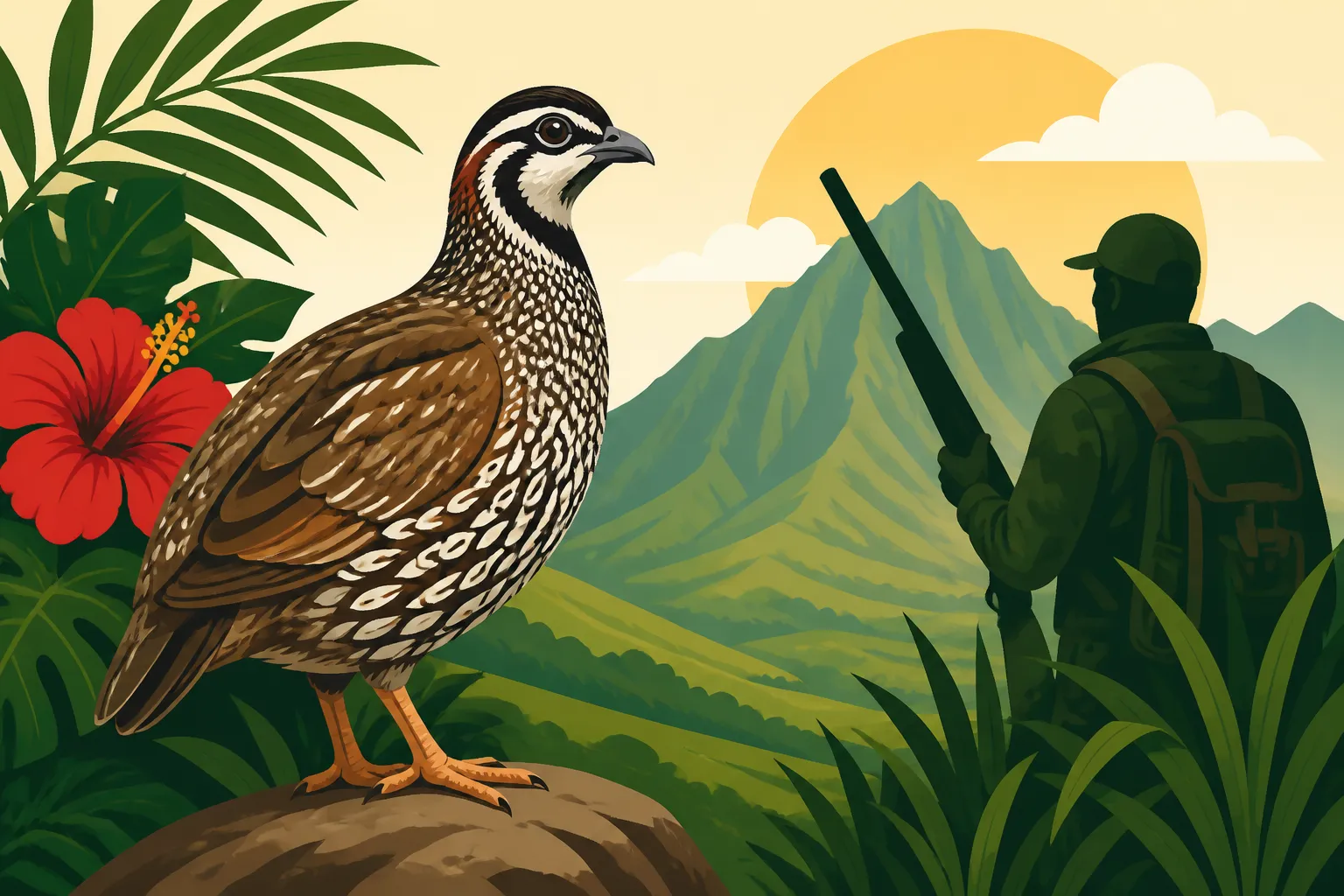
Visually, the Gray Francolin is a handsome bird, though its camouflage can make it blend seamlessly into its surroundings. They are typically smaller than a pheasant but larger than a quail, with a stocky build. Their plumage is a beautiful mix of grays, browns, and rufous tones, with fine barring and speckling. The most distinctive feature is often the warm, rusty patch on their face and throat, which can be quite prominent. Males and females look quite similar, though males tend to be a bit brighter and can have small, blunt spurs. They're known for their distinctive, often loud, and rapidly repeated "pik-pik-pik-perk-perk" call, especially at dawn and dusk, or when a covey is spooked. Hearing this call is often the first indication that you're in Gray Francolin country. When flushed, they explode into the air with a strong, low flight, often cackling as they go, and then drop quickly back into cover a short distance away.
Habitat and Range Across the Islands
Gray Francolin are incredibly adaptable and can be found across several islands, including Maui, Molokai, Lanai, Oahu, and Hawaii Island. Their preferred habitat is generally dry, open to semi-open country with good grass cover, scattered shrubs, and brushy draws – places that offer both foraging grounds and quick access to dense escape cover. Think kiawe flats, overgrown pastures, old sugar cane fields, and the fringes of agricultural areas. You’ll often find them near old fence lines, rocky outcrops, and areas with sparse trees like haole koa. They gravitate towards areas with good seed production and insect populations, which means they are often found where water is available, even if it's just a dew-laden grass patch. This makes them prevalent in many of the leeward, drier parts of the islands, though they will push into slightly wetter areas if suitable cover and food are present. Places like the dry side of Maui or the open areas of Lanai are classic Gray Francolin haunts.
Hunting Strategies for Gray Francolin
Hunting Gray Francolin is all about covering ground and being ready for a sudden flush. They are often found in coveys, so where you find one, there are usually more. Walking up Chukar on a Lava Slope for example, shares some similar challenges to francolin. A good bird dog can be invaluable, helping to locate birds holding tight in cover and retrieving them once flushed. Without a dog, it’s a matter of systematically working through their preferred habitat. Pay close attention to areas where dense cover meets more open foraging ground. Old roads, trails, and gulches can act as natural travel corridors and holding areas. Hunt early in the morning or late in the afternoon when they are most active. When a covey flushes, try to mark where they land, as they often don't fly far, allowing for a second or even third flush. Shotguns in 20 gauge or 12 gauge with smaller shot sizes (like 6 or 7.5) are typical. Remember to always be mindful of other hunters and landowners, especially if you’re hunting near agricultural operations, and make sure your Hawaii Hunting Licenses and What They Cost and permits are in order, perhaps checking GoHunt for specific unit rules.
Black Francolin: The Elusive Jungle Bird
While less widespread than their gray cousins, the Black Francolin offers a unique challenge for hunters seeking something a bit more elusive. These birds prefer denser, often wetter, environments and are masters of disappearing into thick cover.
Spotting the Black Francolin
The Black Francolin is a striking bird, particularly the male. He boasts a mostly black body with bold white spots on the flanks, a distinct white cheek patch, and a rufous collar. The female is more mottled brown and buff, with less distinct markings, offering excellent camouflage in her preferred habitat. Both sexes have bright red legs. Their call is a loud, ringing "chick-cheek-chick-cheek" or a more drawn-out "pi-hee-chee" which carries well through the dense vegetation they inhabit. Unlike the Gray Francolin, which often flushes with a cackle, Black Francolin tend to be quieter in their escape, slipping away through the undergrowth or flying low and silently into the thickest cover available. This makes them incredibly challenging to hunt, as they're more likely to run than to fly, putting a premium on sharp senses and quick reactions from the hunter.
Preferred Cover and Locations
Black Francolin primarily inhabit the wetter, more dense brush and grass areas found on some islands. Their range is more restricted than the Gray Francolin, with established populations mainly on Maui and Hawaii Island, particularly in areas where dense guinea grass, kikuya, or other thick undergrowth provides ample concealment. They often prefer slightly higher elevations than Gray Francolin, moving into the fringes of wet forests, overgrown gullies, and areas adjacent to abandoned agriculture where vegetation has reclaimed the land. These are places where the canopy might be more closed, and the ground cover is almost impenetrable. You might find them along the edges of stream valleys or in areas with consistent moisture, contrasting sharply with the arid zones where Gray Francolin thrive. This preference for heavy cover means they are not as easily seen or heard from a distance, demanding a more deliberate and often slower approach to hunting.
Tactics for Black Francolin
Hunting Black Francolin is not for the faint of heart; it's a test of patience and persistence. Given their tendency to run rather than fly, a good flushing dog is almost essential for consistent success. Without a dog, you'll need to walk slowly and methodically, pushing through thick cover in a line with fellow hunters if possible. Focus on areas of dense, tall grass or tangled brush. Black Francolin will hold incredibly tight, often flushing at your feet only when you've almost stepped on them. When they do fly, their flight path will be low and fast, hugging the contours of the ground or diving immediately back into the densest available cover. Quick, instinctive shooting is key. Shot sizes 6 or 7.5 are appropriate, much like for other upland birds. Remember that these dense areas can be tough going, so proper footwear and durable clothing are a must. Always be aware of your surroundings and your hunting partners in such thick environments. Checking the specific Hawaii Game Bird Seasons and Bag Limits is crucial before heading out.
Erckel's Francolin: The Mountain Dweller
Often considered the most majestic of Hawaii's francolin species, Erckel's Francolin is truly a bird of the high country. Their presence in the cooler, upper elevations adds another layer of diversity to Hawaii's game bird hunting opportunities.
Recognizing Erckel's Francolin
Erckel's Francolin are the largest of the three species found in Hawaii, often resembling a small, stocky pheasant. They have a distinctive appearance with a rich chestnut-brown back, a striking white throat and cheek patch, and bold black stripes running down the sides of their head and neck. Their flanks are heavily barred with black and white. The male typically has more prominent spurs. Their call is a loud, ringing "kek-kek-kek-kek" often repeated with increasing intensity, particularly when alarmed or communicating across distances in their often rugged habitat. When flushed, they are strong flyers, often gaining significant altitude and covering more distance than the other francolin species, sometimes gliding down long slopes. This strong flight and their preference for open, steep terrain makes them a particularly challenging and rewarding bird to pursue.
High-Elevation Haunts
Erckel's Francolin are uniquely adapted to the cooler, higher elevations of Hawaii Island, particularly on the slopes of Mauna Kea and Mauna Loa, and also on Maui in areas like Haleakala. They thrive in rugged, rocky terrain with scattered mamane, naio, and other high-elevation shrubs, interspersed with open grasslands and lava fields. These birds are often found at elevations ranging from a few thousand feet up to 9,000 feet or more. The climate in these areas is drastically different from the coastal lowlands – it can be cold, windy, and even experience frost. Their preferred habitat demands a hunter who is fit and prepared for strenuous hikes over uneven ground. Think of hunting Mouflon in Mauna Kea's Thin Air; Erckel's Francolin often share similar high-altitude landscapes. They utilize the scattered vegetation for cover and forage on seeds, insects, and berries specific to these unique alpine and subalpine environments.
Pursuing Erckel's in Upland Terrain
Hunting Erckel's Francolin is a true mountain hunt. It requires physical stamina and a willingness to cover considerable ground at elevation. These birds are often scattered in smaller coveys or singles compared to the Gray Francolin. A common tactic involves working along contour lines, ridge tops, and through gulches that offer a mix of cover and open ground. Glassing open slopes from a distance can help locate birds, and then a strategic approach can be planned. When flushed, they often fly downslope or across canyons, so anticipating their flight path is key. Unlike their lowland cousins, Erckel's may fly further before setting down, often allowing for only one good shot opportunity. As with other upland birds, a good bird dog can greatly improve your chances, especially in locating downed birds in the sparse, rocky cover. Given the challenging terrain and conditions, preparation is vital. Proper gear, including sturdy boots suitable for Walking Rough Lava Without Wrecking Your Boots, layers of clothing, and plenty of water, is non-negotiable. Shotguns with heavier loads and perhaps slightly larger shot (like 5 or 6) might be preferred by some hunters given the birds' size and strong flight. Remember to check local unit rules and seasons for areas like Hunting Hawaii's High Elevation Alpine Ground, which you can often find information on at the GoHunt platform.
Comparing the Species for Hunters
Understanding the distinctions between these francolin species is crucial for a successful and enjoyable hunting experience in Hawaii. While they all belong to the same family, their habitats, behaviors, and the challenges they present are quite different.
Key Differences in Behavior
The table below summarizes some of the key behavioral and habitat differences you'll notice when pursuing these three francolin species in Hawaii. It's not just about what they look like, but how they act and where they prefer to hide that truly defines the hunt.
| Feature | Gray Francolin | Black Francolin | Erckel's Francolin |
|---|---|---|---|
| Primary Habitat | Dry, open to semi-open grasslands, kiawe | Dense, wet thickets, tall grass, rainforest edge | High-elevation rocky slopes, alpine scrub, mamane forest |
| Typical Elevation | Low to mid-elevations (0-2,000 ft) | Mid-elevations (500-3,000 ft) | High-elevations (3,000-9,000+ ft) |
| Flight Pattern | Low, fast, cackling; short distances | Low, fast, quieter; often runs first | Strong, fast, often gaining altitude; longer glides |
| Covey Size | Often in coveys of 5-15+ | Smaller groups or singles (2-5) | Smaller groups or singles (2-5) |
| Vocalization | "Pik-pik-pik-perk-perk" rapid | "Chick-cheek-chick-cheek" ringing | "Kek-kek-kek-kek" loud, increasing |
| Hunting Challenge | Moderate; good dog or systematic walk | High; dog almost essential due to running | High; requires fitness for steep, rugged terrain |
These differences mean you can't approach every francolin hunt with the same mindset or tactics. The gear you pack for Hunting Hawaii's Wet Forest Boundary Trail for Black Francolin will be vastly different from what you need for the exposed, rocky slopes where Erckel's Francolin roam.
Seasonality and Bag Limits
Like all game birds in Hawaii, francolin hunting is regulated by specific seasons and daily bag limits, which can vary by island and even by hunting unit. It’s absolutely essential to check the current regulations issued by the Hawaii Department of Land and Natural Resources (DLNR), Division of Forestry and Wildlife (DOFAW) before heading out. These regulations are typically available online, and resources like GoHunt often compile this information, linking you directly to official sources. Generally, game bird seasons tend to run for specific periods, often on weekends and state holidays, but this is not universal. Some units might be open year-round for certain species, while others are strictly seasonal. For example, some units might only be open during Hawaii's Weekend and Holiday Hunting Rules. Bag limits also vary; you might be allowed more Gray Francolin than Erckel's, reflecting population densities and management goals. Always carry your valid Hawaii Game Bird Stamp and hunting license, and be prepared to accurately report your harvest if required.
Choosing Your Target Species
Deciding which francolin species to target often comes down to your preferred hunting style, physical capabilities, and the island you're on. If you enjoy covering lots of ground in drier, more open terrain with a good chance of flushing multiple birds, the Gray Francolin might be your best bet. It's often more accessible and a great option for those learning the ropes of bird hunting in Hawaii. If you thrive on the challenge of thick cover, a more elusive quarry, and working closely with a bird dog, then the Black Francolin could be a rewarding pursuit. This type of hunt demands patience and a keen ear. And for the physically robust hunter who loves mountain climbing, breathtaking views, and the satisfaction of earning every bird in rugged, high-altitude environments, Erckel's Francolin is an unforgettable experience. Many hunters combine these pursuits, taking advantage of the diverse landscapes that Hawaii offers. Just be sure to cross-reference all regulations for each specific unit you plan to hunt, as species availability and rules can change.
Disclaimer
This article is for general informational purposes only and does not constitute professional advice. Laws, prices and regulations vary by location and change over time. Consult a qualified professional for guidance on your specific situation.