What a Kauai Black-Tailed Deer Weighs
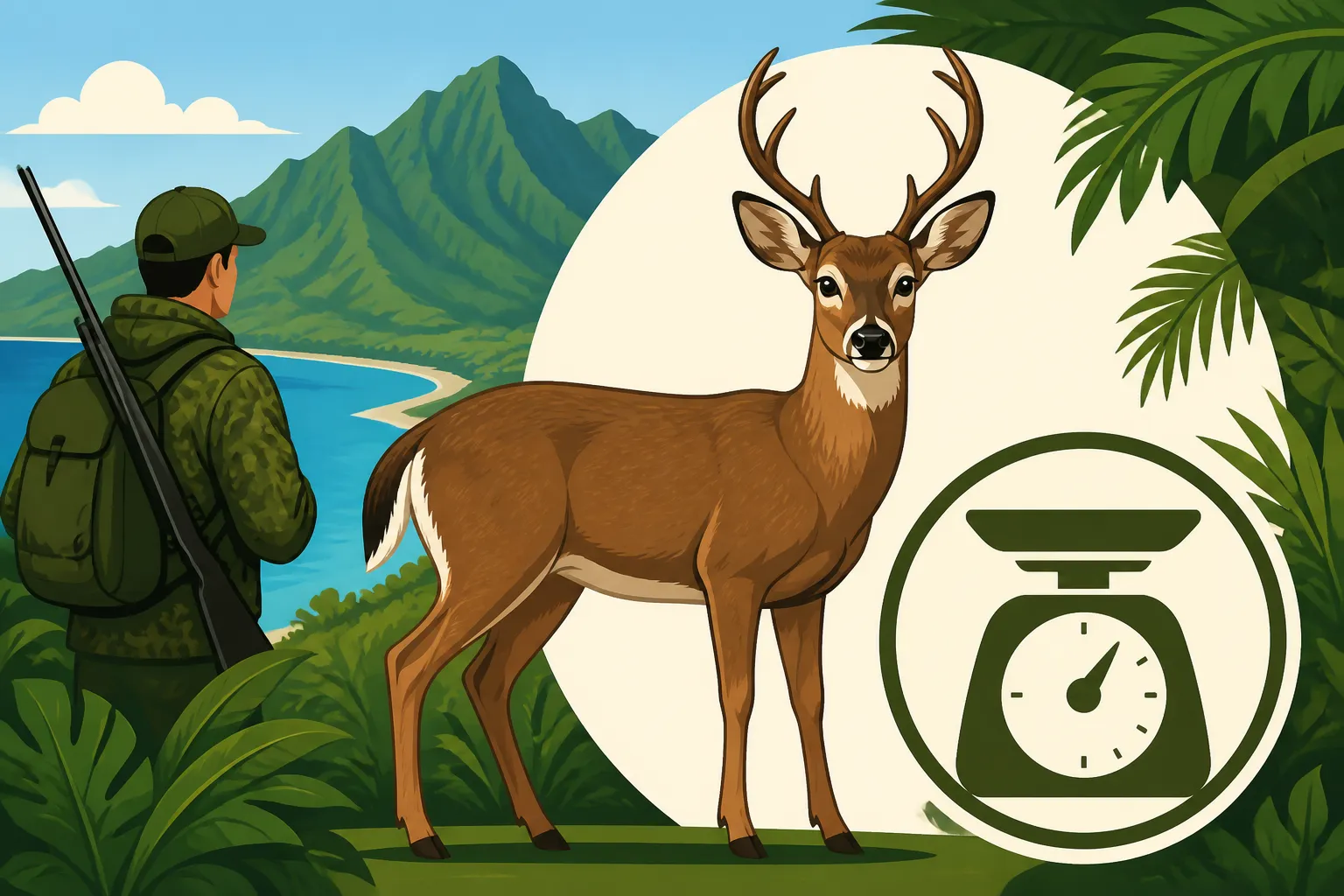
When you're planning a deer hunt on Kauai, it's natural to wonder about the size of the animals you might encounter. Unlike the larger axis deer found on other islands, Kauai's black-tailed deer have a distinct size profile that can surprise hunters expecting mainland whitetail or mule deer dimensions. This guide will help you understand the typical weight ranges for these unique island deer, and what that means for your hunt, from field dressing to meat yield.
Understanding Kauai's Black-Tailed Deer Population
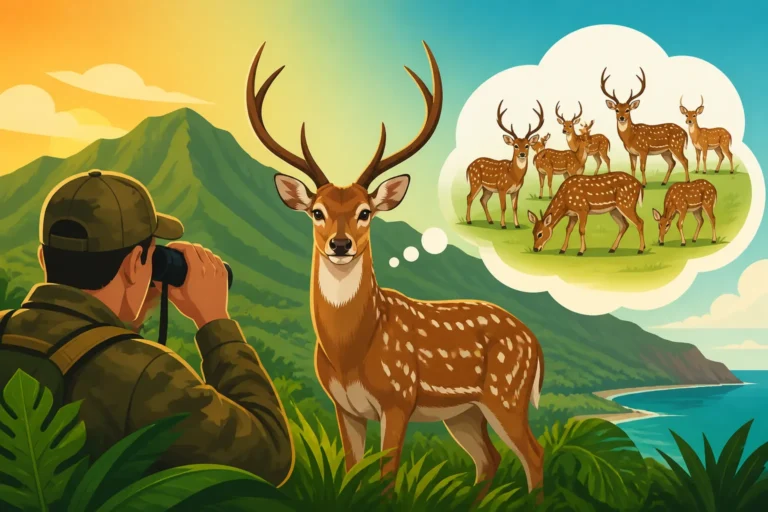
Black-tailed deer are a truly special game animal in Hawaii, exclusively found on the Garden Isle of Kauai. Their presence here is a fascinating part of Hawaii's hunting history, and understanding their origins and habitat helps to shed light on why they are the size they are. Hunters often come to Hawaii with an image of large, sprawling deer populations, but Kauai's black-tails offer a different, more nuanced experience. They’re not just smaller; they’re adapted to a unique environment.
A Brief History of Black-Tails on Kauai
These deer weren't always here, of course. Black-tailed deer, a subspecies of mule deer, were introduced to Kauai in the late 1950s. The idea was to establish a game animal for recreational hunting, and they found a niche in Kauai's diverse landscapes. Unlike axis deer, which multiplied rapidly across Maui Nui, the black-tailed deer population on Kauai has remained more contained, both geographically and numerically. They’ve adapted to the island's mix of dense forests, open canyon lands, and agricultural edges, thriving in a challenging environment. It's a testament to their adaptability that they've made a home in such a unique ecosystem.
Their introduction was part of a broader effort to diversify game animals in Hawaii, offering different hunting experiences across the islands. For many years, they provided a steady, albeit often challenging, hunt. Over time, their genetics have remained relatively pure, maintaining the characteristics of their mainland ancestors, but adapting to the available forage and terrain. This isolation has contributed to their consistent size and behavior patterns, making them a predictable yet elusive target for local and visiting hunters alike. If you're keen to learn more about their history, check out Black-Tailed Deer in Hawaii.
Factors Influencing Deer Size on Kauai
Several environmental factors on Kauai contribute to the typical size and weight of its black-tailed deer. First and foremost is the availability and quality of forage. While Kauai is lush, the specific types of vegetation available to deer can vary greatly depending on elevation and rainfall. The deer in the wetter, denser forest areas might have different diets than those living closer to agricultural fields or dryer canyon rims. Nutritional value directly impacts growth and overall body mass. You might notice deer in different parts of the island showing slight variations in condition based on their local food sources.
Another significant factor is population density. While not as prone to the dramatic population explosions seen with axis deer on Maui or Lanai, too many deer in a specific area on Kauai can lead to overbrowsing and reduced individual animal size due to competition for food. Management efforts, including hunting seasons, play a role in maintaining a healthy balance. Climate also plays a part; the warm, consistent temperatures mean less energy is expended on thermoregulation compared to colder climates, but the intense humidity and periodic drought can also affect forage quality and water availability, indirectly impacting deer health and weight. Understanding these dynamics helps hunters appreciate the effort these animals put into simply surviving and thriving.
Average Weight Ranges for Kauai Black-Tailed Deer
When we talk about the weight of black-tailed deer on Kauai, it’s important to distinguish between live weight (on the hoof) and dressed weight (after field dressing). Most hunters are primarily interested in dressed weight for meat yield, but live weight gives a good indication of the animal's overall size and health. It’s also crucial to remember that these are averages; individual deer can, of course, vary based on age, genetics, and local conditions. A robust, mature buck will naturally weigh more than a young doe.
Antlerless Deer: Does and Fawns
For antlerless deer on Kauai, which primarily means does and fawns, their weight tends to be on the lighter side compared to their mainland counterparts. An adult doe typically ranges from 80 to 120 pounds live weight. After field dressing, you can expect a dressed weight in the neighborhood of 50 to 80 pounds. These are lean animals, well-adapted to navigating the steep, often rugged terrain of Kauai's interior. You'll find them to be surprisingly sturdy for their size, capable of covering impressive distances across challenging landscapes.
Fawns, as you'd expect, are considerably smaller. A young fawn, still dependent on its mother, might weigh as little as 20 to 40 pounds live weight, yielding very little meat, perhaps just 10 to 25 pounds dressed. As they mature into yearlings (young deer, typically 6-18 months old, before their first full antler growth for males), their weight will climb towards that of a smaller adult doe. Hunters pursuing antlerless tags should be prepared for animals that are lighter and more agile than they might anticipate, requiring careful shot placement and quick recovery. Where Kauai's Black-Tailed Deer Range provides good insight into the habitats where you might find these animals.
Antlered Deer: Bucks and Yearlings
Now, let's talk about the bucks. While a Kauai black-tailed deer buck won't typically compete with the massive mule deer bucks of the Rockies or even larger whitetails, they are still respectable animals, especially given their environment. A mature Kauai black-tailed buck generally weighs in the range of 120 to 160 pounds live weight. On occasion, a truly exceptional, older buck might push towards 180 pounds live, but these are rare trophies indeed. For dressed weight, expect anywhere from 75 to 110 pounds of venison from a good-sized buck.
Yearling bucks, still in their early stages of antler development, will be lighter, often falling into the upper range of the adult does, around 100 to 130 pounds live weight, and perhaps 60 to 90 pounds dressed. Their antlers are usually spikes or small forks at this age, often mistaken for does by less experienced hunters, so careful identification is key. The challenge on Kauai isn't just finding a buck, but finding one that has managed to put on significant weight in the demanding habitat. Hunters often focus on areas like Kokee or the Waimea Canyon rim where robust bucks might be found. You can pursue them during Hunting Kauai's Rifle Deer Weekends or Hunting Kauai's Muzzleloader Deer Days.
| Deer Category | Typical Live Weight (lbs) | Typical Dressed Weight (lbs) |
|---|---|---|
| Fawn | 20 – 40 | 10 – 25 |
| Adult Doe | 80 – 120 | 50 – 80 |
| Yearling Buck | 100 – 130 | 60 – 90 |
| Mature Buck | 120 – 160 (occasionally 180) | 75 – 110 |
Why Weight Matters to the Kauai Hunter
Understanding the weight of black-tailed deer on Kauai isn't just about curiosity; it has very real, practical implications for your hunt. From how you prepare for the field to what you expect from your harvest, knowing these numbers can make a significant difference in your overall experience. Hunters who arrive expecting the sheer bulk of larger game species can sometimes be caught off guard, leading to less efficient planning for meat care and extraction.
Field Dressing and Meat Yield Considerations
When you've successfully harvested a black-tailed deer on Kauai, the immediate next step is field dressing. Given the typical weight of these animals, it's generally a manageable task for a single hunter, though a second pair of hands always helps, especially if you're in a steep gulch. Because the deer are smaller than many mainland species, the process can be quicker, but the principles of fast, clean work remain paramount, especially in Hawaii's warm and humid climate. Rapid cooling of the carcass is critical to preserve the quality of the meat. This isn't just a suggestion; it's a necessity in the tropics. Even a slight delay can compromise your hard-earned venison.
The yield of venison from a Kauai black-tail, as discussed, is modest. While delicious and lean, it's not a freezer-filler like a large elk or moose. Hunters should manage their expectations for the amount of meat they'll bring home. Plan for adequate cooler space and ice, particularly if you're hunting in remote areas. Even for smaller animals, you’ll want to review best practices for Field Dressing Axis Deer in Hawaii Heat which shares similar principles for cooling meat quickly. Consider how you'll transport the meat out of the field—will you debone it on site, or pack it out whole? These decisions are directly impacted by the animal's weight and the terrain you're hunting.
Comparing Kauai Black-Tails to Mainland Deer
Many hunters traveling to Hawaii might have experience with whitetail deer or larger mule deer on the mainland. It's important to adjust your expectations when it comes to Kauai's black-tails. Mainland whitetails, depending on subspecies and region, can easily push past 200 pounds live weight for a mature buck, and mule deer bucks can be even heavier, often exceeding 250 pounds in prime habitat. Compared to these giants, Kauai's black-tailed deer are noticeably smaller, generally falling into the lower end of the mule deer size spectrum. This difference is not a mark of inferiority; rather, it’s a reflection of their adaptation to the island ecosystem.
The comparison is less about "better" or "worse" and more about understanding the unique challenge and reward of hunting on Kauai. Their smaller stature means they are incredibly agile and adept at navigating dense cover and steep terrain, making them a formidable target. Their smaller size also implies lighter tracking burdens and easier meat handling in many cases, which can be a relief in rugged environments. For a detailed look at how they stack up, you might find How Black-Tailed Deer Differ From Axis insightful, as it touches on the unique characteristics of different deer species in Hawaii. The hunting experience is distinct, demanding different tactics and offering its own brand of satisfaction.
Practical Tips for Estimating Deer Weight in the Field
Being able to roughly estimate a deer's weight in the field is a valuable skill for any hunter. It helps with everything from planning your approach to managing your harvest after the shot. On Kauai, where the terrain can be challenging and access sometimes limited, having a good idea of the animal's size can save you a lot of grief and ensure you're prepared for the recovery. Don't rely solely on antler size, especially with black-tails; a mature doe can appear quite substantial.
Visual Cues for Size and Age
When you're glassing a black-tailed deer on Kauai, look beyond just the rack. A deer's body tells a story about its age, health, and likely weight. Mature bucks will often have a thick, deep chest and a well-muscled neck, especially during the rut. Their legs might appear shorter in proportion to their body compared to younger deer. Does, while not having the bulk of a buck, can be identified by their body shape: adult does often have a noticeable sway to their back or a slight pot belly if they've had fawns. Yearlings, both male and female, tend to have a more gangly, youthful appearance, with longer legs relative to their body and less overall mass.
Observe how they move and carry themselves. Older, heavier deer might move with a more deliberate, powerful stride, while younger deer can be more bouncy and quick. Pay attention to the thickness of their brisket and the roundness of their hindquarters. These visual cues, combined with an understanding of the average weight ranges we've discussed, will give you a much more accurate field estimate than just a quick glance. Remember, it’s about the total package, not just the headgear. If you are hunting in Hunting Black-Tailed Deer in Kokee, you'll learn to spot these nuanced differences.
Planning for Extraction and Transport
Once you've made a successful shot, the real work begins. Knowing the approximate weight of your deer is crucial for planning the extraction. If you've harvested a mature buck weighing 150 pounds live, that's still 75-100 pounds of dressed meat and bone to move, possibly through dense brush or up a steep incline. Will you be able to drag it out solo, or do you need to debone it and make multiple trips? On Kauai, with its infamous gulches and thick jungle, Packing Meat Out of a Hawaii Gulch can be a serious undertaking. For this reason, many hunters opt to quarter or debone their deer in the field, even with smaller animals, to reduce the weight and make transport easier.
Consider your gear: Do you have a good game bag system? A sturdy pack frame? Enough water for the effort? And importantly, how far is your vehicle? Having a good plan for meat care and transport, tailored to the estimated size of your deer and the terrain, is vital for a successful and ethical hunt. This foresight not only prevents spoilage but also ensures a safer and more enjoyable experience overall. Don't forget to use resources like GoHunt to ensure you have all your licenses and permits in order before you even head out, including your Hawaii Hunting Licenses and What They Cost. Utilizing tools like GoHunt can make navigating regulations for Kauai's Public Hunting Areas much simpler, ensuring you're fully prepared for the challenges of hunting Kauai’s unique black-tailed deer.
Disclaimer
This article is for general informational purposes only and does not constitute professional advice. Laws, prices and regulations vary by location and change over time. Consult a qualified professional for guidance on your specific situation.