Where Kauai’s Black-Tailed Deer Range
It's incredibly frustrating when you hear about black-tailed deer in Hawaii, only to find out they're really only on one specific island, leaving you scratching your head about where exactly to even begin looking. If you're planning a hunting trip to Kauai with hopes of chasing these unique deer, understanding their specific range is absolutely critical to avoid wasting precious hunting days in areas where they simply aren't present. This guide will walk you through the prime black-tailed deer habitats on Kauai, detailing the terrain, elevations, and typical behaviors you can expect from these elusive animals.
The Restricted Realm of Kauai's Black-Tailed Deer
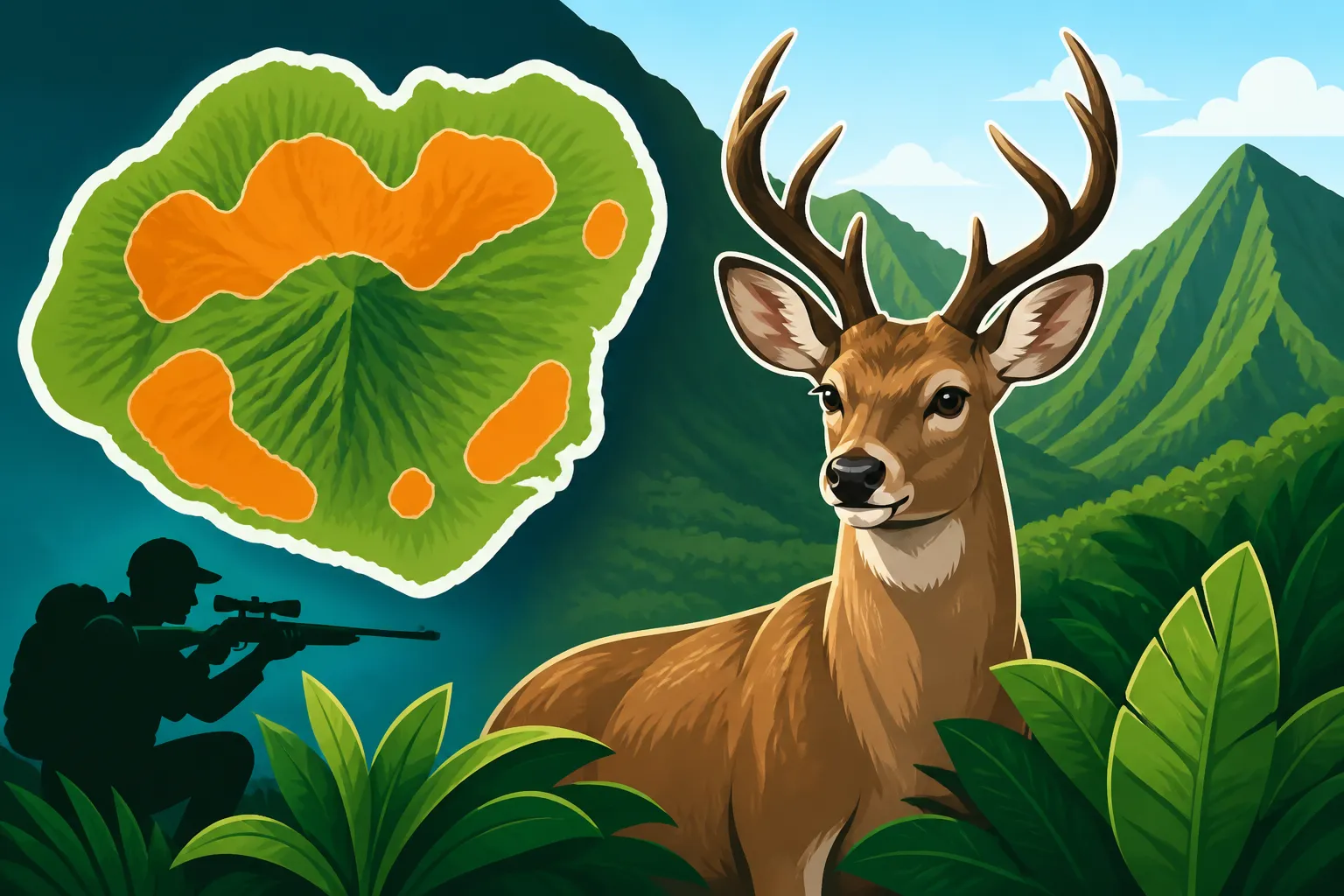
Unlike the widespread Axis deer found across other Hawaiian islands, black-tailed deer on Kauai have a much more limited, though still expansive, range. They are exclusively found on Kauai, a distinct population that has thrived within specific regions of the island since their introduction. This isn't a species you'll encounter by chance in just any forest reserve; their presence is concentrated in the western and northwestern portions of Kauai, primarily within the Kokee and Waimea Canyon areas, extending into surrounding forest reserves and management units. It’s a truly unique hunting opportunity, but one that demands a precise understanding of their territory.
Where Black-Tailed Deer Call Home on Kauai
The heart of black-tailed deer country on Kauai lies within the cooler, wetter upland forests and the dramatic canyon lands of the interior. Think Kokee State Park and the vast, breathtaking expanse of Waimea Canyon. These areas provide the perfect blend of dense cover, varied forage, and rugged terrain that black-tails prefer. They aren't going to be lounging on the sunny beaches or grazing in open pastures near the coast. Instead, they stick to the higher elevations, often above 2,500 feet, where the climate is more temperate and the vegetation more robust. Hunters seeking these deer need to prepare for a completely different environment than what many might associate with a typical Hawaiian hunt.
Within these primary zones, the deer utilize various microhabitats. You'll find them in dense stands of native koa and ohia, where the undergrowth provides excellent hiding cover. They also frequent the edges of more open areas, like old logging roads, firebreaks, and the occasional natural clearing within the forest, especially during dawn and dusk. The steep slopes and numerous drainages of Waimea Canyon itself are also key corridors and bedding areas. It's not uncommon to glass a distant ridge and spot a small herd moving through the mist. Hunting Black-Tailed Deer in Kokee is a classic Kauai experience that embodies this challenge and reward.
Historical Footprint and Range Expansion
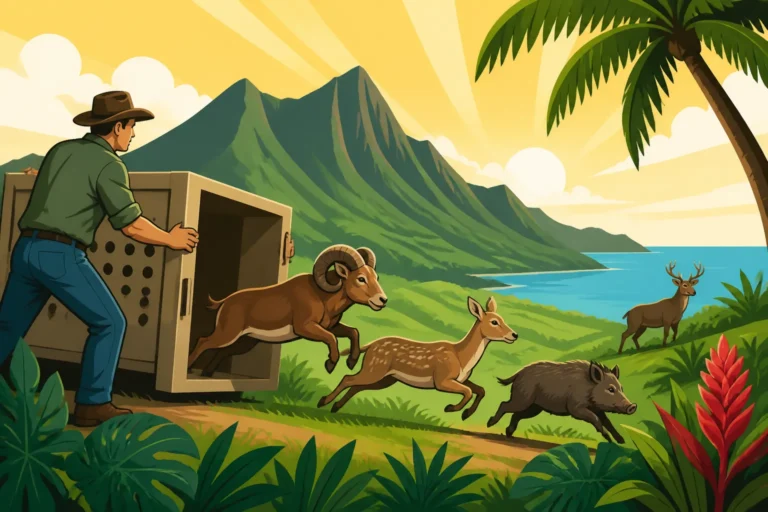
The black-tailed deer population on Kauai traces its origins back to a limited introduction in the early 20th century. While their numbers started small, they quickly adapted to Kauai's diverse ecosystems, finding niches that offered ample food and shelter. Over the decades, their population expanded from the initial release sites, primarily moving deeper into the central and western highlands. This expansion, while significant on Kauai, has not led to their establishment on other islands, making them a truly unique species for Kauai hunters.
Their successful establishment is a testament to the island's suitable habitat and lack of natural predators. However, their range isn't static; it ebbs and flows slightly depending on factors like rainfall, forage availability, and hunting pressure. Years of heavy rain might see them disperse more widely, while drought conditions could concentrate them closer to reliable water sources. Understanding these subtle shifts can give a hunter an edge, allowing them to anticipate movement patterns. You might consider checking resources like GoHunt, which often provides updated information and unit boundary details that can help you pinpoint areas of recent deer activity.
Key Hunting Units for Black-Tailed Deer
When it comes to actually putting boots on the ground, knowing which public hunting units are open for black-tailed deer is paramount. The Department of Land and Natural Resources (DLNR) on Hawaii categorizes various areas into specific hunting units, each with its own regulations, seasons, and access points. For black-tailed deer, the focus is almost entirely on units located in the western part of Kauai.
Kokee and Pu'u Ka Pele Forest Reserves
These adjacent areas form the backbone of black-tailed deer hunting on Kauai. The Kokee and Pu'u Ka Pele Forest Reserves encompass a vast network of trails, dense forests, and dramatic viewpoints overlooking Waimea Canyon. The deer here are accustomed to human presence, but they are far from tame. They know these woods intimately, making them challenging but rewarding quarry. The terrain can be unforgiving, with steep climbs, muddy trails, and thick vegetation, requiring a good level of physical fitness and robust gear.
Hunters in these units often utilize the established trail systems, but success usually comes from venturing off the beaten path into the less-pressured areas. Glassing canyon walls and distant ridges, especially at first light and last light, can reveal deer moving between bedding and feeding areas. Understanding the unit boundaries and regulations is essential, as some areas might be designated for different uses or closed entirely. The Hunting Kauai's Kekaha Unit and Hunting Kauai's Puu Ka Pele Reserve posts can offer more specific insights into these critical areas.
Waimea Canyon Rim and Adjacent Areas
The rim of Waimea Canyon itself and the areas immediately adjacent to it provide crucial habitat for black-tailed deer. These deer are incredibly adept at navigating the canyon's steep, broken terrain, using its deep gulches and rocky outcrops for cover and escape. Hunting along the canyon rim requires extreme caution due to sheer drop-offs, but it also offers unparalleled opportunities for long-range glassing and strategic spot-and-stalk approaches.
The vegetation here can vary dramatically, from dense, wet forest on the higher plateaus to drier, scrubbier areas along the canyon slopes. Deer will move between these zones, seeking optimal forage and thermal cover. Hunters exploring Hunting the Waimea Canyon Rim for Deer need to be prepared for rapid changes in weather and challenging footing. It's not a place for the faint of heart, but the rewards—both in terms of scenery and hunting opportunity—are immense. Always double-check current hunting unit maps, which you can often find through the DLNR website or platforms like GoHunt, to ensure you're in an open and legal area.
Habitat Preferences and Deer Behavior
Understanding where the deer live is only half the battle; knowing why they choose those areas and how they behave within them is what truly turns a hopeful hunter into a successful one. Black-tailed deer on Kauai have developed distinct patterns influenced by their environment.
Vegetation Types and Forage
Kauai's black-tailed deer are primarily browsers, meaning they feed on a variety of leaves, twigs, and shrubs rather than grazing on grasses. Their diet in the Kokee and Waimea Canyon areas consists of native and introduced plant species, including various ferns, small shrubs, and the tender shoots of trees like ohia and koa. They particularly favor areas with a diverse understory that provides both food and cover.
Look for areas where new growth is abundant, perhaps after a recent rain or in an area that has seen some disturbance, like a small landslide or natural opening in the canopy. These areas often provide a flush of palatable browse. In drier periods, they might concentrate around wetter gulches or areas where the deeper soils retain more moisture, allowing for sustained plant growth. Observing fresh browse marks, especially on younger plants, can be a strong indicator of recent deer activity.
Elevation and Terrain Use
Black-tailed deer on Kauai exhibit a strong preference for the middle to upper elevations of the island's western side. While they can be found as low as 1,500 feet, their primary range extends from about 2,500 feet up to the highest points of the plateau, around 4,000 feet. This elevation band provides cooler temperatures, more consistent rainfall, and the dense forest cover they rely on.
The terrain within this range is rugged, characterized by steep valleys, razorback ridges, and numerous drainages that dissect the landscape. Deer are incredibly agile and will use these features to their advantage, moving silently through thick brush or traversing difficult slopes with ease. Hunters must be prepared for steep climbs and descents, and often, long, arduous walks. Using good quality optics to glass distant slopes and saddles from advantageous viewpoints is a highly effective strategy in this challenging landscape. Hunting Hawaii's High Elevation Alpine Ground will give you a broader understanding of how game animals relate to elevation in the islands, which can be applied to black-tailed deer here.
Daily and Seasonal Movements
Like most deer species, Kauai's black-tailed deer are crepuscular, meaning they are most active during dawn and dusk. This is when they typically move from their bedding areas in dense cover to more open feeding areas. During the day, especially in warmer periods, they tend to bed down in thick vegetation, often on north-facing slopes or in areas that offer shade and protection from the wind.
Their movements can also be influenced by seasonal changes, though less dramatically than in mainland environments. While Hawaii doesn't experience distinct four seasons, variations in rainfall and forage availability can dictate where deer concentrate. During periods of drought, they might congregate around perennial water sources or areas where certain plants remain green. Conversely, after heavy rains, they might disperse more widely to take advantage of new growth across the landscape. Observing patterns in deer sign—tracks, droppings, and browse—can help you piece together their current movement habits.
Planning Your Kauai Black-Tailed Deer Hunt
With a better understanding of where Kauai's black-tailed deer roam, you can start to formulate a solid hunting plan. This isn't a walk-in-the-park hunt; it requires preparation, perseverance, and respect for the unique Hawaiian environment.
Accessing Hunting Units
Access to the prime black-tailed deer hunting units on Kauai, particularly Kokee and Pu'u Ka Pele, is typically via paved roads that lead into Kokee State Park. However, to truly get into the deer's preferred habitat, you'll often need to transition to dirt roads, which may require a 4×4 vehicle, especially during wet conditions. Many of the best hunting spots involve considerable hiking beyond the road systems, deep into the canyons or along remote ridge lines.
Before heading out, always check with the DLNR for any road closures, trail conditions, or specific access rules for the units you plan to hunt. Some areas may have restricted access or require special permits beyond your general hunting license and permit-tag. The GoHunt platform can sometimes provide convenient links and information regarding these access details, helping you plan your approach effectively. Also, be aware of where Hawaii's Fenced Conservation Boundaries might impact access or deer movement.
Essential Gear for Kauai Deer Hunting
The rugged, often wet, and challenging terrain of Kauai demands specific gear. Waterproof and durable hiking boots with excellent ankle support are non-negotiable. Rain gear is also essential, as conditions can change rapidly from sunny to pouring rain, especially in the uplands. Layered clothing is key to adapting to temperature fluctuations throughout the day.
For optics, a good pair of binoculars (10×42 or 12×50) and a spotting scope are invaluable for glassing the vast canyons and distant slopes. A reliable GPS device or a mapping app on your phone (with downloaded offline maps, as cell service is spotty) is critical for navigation. Remember to carry ample water, snacks, a first-aid kit, and an emergency shelter. The challenges of Walking Rough Lava Without Wrecking Your Boots can extend to muddy, rocky trails, so prepare accordingly.
Hunting Strategies in Kauai's Terrain
Spot-and-stalk is the most common and often most effective strategy for black-tailed deer on Kauai. This involves finding a good vantage point to glass wide areas, spotting deer, and then carefully planning an approach. The dense vegetation often means stalks are up close and personal, requiring extreme stealth. Still-hunting, moving slowly and deliberately through the forest, can also be productive, particularly in areas with good sign.
Remember that Hawaii's thermals can be tricky, often drawing scent uphill in the morning and downhill in the evening. Always try to hunt with the wind in your favor. Be patient, move slowly, and pay attention to subtle changes in the landscape that might indicate deer activity. Early mornings and late evenings are prime times, so be in your hunting area well before sunrise and stay until after sunset. Hunting Axis Deer at First Light in Hawaii principles apply equally to black-tailed deer, emphasizing the importance of those golden hours.
Considerations for Conservation and Respect
Hunting black-tailed deer on Kauai is not just about the pursuit; it's also about understanding your role in conservation and showing respect for the land and its unique ecosystems. These deer, while a valuable game animal, are also an introduced species, and their management contributes to the overall health of Kauai's native forests.
Ethical Hunting Practices
Adhere strictly to all Hawaii hunting regulations, including season dates, bag limits, and legal weapon requirements. Always ensure you have the proper licenses and permits before heading into the field. Ethical shot placement, prompt retrieval of game, and proper field dressing are not just good practice but also a sign of respect for the animal and the hunting tradition.
Participating in harvest reporting programs, when applicable, helps wildlife managers gather crucial data on population health and distribution, which in turn informs future hunting seasons and conservation efforts. Be a responsible hunter, leave no trace, and pack out everything you pack in, including spent shell casings and any trash.
Impact on Native Ecosystems
While the focus of this guide is on hunting opportunities, it's important to remember that black-tailed deer, like all introduced ungulates in Hawaii, can have an impact on native ecosystems. Their browsing habits can affect native plant communities, and their presence can contribute to soil erosion. Hunting plays a role in managing these populations, helping to mitigate their impact on sensitive areas and protect Hawaii's unique biodiversity.
By understanding the full context of black-tailed deer in Hawaii, hunters can appreciate not only the challenge and reward of the hunt but also their contribution to responsible wildlife management on the islands. It’s a privilege to hunt in such a special place, and with that privilege comes a responsibility to be informed and ethical.
| Feature / Location | Primary Elevation Range | Typical Terrain | Dominant Vegetation | Key Hunting Strategy |
|---|---|---|---|---|
| Kokee State Park | 3,000-4,000 ft | Rolling plateaus, steep valleys, dense forest | Koa, Ohia, various ferns, introduced shrubs | Spot-and-stalk, still-hunting |
| Puu Ka Pele Reserve | 2,500-3,500 ft | Deep gulches, ridge lines, mixed forest | Dense undergrowth, Eucalyptus, native trees | Still-hunting, strategic glassing |
| Waimea Canyon Rim | 2,000-3,000 ft | Sheer cliffs, broken slopes, deep canyons | Drier scrub, native grasses, scattered trees | Long-range glassing, careful stalk |
| Na Pali-Kona FR | 1,500-3,000 ft | Rugged, remote, steep slopes | Dense wet forest, some open clearings | Difficult access, still-hunting |
Disclaimer
This article is for general informational purposes only and does not constitute professional advice. Laws, prices and regulations vary by location and change over time. Consult a qualified professional for guidance on your specific situation.