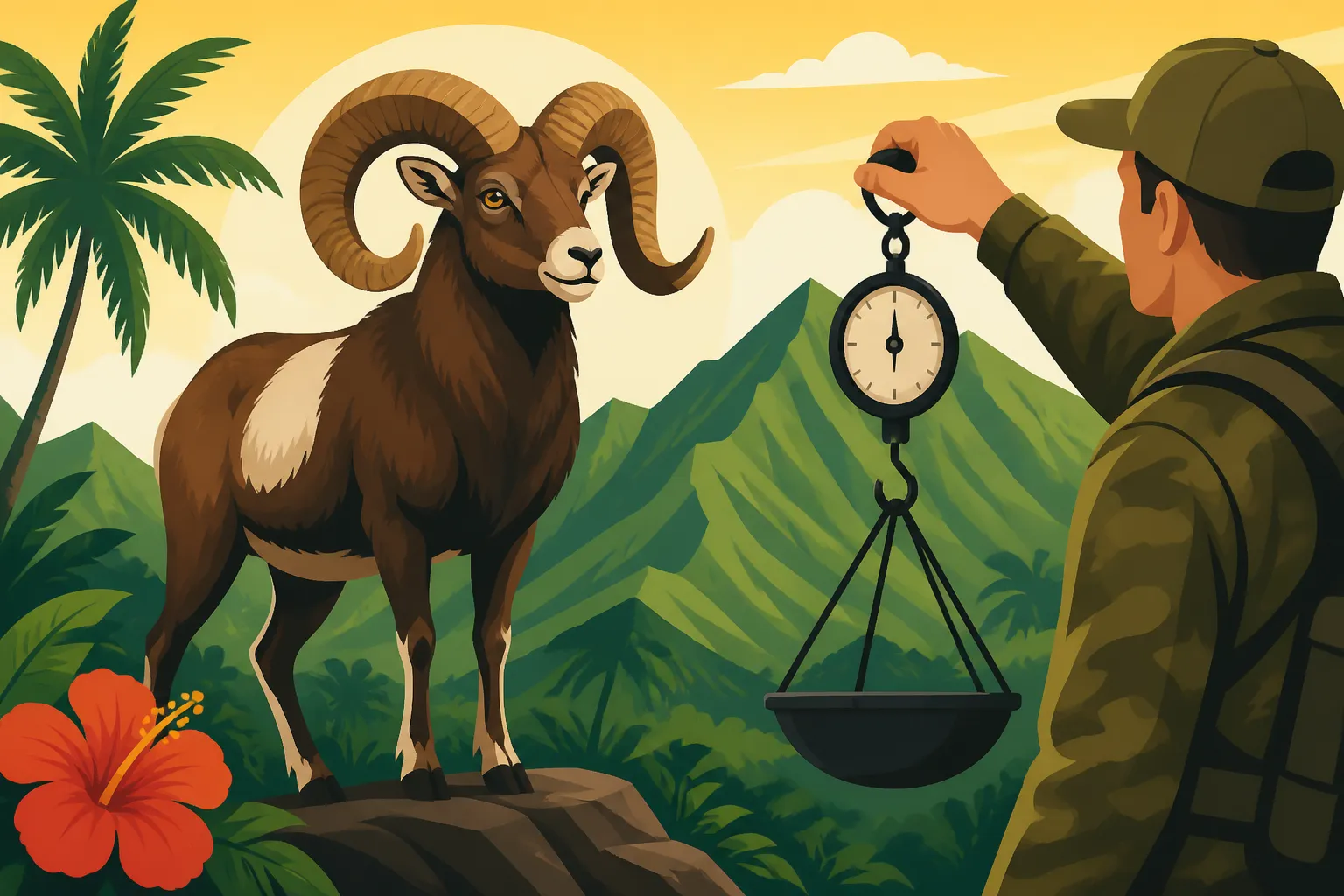
What a Mouflon Ram Weighs
One of the biggest questions I get from hunters planning a trip to Hawaii for mouflon is, "Just how big are these rams, really?" It's not just about the horn curl; knowing the potential body weight of a mouflon ram can profoundly impact your gear choices, your physical preparation, and even your strategy for getting that hard-earned meat off the mountain. This guide is here to break down exactly what you can expect when it comes to the weight of Hawaii's mouflon rams, the factors that make them vary, and what that means for your hunt.
Understanding Mouflon Sheep in the Hawaiian Islands
Mouflon sheep, with their distinctive curled horns, are a challenging and highly sought-after game animal in Hawaii. Unlike the native wildlife, they're an introduced species, thriving in some of the islands' most rugged and beautiful terrain. Their presence here is a unique chapter in Hawaii's diverse ecological story, offering a thrilling hunt while also presenting complex conservation discussions.
The Journey to the Islands
Mouflon sheep were first introduced to Hawaii Island in the 1950s, primarily for sport hunting. These animals, originally from Corsica and Sardinia, found the high-elevation, open, and often arid landscapes of Mauna Kea surprisingly accommodating. They flourished, establishing strong populations that eventually led to hunting opportunities. It wasn't just a simple release; the Department of Land and Natural Resources (DLNR) and private ranches have played roles in managing and sometimes relocating these animals over the decades to various suitable habitats. This long history means today's mouflon are well-established and adapted to Hawaii's unique environmental pressures.
Mouflon-Feral Sheep Hybrids
It's important for hunters to know that not all "mouflon" in Hawaii are pure European mouflon. Over the years, particularly on Hawaii Island, these animals have interbred with feral domestic sheep that were also present in the uplands. This cross-breeding has led to what are often called "mouflon-feral sheep hybrids." These hybrids can exhibit a wide range of appearances, sometimes retaining the classic mouflon horn structure and reddish-brown coat, while others might look more like a shaggy, multi-colored domestic sheep with less impressive horns. This hybridization can also influence body size and conformation. For hunters, distinguishing between a pure mouflon and a hybrid, especially when Judging a Mouflon Ram's Horn Curl, can be part of the challenge and reward, as the trophy criteria often lean towards the more classic mouflon characteristics.
Average Weight of a Hawaii Mouflon Ram
When we talk about the weight of a mouflon ram in Hawaii, it's rarely a single, neat number. Several factors play into it, but we can certainly give you a solid range to prepare for. These aren't your typical domestic sheep; they're lean, muscular, and built for navigating steep, volcanic terrain.
Estimating Live Weight
A mature mouflon ram in Hawaii typically weighs between 80 to 120 pounds (36 to 54 kg) live weight. Some exceptional, older rams, particularly those with good forage and genetics, might push closer to the 130-140 pound (59-63 kg) mark, but those are truly the giants of the herd. These animals are incredibly tough for their size, with dense bones and powerful musculature. Think of them as compact athletes, designed for quick bursts of speed and incredible agility on rocky slopes. Their relatively light weight compared to, say, an axis deer, makes them seem manageable, but don't underestimate the sheer effort it takes to bring one down and get it off the mountain.
For context, a large ewe (female sheep) will usually fall into the 60-80 pound range, so rams are noticeably heavier and more robust. This weight range is generally consistent across the islands where mouflon are found, though specific units and their unique ecosystems can certainly lean towards one end of the spectrum.
Dressed Weight Expectations
The "dressed weight" refers to the weight of the animal after it has been field-dressed, meaning the internal organs have been removed. This is often the weight that hunters are most concerned with, as it directly impacts how much meat they'll be packing out. For a Hawaii mouflon ram, you can expect the dressed weight to be roughly 60% to 70% of its live weight.
So, for a ram weighing 80-120 pounds live, you're looking at a dressed weight of approximately 48 to 84 pounds (22 to 38 kg). If you're lucky enough to take one of those rare 140-pound monsters, your dressed meat might approach 100 pounds. This dressed weight doesn't include the head, hide, or lower legs, which are often removed during the field dressing process to lighten the load even further for the pack out. While this is a significant amount of lean, delicious meat, remember that you might need to carry it quite a distance across very unforgiving ground, which brings us to the next section. Proper Field Care in Hawaii's Heat and Humidity is crucial to preserve this meat, as mouflon are often hunted in warm, exposed environments.
Factors Influencing Mouflon Ram Weight
Just like any wild animal, a mouflon ram's weight isn't just a fixed number. It's a dynamic reflection of its environment, its age, and even its genetic lineage. Understanding these factors can give you a better idea of what to expect when you're out scouting or on the hunt.
The Role of Nutrition and Forage
The availability and quality of forage are paramount to an animal's growth and overall body condition. In Hawaii, mouflon thrive in often dry, high-elevation alpine and subalpine zones where vegetation can be sparse and tough. Areas with more consistent rainfall, better soil quality, or a wider variety of palatable plants will generally support larger, healthier rams. For example, a ram living in a lush, kipuka (an island of vegetation surrounded by lava flows) with ample mamane and other native plants will likely have access to better nutrition than one constantly struggling in a vast, exposed lava field.
Drought years, which are not uncommon in Hawaii, can significantly impact the forage quality and quantity, leading to leaner animals across the board. Conversely, years with good rain often result in a flush of vegetation, contributing to heavier, healthier sheep. Hunters often observe these fluctuations year-to-year, influencing herd health and the average weight of rams in a given season.
Age and Genetic Potential
Like most ungulates, mouflon rams continue to grow and add weight throughout their lives, typically peaking in their prime years, often between 5 and 8 years old. Younger rams, while sexually mature, are still putting energy into growth and won't carry the same mass as an older, more established ram. After their prime, weight can sometimes plateau or even slightly decrease as animals age further, though horn growth might continue to impressive lengths.
Genetics also play a silent, but significant, role. Some rams are simply predisposed to grow larger, both in body and horn size, due to their genetic makeup. This is where the topic of Mouflon and Feral Sheep Hybrids comes into play. Pure mouflon often exhibit more consistent body and horn characteristics, while hybrids can be a mixed bag, sometimes displaying larger, shaggier bodies or unusual horn growth patterns that can influence their overall weight. Ethical hunting practices often encourage harvesting older, mature rams to allow younger animals to reach their full potential and contribute to the herd's overall health and genetic diversity.
Impact of Habitat and Elevation
The specific habitat a mouflon ram calls home directly influences its weight. Hawaii's mouflon are found in diverse, challenging landscapes, from the barren cinder cones of Mauna Kea to the drier, thorny kiawe forests of Lanai. Animals living in higher elevations, like those found on the slopes of Mauna Kea, face harsher conditions but often have access to unique forage species and vast, undisturbed ranges. This can lead to robust, hardy animals.
Conversely, rams living in areas with more human disturbance or smaller, fragmented habitats might experience more stress, potentially impacting their growth. The sheer physicality required to navigate steep, rocky, high-elevation terrain also means these animals are incredibly fit, which translates to dense muscle mass rather than excess fat. This "hard-earned" muscle contributes to their overall weight and makes them formidable animals to pursue. Understanding the specific characteristics of Hunting Hawaii's High Elevation Alpine Ground will greatly prepare you for the challenge.
Weight Differences Across Islands and Hunting Units
While the general weight range for Hawaii mouflon rams holds true, subtle yet significant differences can be observed between the various islands and even specific hunting units. These variations are often tied to localized habitat conditions, population densities, and management strategies.
Mauna Kea's High-Elevation Giants
Hawaii Island, particularly the vast slopes of Mauna Kea, is renowned for producing some of the largest mouflon rams in the state. The combination of high-elevation volcanic terrain, relatively good forage, and historically strong genetics has allowed these animals to reach impressive sizes. Hunters pursuing mouflon on Hunting Mouflon on Hawaii's Highest Slopes often speak of the sheer difficulty and reward of taking a mature ram from this challenging environment.
These rams tend to be on the higher end of the 80-120 pound live weight spectrum, with prime individuals pushing towards 130-140 pounds. The thin air and expansive, rugged landscape force these animals to be incredibly robust and physically adapted, contributing to their dense musculature and overall weight. The mouflon here also benefit from being in a more "wild" environment with less encroachment from human activity compared to some other areas.
Lanai's Mouflon Populations
Lanai also hosts a healthy mouflon population, though the habitat is quite different from Mauna Kea. Lanai's mouflon often inhabit drier, more arid environments, including kiawe flats and brushy hillsides. While the rams on Lanai are still respectable in size, they might trend slightly smaller on average compared to their Mauna Kea counterparts. A typical Lanai ram might be closer to the 80-100 pound live weight range, with larger individuals hitting 110-120 pounds.
This difference can be attributed to the drier conditions and potentially different forage availability. However, don't let a slightly smaller average size fool you; Lanai mouflon are still incredibly tough and offer an exhilarating hunt. Many hunters focus on the quality of the horn curl rather than just raw body weight when hunting Lanai's mouflon. Getting a tag on Lanai can be challenging, as many opportunities come through Hawaii's Drawn Hunts and Lotteries or specific seasons like Hunting Lanai's Mouflon Muzzleloader Days.
Puu Waawaa's Unique Conditions
The Puu Waawaa Game Management Area on Hawaii Island offers a unique mouflon hunting experience. Situated on the leeward side of Mauna Kea and Hualalai, it features a mix of dry forest, open pastures, and volcanic terrain. The mouflon population here is well-managed, and the varied habitat can support robust animals. Rams from Puu Waawaa often fall within the middle to upper range of mouflon weights, influenced by the specific conditions of the unit.
Forage can be quite good in certain sections, leading to healthy animals, but the terrain can be deceptively challenging. Hunters often find good rams in this unit, and understanding the specific conditions of Hunting Mouflon at Puu Waawaa can greatly aid in your success. The mouflon here, much like those on Mauna Kea, are true mountain athletes, making a successful harvest a testament to a hunter's skill and endurance.
What Ram Weight Means for the Hunter
Knowing the potential weight of a mouflon ram isn't just a fun fact; it's vital information that directly impacts your planning, your gear, and your physical readiness for a Hawaii mouflon hunt. From the moment you successfully take an animal, its weight becomes a central factor in every step that follows.
Field Dressing and Meat Care
The dressed weight of a mouflon ram, typically 48 to 84 pounds of pure meat, is a significant load. Proper and efficient field dressing is paramount, especially in Hawaii's often warm and humid conditions. The quicker you can gut the animal, cool its core temperature, and get it quartered or bagged, the better the quality of your meat will be. This means having a sharp knife, game bags, and perhaps even some wet wipes ready. Many hunters choose to quarter their animals, especially larger rams, to distribute the weight across multiple packs or individuals.
The terrain where a mouflon often falls can be steep, rocky, or covered in dense vegetation, making field dressing a physical challenge in itself. Imagine trying to maneuver a 100-pound animal on a 45-degree slope! Taking the time to properly cool the meat, perhaps by hanging it in the shade or using a portable cooler with ice if accessible, is critical. This initial effort directly contributes to how well your venison tastes back home. Learning about Field Dressing Axis Deer in Hawaii Heat can provide transferable skills, as the principles of rapid cooling apply to all game in Hawaii.
Packing Out Challenges
This is where the weight really hits home. Even a 50-pound pack of boned-out meat, combined with your rifle, gear, water, and personal items, can easily push your pack weight over 70-80 pounds. Now imagine carrying that over several miles of uneven lava rock, through thick kiawe thorns, or up and down steep gulches. It's a grueling endeavor, and often the most underestimated aspect of a Hawaii mouflon hunt.
Hunters often bring sturdy backpacks with good load-bearing frames. If hunting with a partner, you can split the load, making the pack out significantly easier. The remoteness of many mouflon units means that vehicle access is often limited or non-existent, so you will be carrying that meat out on your back. Physical conditioning cannot be stressed enough; long hikes with weighted packs before your hunt are highly recommended. Don't forget that Hawaii's sunshine and humidity can quickly dehydrate you, making a heavy pack even more taxing. A helpful resource, Packing Meat Out of a Hawaii Gulch, details many of the challenges you'll face.
Assessing Trophy Quality
While body weight is a consideration for meat and the physical challenge, for many mouflon hunters, the true "trophy" lies in the ram's horns. The size, curl, and spread of the horns are what define a true trophy ram. While older, heavier rams generally have more developed horns, a ram's body weight doesn't always directly correlate with its horn score. You might encounter a moderately sized ram with exceptional horn genetics, or a heavy-bodied ram with broken or average horns.
Hunters often study photographs and learn how to estimate age and horn development in the field. When applying for a permit through services like GoHunt, understanding the typical trophy potential of a unit can help set expectations. The Department of Land and Natural Resources (DLNR) typically has specific guidelines for what constitutes a legal ram, often based on horn curl or tip-to-tip spread. Ultimately, the decision of what makes a trophy is personal, but recognizing the difference between body weight and horn development is key.
Comparing Hawaii Mouflon to Other Game Species
To further put the mouflon ram's weight into perspective, let's stack it up against some of Hawaii's other popular big game animals. This comparison highlights the unique challenges and rewards associated with hunting each species in the islands.
Mouflon vs. Axis Deer
Axis deer are widely considered Hawaii's premier big game animal, and there's a significant difference in size compared to mouflon.
| Feature | Hawaii Mouflon Ram | Hawaii Axis Buck |
|---|---|---|
| Live Weight | 80-120 lbs (36-54 kg) | 150-220 lbs (68-100 kg) |
| Dressed Weight | 48-84 lbs (22-38 kg) | 90-150 lbs (41-68 kg) |
| Habitat | High-elevation, arid, rocky | Dry forests, grasslands, agricultural |
| Pack Out | Difficult, often steep | Difficult, can be hot & dense |
As you can see, a large axis buck can be nearly twice the weight of a large mouflon ram. This means the challenges of Axis Deer Hunting in Hawaii, especially in terms of field dressing and meat packing, are amplified. While a mouflon pack-out is tough due to terrain, an axis deer pack-out is often tough due to sheer volume and weight of meat, compounded by heat. Axis deer also tend to inhabit areas that are often thicker and hotter, demanding different strategies for cooling meat quickly. The venison from both is highly prized, with axis deer often having a slightly sweeter, milder flavor.
Mouflon vs. Feral Goats and Pigs
Hawaii's feral goats and pigs are also abundant and widely hunted, providing a different set of challenges and body weights.
| Feature | Hawaii Mouflon Ram | Hawaii Feral Goat (Billy) | Hawaii Feral Pig (Boar) |
|---|---|---|---|
| Live Weight | 80-120 lbs (36-54 kg) | 70-150 lbs (32-68 kg) | 100-300+ lbs (45-136+ kg) |
| Dressed Weight | 48-84 lbs (22-38 kg) | 40-90 lbs (18-41 kg) | 60-200+ lbs (27-90+ kg) |
| Habitat | High-elevation, rocky | Steep cliffs, dry canyons | Dense rainforest, gulches, agricultural |
| Pack Out | Difficult, often steep | Extremely difficult, precarious cliffs | Extremely difficult, dense, wet, hot |
Feral goats, particularly the big billies, can actually rival or even slightly exceed the upper weight range of mouflon rams. However, their body structure is typically leaner and more agile, built for scaling near-vertical cliffs. Hunting Hawaii's Feral Goats often involves extremely precarious terrain, making a pack-out potentially more dangerous, even if the absolute weight isn't drastically higher.
Feral pigs, on the other hand, are the undisputed heavyweights of Hawaii's game animals. A large boar can easily top 200 pounds, and some absolute giants can push past 300 pounds. This presents an entirely different set of challenges for Hunting Hawaii's Feral Pigs, especially with tactics like Dog and Knife Pig Hunting in Hawaii. Extracting a large pig from a deep, muddy rainforest gulch is arguably the most physically demanding pack-out in Hawaii hunting, far surpassing that of a mouflon.
In summary, while mouflon rams are not the largest game animals in Hawaii, their unique high-elevation habitat and lean, muscular build make them a formidable challenge for any hunter. The weight of the animal, while manageable for a fit individual, combined with the terrain, demands thorough preparation and respect for the environment.
Disclaimer
Hunting in Hawaii involves inherent risks. Always consult the most current regulations from the Hawaii Department of Land and Natural Resources (DLNR) Division of Forestry and Wildlife (DOFAW) before planning any hunt. This information is for general guidance only and should not replace official rules or professional advice. Be aware of private land boundaries, obtain all necessary licenses and permits, and prioritize safety above all else.