Hunting Hawaii’s Muzzleloader Deer Windows
For hunters dreaming of that unique Hawaiian experience, navigating the specific seasons for muzzleloader deer can feel like deciphering an ancient scroll. Many folks assume all deer hunting falls under a single umbrella, but the islands carve out dedicated "muzzleloader windows" that are easy to miss if you're not paying close attention to the fine print. This guide will meticulously break down those critical periods, what to expect, and how to prepare, ensuring you're ready when those unique opportunities arise.
Understanding Hawaii's Muzzleloader Deer Landscape
Hawaii, with its stunning, diverse landscapes, offers a hunting experience unlike any other. For big game, we're primarily talking about Axis deer on Maui, Molokai, and Lanai, and Black-tailed deer on Kauai. While rifle and archery seasons often get the most attention, the muzzleloader windows provide a distinct challenge and a unique way to connect with the land and the animals. It's not just about the weapon; it's about the timing, the tactics, and the deep satisfaction of a successful hunt under a very specific set of rules.
The Specific Appeal of Muzzleloader Seasons
There’s something truly special about hunting with a muzzleloader. It’s a nod to tradition, a slower pace, and a commitment to making that first shot count. For many, it harkens back to an earlier era of hunting, demanding a higher level of fieldcraft and patience. In Hawaii, where hunting pressure can sometimes be high on public lands, these specialized seasons often see fewer participants. This can translate into a more solitary experience, giving you a better chance to find undisturbed animals and truly immerse yourself in the hunt. Plus, the sheer satisfaction of bringing down an Axis buck or a Kauai black-tail with a front-loader is a feeling that's hard to beat.
Beyond the personal satisfaction, muzzleloader seasons can also offer different hunt dates than general rifle seasons. Sometimes, these windows fall during times when deer behavior might be changing – perhaps leading up to a specific rut phase, or during periods of increased movement between feeding and bedding areas due to weather shifts. Paying close attention to these specific openings can provide unique strategic advantages. It forces you to sharpen your stalking skills, become more proficient with your chosen firearm, and truly understand the habits of the deer you’re pursuing, knowing that you likely only get one shot.
Key Deer Species and Their Muzzleloader Seasons
When we talk about deer in Hawaii, the majestic Axis deer (Axis axis) instantly comes to mind for most hunters. These beautiful, spotted deer are found predominantly on the islands of Maui, Molokai, and Lanai, where they thrive in the drier, more open country as well as the dense kiawe forests. Their seasons, including muzzleloader opportunities, are often the most sought-after. On the other hand, Kauai is home to the smaller, elusive Black-tailed deer (Odocoileus hemionus columbianus), a species with its own dedicated following and unique hunting challenges in the dense, wet forests and deep canyons of the Garden Isle.
The specifics of muzzleloader seasons for each species vary significantly. For Axis deer, especially on Lanai, the opportunity to draw a muzzleloader tag is a highly anticipated event. These seasons are typically tightly regulated and limited, making them incredibly valuable. On Maui, while there are year-round general seasons in some units, dedicated muzzleloader periods for Axis deer are often part of specific drawn hunts or special access programs in certain units. Meanwhile, for Black-tailed deer on Kauai, muzzleloader seasons tend to align with the wider framework of their general seasons, often running concurrently or as specific windows within the longer archery or rifle periods in areas like the Kokee and Waimea Canyon rim. Understanding these species-specific distinctions is the first step to planning a successful Hawaiian muzzleloader hunt.
Navigating the Muzzleloader Season Calendar
The Department of Land and Natural Resources (DLNR) Division of Forestry and Wildlife (DOFAW) is the governing body for hunting in Hawaii, and their regulations are critical to understand. The calendar for muzzleloader deer hunting is not a one-size-fits-all affair. It's broken down by island and often by specific hunting unit within those islands. Missing an application deadline or misinterpreting a season date can mean the difference between a successful hunt and a missed opportunity. It requires diligent research and planning, especially for those highly coveted drawn hunts.
Island-Specific Muzzleloader Dates: Maui, Lanai, and Kauai
Each island presents its own unique set of muzzleloader opportunities and regulations for deer.
On Maui, Axis deer are plentiful, but public land muzzleloader seasons are typically unit-specific and often part of a special hunt lottery. For instance, areas like the Kula Forest Reserve or Kahikinui might have dedicated muzzleloader windows. These aren't always year-round; instead, they're carefully timed by DOFAW to manage herds or provide specific hunting experiences. Keeping an eye on the DOFAW announcements and maps is crucial for Maui. Sometimes, private ranch lands on Maui offer guided muzzleloader hunts, which may have more flexible dates but come with a significant price tag. For those looking to hunt Maui's Year-Round Axis Deer Units, checking if muzzleloaders are specifically permitted during certain times or if there are special restrictions is a must.
Lanai is perhaps the most famous for its Axis deer hunting, and its muzzleloader seasons are almost exclusively tied to the annual hunting lottery. These are highly sought-after permits, often limited to specific weekends, such as When Lanai's Axis Deer Rifle Season Runs. The muzzleloader draw for Lanai typically allows for one either-sex Axis deer tag, and these hunts occur in designated units like Unit One, which covers a significant portion of the island's prime deer habitat. Because these are drawn hunts, application deadlines are firm, usually several months in advance of the season, and you need to monitor the results closely. Unlike some other public hunts, guides are generally not allowed on Lanai's public drawn hunts, emphasizing the self-reliant nature of these trips.
Kauai offers opportunities for Black-tailed deer, and while their population isn't as large as the Axis deer herds, they provide an exciting challenge. Kauai's Muzzleloader Deer Days are typically designated within specific game management units like Kekaha or the Na Pali-Kona Forest Reserve. These seasons might run for several weeks or even months, often overlapping with archery or rifle seasons but with distinct weapon restrictions. For example, some units might allow muzzleloaders during general rifle seasons, but with specific powder and projectile limitations. You'll need to consult the annual hunting regulations booklet for the most up-to-date calendar, as these can shift slightly year to year based on deer populations and management goals.
Drawn Hunt Considerations for Muzzleloader Tags
Hawaii's drawn hunts are a distinct feature of its hunting landscape, especially for popular species like Axis deer on Lanai. For muzzleloader enthusiasts, applying for these lotteries is often the primary (or only) way to secure a tag during dedicated muzzleloader windows. The process typically involves submitting an application through the GoHunt Hawaii portal, usually months in advance of the season. It’s essential to understand the specific rules for each draw, as they can differ. For instance, some draws might be for "either-sex" tags, while others might specify "buck only."
The competition for these tags can be fierce, particularly for the Lanai Axis deer hunts. There's no preference point system in Hawaii, so every applicant has an equal chance in the lottery each year. This means you might get lucky on your first try, or it could take several years of applying. It's crucial to mark those application deadlines on your calendar and double-check all requirements before submitting. Many hunters combine their muzzleloader applications with applications for other weapon types if allowed, to maximize their chances of drawing any deer tag for that season. Once drawn, understanding the rules for checking in and out of Hawaii hunting units and securing your permit-tag through GoHunt is the next vital step.
| Island | Deer Species | Typical Muzzleloader Units | Season Type | Key Considerations |
|---|---|---|---|---|
| Maui | Axis Deer | Kula FR, Kahikinui, Polipoli | Special/Drawn Hunts, sometimes general | Check DOFAW for specific unit dates; private land options exist. |
| Lanai | Axis Deer | Unit One (various sections) | Highly Competitive Drawn Hunts | Apply months in advance via GoHunt; limited weekends, usually one either-sex tag. |
| Kauai | Black-tailed Deer | Kekaha, Na Pali-Kona FR | General season windows, sometimes specific periods | Consult annual regs for exact dates; often overlaps with rifle/archery but has weapon restrictions. |
Essential Muzzleloader Gear and Preparation for Hawaii
Hunting with a muzzleloader in Hawaii presents a unique set of challenges that go beyond just knowing the season dates. The islands boast incredible humidity, sudden downpours, rugged lava flows, and dense, wet forests. This means your gear preparation needs to be meticulous, focusing on reliability and resilience in challenging conditions. You can't just grab your trusty black powder rifle from a mainland elk hunt and expect it to perform flawlessly without some forethought.
Choosing the Right Muzzleloader and Ammunition
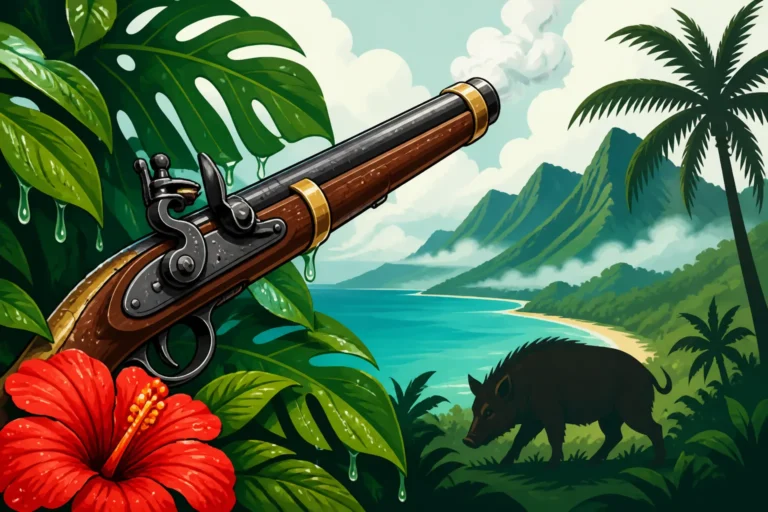
When selecting a muzzleloader for Hawaii's deer, reliability in wet conditions is paramount. Modern inline muzzleloaders, especially those with sealed breeches and corrosion-resistant finishes, are generally preferred over traditional flintlocks or caplocks for their improved weather resistance and ease of cleaning. Brands like CVA, Traditions, and Thompson/Center offer models that are well-suited for the humid island environment. Look for features that minimize exposed primers and powder, as a single drop of rain can ruin your shot. A stainless steel barrel and synthetic stock are wise choices for resisting the ever-present moisture and salt air.
Projectile choice is also critical. While many traditional hunters favor lead balls, modern saboted bullets often offer better accuracy and terminal performance, which is especially important for quick, ethical kills on deer. Consider a heavier bullet (250-300 grains) with good expansion characteristics. For powder, stick with granular black powder substitutes like Pyrodex or Triple Seven, or even Blackhorn 209, as they tend to be less hygroscopic (absorbent of moisture) than traditional black powder. Pre-measured charges in speedloaders or waterproof containers are a smart move. Remember, a single shot is your opportunity, so practice extensively with your chosen load to ensure accuracy out to your ethical range. Muzzleloader Hunting in Hawaii delves deeper into general muzzleloader considerations for the islands.
Weatherproofing Your Muzzleloader for Island Conditions
Hawaii's weather can be notoriously unpredictable. One moment you're under a blazing sun in a dry kiawe flat, and the next you're caught in a sudden tropical downpour in a rainforest gulch. Protecting your muzzleloader from moisture is not just a good idea; it's absolutely essential for preventing misfires and ensuring accuracy. Start with your primer. Use waterproof primers or apply a thin coat of clear nail polish around the primer to seal it. For caplocks, keep your caps in a waterproof container and only place one on the nipple when you are actively hunting and ready to shoot.
Beyond the primer, consider how you'll carry your rifle. A good quality rifle cover or case that can quickly be deployed is invaluable. Some hunters even use cling film or electrical tape to seal the muzzle, though you must remember to remove it before shooting! When still-hunting or moving through thick brush, ensure the muzzle is pointed down to prevent rain or debris from entering the bore. After the hunt, even if it didn't rain, a thorough cleaning is mandatory due to the high humidity and potential for internal condensation. Corrosion can set in shockingly fast here. This meticulous attention to detail is crucial for Keeping Powder Dry on a Wet Forest Hunt and ensuring your muzzleloader performs when it truly matters.
Tactics for Muzzleloader Deer Hunting in Hawaii
Hunting with a muzzleloader is inherently different from hunting with a modern repeating rifle. The single-shot nature, the distinctive smoke cloud, and the slower reload time mean that your approach to the hunt must be more deliberate and focused. In Hawaii's varied terrain, this means adapting classic tactics to the island environment, always with the understanding that success hinges on making that first shot count.
Spot-and-Stalk for Muzzleloaders in Open Country
Many of Hawaii's prime Axis deer habitats, particularly on Lanai and parts of Maui, consist of relatively open, dry country with kiawe flats, scattered trees, and rolling hills. This terrain is perfect for Spot-and-Stalk Axis Deer in Hawaii tactics, which align well with muzzleloader hunting. The key is patience and powerful optics. Get to a high vantage point before first light and spend significant time glassing the distant hillsides, valleys, and forest edges. Look for deer feeding or moving between bedding and feeding areas. Once you spot a legal animal, the real work begins.
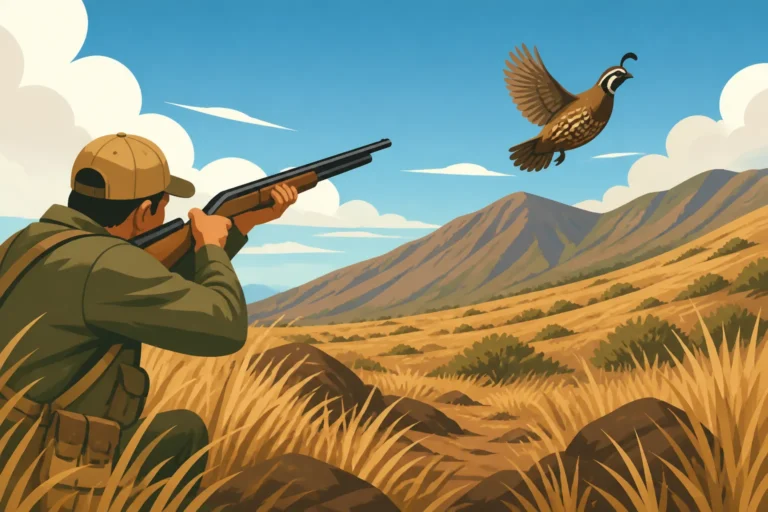
With a muzzleloader, your stalk needs to be even more precise. You need to close the distance to an ethical shooting range – typically within 100-150 yards for most hunters and muzzleloader setups. This means using terrain features like gulches, ridges, and dense vegetation to conceal your approach. Pay meticulous attention to wind direction, as the swirling thermals in Hawaii can change quickly. Once you are in position, take your time. Ensure you have a stable rest, good visibility of the animal, and a clear shot lane. The limited shot capacity means no quick follow-ups, so make that first shot count by being as steady and precise as possible.
Still-Hunting in Thicker Cover with a Muzzleloader
While some areas are open, other Hawaiian units, particularly where Axis deer might retreat during the heat of the day or in the denser parts of Maui, can involve thick scrub, kiawe thickets, or even mixed forests. Here, a still-hunting approach is often more effective, and a muzzleloader can be surprisingly well-suited for it. Still-hunting involves moving slowly and deliberately through the cover, taking a few steps, pausing for several minutes to observe, listen, and scan, then repeating the process. This method allows you to detect deer before they detect you.
The advantage of a muzzleloader in thick cover is that it forces you to be stealthy and patient. Since you're not expecting a running shot or multiple opportunities, you focus on getting close for a clean, ethical shot. Pay attention to Reading Axis Deer Sign in Dry Country, such as tracks, droppings, and rubs, to identify areas where deer are actively bedding or feeding. Move into the wind, always using cover to break up your outline. When you do encounter deer at close range, the single-shot nature means you must quickly identify the animal, find an opening, and acquire a stable shooting position. The focus shifts from speed to precision and quiet movement, qualities that are paramount when navigating Hawaii's dense undergrowth.
Public Access and Unit-Specific Muzzleloader Rules
One of the biggest hurdles for any hunter in Hawaii, especially for those new to the islands, is understanding where you can actually hunt. Hawaii's public hunting land is managed by DOFAW and is divided into specific units, each with its own set of rules, seasons, and access limitations. It's not enough to simply have a hunting license; you need to know the specific unit regulations, particularly when it comes to specialized seasons like muzzleloader deer windows.
Key Public Units Allowing Muzzleloaders
While specific units and their rules can change, there are several key public hunting areas across the islands where muzzleloader deer hunting opportunities frequently arise.
On Maui, Units H and I in the Kula Forest Reserve and Kahikinui Game Management Area are common spots for Axis deer, and special muzzleloader seasons are often designated there. These units can be challenging, with varying terrain from dense forest to open grasslands, and require good physical conditioning. The Polipoli Spring State Recreation Area also falls within some hunting boundaries, but hunters must be extremely mindful of non-hunting public use.
For Lanai, almost the entirety of the public hunting land, designated primarily as Unit One, is where drawn muzzleloader Axis deer hunts take place. Access to these areas is typically via designated roads, and 4WD vehicles are highly recommended due to the rugged and often unmaintained trails.
On Kauai, the Kekaha Game Management Area and the Na Pali-Kona Forest Reserve are the primary public units for Black-tailed deer. These units encompass a vast, rugged, and often very wet landscape, including the famous Waimea Canyon. Muzzleloader seasons here are generally open during broader deer seasons, but always double-check the specific regulations for the particular unit you plan to hunt. Hunters often use access points along the Kokee Road and the dirt roads leading into the interior. Hunting Kauai's Muzzleloader Deer Days provides more detailed information on these opportunities.
Understanding Unit-Specific Regulations and Check-In Procedures
Every hunting unit in Hawaii has its own quirks and rules, and this is especially true for muzzleloader seasons. These regulations dictate everything from legal shooting hours and access points to vehicle restrictions and blaze orange requirements. The first step is always to obtain the current year's hunting regulations booklet, available online through the DOFAW website or at local DOFAW offices. This document is your bible.
Beyond the general rules, many units require hunters to check in and out before and after their hunt. This is typically done at a designated hunter check station at the unit's boundary, or increasingly, through the OuterSpatial App. This system tracks hunter presence for safety and management purposes. For example, on Lanai's drawn muzzleloader hunts, strict check-in and check-out times are enforced. Forgetting to check out can result in penalties, so always ensure you complete this step. Checking In and Out of Hawaii Hunting Units covers this process in detail. Also, be aware of specific weapon rules; some units might have additional restrictions on muzzleloader caliber or projectile types beyond the statewide minimums. Always verify these details for your chosen unit, as ignorance of the law is never an excuse.
Field Care and Ethical Considerations with Muzzleloaders
Making a clean, ethical kill with a muzzleloader is paramount, given the single-shot nature of the weapon. However, the hunt doesn't end when the animal hits the ground. In Hawaii, the tropical heat and humidity can quickly spoil game meat, making rapid and thorough field care an absolute necessity. Proper handling ensures that your hard-earned venison makes it to the table in prime condition, honoring the animal and your efforts.
Rapid Field Dressing and Cooling After a Muzzleloader Shot
Once your deer is down, the clock starts ticking, especially in Hawaii's warm climate. The first priority is to field dress the animal immediately. This involves removing the internal organs to allow the carcass to begin cooling from the inside out. Even if you're excited about your Axis buck's antlers, resist the urge to admire it for too long. Get to work. Wear gloves for hygiene and to protect yourself from any potential diseases. Make precise cuts to open the body cavity and carefully remove the heart, lungs, liver, stomach, and intestines. For a thorough guide, refer to Field Dressing Axis Deer in Hawaii Heat.
After field dressing, the next critical step is to facilitate rapid cooling. If you’re hunting in a remote area, consider quartering the animal and placing the meat in breathable game bags. Hanging the quarters, even briefly, in a shaded, airy spot can help. If you have ice chests nearby, fill them with ice, but ensure the meat is not directly submerged in water for extended periods, as this can lead to waterlogging and spoilage. For longer packing distances, having a plan for Packing Meat Out of a Hawaii Gulch that includes cooling strategies is vital. Some hunters bring large coolers with block ice in their vehicle, or coordinate with a pickup truck equipped with a chilling unit. The goal is to get that internal temperature down as quickly as possible.
Tracking and Recovery in Challenging Terrain
While the aim is always a clean, quick kill, sometimes a deer might not drop instantly, or the shot placement might not be perfect. Tracking in Hawaii's varied and often dense terrain presents unique challenges. On lava flows, blood trails can be hard to spot. In thick kiawe or guava thickets, visibility is severely limited. And in wet rainforest areas, rain can quickly wash away vital sign.
With a muzzleloader, recovery often becomes even more critical due to the single-shot limitation. If an animal is hit but not recovered, it's not just a lost opportunity; it's an ethical failure. If you have a questionable hit, give the animal time – often at least an hour for gut shots, and 30 minutes for leg shots – before beginning your track. Mark the spot of the shot carefully, noting landmarks. Then, move slowly and methodically, looking for blood, broken branches, disturbed ground, and hoof prints. Bring flagging tape to mark the trail. If the trail is lost, expand your search in concentric circles from the last known sign. Remember, getting the most from a Hawaii Weekend Unit often involves thorough preparation for all scenarios, including challenging recoveries. Always prioritize finding a wounded animal, even if it means sacrificing part of your hunting day.
Disclaimer
Please note that hunting regulations in Hawaii are subject to change by the Department of Land and Natural Resources (DLNR) Division of Forestry and Wildlife (DOFAW). While this guide strives for accuracy, it is your responsibility to consult the most current Hawaii Game Hunting Regulations booklet and any emergency announcements or special conditions before planning and executing your hunt. Always confirm season dates, bag limits, unit boundaries, and specific weapon requirements directly with official DOFAW sources.