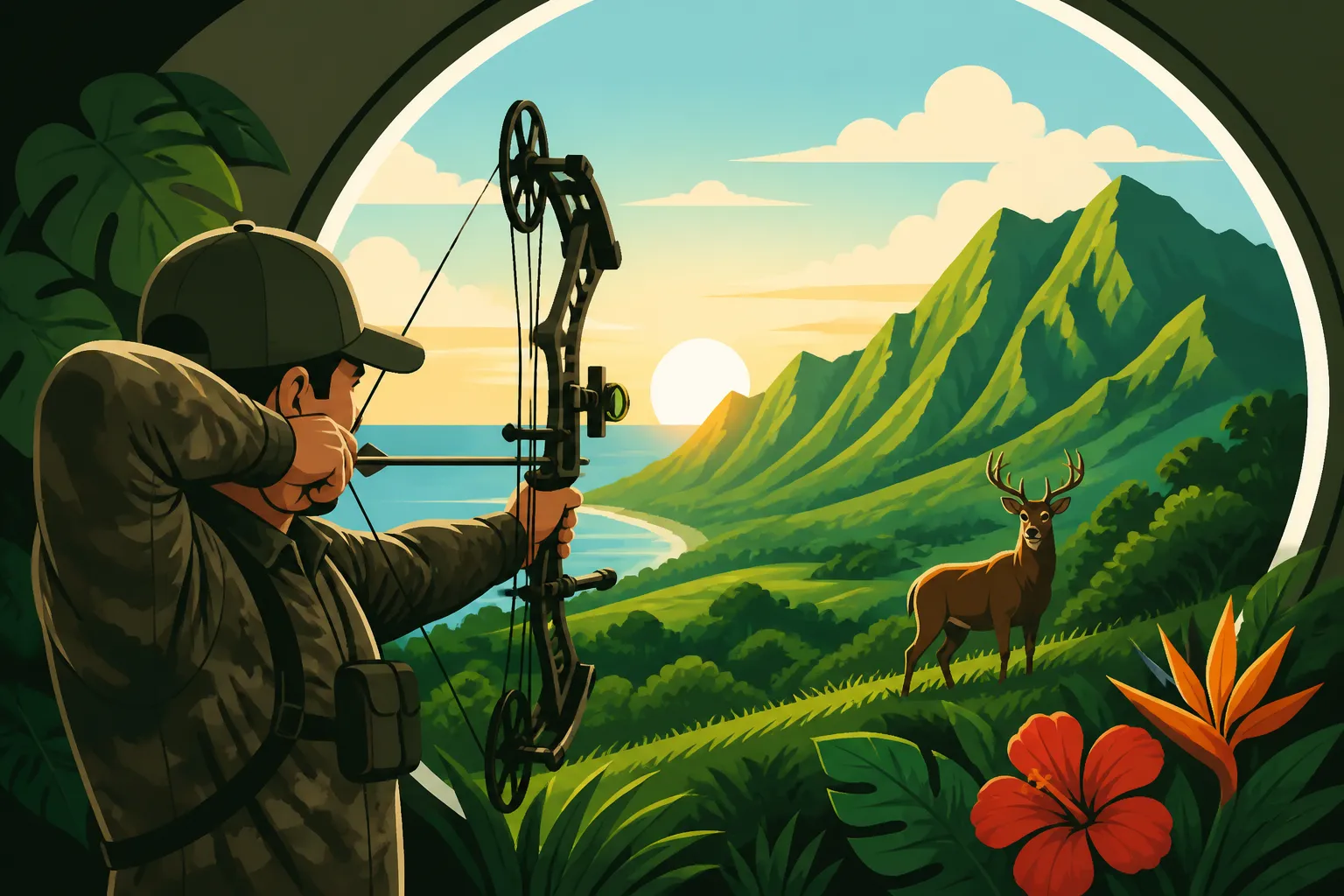
Bowhunting Hawaii’s Long Archery Windows
The thought of bowhunting in Hawaii often brings a mix of excitement and confusion. Many mainland hunters, and even some local folks, are used to incredibly short, often restrictive archery seasons back home. It's a common frustration to feel rushed, or to miss out on prime hunting days because the bow season is just too brief. But here in Hawaii, it's a completely different game; our islands offer surprisingly long and generous archery windows, giving you ample time to pursue game without the frantic rush. This guide will help you understand these unique opportunities, what you need to prepare, and how to make the most of Hawaii's extended bowhunting seasons.
Understanding Hawaii's Generous Archery Windows
One of the standout features of hunting in the Aloha State, especially for bowhunters, is the incredible length of our archery seasons. Unlike many places where bowhunting is a mere sliver of the overall hunting calendar, Hawaii often provides archers with extended, sometimes year-round, opportunities. This isn't just a slight advantage; it fundamentally changes how you can plan and execute your hunts.
Why Archery Seasons Are Different Here
The reasons behind Hawaii's lengthy archery seasons are rooted in a combination of wildlife management goals and practical considerations. Our game animals—like axis deer, feral pigs, mouflon sheep, and feral goats—are all introduced species. While they provide fantastic hunting opportunities, many also pose significant ecological threats to Hawaii's fragile native ecosystems. Because of this, the Department of Land and Natural Resources (DLNR), specifically the Division of Forestry and Wildlife (DOFAW), often encourages hunting pressure to help manage populations. Archery, being a more selective and generally quieter method, allows for sustained pressure over longer periods without as much disturbance as rifle hunting might cause in certain areas. It also often has a lower success rate for individual hunters compared to rifle hunting, which naturally allows for longer seasons without quickly overharvesting an area.
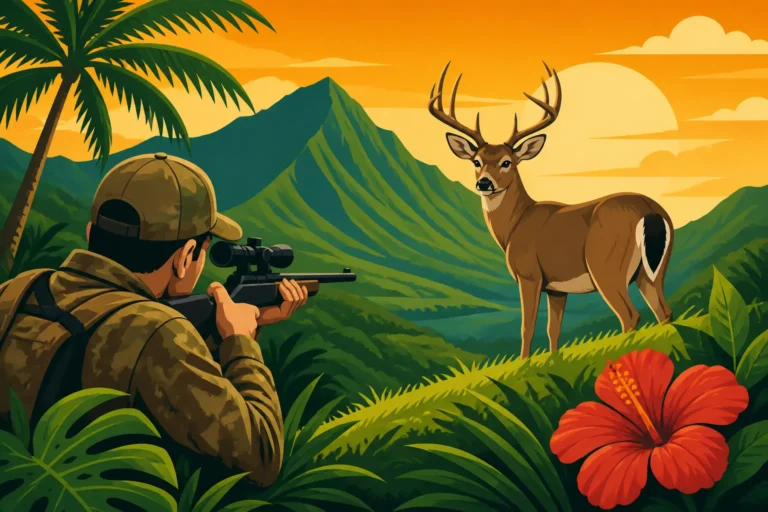
Furthermore, the unique tropical climate means animals don't have a distinct "rut" period like whitetails in colder climates, where activity spikes for a few weeks and then drops off. For instance, Axis Deer, Hawaii's Signature Big Game, can breed year-round, meaning bucks can be in hard antler at any time. This eliminates the need to confine hunting to a narrow, species-specific breeding window. The consistency of animal behavior throughout the year allows for a much more flexible and extended hunting calendar for archers.
General Season Overlaps and Archery-Only Units
When you start looking at the Hawaii hunting regulations, you'll quickly notice that archery seasons often either run concurrently with rifle or muzzleloader seasons, or they extend far beyond them. In many units across the islands, archery is permitted throughout the entire general mammal season. This means you might be bowhunting alongside rifle hunters, which has its own set of considerations in terms of safety and strategy, but it certainly keeps the season open.
Even more appealing are the designated archery-only units or specific archery seasons that can run for months, sometimes even year-round in certain areas. For example, some units on Molokai or Maui might have an extended or continuous archery season for Axis deer and feral pigs, offering a dedicated window where only bowhunters are present. On other islands, like Hawaii Island, certain remote areas or management units might prioritize archery due to terrain or conservation goals. It’s critical to check the specific unit rules and the Hawaii Archery Season Dates by Unit before planning, as these can vary significantly from one island to the next, and even between adjacent units on the same island. These long windows mean less stress about making every single weekend count; you can spread your hunting efforts out, learn the land, and truly get to know the animals' patterns.
Planning Your Hunt Around These Dates
With such generous archery windows, planning your hunt takes on a different flavor. Instead of rushing to cram a hunt into a two-week period, you can strategize based on factors like weather, moon phase, or even your own personal schedule. If you’re targeting Axis deer, knowing that they can be in hard antler at any time means you don’t have to race against a specific calendar date for a trophy. You might choose to hunt during the drier months when animals are more concentrated around water sources, or after a rain when the forest floor is softer for quieter stalking.
Consider booking your travel for a longer duration, perhaps spreading your hunting days out over a couple of weeks, allowing for rest days, scouting days, and multiple attempts. This extended access is a huge boon for nonresident hunters who fly thousands of miles to hunt. You can really get a feel for the unique challenges of Hunting Hawaii's Volcanic Terrain or navigating the dense jungle before you commit to prime hunting efforts. Remember to check the DOFAW website or the GoHunt Hawaii portal well in advance, as season dates and unit designations can change, sometimes with short notice, due to drought conditions, management needs, or other environmental factors. Being flexible and informed is key to maximizing these long windows.
Essential Gear for Hawaii Bowhunting
Hawaii's diverse environments, from arid kiawe flats to dense, wet rainforests, demand a gear setup that is robust and adaptable. Bowhunting here isn't just about flinging arrows; it's about being prepared for steep climbs, unforgiving lava fields, and sudden downpours. Your equipment needs to stand up to the challenge.
Bow and Arrow Setup Considerations
When it comes to your bow, reliability and simplicity are often prized. While the latest and greatest technology is always fun, a setup that you are intimately familiar with, that's rugged and dependable, will serve you best. Most modern compound bows with a draw weight of 50-70 pounds are perfectly adequate for Hawaii's game animals. You want enough kinetic energy to confidently take down an Axis deer or a large feral hog. Ensure your bow is well-tuned, and consider bringing an extra string and cables if you're planning an extended trip or hunting in particularly rough country, as impacts can happen.
For arrows, a durable, heavy shaft with good FOC (Front of Center) will provide better penetration and stability, especially when shooting through vegetation or at larger animals like mature feral boars or Axis bucks. Carbon arrows are popular for their durability and consistent flight. You'll want to practice extensively with your hunting setup, including broadheads, at various distances, mimicking realistic hunting scenarios. A shot into a pig or deer from an awkward angle in dense cover is a lot different than a broadside shot on an open range. Don't forget a quiver that holds your arrows securely, as you'll be doing a lot of hiking and potentially scrambling over rocks and through brush. For specific recommendations, you might find valuable insights in "Choosing an Arrow Setup for Axis Deer" as these deer are a primary target for many bowhunters.
Broadheads and Kinetic Energy for Hawaii Game
Choosing the right broadhead is paramount for ethical and effective bowhunting in Hawaii. Given the tough hide and heavy bone structure of mature pigs and the lean, muscular build of Axis deer, you'll want a broadhead that maximizes penetration. Fixed-blade broadheads are often favored for their reliability and ability to cut on impact, minimizing deflection from bone or thick hide. Two-blade or three-blade designs with a strong, sharp point are excellent choices. Brands like Exodus, G5 Montec, or GrizzlyStik are known for their durability and penetration.
Mechanical broadheads can be effective, but choose designs known for their robust construction and reliable deployment, as they can sometimes struggle with extremely thick hides or glancing blows. The key is to ensure your broadhead maintains its integrity and delivers maximum cutting diameter. Aim for a total arrow weight that produces good kinetic energy (KE) and momentum. For most big game, a KE of at least 40-50 ft-lbs is recommended, but more is always better, especially for pigs. Practice shooting your broadheads frequently to confirm their flight characteristics are identical to your field points.
Clothing, Footwear, and Essential Accessories
Hawaii's climate is notoriously humid, even in drier regions, and weather can change dramatically within a single hunt. Layering is crucial. Opt for lightweight, breathable, moisture-wicking fabrics in subdued earth tones or camouflage patterns. You'll sweat, a lot, so cotton is generally a no-go as it retains moisture and takes forever to dry. A good quality, quiet rain jacket and pants are non-negotiable, even if the forecast looks clear; sudden tropical showers are common, especially on the windward sides of the islands.
Footwear might be the most critical piece of gear. You'll be traversing everything from sharp, abrasive lava rock to slick, muddy rainforest trails and steep, loose volcanic cinder. Sturdy, waterproof hiking boots with excellent ankle support and aggressive traction are essential. Brands like Kenetrek, Crispi, or even sturdy trail running shoes with good grip if you prefer a lighter setup, can work, but prioritize durability and support. Make sure they are well broken-in before your trip to avoid blisters.
Beyond the basics, a good quality backpack is needed to carry water (lots of it!), snacks, a first-aid kit, a headlamp, and game processing tools. A reliable rangefinder is also vital for accurate shot placement in varying terrain. Consider bringing a sturdy pair of binoculars, ideally 10×42, for glassing open areas, which is a great tactic for Spot-and-Stalk Axis Deer in Hawaii. Don't forget insect repellent, as mosquitoes can be relentless in certain areas, especially after rain.
Strategies for Success in Hawaii's Archery Zones
Bowhunting in Hawaii is a unique challenge, blending elements of western spot-and-stalk with dense jungle still-hunting. The long archery windows allow for extensive learning and adaptation, which is precisely what you’ll need to put an arrow in a Hawaiian game animal.
Adapting to Diverse Hawaiian Terrain and Cover
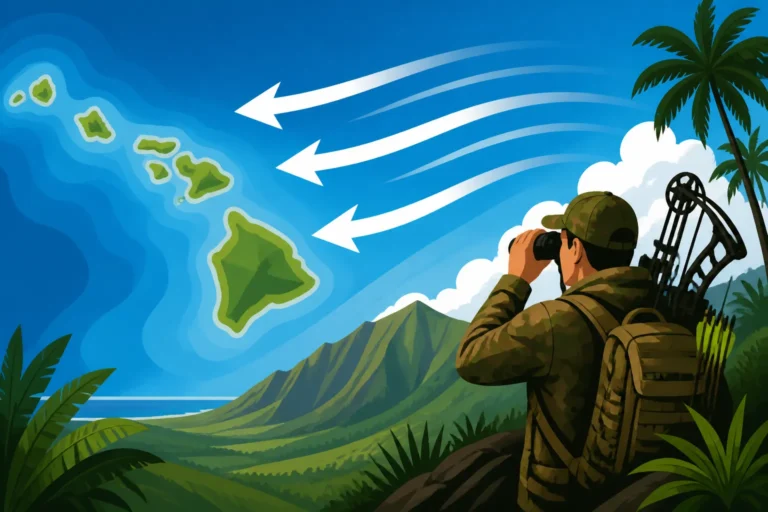
Hawaii's landscape is incredibly varied, and each type of terrain demands different bowhunting tactics. On islands like Maui or Lanai, you'll encounter vast open areas, often covered in kiawe (mesquite) trees, dry grasses, and lava flows. Here, the strategy often revolves around glassing from a distance, identifying animals, and then carefully planning a stalk, utilizing every bit of cover like small depressions, kiawe thickets, or volcanic features. The wind is notoriously shifty in Hawaii, especially in gulches and near coastline, making scent control and reading thermals critical. This type of hunting is physically demanding, involving long walks and careful movements over uneven, sometimes brittle ground.
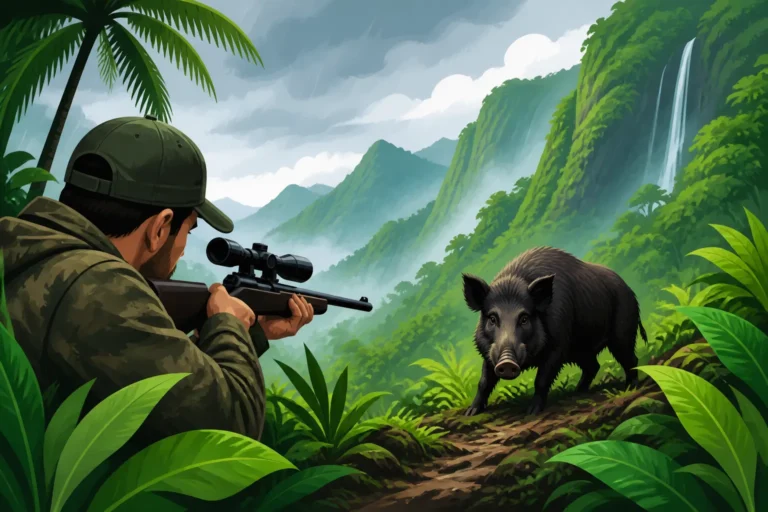
Conversely, on islands like Hawaii Island or parts of Oahu and Kauai, you might find yourself in incredibly dense, wet rainforests. Here, visibility can be limited to mere yards, and stalking becomes a slow, methodical still-hunt. Animals like feral pigs often frequent these areas, leaving clear sign in the muddy trails. Finding Pigs in Hawaii's Rainforest Gulches requires stealth, patience, and often relying more on sound than sight. The thick vegetation works both for and against you, providing cover for stalks but also limiting shooting lanes. Learning to navigate a Hawaii Gulch System quietly is an art form. You'll need to be proficient at snap shooting at close range, sometimes with limited movement.
Scouting and Locating Game in Archery Windows
The extended archery seasons offer an incredible advantage: more time for thorough scouting. Instead of a frantic pre-season rush, you can spread your scouting efforts throughout the year, observing animal patterns, identifying bedding and feeding areas, and locating water sources, especially during dry spells. Animals in Hawaii often establish very predictable routines around food and water, which can be critical for bowhunters needing close range opportunities.
Look for fresh tracks, droppings, rubs (especially from Axis bucks), and wallows (for pigs). Pay attention to prevailing wind patterns and how they swirl in various terrain features. If you're hunting Axis deer, understanding When Axis Deer Antlers Are in Velvet and how their year-round rut influences their movements can be a game-changer. For pigs, look for areas of rooted-up ground near food sources like guava, job's tears, or wild taro. Utilizing trail cameras can be incredibly effective in pinpointing animal travel routes and identifying specific animals, particularly if you can leave them out for extended periods during these long seasons. Use apps like onX Hunt for Hawaii Land Status to understand public and private land boundaries, helping you scout and hunt legally and effectively.
Close-Range Tactics: Stalking and Ambush Hunting
Bowhunting success, particularly in Hawaii, hinges on your ability to get within short shooting distances—ideally 20-40 yards. This means mastering either the art of the stalk or the patience of ambush hunting. For stalking, quiet movement is paramount. Pay attention to every footfall, utilizing soft ground when possible, and pausing frequently to scan and listen. The dense vegetation in many Hawaiian units means you'll need to be extra vigilant, using your eyes and ears to detect animals before they detect you.
Ambush hunting often involves identifying a high-traffic area, a well-used game trail, a water source, or a feeding area, and setting up to intercept animals. This could mean finding a natural blind, sitting patiently at the edge of a kiawe flat at first light for Axis Deer, Hawaii's Signature Big Game, or positioning yourself along a well-used pig trail in a guava thicket. Patience is key. With long archery windows, you have the luxury of returning to a promising spot multiple times, learning how the animals use it throughout the day or across different weather conditions. Calling Axis Deer With a Fawn Bleat can sometimes draw in curious does or even a cautious buck, but success often relies on meticulous planning and remaining absolutely still and silent until the perfect shot opportunity arises.
Navigating Regulations and Permits
Even with generous seasons, Hawaii is still an island state with unique regulations. Understanding the local rules is non-negotiable for a successful and legal hunt. Don't let the relaxed atmosphere fool you; proper procedure is essential.
Securing Your Hunting License and Archery Permits
Before you even think about stepping into the field with your bow, you absolutely need a Hawaii Hunting License. For nonresidents, this requires a bit of planning, including demonstrating completion of a Hunter Education course. The Nonresident Letter of Exemption is often needed if your hunter education wasn't done in Hawaii. You can typically purchase your license online through the GoHunt Hawaii portal, which streamlines the process significantly. It's vital to do this well in advance of your trip. Don't wait until the last minute, as unforeseen issues can arise.
In addition to the general hunting license, bowhunters will also need an Archery Permit. This is a separate endorsement that certifies your proficiency and grants you access to archery-specific seasons and units. Typically, you'll need to pass an archery proficiency test administered by DOFAW or provide proof of completion of an archery hunter education course from another state. Check the current requirements on the DOFAW website; sometimes you can provide proof of a previous archery license or certification. Always carry both your general hunting license and your archery permit with you when in the field, as enforcement officers can request them at any time.
Checking In and Out of Units
Hawaii employs a mandatory check-in/check-out system for nearly all public hunting units. This is a crucial part of wildlife management, allowing DOFAW to monitor hunter pressure and harvest success. Before entering any public hunting unit, you must check in, either physically at a designated hunter check station or increasingly, through the OuterSpatial App to Check In. This app has become an indispensable tool for many hunters, allowing for digital check-ins and check-outs from your smartphone, often even in areas with limited cell service.
Failing to check in or, more commonly, failing to check out at the end of your hunt, can result in penalties or fines. This might seem like a minor detail, but it’s taken seriously. What Happens If You Forget to Check Out? It could lead to complications with future permits or even charges for illegal hunting. Always double-check that your check-in and check-out are properly recorded. These procedures are in place to ensure fair chase, manage resources, and provide valuable data for future season planning.
Understanding Bag Limits and Tagging Requirements
Bag limits and tagging requirements vary significantly depending on the island, the unit, and the species you are pursuing. For species like feral pigs and goats, many units have generous, sometimes unlimited, bag limits, reflecting the need for population control. However, for desirable game like Axis deer or Mouflon sheep, bag limits are often restricted to one or two animals per season, and often require a specific permit-tag.
| Game Species | Island/Unit Example | Bag Limit (Archery) | Tagging Requirement |
|---|---|---|---|
| Axis Deer | Lanai Drawn Hunt | One either-sex per tag | Mandatory permit-tag |
| Axis Deer | Maui Year-Round Units | One per season/unit | Often general license |
| Feral Pig | Hawaii Island | Unlimited in most units | No specific tag, general license |
| Feral Goat | Kauai Canyon | Unlimited in most units | No specific tag, general license |
| Mouflon Sheep | Mauna Kea Archery | One ram per tag | Mandatory permit-tag |
When a permit-tag is required, such as for Axis deer on Lanai or Mouflon on Hawaii Island, you must purchase this tag in addition to your hunting license. These tags often come with specific instructions on How to Attach a Hawaii Tag to a Carcass immediately after the kill. Make sure the tag is visibly affixed and remains with the animal until it is processed. Understanding Hawaii Axis Deer Bag Limits or Mouflon Bag Limits by Island is critical to avoid any issues. Always consult the most current Hawaii Game Mammal Seasons and Hawaii's Hunting Units and How They Work regulations provided by DOFAW before heading into the field.
Disclaimer
The information provided in this guide is for general informational purposes only and is subject to change. Hunting regulations in Hawaii are complex and can vary significantly by island, unit, and species. Always consult the most current official regulations and advisories from the Hawaii Department of Land and Natural Resources (DLNR) Division of Forestry and Wildlife (DOFAW) before planning or engaging in any hunting activity. Hunters are responsible for knowing and adhering to all applicable laws and regulations.