Rules on Shooting From a Vehicle
It’s an age-old temptation for hunters, isn't it? You’ve been driving down a remote track, maybe scouting or heading into your unit, and suddenly, there they are – a magnificent pig or a beautiful axis deer, standing right there, just off the shoulder. Your heart races, the adrenaline spikes, and for a fleeting moment, you think, "If only I could just shoot from here." But let me tell you, that fleeting thought can lead to some serious trouble in Hawaii. This guide will meticulously break down the critical rules and regulations surrounding shooting from or across a vehicle on your Hawaii hunting adventures, ensuring you stay safe, legal, and ethical.
The Strict Law Against Shooting From or Across Public Roads
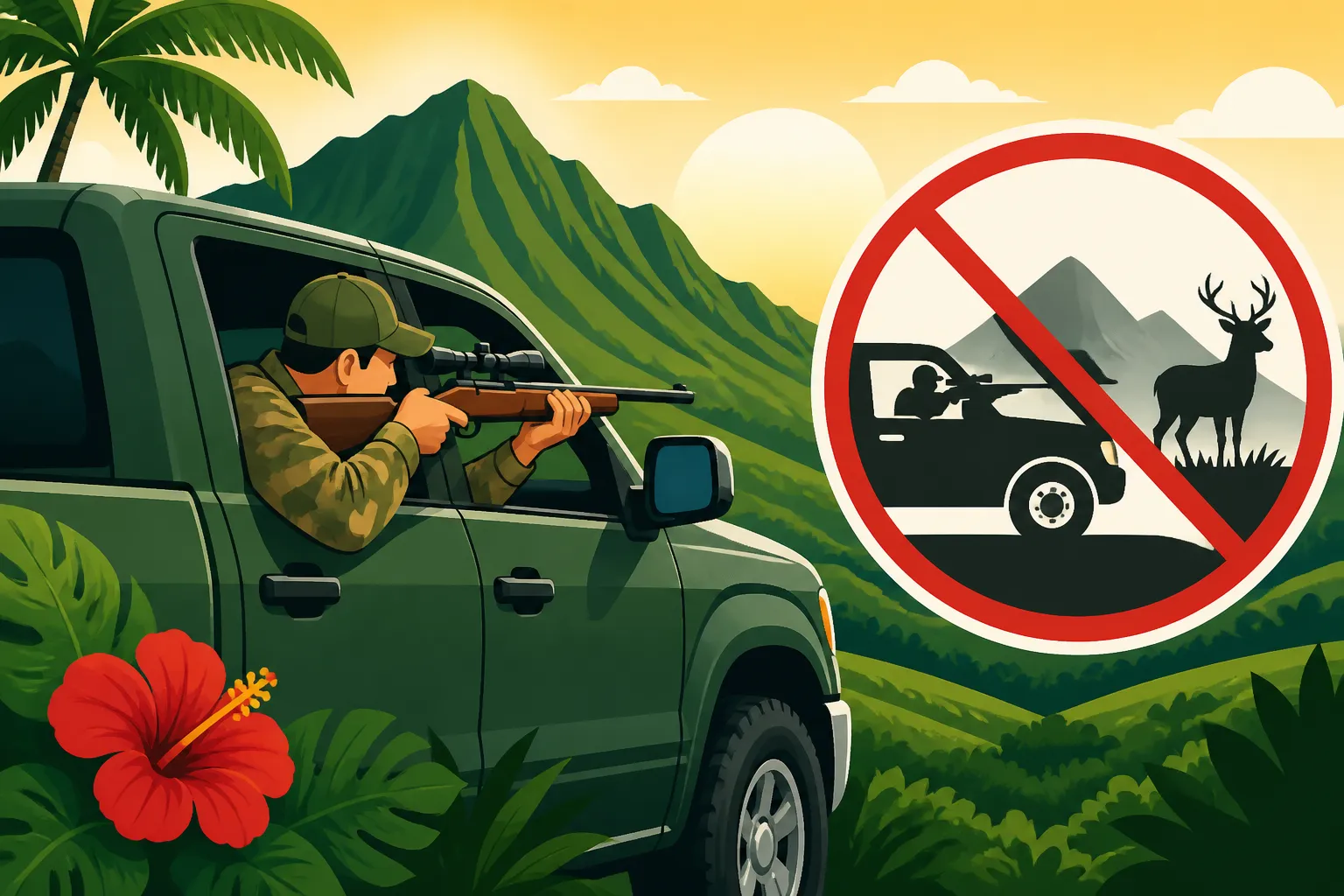
Hawaii’s hunting regulations are crystal clear and quite strict when it comes to firearms and vehicles. Simply put, it is illegal to shoot a firearm from, upon, across, or along any public road or highway. This rule isn’t just a suggestion; it’s a foundational safety measure designed to protect not only hunters but also the general public who might be using those same roads or adjacent lands. The moment you see game and consider taking a shot from your truck, ATV, or even parked vehicle, you are venturing into a very dangerous and illegal territory that carries significant repercussions.
It’s easy to get frustrated when that perfect animal pops up right by the road, but that momentary lapse in judgment isn't worth losing your license, paying hefty fines, or worse, causing an accident. Hawaii's diverse landscapes mean that even seemingly remote dirt roads can be used by hikers, farmers, or other outdoor enthusiasts. The rule is there for everyone's safety, and it's something every hunter needs to internalize before they even set foot (or tire) on a hunting unit.
Remember, the emphasis in Hawaii hunting is on fair chase and responsible participation. Shooting from a vehicle, even if you could guarantee safety (which you can't), undermines the spirit of hunting that demands effort, skill, and respect for the game and the land. It's a quick shortcut that the law, and ethical hunters, simply do not allow.
What Constitutes a "Vehicle" and a "Public Road"
Understanding the definitions here is crucial because they're broader than many realize. When the Hawaii Department of Land and Natural Resources (DLNR) talks about a "vehicle," they're not just referring to your everyday pickup truck on a paved highway. This definition extends to pretty much any motorized conveyance you can think of. We're talking about cars, trucks, Jeeps, all-terrain vehicles (ATVs), utility task vehicles (UTVs), dirt bikes, and even farm equipment if it’s being used in a hunting context.
It's not just about the vehicle being in motion either. If you pull over and park your truck on the shoulder of a road, hop out, and immediately shoot an animal standing in a field next to that road, you’re still in violation. The intent of the law covers the vehicle as the platform or immediate vicinity from which the shot is taken. You must be completely disassociated from the vehicle and safely off the road or right-of-way before even thinking about shouldering your weapon.
As for "public road," this also has a wide interpretation in Hawaii. It includes all state and county roads, paved or unpaved, major highways, and even those rough, dusty jeep trails that lead deep into the public hunting units. Many hunters, especially those new to the islands, might mistakenly think a remote two-track dirt road through a forest reserve doesn’t count, but it absolutely does. Furthermore, the rule often extends to the "right-of-way" associated with these roads, which can be a significant distance on either side, encompassing shoulders, ditches, and sometimes even fenced areas adjacent to the roadway. Always assume that if you drove to it, and it's not explicitly designated as a private hunting access trail on private property, it falls under this rule.
Why These Rules Exist
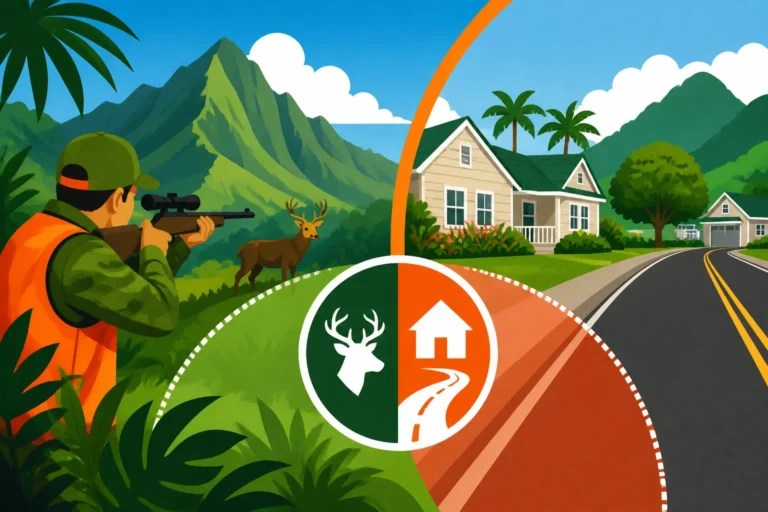
The reasons behind Hawaii's strict "no shooting from a vehicle" rules are deeply rooted in safety, ethical hunting practices, and the broader conservation effort. First and foremost is public safety. Hawaii's diverse landscapes are enjoyed by many different groups – hikers, birdwatchers, farmers, property owners, and other recreational users. A stray bullet from a shot taken carelessly from a vehicle could travel far beyond its intended target, putting innocent lives at risk. Given the close proximity of many hunting units to residential areas or popular recreational spots, this risk is simply unacceptable.
Beyond safety, these rules uphold the principle of fair chase. Hunting should be a challenge that requires skill, effort, and an understanding of animal behavior and terrain. Using a vehicle as a mobile hunting blind or a quick ambush platform eliminates much of that challenge. It removes the necessity for stealth, tracking, and understanding wind patterns, reducing the hunt to little more than a drive-by shooting. This diminishes the respect for the animal and the sport itself. For many of us, the true reward of hunting comes from the hard work and knowledge applied in the field, not from an opportunistic shot from a window.
Finally, these regulations help prevent poaching and uphold the integrity of hunting in the public eye. If shooting from vehicles were allowed, it would open the door for unscrupulous individuals to abuse the privilege, making it easier to take animals illegally or irresponsibly. Such incidents erode public trust and can lead to calls for tighter restrictions on all hunters, impacting the entire hunting community. By adhering to these rules, we demonstrate our commitment to responsible wildlife management and ensure that hunting remains a respected and viable activity in Hawaii for generations to come.
Exceptions and Nuances: When Vehicles are Part of a Legal Hunt
While the "no shooting from a vehicle" rule is a bedrock principle, it's important to understand that vehicles are not entirely banished from Hawaii hunting. They are, in fact, absolutely essential for accessing many of our remote and rugged hunting units. The key distinction lies in how you use your vehicle – as a tool for transportation and access, not as a shooting platform. Think of your truck or ATV as your legs to get you to the hunt, not a mechanical extension of your arm once you're there.
Many of Hawaii's hunting areas require a significant drive, often on unpaved roads that demand a 4WD vehicle. Without them, large sections of prime hunting ground would be virtually inaccessible. So, while you can drive your vehicle to a promising ridge or the edge of a kiawe flat, the moment you decide to actively hunt, the vehicle becomes secondary. You need to stop, secure your firearm, exit the vehicle, and move to a safe, legal position away from the roadway before any hunting activity, including scouting for a shot, begins. It's about dismounting and hunting on foot, the way hunting was meant to be.
This might seem like a small distinction, but it's one that conservation officers take very seriously. They're looking for signs that a vehicle was used to gain an unfair advantage or to take a dangerous shot. Your diligence in separating your hunting activity from your vehicle access is critical to staying on the right side of the law.
Using Vehicles for Access to Hunting Units
Let's be clear: using your vehicle to get to your hunting area is not only allowed but often necessary. Many of Hawaii's public hunting units, from the expansive slopes of Mauna Kea on Hawaii Island to the deep gulches of Molokai, are reached via a network of rough, unpaved roads and trails. Without a reliable 4×4 or ATV, you simply wouldn't be able to reach much of the prime habitat for pigs, goats, or axis deer. When you’re looking at something like Hunting Molokai's Axis Deer Country, you quickly realize how vital vehicle access is.
The trick is understanding where the "access" ends and the "hunting" begins. When you drive your truck down a two-track road, scanning the surrounding terrain for game, that's still considered access. However, if you spot an animal, you need to pull over completely off the road, turn off your engine, safely exit the vehicle, retrieve your weapon, and then proceed on foot to a position that allows for a safe and legal shot. This often means walking some distance away from the road, ensuring you have a clear backdrop and are not shooting across or along the road itself. It's a fundamental aspect of hunting Hawaii on foot without a truck once you've arrived at your desired drop-off point.
Furthermore, many units require hunters to check in and out, either physically at a hunter check station or digitally via apps like OuterSpatial. When Checking In and Out of Hawaii Hunting Units, you'll often use your vehicle to reach these points. The rules typically don't prohibit having a loaded firearm in your vehicle while traveling to and from a unit, as long as it's properly secured and not being used for hunting from the vehicle. Always double-check the specific unit rules on GoHunt or the DLNR website, as some areas might have additional restrictions on loaded firearms in vehicles.
Private Land Considerations
When it comes to private land in Hawaii, the rules on shooting from a vehicle can have some nuances, but generally, the principles of safety and ethical hunting still apply. If you're hunting on private ranch land, perhaps as part of a guided hunt or with landowner permission, the landowner may have their own specific rules regarding vehicle use. Some ranches might allow certain types of vehicle-assisted hunting in designated areas, or they might have specific trails where you can drive closer to game. However, even on private land, you absolutely cannot shoot from or across a public road or its right-of-way if it traverses or borders that property. Public road laws always supersede private land rules in that specific context.
It's paramount to clarify all rules with the landowner or your guide before your hunt begins. Never assume that because it's private land, all public hunting regulations are off the table. A reputable outfitter, like those offering Hawaii Private Ranch Hunts, will always brief you thoroughly on their specific protocols and ensure you understand the legal boundaries. They understand that maintaining a good relationship with state agencies and the public is vital for their business and for the future of hunting in Hawaii.
Even if a landowner permits you to take an animal from a vehicle on their private property, consider the ethical implications. Many hunters prefer to challenge themselves on foot, believing it’s more sporting. However, situations might arise, such as a hunter with a disability, where limited vehicle use might be part of an accessible hunting experience, provided it’s done safely and legally within the property boundaries and away from public thoroughfares. Ultimately, clear communication, respect for the law, and good judgment are your best allies when hunting private lands in Hawaii.
Here's a quick reference table to help visualize common scenarios:
| Scenario | Legal Status | Explanation |
|---|---|---|
| Shooting from a vehicle on a public road | Illegal | Directly violates state law, regardless of whether the vehicle is moving or parked. High risk to public safety and severe penalties. |
| Shooting from a vehicle on a private road | Generally Illegal/Discouraged | While some private landowners might permit it away from public view, it's typically frowned upon and dangerous. Public road laws still apply if within right-of-way. Always confirm with landowner. |
| Using a vehicle to drive to a hunting unit | Legal & Necessary | Essential for access. Loaded firearms may be in the vehicle (check local unit rules for specifics) but must not be used for shooting from the vehicle. |
| Spotting game from a vehicle, then exiting to shoot | Legal (if done correctly) | Stop, park completely off the public road/right-of-way, turn off the engine, exit the vehicle, retrieve your weapon, and move to a safe, legal position on foot before taking a shot. Ensure you are not shooting across or along the road. |
| Transporting legally harvested game in a vehicle | Legal | Once an animal is legally harvested and tagged (see Tagging an Animal Correctly in Hawaii), it can be transported in your vehicle. Ensure proper field dressing and cooling, especially in Hawaii's heat. |
Consequences of Violating Vehicle Shooting Rules
Let's not mince words: violating the rules against shooting from a vehicle in Hawaii can lead to some truly serious consequences. It's not just a slap on the wrist; these are offenses that can impact your hunting privileges, your wallet, and potentially even your freedom. The state takes these regulations very seriously because they are directly tied to public safety and responsible resource management. Ignorance of the law is never an excuse, and enforcement officers are vigilant, especially in areas where road hunting might be tempting.
Imagine planning a dream hunting trip to Hawaii, investing in licenses, tags, and travel, only to have it all derailed by a moment of poor judgment. The legal ramifications are designed to be a strong deterrent, and they effectively are. Beyond the official penalties, there’s also the significant damage to your reputation as a hunter and the broader perception of our hunting community. Every time someone breaks these rules, it fuels negative stereotypes and makes it harder for all of us to enjoy our hunting heritage. It’s a collective responsibility to uphold the highest standards of safety and ethics in the field.
Fines, License Revocation, and Equipment Confiscation
The penalties for shooting from or across a public road in Hawaii are substantial. First, you're looking at significant fines. These aren't small tickets; they can range into the hundreds or even thousands of dollars, depending on the severity of the offense and whether it's a repeat violation. These fines are often accompanied by court costs and administrative fees, quickly adding up to a hefty sum that could have been better spent on more hunting trips!
Beyond the financial hit, you face the very real possibility of having your Hawaii hunting license revoked. This isn't just a temporary suspension; it can be a lengthy revocation, potentially for multiple years, meaning you'll be completely shut out from all hunting activities in the state. For many passionate hunters, losing the privilege to hunt is far more impactful than any fine. Moreover, if you are a nonresident, this could affect your ability to get hunting licenses in other states, as most states share violation information. Getting caught often leads to serious Penalties for a Hunting Violation across the board.
To make matters worse, enforcement officers have the authority to confiscate equipment used in the commission of the crime. This could include your firearm, ammunition, and even the vehicle itself if it was instrumental in the violation. Imagine having your prized rifle or even your truck seized. This is a very real possibility and a powerful incentive to always operate within the bounds of the law. The financial and personal cost of such an incident can be devastating, far outweighing any perceived benefit of an illegal shot.
Public Perception and Ethical Hunting
Beyond the legal and financial penalties, violating vehicle shooting rules carries a heavy cost in terms of public perception and the overall standing of ethical hunting in Hawaii. In a state with unique ecosystems and ongoing debates about introduced species, the actions of hunters are constantly under scrutiny. When instances of unsafe or unethical hunting practices, such as shooting from a vehicle, come to light, it directly harms the image of all hunters. It reinforces negative stereotypes and provides ammunition for anti-hunting groups who advocate for more restrictive regulations or even outright bans.
Ethical hunting is about more than just following the letter of the law; it's about respecting the land, the animals, and our fellow citizens. It's about embodying responsible stewardship. Every time a hunter takes an illegal shot from a road, it undermines the tireless efforts of conservation organizations, responsible outfitters, and local hunters who work hard to demonstrate that hunting is a valuable tool for wildlife management and a cherished cultural practice. It makes it harder to secure access to Hunting Hawaii's Forest Reserves or to justify the continuation of vital programs.
Ultimately, we as hunters are ambassadors for our sport. Our actions in the field reflect on everyone who carries a license. By strictly adhering to rules like "no shooting from a vehicle," by ensuring we know Hawaii Blaze Orange and Safety Rules, and by making a conscious effort to hunt safely and ethically, we protect not only ourselves from legal trouble but also the future of hunting in Hawaii. Let's make sure that when we're out there, we're building a positive legacy, not chipping away at it.
Disclaimer
Please remember that hunting regulations in Hawaii are subject to change. While this guide aims to provide accurate and up-to-date information, it is your responsibility as a hunter to consult the most current regulations issued by the Hawaii Department of Land and Natural Resources (DLNR) Division of Forestry and Wildlife (DOFAW) before any hunt. Always verify season dates, bag limits, unit-specific rules, and legal weapon requirements. Safety should always be your top priority.