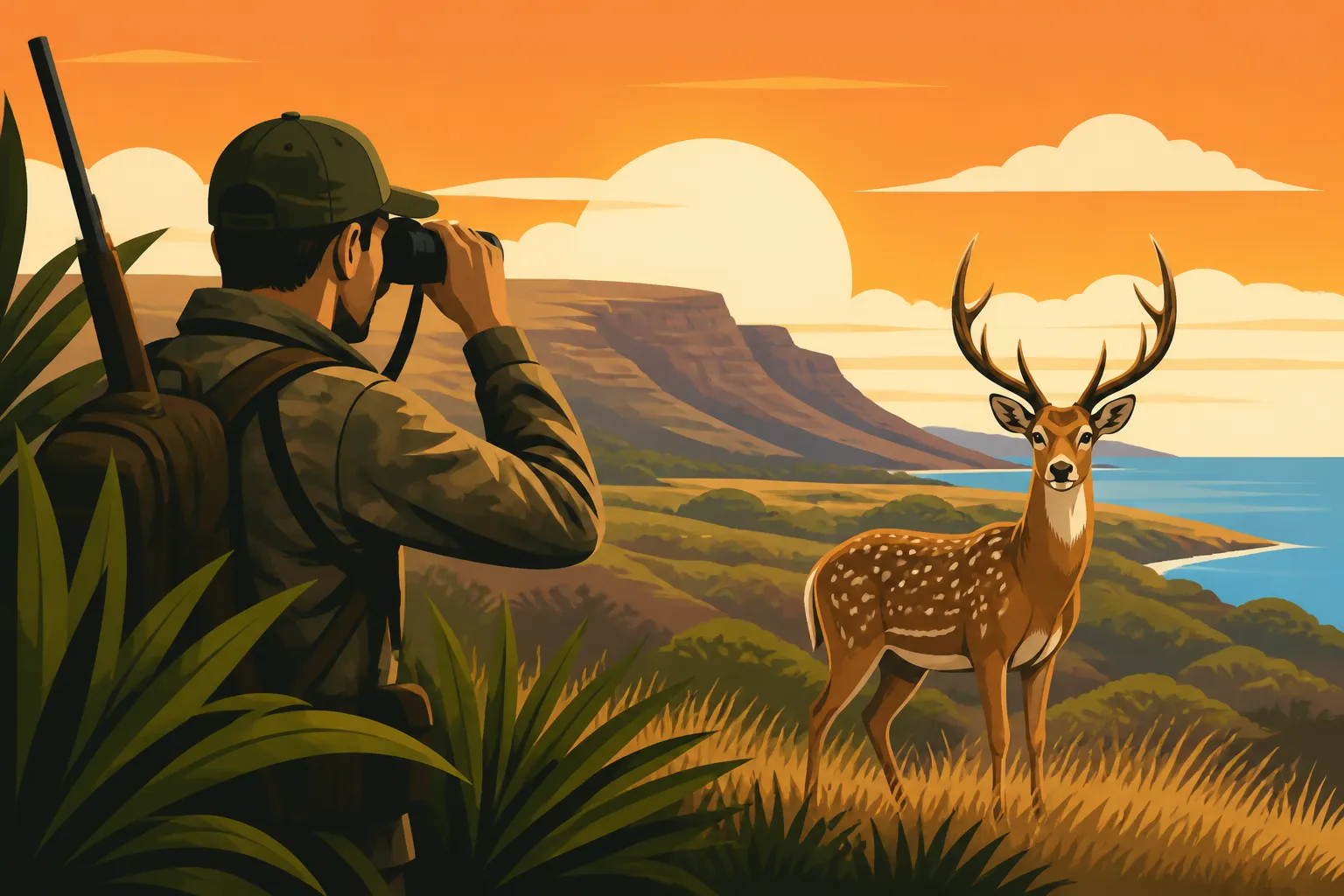
Hunting Lanai’s Drawn Axis Deer Weekends
For many hunters, the thought of pursuing axis deer in Hawaii conjures images of endless sunny days and abundant game. But for those eyeing the unique opportunity on Lanai, the reality is a little more complex, often kicking off with the anxiety of a limited-entry draw system. Getting one of those coveted tags for Hunting Lanai's Drawn Axis Deer Weekends is just the first step; truly understanding how to navigate the specific seasons, rules, and terrain of this island is what transforms a hopeful application into a successful hunt. This comprehensive guide is designed to peel back the layers of this particular challenge, offering seasoned insights to help you make the most of your hard-earned Lanai permit.
Understanding the Lanai Drawn Hunt System
The Lanai axis deer hunt isn't your typical over-the-counter affair. It's a special occasion, limited by design to manage the island's axis deer population and provide a high-quality hunting experience. This means navigating a specific lottery system and understanding the unique parameters that govern these coveted weekends. It’s a process that can feel daunting, especially for those unfamiliar with Hawaii's particular regulations, but once you break it down, it becomes much clearer.
The Lottery Process and Eligibility
Every year, thousands of eager hunters, both residents and non-residents, throw their hats into the ring for a chance at a Lanai axis deer tag. The drawing is competitive, reflecting the unparalleled demand for hunting these beautiful animals in such a unique setting. To even be eligible, you'll need to possess a valid Hawaii hunting license, which is your baseline entry requirement. For residents, the cost of this license is typically lower, a nod to their ongoing contribution to the state's economy and conservation efforts. Non-residents face a higher fee, a common practice across states to balance local access with out-of-state interest.
The application period for these drawn hunts is crucial and strictly adhered to by the Department of Land and Natural Resources (DLNR), Division of Forestry and Wildlife (DOFAW). Miss the deadline, and you're out of luck for the season. Historically, these deadlines fall in the late spring or early summer, with results typically announced a few weeks later. The application itself is usually submitted through the state's online portal, often powered by systems like GoHunt Hawaii, which streamlines the process. When applying, you'll often have the option to select your preferred hunting dates or weekends, though securing your first choice is far from guaranteed given the sheer volume of applicants. It's worth noting that typically, a hunter can only be drawn for one specific weekend and one type of tag per season, ensuring fairness and spreading the opportunity. Understanding how the Lanai Axis Deer Draw Works is absolutely fundamental.
Decoding the Drawn Weekend Calendar
Once the draw results are out, successful applicants are assigned specific weekends. These are not open-ended seasons; they are tightly scheduled, typically running from October through January, though specific dates can shift slightly year to year based on various factors, including deer population assessments and environmental conditions. Knowing When Lanai's Axis Deer Rifle Season Runs is key for planning your travel and time off. Each drawn weekend is a designated Friday, Saturday, and Sunday, giving hunters a concentrated window to pursue their animal. This compressed timeframe means every moment on the island counts, requiring meticulous planning and efficient execution.
The staggered nature of these weekends means that hunting pressure fluctuates, but generally, Lanai's public hunting units, specifically Unit 1, see significant activity. Hunters often find themselves sharing the landscape, so understanding how to be courteous and effective in a shared space is paramount. There are typically eleven such rifle weekends, creating a continuous flow of hunters throughout the prime fall and winter months. These specific windows are designed to maximize opportunity while still controlling impact, a delicate balance in game management. It's vital to remember that these are not flexible dates; if you're drawn for a specific weekend, that's when you hunt. There are no deferrals or swaps, emphasizing the need for solid logistical planning well in advance.
Permit-Tags and Bag Limits
A successful draw application will grant you the opportunity to purchase a permit-tag. This tag is your legal authorization to harvest an animal. For Lanai axis deer, the standard offering is typically an "either-sex" tag. This means you are permitted to harvest one axis deer, regardless of whether it's a buck or a doe. This flexible tag provides hunters with more opportunities for success, as locating and harvesting any legal animal fulfills the tag requirement. Understanding What One Either-Sex Tag Means on Lanai can simplify your hunt strategy.
However, sometimes special lottery hunts or landowner tags might offer slightly different configurations, like a buck-only tag. Always double-check the specific regulations associated with your drawn permit for that particular season. The bag limit is strictly one axis deer per hunter per drawn season. This isn't a place where you can fill multiple tags in one weekend. This single-animal limit reinforces the conservation aspect of the hunt, ensuring sustainable harvesting while still providing a challenging and rewarding experience. This system also means that every stalk, every shot, carries significant weight. Make sure you carry your tag and license with you at all times while afield, and know the proper procedure for attaching it immediately upon harvest.
Preparing for Your Lanai Axis Deer Hunt
Lanai offers a hunting experience unlike almost anywhere else, blending rugged terrain with stunning views. But this unique environment also demands a unique approach to preparation. You can't just show up with your rifle and expect success; the island will test your physical limits, your gear, and your planning acumen.
Physical Fitness and Gear Essentials
Lanai's hunting grounds, particularly within Unit 1, can be incredibly demanding. You'll encounter a diverse landscape, from rolling hills covered in kiawe and haole koa to steep gulches and surprisingly dense patches of forest. The constant elevation changes, coupled with the often-dry, loose soil and sharp volcanic rock, make for challenging hiking. This isn't a flatland hunt; expect to cover significant mileage on foot, often in warm, humid conditions. Building up your endurance and leg strength is paramount. Long hikes with a weighted pack – mimicking the weight of your gear, water, and eventually, meat – will pay dividends. There's nothing worse than being physically broken down on day one of a three-day hunt.
When it comes to gear, durability and functionality are key. Sturdy hiking boots are non-negotiable; they need to offer excellent ankle support and a stiff sole to handle the uneven ground and thorny vegetation. Many hunters opt for gaiters to protect their lower legs from thorns and debris. Lightweight, breathable clothing that can handle both heat and potential evening coolness is essential. Think layers. Optics are another critical component for hunting Axis Deer in Hawaii. A good pair of binoculars (10×42 or 12×50) and a spotting scope are invaluable for Glassing Lanai's Open Ridgelines, allowing you to locate deer from a distance and plan your approach. Don't forget a reliable backpack with enough capacity for water, snacks, first-aid, a knife, game bags, and an emergency shelter. Always have a headlamp, even if you plan to be back before dark, because you never know when a long recovery might extend into the night.
Scouting and E-Scouting Strategies
With limited hunting days, maximizing your time on the ground is critical, and that starts long before you even board a plane. E-scouting has become an invaluable tool for hunters planning a Lanai trip. Utilizing satellite imagery and topographic maps through platforms like onX Hunt or GoHunt allows you to analyze terrain features, identify potential water sources, locate natural travel corridors, and mark areas of dense cover where deer might bed down. Look for saddles between ridges, distinct elevation changes, and the edges of kiawe thickets where deer like to browse and hide from the sun.
While on-the-ground scouting might be limited for out-of-state hunters, residents who can make pre-season trips gain a significant advantage. Walking a unit, even without a weapon, helps you understand the scale of the terrain, identify game trails, and find hidden springs or seeps that might not be obvious on a map. Pay attention to droppings, tracks, and rub lines. Even without a physical presence, many hunters connect with local hunting forums or social media groups to gather intel. Be respectful and understand that local knowledge is hard-earned, but sometimes a friendly inquiry can yield helpful tips about general deer patterns or current conditions. The more informed you are before your boots hit the dirt, the less time you'll waste trying to understand the lay of the land during your precious hunting weekend.
Travel Logistics: Flights, Ferries, and Rentals
Getting to Lanai requires a bit of logistical choreography. Most hunters fly into Honolulu (Oahu) or Kahului (Maui) first. From there, you'll either take a small commuter flight directly to Lanai's tiny airport (LNY) or, more commonly, catch the Expeditions ferry from Lahaina Harbor on Maui to Manele Bay on Lanai. The ferry ride is scenic and relatively quick, but it's important to account for its schedule, especially if you're bringing a firearm. If you're flying with a firearm, you'll need to declare it with your airline and adhere to all TSA and airline regulations, which can be stringent. If you rent a rifle from a Hawaii guide, this simplifies things significantly, but remember, guides are not permitted on public land hunts on Lanai.
Once on Lanai, a reliable vehicle is essential. The public hunting unit roads are often unpaved, rough, and require high clearance, if not full 4×4 capability, especially after rain. Many rental companies on Lanai offer Jeeps or trucks that are better suited for the rugged terrain. Book your vehicle well in advance, as options can be limited. Don't underestimate the time it takes to get from the ferry dock or airport to your lodging and then to the hunting unit. Every minute counts on these short weekends. Most hunters stay in Lanai City, which offers limited accommodations from hotels to vacation rentals. Plan your meals, too, as options are few and far between once you leave the main town. Having a cooler with ice to keep drinks and snacks, and eventually meat, chilled is crucial.
Key Tactics for Hunting Lanai's Axis Deer
Lanai's axis deer are notoriously sharp, having adapted to the island's unique pressures. They are wary and can disappear into seemingly sparse cover with remarkable speed. To consistently find success, hunters need to employ a blend of patience, keen observation, and well-honed tactical skills.
Spot-and-Stalk in Open Country
The predominant hunting method on Lanai, especially in Unit 1 and the more open kiawe flats, is spot-and-stalk. This technique is incredibly effective for axis deer, which often feed in open areas at dawn and dusk. The process begins with finding a high vantage point, preferably before first light, to glass expansive areas. Use your binoculars and spotting scope to meticulously scan every fold in the terrain, every patch of shade, and every edge of cover. Axis deer, with their distinctive white spots, can blend surprisingly well into the dry, patchy landscape. Look for movement, a flick of an ear, or the glint of an antler. Once an animal or group of animals is spotted, the real work begins.
Planning your stalk is critical. Analyze the wind direction, the terrain (identifying any draws or rises that can provide cover), and the deer's likely travel path. Axis deer have an incredible sense of smell and hearing, so staying downwind and moving quietly are non-negotiable. Often, stalks can be long, tedious affairs, sometimes taking hours to close the distance. Patience is paramount; rushing a stalk almost guarantees being busted. Use every bit of available cover, even small bushes or depressions, to break up your silhouette. The goal is to get within comfortable shooting range, ideally within 200-300 yards for most rifle hunters, before the deer detect your presence. This is where mastering Spot-and-Stalk Tactics on Open Country truly pays off.
Hunting Water Sources and Feeding Areas
In Lanai's often dry environment, water is life, and axis deer are no exception. During periods of drought or in the drier parts of the season, water sources become natural magnets for deer. These can range from small, man-made guzzlers or stock tanks to natural seeps in gulches that retain moisture. Identifying these critical water points through e-scouting or pre-hunt scouting can give you a significant advantage. Positioning yourself near a known water source, especially during midday when deer might be seeking relief from the heat, can be a highly effective tactic.
Similarly, axis deer are grazers and browsers, and their feeding habits dictate their movement patterns. They prefer palatable grasses and browse, and areas with lush kiawe pods or certain types of forage will attract them. These feeding areas are prime locations to focus your efforts at first light and last light. Look for fresh tracks, droppings, and browsed vegetation. Hunting a Kiawe Flat for Axis Deer, particularly those with a mix of open areas for grazing and dense patches for bedding, can be incredibly productive. When hunting these areas, remember that deer will typically move from bedding cover to feeding areas, and then to water. Understanding this natural circuit allows you to intercept them.
Understanding Axis Deer Behavior and Rut Cycles
Axis deer behavior is influenced by several factors, including time of day, weather, and their unique breeding cycle. Unlike many deer species that have a distinct annual rut, axis deer can breed year-round in Hawaii. However, there are peak periods of rutting activity, often centered around late spring and summer into early fall. While your drawn hunt weekends usually fall outside the very peak of the rut, bucks will still be responsive to calls and often more vocal than other deer species. Learning to mimic a fawn bleat or a young buck's grunt can sometimes draw in a curious or dominant buck, especially if you're Hunting Axis Deer Under a Full Moon which can influence their nighttime activity.
Understanding their daily patterns is equally important. Axis deer are most active during the cooler parts of the day – dawn and dusk. They will often bed down in dense cover during the heat of midday. Observing their patterns from a distance can reveal their preferred travel routes between bedding, feeding, and watering areas. Additionally, understanding the dynamics of their herds is useful. Axis deer often travel in larger groups than other deer, with a dominant doe leading the way. If you spot a group, watch their behavior; a sudden alert from one deer can spook the entire herd. Always be mindful of the wind, as it is perhaps the most critical factor when approaching these sharp-sensed animals.
Navigating Lanai's Unique Hunting Units
Lanai offers a unique hunting landscape, predominantly centered around a single public hunting unit. However, within this unit, there are distinct geographical features and vegetation types that demand different approaches. Knowing these nuances is essential for any hunter hoping to fill their tag.
Unit One: The Core Hunting Zone
Lanai's Unit 1 is the primary public hunting area for axis deer, encompassing the central and western portions of the island. This sprawling unit offers a vast amount of challenging terrain, characterized by rolling hills, steep ravines, and a mix of open grasslands with dense kiawe and haole koa thickets. The unit is crisscrossed by old ranch roads and trails, some of which are accessible by 4×4 vehicle, but many areas require walking in. This is where most of the drawn hunt weekends take place. The sheer size and varied topography of Unit 1 mean that hunters need to be prepared for a wide range of conditions.
Historically, the western side of the unit, closer to the old Lanai City landfill, has been known for its higher deer density, but deer are spread throughout the unit. Areas like Kaiholena and Maunalei Gulch are well-known hotspots but also tend to see higher hunting pressure. To find success, you'll often need to push beyond the easy-access roads and into the deeper gulches and more remote ridges. This requires good physical conditioning and a willingness to explore. Always remember that guides are not permitted on public land, meaning you're Hunting Lanai Without a Guide, relying solely on your own skills and preparation. This makes detailed map work and GPS navigation absolutely critical for staying found and productive.
Upper Ridgelines and Dry Kiawe Flats
The upper ridgelines of Lanai provide excellent opportunities for spotting deer from a distance. These elevated positions, often windswept, offer expansive views of the lower slopes and valleys. Hunters frequently position themselves on these ridges at first light, glassing patiently for deer moving from their nighttime feeding areas to their daytime bedding grounds. The key here is patience and thorough glassing. Axis deer can be surprisingly camouflaged, especially when bedded down in patchy shade. Once spotted, a strategic approach from the ridgeline, using the terrain to mask your movement, can lead to a successful stalk.
Conversely, the dry kiawe flats, particularly those at lower elevations, are critical habitat for axis deer. These thorny, dense forests provide excellent cover and browse, offering both food and sanctuary from the sun and predators (of which there are none for axis deer in Hawaii). Hunting these flats requires a different approach. Spot-and-stalk can be challenging due to the limited visibility and noisy underfoot conditions. Still-hunting, moving slowly and quietly through the kiawe, pausing frequently to listen and scan, can be more effective. Pay close attention to fresh tracks and heavily browsed areas. Deer will often be found bedded deep within these thickets during the middle of the day, making for challenging but often rewarding close-quarters encounters.
Understanding Public vs. Private Boundaries
While Unit 1 is public land, Lanai also has significant tracts of private land, primarily owned by Pulama Lanai (formerly Castle & Cooke). These private lands are usually off-limits to public hunters unless specific permission or a paid hunt is arranged directly with the landowner, which is not applicable for the drawn public hunt weekends. It is absolutely critical for public land hunters to understand and respect the boundaries between public and private land. These boundaries are often well-marked with signs, fences, or natural features, but in remote areas, they can be less obvious.
Using a reliable GPS app with property boundaries, such as onX Hunt, is an indispensable tool for preventing accidental trespass. Penalties for trespassing can be severe and can jeopardize your hunting privileges. Always double-check your position, especially when pursuing a wounded animal that might cross a boundary. It's a hunter's responsibility to know exactly where they are at all times. This awareness not only keeps you legal but also fosters a positive relationship between the hunting community and private landowners, which is vital for maintaining future access.
| Lanai Hunting Area Feature | Characteristics | Hunting Tactic | Key Consideration |
|---|---|---|---|
| Upper Ridgelines | Open, windswept, high elevation, panoramic views. Sparse vegetation. | Spot-and-stalk (long-distance glassing) | Wind direction is crucial; exposed to elements. |
| Dry Kiawe Flats | Dense, thorny kiawe and haole koa, patchy grass, low visibility. | Still-hunting, tracking, patience | Thorns, limited visibility, noisy ground. |
| Deep Gulches / Ravines | Steep sides, varying vegetation, natural travel corridors, potential water. | Ambush points, still-hunting along contours | Physical exertion, limited visibility, thermals. |
| Water Sources | Guzzlers, seeps, stock tanks. Often surrounded by denser vegetation. | Stand/blind hunting (if allowed), ambush points | Best during dry periods; check regulations on blinds. |
| Old Ranch Roads | Unpaved, rough, varying accessibility, can be game trails. | Access, glassing from vehicle (ethical distance), walk-in | Can have high pressure; respect vehicle rules. |
Post-Hunt Considerations and Logistics
The hunt doesn't end when you pull the trigger. In Hawaii's unique environment, particularly on an island like Lanai, the post-harvest process is as critical as the hunt itself. From immediate field care to transporting your meat across the channel, every step requires careful attention to detail.
Field Care and Cooling Meat in Hawaii's Heat
Hawaii's climate, with its consistent warmth and humidity, presents a significant challenge for game meat preservation. Unlike colder climates where an animal can hang for a while, spoilage begins rapidly here. Immediate and thorough field dressing is absolutely essential. As soon as you harvest an axis deer, get to work. Gut the animal quickly, removing all internal organs to facilitate cooling. If possible, split the brisket and pelvic bone to allow for maximum airflow. Carrying game bags specifically designed for quarters is highly recommended, as they protect the meat from flies and debris while allowing it to breathe.
The next critical step is rapid cooling. This usually means quartering the animal in the field. Breaking the deer down into manageable pieces allows you to pack them into coolers with ice as quickly as possible. Many successful Lanai hunters bring multiple large coolers, pre-chilled with block ice, to the island. Pack meat directly on ice, ensuring good contact and drainage to prevent the meat from sitting in water. If you can, get the meat out of the sun and into your iced coolers within an hour or two of harvest. Learning how to properly Field Dressing Axis Deer in Hawaii Heat and then Cooling Meat Fast on a Hawaii Hunt is a skill that will save your venison. Remember to keep a separate cooler for your cape if you plan on a shoulder mount, as capes spoil even faster than meat.
Meat Transport from Lanai to Other Islands
If you're a resident of another Hawaiian island or a non-resident flying out of Honolulu or Maui, transporting your hard-earned axis venison from Lanai requires careful planning. The inter-island ferry is the most common method. Your meat, packed in well-drained, secure coolers, can be loaded onto the ferry. However, it's crucial to ensure your coolers are sealed and clearly labeled. Many hunters double-bag their meat within the coolers to prevent any leaks, which would be an unpleasant surprise for fellow passengers and ferry staff.
If you're flying, especially inter-island on a commuter flight, check with the airline well in advance regarding their policies on transporting game meat. Some airlines have specific weight limits or packaging requirements. For those flying to the mainland, shipping your meat as checked baggage requires even more stringent adherence to airline and TSA regulations. The meat must be completely frozen solid and packaged in leak-proof containers (often hard-sided coolers taped shut). Always confirm these details with your airline before you even leave for your hunt. The last thing you want is to have to leave your meat behind because of a logistical oversight.
Reporting Your Harvest and Check-Out Procedures
Hawaii's hunting system, managed by DOFAW, requires hunters to check in and out of public hunting units, and to report their harvest. For Lanai's drawn hunts, this typically involves using the OuterSpatial app or a physical check station, depending on the specific unit and current regulations. Before entering the hunting unit, you must check in, indicating your presence and acknowledging the unit rules.
Upon completion of your hunt, whether successful or not, you are required to check out. This is a crucial step that allows DOFAW to monitor hunter activity and gather important data. If you were successful, you must also report your harvest. This usually involves providing details about the animal taken (sex, age class if discernible) and the location of the harvest. This data is vital for wildlife management, helping DOFAW assess population health and make informed decisions about future seasons and bag limits. Failing to check in, check out, or report your harvest can lead to penalties and potentially jeopardize your ability to hunt in Hawaii in the future. Make sure you understand all of the requirements for Checking In and Out of Hawaii Hunting Units. It’s a small but significant part of being a responsible hunter in the islands.
Disclaimer
Please note: Hunting regulations in Hawaii can change. This guide provides general information based on typical practices. Always consult the most current Hawaii Department of Land and Natural Resources (DLNR), Division of Forestry and Wildlife (DOFAW) regulations and season announcements before planning or embarking on any hunt.