What Happens If Weather Cancels Your Hunt
You’ve meticulously planned your Hawaiian hunting adventure, dreaming of the perfect shot on an Axis deer silhouetted against a setting sun or stalking a big boar in a dense rainforest. But then, the forecast takes a turn, and suddenly, the specter of a weather-related cancellation looms large, threatening to derail weeks or even months of anticipation. It's a frustrating, often disheartening situation, leaving you wondering what exactly happens next. This guide is here to walk you through the realities of weather-impacted hunts in Hawaii, explaining your options and how to navigate the unexpected.
The Unpredictable Nature of Hawaii Weather and its Impact on Hunts
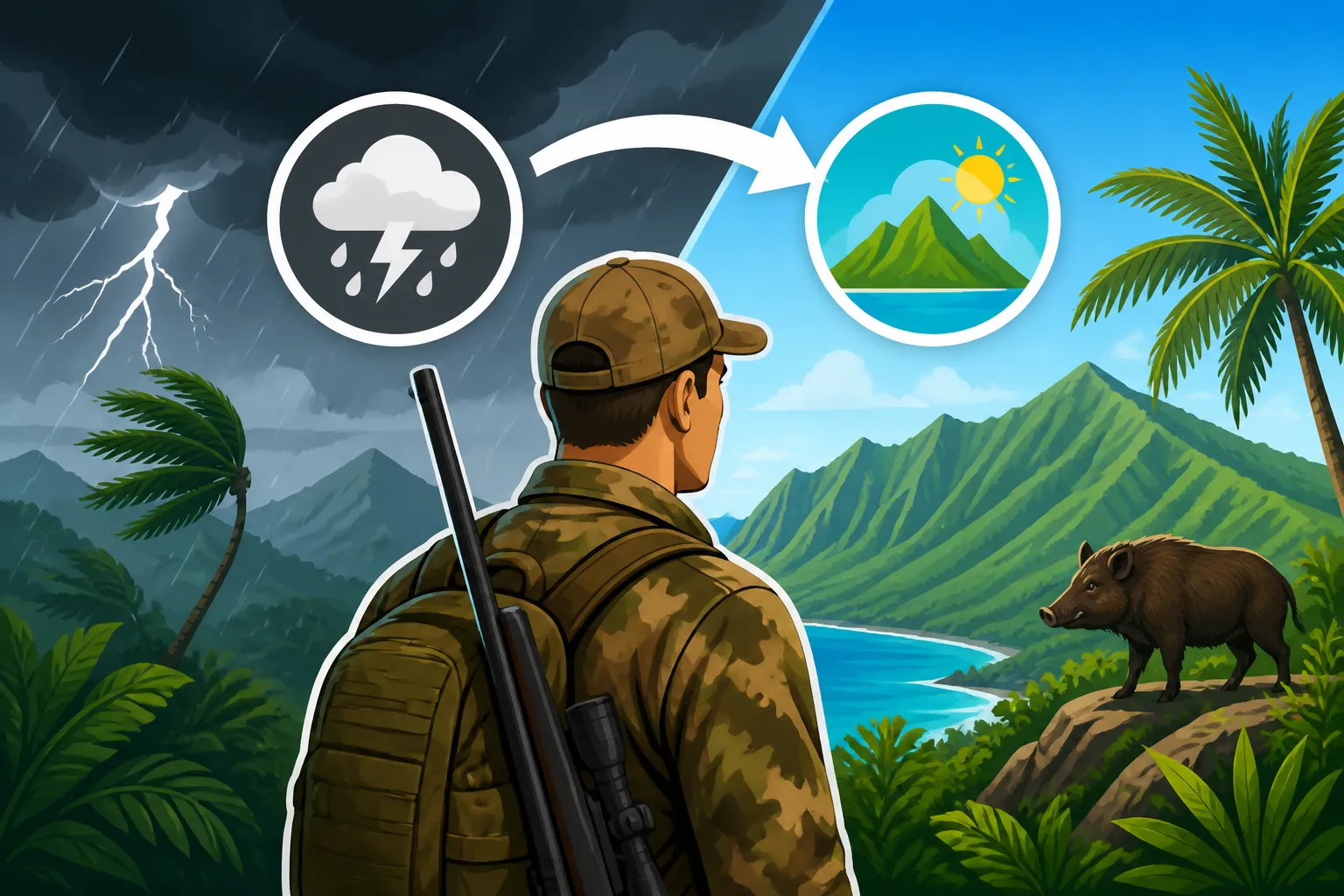
Hawaii, with its stunning beauty, also comes with incredibly dynamic and localized weather patterns that can change a hunt from possible to utterly impossible in a matter of hours. This isn't just about a little drizzle; we're talking about conditions that make travel dangerous, make tracking impossible, or even lead to official unit closures for public safety. Understanding these challenges is the first step in preparing for potential cancellations.
Heavy Rains, Flash Floods, and High Winds
Imagine waking up to the sound of torrential rain, not the gentle kind, but the type that turns dirt roads into muddy rivers and streams into raging torrents. Hawaii's steep terrain and thin soil layers are incredibly susceptible to flash floods. A localized downpour can make stream crossings impassable, wash out access roads, or even create dangerous conditions in gulches and low-lying areas. Hunting in these conditions is not only unproductive but incredibly risky. Similarly, high winds, often accompanying storms, can make bowhunting impossible, obscure visibility, and bring down dangerous branches in forested areas. You might be planning on hunting Hawaii's wet windward side and expect rain, but extreme versions of it can shut everything down.
When an outfitter or guide looks at a forecast calling for sustained heavy rain or high winds, their primary concern is safety. They’re not just thinking about their own well-being, but yours too. Getting stranded, injured, or facing an emergency in remote Hawaiian terrain is a serious matter, especially where cell service can be spotty at best. Many public hunting units, particularly on islands like Maui or the Big Island, have access roads that become impassable to even 4WD vehicles after heavy rain, making it impossible to even reach your hunting grounds, let alone retrieve an animal.
Volcanic Vog, Fire Risks, and Other Natural Hazards
Beyond rain and wind, Hawaii faces unique natural phenomena that can disrupt hunts. Volcanic vog, a hazy mixture of sulfur dioxide gas and particulate matter, is a reality on the Big Island, especially when Kilauea is active. While often just an annoyance, severe vog events can cause respiratory issues and dramatically reduce visibility, making hunting unsafe and difficult. Imagine trying to spot a Mouflon ram on a distant lava flow when the entire landscape is shrouded in thick haze.
Less common but equally impactful are fire risks. During prolonged dry spells, particularly on the leeward sides of islands like Maui or the Big Island, the kiawe and grasslands can become tinder-dry. Hunting Hawaii's Dry Leeward Country usually offers expansive views, but this also means potential fire hazards. If fire danger reaches critical levels, state and private lands can be closed to all access, including hunting, to prevent accidental ignitions. These closures, like those related to severe weather, are often made by the Hawaii Department of Land and Natural Resources (DLNR) and its Division of Forestry and Wildlife (DOFAW), often announced with little lead time. Knowing Where DOFAW Posts Season Announcements is crucial.
Navigating Outfitter Cancellation Policies: What Your Contract Says
When you book a guided hunt, whether through a local Hawaiian outfitter directly or via a platform like BookYourHunt, you're entering into a contract. This contract, often in the form of a signed agreement or the terms and conditions outlined in your booking, is the single most important document governing what happens if weather forces a cancellation. Many hunters are so excited about the trip that they skim this crucial part, only to find themselves in a difficult position later.
Reading the Fine Print: Weather Clauses
Most reputable Hawaiian hunting outfitters will have explicit clauses in their contracts regarding weather-related cancellations. These clauses are designed to protect both you and the outfitter from unforeseen circumstances. Here's what you might typically find:
- Outfitter-Initiated Cancellations: If the guide determines conditions are unsafe or the hunt area is inaccessible due to weather (e.g., flash flood warnings, extreme high winds, official unit closures), they will typically cancel the hunt. In these cases, most outfitters offer to reschedule your hunt for a future date, often within a certain timeframe, such as 12 to 18 months. Some might offer a credit towards a different hunt or even a partial refund, though full refunds for weather are less common due to the costs already incurred (prep, lost opportunity for other bookings).
- Hunter-Initiated Cancellations: If you decide to cancel your hunt due to weather that the outfitter deems manageable or safe, the terms are often less favorable. For instance, if it's just a rainy day but not dangerous, and you decide not to go, your deposit or full payment might be forfeited. This is why it's critical to communicate openly with your guide and trust their judgment on safety.
- "Act of God" Clauses: Many contracts include an "Act of God" clause, which typically covers events beyond human control, such as severe weather, natural disasters, or government-mandated closures. These clauses usually dictate that the outfitter is not liable for damages or a full refund, but will work with you on rescheduling.
Before you book, ask detailed questions about their specific weather policy. What constitutes an "un-huntable" day in their eyes? What happens if you can't make the rescheduled dates? Getting these answers in writing is incredibly important.
The Role of Communication and Flexibility
Once you’ve booked, maintaining open communication with your outfitter is paramount. As your hunt date approaches, especially in the week leading up to it, stay in touch with your guide. They live in Hawaii, they know the local microclimates, and they’ll have the most accurate, up-to-date assessment of conditions and potential impacts. Don’t hesitate to reach out if you see a concerning forecast. They might advise you to come as planned, or they might proactively suggest a reschedule if they foresee insurmountable issues.
For example, if you're booked for a Pig Hunting With Dogs in Hawaii trip, and a hurricane watch is issued, your guide will likely be the first to call you. Being flexible with your travel dates, if at all possible, can also be a huge asset. Sometimes, shifting your hunt by a day or two can mean the difference between hunting in safe, clear weather and battling a storm. This flexibility can be challenging, especially for non-residents flying in for a specific timeframe.
Your Options and Expectations When a Hunt is Called Off
So, the unfortunate call comes: your Hawaiian hunt is canceled due to weather. What now? The options available to you will depend heavily on your outfitter's policy and your own circumstances. It’s a moment of disappointment, but understanding your avenues forward can help manage the situation.
Rescheduling Your Hunt
The most common resolution for weather-related cancellations, especially those initiated by the outfitter, is rescheduling. Outfitters often try their best to accommodate hunters, understanding the effort and cost involved in planning such a trip. They'll typically offer alternative dates, sometimes within the same hunting season, or extend into the following year.
- Availability: Be prepared that rescheduling might mean waiting for popular dates or seasons to open up again. Peak times for Axis Deer Hunting in Hawaii or Mouflon Sheep Hunting on Hawaii Island can book up far in advance, so flexibility on your part will make the process smoother.
- Cost Implications: Generally, your deposit or full payment will be applied to the rescheduled hunt. However, be aware of potential price increases if you reschedule far into the future. Some outfitters may honor the original price, while others might apply current rates. This should also be clarified in their cancellation policy.
- Travel Costs: This is where it gets tricky. Outfitter cancellation policies almost never cover your personal travel expenses like flights, rental cars, or non-refundable accommodations. This is why travel insurance, especially a "Cancel For Any Reason" policy (though pricier), is often highly recommended for destination hunts. It's a hard lesson learned for many, but securing your own travel investment is your responsibility.
Refunds and Credits
While rescheduling is the norm, some outfitters might offer a partial refund or a credit if rescheduling isn't a viable option for you.
- Partial Refunds: Don’t expect a full refund for an outfitter-initiated cancellation due to weather. Outfitters incur overhead costs, administrative time, and often lose the opportunity to book another client for that slot. A partial refund, if offered, is usually a gesture of goodwill or a policy for specific circumstances.
- Credits for Future Hunts: A credit applied to a future hunt with the same outfitter is a common compromise. This keeps your investment with them and gives you a chance to rebook when conditions are better. If you used a booking service like BookYourHunt, they might also have specific policies for how credits are managed through their platform.
- Government-Mandated Closures: When DOFAW or another government agency closes a hunting unit (e.g., Hunting Lanai's Drawn Axis Deer Weekends could be affected by extreme weather), the situation is generally clearer. Outfitters are not to blame, and they often align their policies with allowing rescheduling or offering credits. If you're planning a public land hunt yourself, checking Hawaii's Hunting Units and How They Work and their current status is your responsibility, and government closures usually mean no refunds for licenses or tags from the state.
Being Prepared: Mitigating Risks and Planning for the Unexpected
While you can't control the weather, you can control how you prepare for its potential impact on your Hawaii hunt. Taking proactive steps can save you significant headaches, stress, and money if a cancellation occurs.
Comprehensive Travel Insurance
This cannot be stressed enough: for any destination hunt, especially one requiring flights and specialized bookings, invest in comprehensive travel insurance. This insurance should cover:
- Trip Interruption/Cancellation: To recoup costs if you have to cancel or cut your trip short due to covered reasons (which often include severe weather, airline delays, or medical emergencies).
- Medical Evacuation: Crucial in Hawaii's remote hunting areas where medical help might be hours away.
- "Cancel For Any Reason" (CFAR) Coverage: This is often an add-on, but it's the most flexible. It typically allows you to cancel for any reason not covered by standard policies and receive a percentage (e.g., 50-75%) of your non-refundable trip costs back. While more expensive, it provides the ultimate peace of mind for weather worries.
Always read the policy details carefully to understand exactly what is covered and what isn't, especially regarding weather.
Researching Outfitter Policies Thoroughly
Before you send that deposit, thoroughly vet your outfitter's cancellation and refund policies. Don't be shy about asking direct questions:
- "What happens if you, the guide, cancel due to unsafe weather?"
- "What if I, the hunter, need to cancel due to weather conditions that don't meet your 'unsafe' criteria, but I feel uncomfortable?"
- "What are my options if I can't make the rescheduled dates?"
- "Are there any fees associated with rescheduling?"
A reputable outfitter will have clear answers and be transparent about their terms. If they are vague or evasive, consider it a red flag. You can often find initial policy information on platforms like GoHunt or directly on the outfitter's website.
Planning for Buffer Days
If your schedule allows, consider building a few "buffer days" into your trip, especially if you're traveling a long distance for a short hunt. This could mean arriving a day early and staying a day late. These extra days can be invaluable if a weather delay pushes back the start of your hunt or if a unit closes for a day but reopens quickly. It gives you some wiggle room without completely derailing your plans. You could spend those extra days scouting areas, visiting local attractions, or doing some Hunting Hawaii's Game Bird Weekends if those seasons are open.
Checking Forecasts and Official Announcements
Stay vigilant with weather forecasts as your trip approaches. Use reliable local Hawaiian weather sources, not just national apps, as microclimates are significant here. Beyond general forecasts, keep an eye on official announcements from the Hawaii DLNR/DOFAW for public land closures. They will post updates regarding Hawaii's Fenced Conservation Boundaries or specific unit closures on their website. The OuterSpatial app, used for checking in and out of units, can also provide alerts.
| Cancellation Scenario | Typical Outfitter Response (General) | Hunter's Best Recourse | Travel Insurance Benefit (if applicable) |
|---|---|---|---|
| Outfitter cancels due to unsafe weather | Reschedule, credit for future hunt, or partial refund | Accept reschedule; if not viable, discuss credit/partial refund | Trip Cancellation/Interruption may cover non-refundable travel costs (e.g., flights) |
| Hunter cancels due to perceived "bad" but safe weather | Often forfeiture of deposit/payment per contract | Review contract; discuss options if significant extenuating circumstances | CFAR (Cancel For Any Reason) policy offers best coverage |
| Government (DOFAW) closes unit due to weather | Reschedule or credit for future hunt (similar to outfitter cancel) | Accept reschedule; check DOFAW for re-opening announcements | Trip Cancellation/Interruption likely to cover, as it's an unforeseen event |
| Hunter cannot make rescheduled dates | Loss of deposit/payment if not explicitly covered in policy | Understand policy before booking; CFAR helps here | CFAR is the most likely to provide any recovery |
Ultimately, while the disappointment of a weather-canceled hunt in Hawaii is real, being well-informed and prepared can significantly soften the blow. Do your homework, read the fine print, communicate openly, and consider protecting your investment with travel insurance. That way, even if the weather tries to call the shots, you’ll be ready to pivot and make the most of your Hawaiian hunting journey, perhaps even for another amazing adventure down the road.
Disclaimer
This article is for general informational purposes only and does not constitute professional advice. Laws, prices and regulations vary by location and change over time. Consult a qualified professional for guidance on your specific situation.