Inter-Island Flights With a Firearm
Traveling between Hawaii's islands with a firearm for a hunting trip can feel like navigating a maze of confusing rules and regulations, often leaving hunters worried about making a costly mistake or, worse, missing out on their hard-earned hunt. It's a common frustration, especially when you're trying to line up a trip to Molokai or Lanai from Oahu or the Big Island. This guide aims to clear up the uncertainty, walking you through the federal and state requirements to ensure your firearm travels smoothly and legally on inter-island flights.
Navigating TSA and Airline Rules for Inter-Island Travel
Before you even think about Hawaii's specific firearm laws, you first have to contend with the federal Transportation Security Administration (TSA) and the individual airline policies. These are the foundational rules that apply to all commercial flights within the United States, including those short hops between our beautiful islands. Missing a single detail here can lead to significant delays, confiscation of your firearm, or even missing your flight entirely, which is the last thing any hunter wants.
Checked Baggage Requirements for Firearms
The absolute first rule of flying with a firearm, whether it's an inter-island hop or across the country, is that it must be in your checked baggage. No firearms, loaded or unloaded, are ever permitted in carry-on luggage or accessible in the cabin. This rule is non-negotiable and applies universally.
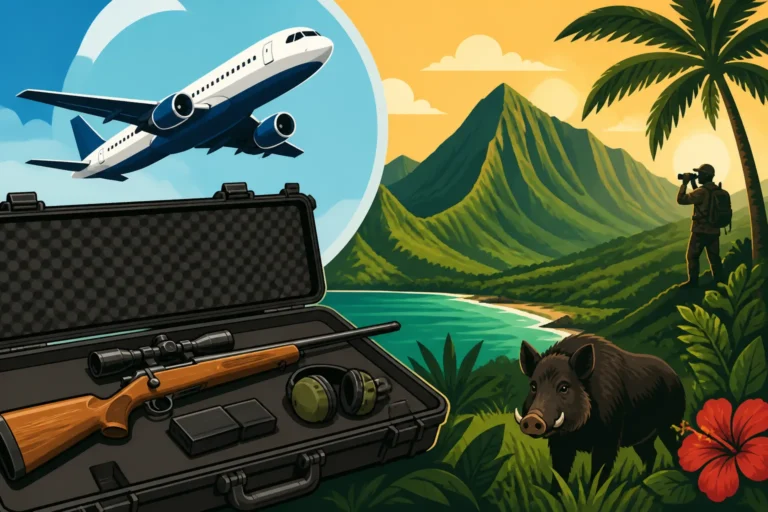
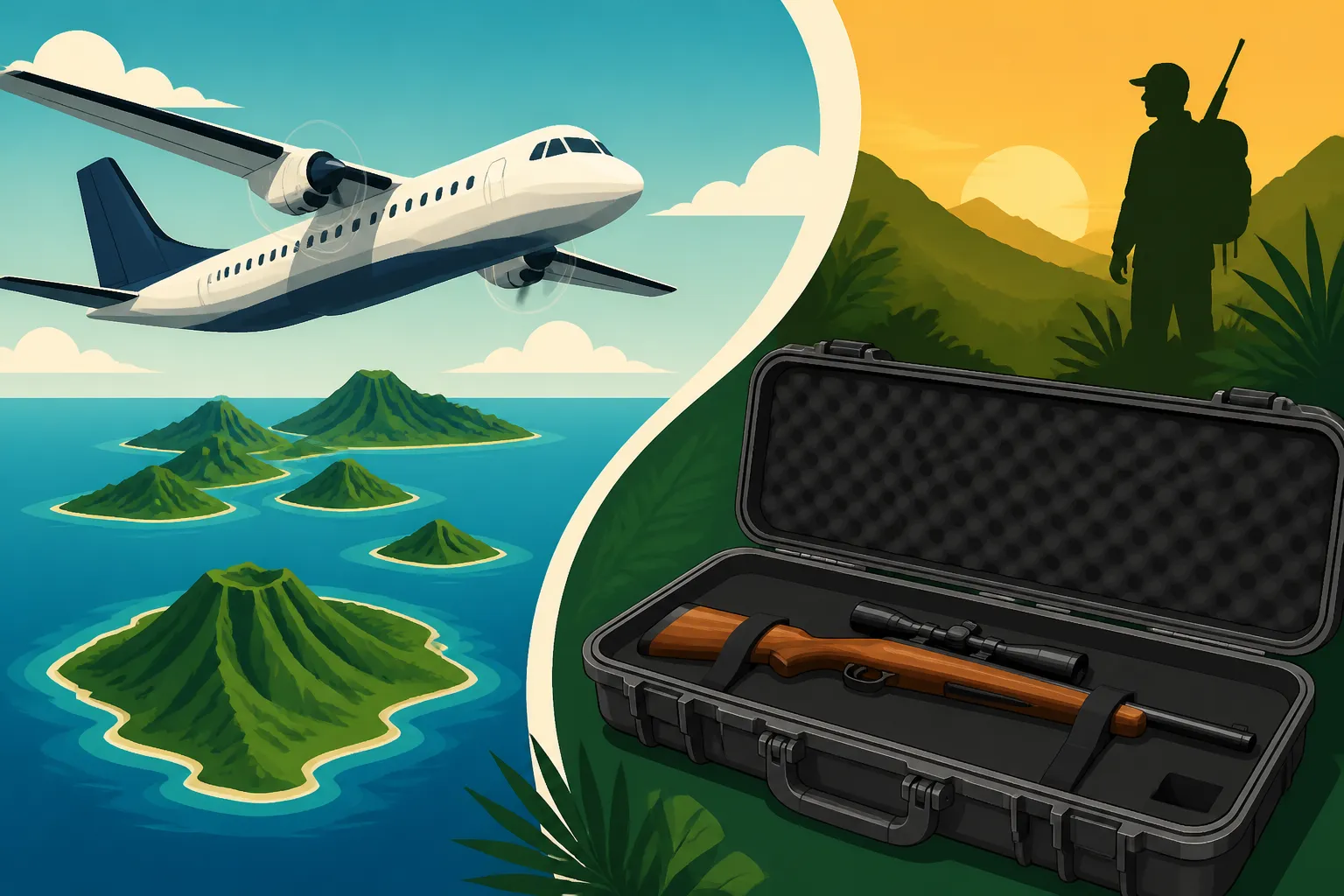
Your firearm needs to be unloaded and secured in a hard-sided container. This isn't just a suggestion; it's a hard requirement. The case must be capable of being locked, and it must be locked. You, and only you, should retain the keys or the combination to that lock. No airline personnel or TSA agent should ever have access to unlock your firearm case. Imagine flying to hunt Axis Deer Hunting in Hawaii or Hunting Molokai's Axis Deer Country only to find your firearm wasn't properly secured. The hard case protects your valuable equipment from damage during transit, but its primary purpose in this context is security. Think about the jostling baggage goes through; a soft case simply won't cut it for safety or security.
Ammunition Segregation and Packaging
A common point of confusion is ammunition. Just like your firearm, ammunition cannot travel in your carry-on luggage. It must also be in your checked baggage. However, and this is crucial, it generally cannot be packed in the same locked case as your firearm, unless specifically allowed by the airline and only if segregated within that case in an approved manner. Most airlines prefer and sometimes require that ammunition be packed separately from the firearm itself, in a distinct container.
Ammunition needs to be in its original manufacturer's packaging or a sturdy container specifically designed for ammunition, like plastic ammo boxes. Loose ammunition is a big no-no. It must be protected from accidental discharge. There are also quantity limits, typically up to 11 pounds (5 kg) gross weight per passenger, though this can vary by airline. Always check with your specific carrier beforehand. If you're bringing ammunition from the mainland for a multi-species hunt like Hunting Hawaii's Feral Pigs and Hawaii Game Bird Hunting, make sure you understand the total weight and packaging requirements for all your rounds. It's much easier to clarify these details upfront than to repack at the ticket counter while a line of impatient travelers watches.
Declaring Your Firearm at the Ticket Counter
This step is arguably the most critical and where many nervous moments happen for first-time firearm travelers. When you arrive at the airport, you must declare your firearm to the airline agent at the ticket counter. Do not try to sneak it through or assume they'll know. Honesty and transparency are paramount. You'll typically be asked to complete a declaration tag, which states that the firearm is unloaded. This tag is then usually placed inside the locked firearm case.
The airline agent will guide you through the process, which often includes a visual inspection by a TSA agent to ensure the firearm is unloaded and properly secured. This is where patience is key. Sometimes you'll walk your case to a special TSA screening area. Other times, they'll handle it right at the counter. Be prepared for questions, and simply answer truthfully and politely. Remember, these agents are simply doing their job to ensure everyone's safety and adherence to federal regulations. Trying to bypass this process or being evasive can lead to serious legal consequences. It's much like checking in for a unit through the OuterSpatial app for a public hunt; you have to follow the process correctly.
Understanding Hawaii State Law for Firearms on Inter-Island Flights
Beyond the federal and airline mandates, Hawaii has its own specific laws regarding firearms, particularly concerning registration. While the transport rules for inter-island flights are largely governed by federal aviation standards, the underlying legality of possessing that firearm in Hawaii is a state matter. This is where many visitors and even new residents get tripped up.
Hawaii's Firearm Registration Nuances
Hawaii is one of the few states that requires all firearms to be registered with the local police department. This applies whether you're a resident or a nonresident bringing a firearm into the state. If you initially flew into Hawaii from the mainland with your firearm, you would have had to register it with the police department in the county of your arrival within 48 hours of picking it up from the airline. For inter-island travel, this means your firearm should already be legally registered in the state.
An unregistered firearm, even if properly cased and declared for an inter-island flight, could lead to significant legal problems upon arrival at your destination island's airport, particularly if a law enforcement check happens. While police typically don't conduct routine registration checks on every inter-island firearm, if any issue arises, the lack of registration will quickly become a primary concern. Hunters often use resources like GoHunt or consult local guides to understand hunting seasons and areas, but it's equally important to use official state websites to confirm firearm registration requirements.
Permit-to-Acquire and Inter-Island Implications
It's important to differentiate between a "permit-to-acquire" and simple registration. In Hawaii, before you can buy a firearm, you need to obtain a permit-to-acquire from your local police department. This involves a background check, and there's a waiting period. For inter-island travel with a firearm you already own and have properly registered in Hawaii, you do not need a new permit-to-acquire for each trip. The existing registration covers your legal possession.
However, if you're traveling inter-island with the intention of selling or transferring a firearm to someone on another island, that transaction would fall under Hawaii's permit-to-acquire laws. Both the seller and buyer would need to follow the proper channels, including background checks and registration in the recipient's county. For the vast majority of hunters moving their personal gear for a hunt, this isn't an issue, but it's a nuance to be aware of. When considering a hunt on a specific island, whether through a platform like BookYourHunt or direct contact with an outfitter, ensure all your firearm paperwork is in order for your originating island.
General Rules for Different Islands
While Hawaii's firearm registration laws are county-specific (i.e., Honolulu, Maui, Hawaii, Kauai Counties), the rules for inter-island air travel itself are uniform across the state, adhering to federal TSA and airline regulations. What might differ are the specific local ordinances regarding hunting in certain areas or carrying firearms outside of the airport environment on each island. For instance, Hawaii Island Hunting Unit Seasons or Maui's Year-Round and Seasonal Units may have different restrictions on weapon types or open carry.
It's vital to research the specific regulations for your destination island's hunting units before you fly. While the flight itself won't change, your ability to legally transport and use that firearm after you land will depend on local rules. For example, some units might restrict certain calibers or require specific actions for Muzzleloader Hunting in Hawaii or Bowhunting Hawaii's Public Units. Always cross-reference your hunting plans with the most current DOFAW regulations for the specific island and unit you intend to hunt.
Practical Tips for Smooth Firearm Transport Between Islands
After understanding the federal and state regulations, a few practical tips can make your inter-island firearm travel much less stressful. Being prepared and knowing what to expect can turn a potentially anxious experience into a routine part of your hunting adventure.
Packing Smart for Inter-Island Convenience
When preparing your firearm for an inter-island flight, think about efficiency and compliance.
- Sturdy Hard Case: Invest in a high-quality, lockable hard case. Pelican or SKB are popular choices, known for their durability and security. Make sure your locks are TSA-compliant if they're going to be accessible, though for a firearm case, you retain the keys/combination, so a non-TSA lock is usually preferred for security.
- Unload and Double Check: Before you even leave home, ensure your firearm is completely unloaded. Visually inspect the chamber and magazine. It's a fundamental rule that will be checked, and an accidental oversight can cause major headaches.
- Ammunition Packaging: As mentioned, separate your ammo. Use factory boxes or proper ammo containers. Consider a small, separate, lockable container for your ammunition within your main checked luggage (but still separate from the firearm case). This adds another layer of security and ensures compliance. Don't forget to check Ammunition Rules Worth Knowing Before You Fly.
- Documentation: Keep all your firearm registration documents, your Hawaii hunting license (if applicable – see Hawaii Hunting Licenses and What They Cost), and any relevant permits easily accessible, but securely stored, in your carry-on or personal item. While not always asked for at the airport, having them readily available can resolve any questions quickly.
Communication with Airlines and Local Authorities
Don't be afraid to communicate. A little proactive effort can save a lot of last-minute stress.
- Call Your Airline: Before your travel day, call your airline's customer service and specifically ask about their current policies for "inter-island firearm transport." While federal rules are consistent, airlines can have minor variations. Confirm baggage fees for firearm cases, as they are often considered oversized or overweight.
- Check DOFAW Website: Always, always check the Hawaii Department of Land and Natural Resources (DLNR) Division of Forestry and Wildlife (DOFAW) website for the latest hunting regulations, unit closures, or any changes to firearm laws. These can sometimes change, and staying informed is your responsibility as a hunter. This is where online portals like GoHunt can direct you to official resources.
- Police Department (If Unsure): If you have specific concerns about your firearm's registration status or any unique circumstances, consider contacting the police department in your county of residence in Hawaii. They can provide clarification on local ordinances. This step is usually only necessary if you have a doubt about your existing registration or if you are considering bringing a new firearm into the state. Often, a good guide from Hunting Guides and Outfitters in Hawaii can provide local insights too, but always verify with official sources.
Contingency Planning for Delays or Issues
Even with the best preparation, travel can sometimes throw a curveball. Having a plan B helps.
- Arrive Early: Give yourself ample time at the airport. Declaring a firearm takes longer than standard baggage check-in. Arriving early minimizes stress if there's a line or if TSA needs extra time for inspection.
- Know Your Rights and Responsibilities: Understand that you have a right to travel with your legally owned firearm, provided you follow all rules. However, airline and TSA personnel also have the right to inspect and ensure compliance. Be respectful and cooperative.
- Contact Information: Keep phone numbers for the airline, TSA, and if necessary, the local police department on your destination island handy. In case of a serious issue, knowing who to call can make a difference.
- Alternative Plans: What if your firearm doesn't make it on your flight, or there's an unexpected delay? While rare, it can happen. Consider if renting a rifle from a local guide (if available and permissible) is a viable backup for your hunt. This is particularly relevant if you've booked through a service like BookYourHunt and have an outfitter already lined up who might offer rentals. Understanding your options, even if you never need them, can provide peace of mind.
Traveling inter-island with a firearm for a Hawaii hunting trip is absolutely doable, but it requires diligent adherence to regulations and careful planning. By understanding the layered rules from federal aviation to state registration and by employing smart packing and communication strategies, you can ensure your equipment arrives safely, legally, and ready for your next adventure in Hawaii's diverse hunting grounds.
Disclaimer
This article is for general informational purposes only and does not constitute professional advice. Laws, prices and regulations vary by location and change over time. Consult a qualified professional for guidance on your specific situation.