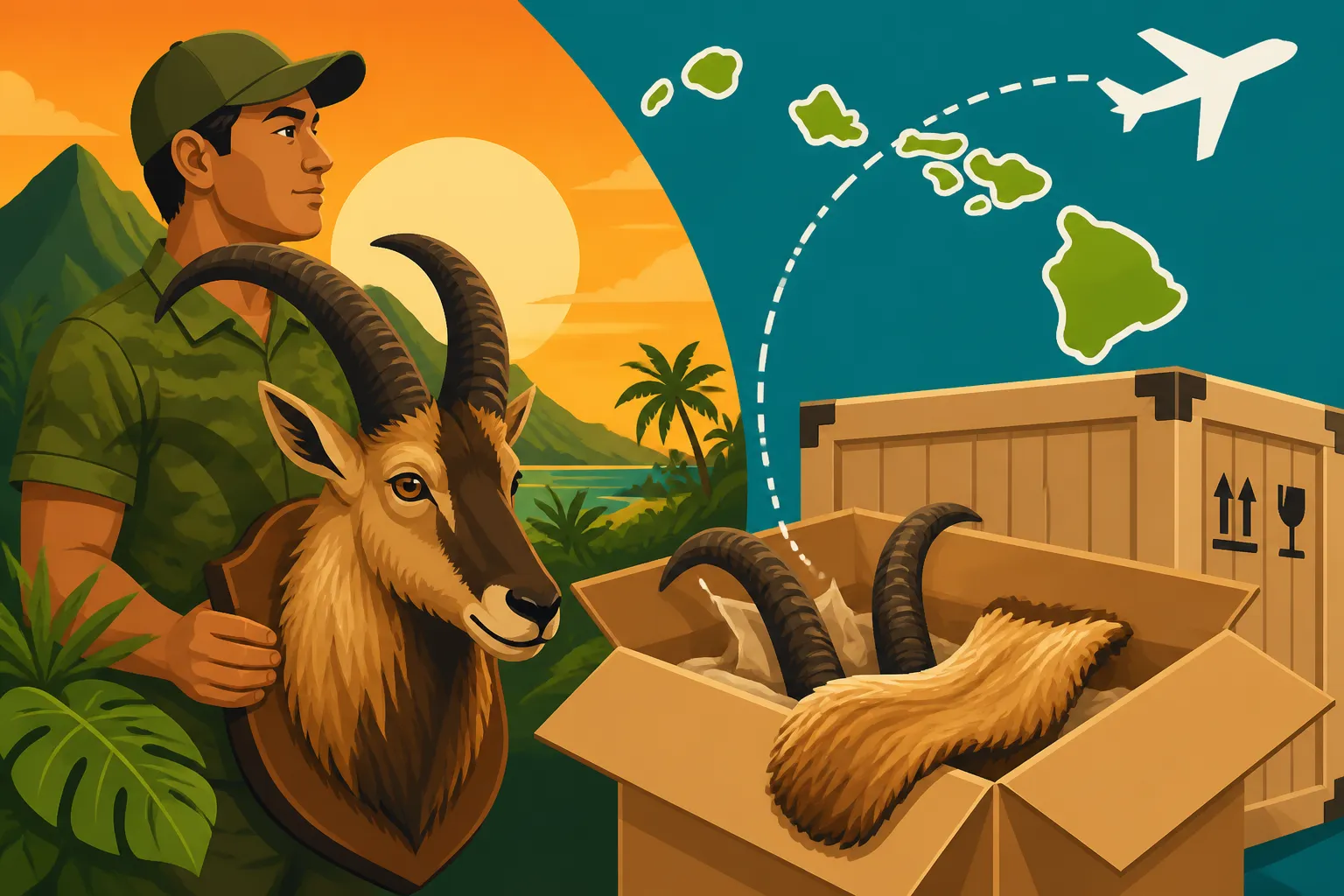
Getting a Cape and Horns Shipped Home
You've just completed a fantastic hunt in Hawaii, maybe taken a beautiful Axis buck or a formidable Mouflon ram, and now that exhilarating feeling is quickly being replaced by a looming question: how on earth do you get that magnificent cape and set of horns back home? It's a logistical challenge that can feel overwhelming, especially with island regulations, agricultural rules, and the sheer physicality of moving a trophy across an ocean. This guide is here to walk you through the process, easing your worries and helping you ensure your hard-earned trophy makes it safely to your taxidermist, no matter where home is.
The Critical First Steps: Field Preparation and Preservation
Bringing a cape and horns home from Hawaii starts long before you even think about a shipping label. Proper field care is paramount, especially in the islands' often warm and humid climate. A trophy can spoil faster than you might imagine if not handled correctly.
Immediate Field Care for the Cape
The moment that animal is down, your priority shifts from hunting to preservation. For a shoulder mount, you'll need to know where to make your cuts. Generally, you'll want a generous cape, meaning you cut well behind the front legs and up along the back. This gives your taxidermist plenty of material to work with.
Once skinned, the cape needs to be cooled and cleaned as quickly as possible. In Hawaii's tropical heat, bacteria multiply rapidly. Remove as much flesh and fat as you can from the hide. This process, known as fleshing, is vital for proper curing. If you’re deep in a gulch or miles from a cooler, getting that hide cooled down is tough. Many hunters will immediately salt their capes generously with non-iodized salt. The salt draws out moisture, which inhibits bacterial growth. You'll need a lot of it – often several pounds for a deer or sheep cape. Rub it thoroughly into every part of the flesh side. You might even need to re-salt it after a day or two if the first application becomes saturated with moisture. Field Dressing Axis Deer in Hawaii Heat and Cooling Meat Fast on a Hawaii Hunt both offer valuable insights into managing perishables in this climate.
Preparing the Skull Plate and Horns
For the horns or antlers, your primary concern is to clean the skull plate. If you plan for a European mount or simply want to keep the skull plate with the horns, you'll need to remove all brain matter and connective tissue. This might involve boiling or simmering the skull, but be careful not to damage the bone or the bases of the horns. For a shoulder mount, the horns will remain attached to a portion of the skull (the skull plate). Clean this skull plate meticulously. Any remaining flesh or tissue can attract pests, create odors, and become an issue during agricultural inspection.
Ensure the horns themselves are clean. Remove any dried blood, dirt, or debris. While they are incredibly durable, they represent your trophy. A good scrubbing with a stiff brush and water can do wonders. Let the horns and skull plate dry thoroughly in the shade, away from direct sunlight, which can cause cracking or bleaching.
Navigating Hawaii's Regulations and Permitting for Trophies
This is often where the real headaches begin. Shipping animal parts, even cleaned trophies, between islands or to the mainland isn't as simple as mailing a package. Hawaii has strict agricultural and wildlife regulations designed to protect its unique ecosystems from invasive species and diseases.
Understanding Agricultural Inspections
Every animal product leaving Hawaii is subject to agricultural inspection by the Hawaii Department of Agriculture. This is not just a formality; it's a serious checkpoint. The main concern is preventing the spread of insects, plant diseases, and other biological contaminants.
For your cape and horns, this means they must be absolutely clean and free of any organic material.
- Capes: A fully salted, dried, and sometimes even tanned cape stands a much better chance. If it's merely salted and dried, it needs to be very well preserved, completely dry to the touch, and often packed in a way that minimizes any potential for pests. Some hunters opt to have their capes processed by a local taxidermist in Hawaii before shipping to ensure it meets inspection standards.
- Horns/Antlers with Skull Plate: The skull plate must be bone-dry and completely free of any tissue, brain matter, or odor. Boiling or pressure washing the skull plate to remove all soft tissue is usually required. Allowing it to dry for an extended period, perhaps even weeks, is ideal. Any sign of insects, even tiny ones, will likely result in confiscation or mandatory fumigation.
You'll need to present your trophy, along with your hunting license and tag information, to the agricultural inspectors. They will examine it thoroughly. Don't try to hide anything or rush the process. Honesty and transparency are key. Hawaii Rules on Transporting Game Meat provides a good overview of the general transport challenges, many of which apply to non-meat animal parts too.
Wildlife and Interstate Shipping Regulations
Beyond agricultural concerns, you also need to consider state and federal wildlife regulations. While Axis deer and Mouflon sheep are not endangered species that typically fall under CITES restrictions, you must ensure your possession of the trophy is legal. Your Hawaii hunting license and harvest tag are your proof of legal take. Keep these documents with your trophy or readily accessible during shipping.
When shipping to the mainland, federal regulations like those enforced by the U.S. Fish and Wildlife Service (USFWS) might apply, especially if you're using a common carrier. For most common game species, a legally harvested trophy doesn't pose an issue, but documentation is always good practice. It's wise to check with your home state's wildlife agency as well, to ensure there are no specific import restrictions you need to be aware of.
Table: DIY vs. Professional Trophy Shipping
| Feature | DIY Shipping (Self-Prepared) | Professional Shipping (Taxidermist/Expeditor) |
|---|---|---|
| Cost | Generally lower upfront (materials, shipping fees) | Higher (service fees, specialized packing, shipping) |
| Effort | High (fleshing, salting, packing, paperwork, logistics) | Low to moderate (drop off, provide info, approve plans) |
| Risk | Higher (spoilage, damage, customs issues, confiscation) | Lower (expertise in preservation, packing, regulations) |
| Turnaround | Can be faster if well-prepared, but relies on your speed | Slower due to processing, but more reliable for safe arrival |
| Paperwork | Your responsibility to research and complete | Handled or guided by the professional |
| Expertise | Requires personal knowledge of preservation and shipping | Utilizes professional experience and established networks |
| Peace of Mind | Variable, depends on your comfort with logistics | Generally higher, knowing experts are handling it |
Choosing Your Shipping Method: DIY or Professional Assistance
Once your trophy is properly prepped and you understand the regulations, the next big decision is how it actually gets from the islands to its final destination. You generally have two main routes: doing it yourself or entrusting it to professionals.
The DIY Approach: Packing and Shipping Yourself
If you’re on a tighter budget or just prefer to handle everything yourself, DIY shipping is an option, but it demands meticulous attention to detail.
1. Final Preparation:
- Cape: Ensure your salted cape is completely dry and hard. Roll it up tightly, flesh side in, and place it in a heavy-duty plastic bag, then into a sturdy cardboard box. Adding a desiccant pack can help absorb any residual moisture. Double-bagging it is a good idea to contain any lingering odor or moisture.
- Horns/Antlers: If they are detached from the skull for a European mount, ensure they are thoroughly cleaned and dry. If they are on a skull plate, wrap the skull plate securely in multiple layers of bubble wrap or newspaper to protect the delicate bone. The horns themselves can be wrapped to prevent scratching or damage.
2. Packaging:
You'll need a robust shipping container. For horns, especially larger ones, a custom-built wooden crate or a heavy-duty plastic tote might be necessary to prevent breakage during transit. Pad generously with crumpled newspaper, foam peanuts, or bubble wrap. The goal is to ensure absolutely no movement inside the box. Imagine what the package will endure on a plane or truck; it needs to withstand being dropped, stacked, and jostled.
3. Choosing a Carrier:
Major shipping carriers will accept properly prepared and declared animal trophies. You'll need to declare the contents accurately on customs forms (if shipping internationally, though unlikely for mainland US) and shipping labels. Be prepared for potential questions from carrier staff who might not be familiar with shipping animal parts. Some hunters have found success with air cargo services directly from the airports, as they are often more accustomed to handling unusual or oversized freight. Keep in mind that Flying Home With Game Meat From Hawaii covers similar ground for meat, and many of the logistics are comparable.
4. Documentation:
Always include copies of your hunting license and harvest tag inside the package, and carry originals with you if you're flying. Attach a clear, detailed inventory of the contents to the outside of the package.
Enlisting Professional Help: Taxidermists and Expeditors
For many hunters, especially those traveling from the mainland, hiring a professional is worth the added cost for the peace of mind and expertise.
1. Local Hawaii Taxidermists:
One of the best options is to connect with a taxidermist in Hawaii. They are experts in the local regulations and have established methods for preserving and shipping trophies. They can:
- Properly cape and flesh your trophy.
- Thoroughly clean and prepare the skull plate.
- Handle the agricultural inspection process on your behalf.
- Prepare all necessary shipping documentation.
- Package your trophy securely for transit to your chosen taxidermist back home.
- Many reputable guides, which you can often find listed on platforms like BookYourHunt, will have relationships with local taxidermists and can facilitate this connection for you.
Using a local taxidermist can significantly reduce the risk of your trophy being delayed, damaged, or confiscated. They understand the nuances of the Hawaiian climate and regulations better than anyone else. Hawaii Taxidermists and Their Wait Times delves deeper into finding and working with these professionals.
2. Shipping Expeditors:
Some companies specialize in international trophy shipping. While perhaps less common for purely domestic Hawaii-to-mainland shipments, they can be invaluable for complex cases or if you're combining your trophy with other goods. They handle all logistics, paperwork, and customs, acting as a middleman between you and the shipping carrier.
3. Guides and Outfitters:
If you've booked a guided hunt, your outfitter might offer services or advice on trophy preparation and shipping. Some may even have arrangements with local processors. It's always worth discussing this with your guide upfront when booking, as some outfitters found on BookYourHunt might even offer basic field prep as part of their service or be able to recommend a trusted local partner.
What to Expect for Costs and Timeline
Let's be realistic: shipping a trophy from Hawaii isn't cheap, nor is it always fast. Managing your expectations is key to avoiding frustration.
Breaking Down the Costs
The total cost will vary wildly depending on your chosen method, the size of your trophy, and your final destination.
- DIY Costs: You'll pay for salt, packaging materials (boxes, crates, bubble wrap), and the shipping carrier fees. These fees are based on weight, dimensions, and speed of service. Oversized items, like a large set of Axis deer antlers, will incur significant surcharges.
- Professional Services Costs: If you use a Hawaii taxidermist, you'll pay for their caping, fleshing, cleaning, salting, and potentially crating services. This can easily run into several hundred dollars or more, depending on the animal and the level of service. Then, you'll still pay the separate shipping carrier fees on top of that. What an Axis Shoulder Mount Costs gives you a sense of taxidermy pricing, but remember, shipping is a separate charge.
- Agricultural Inspection Fees: There might be a nominal fee for the inspection, but often it's included if you're using a professional service.
- Customs/Brokerage Fees: If you were shipping internationally, these would be a factor, but for mainland U.S. travel, it's generally not a concern beyond standard shipping charges.
It's not uncommon for the total cost of preparing and shipping a cape and horns to be comparable to, or even exceed, the cost of the hunting trip itself, especially for larger trophies. Always get quotes upfront!
Understanding the Timeline
Patience is a virtue when it comes to trophy shipping from Hawaii.
- Field Prep & Drying: If you're doing it yourself, allowing sufficient time for the cape to dry fully (after salting) and the skull plate to dry completely can take anywhere from a few days to several weeks, depending on the humidity. Rushing this step is a recipe for disaster.
- Agricultural Inspection: This can happen relatively quickly if everything is in order, often within a day or two. However, if there are issues, it can cause significant delays while remediation (like fumigation) is performed.
- Shipping Transit Time: Standard ground shipping from Hawaii to the mainland can take weeks. Air freight is faster but much more expensive. If you use a taxidermist in Hawaii, their processing time will add to this before it even ships.
- Overall: From the moment of harvest to the time your trophy arrives at your taxidermist back home, you should realistically expect several weeks to a few months. Don't plan on having your mount ready for display a week after you get back!
Always remember to communicate clearly with anyone handling your trophy, whether it's your guide, a local taxidermist, or the shipping carrier. Confirm every step, get tracking numbers, and keep all receipts and documentation. It's your trophy, and staying on top of the process is the best way to ensure its safe journey home. For detailed agricultural rules, resources like GoHunt often have links or summaries that can help you cross-reference regulations before you even leave for your trip. This pre-planning can save immense stress and expense down the line.
Disclaimer
This article is for general informational purposes only and does not constitute professional advice. Laws, prices and regulations vary by location and change over time. Consult a qualified professional for guidance on your specific situation.