Chukar Hunting Hawaii Island’s High Country
Hunting chukar in Hawaii Island's high country presents a challenge unlike almost anywhere else. You're not just dealing with elusive birds; you're battling thin air, unpredictable weather that can swing from sunny to freezing in an hour, and terrain that ranges from loose cinder to unforgiving lava fields. This guide will walk you through everything you need to know to pursue these tough game birds in the unique environment of the Big Island's volcanic uplands, helping you prepare for an adventure that demands respect and readiness.
Understanding Hawaii Island's Chukar Habitat
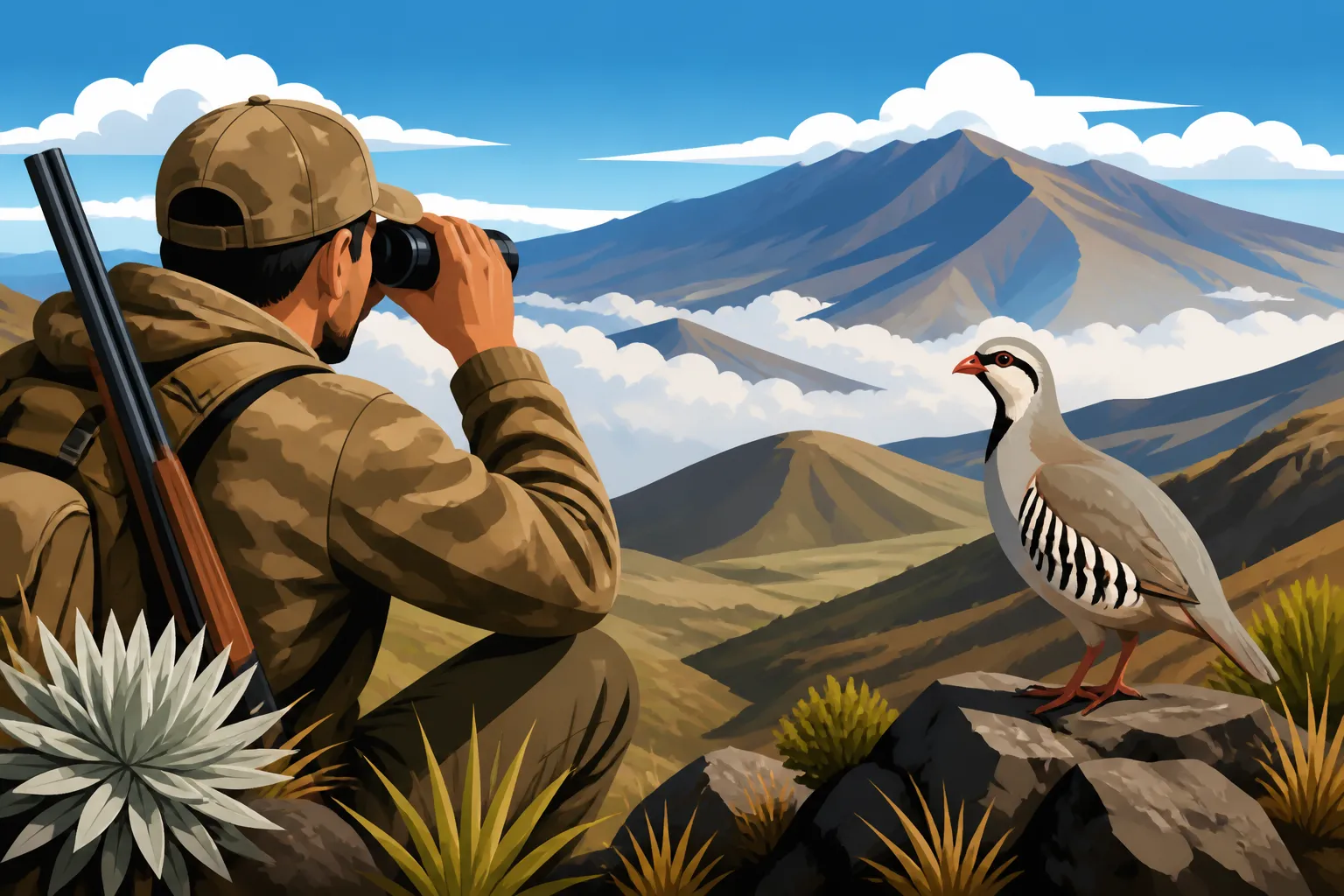
Chukar partridge, those hardy, striking birds with their distinctive call, thrive in the arid, rocky, and often sparse landscapes of Hawaii Island's high elevations. Unlike the lush, wet forests you might associate with other parts of the islands, chukar prefer the barren, windswept slopes of Mauna Kea and Mauna Loa. This unique habitat shapes everything about how you'll hunt them.
The Extreme Environment of Mauna Kea and Mauna Loa
When we talk about Hawaii Island's high country, we're really talking about the slopes of two of the world's most massive volcanoes: Mauna Kea and Mauna Loa. These aren't your typical island hunting grounds. Elevations regularly exceed 6,000 feet, and can push towards 10,000 feet or more in accessible hunting units. The air is noticeably thinner up here, which can hit you harder than you expect, especially if you're coming from sea level. It’s a harsh, unforgiving environment, dominated by volcanic rock, sparse grasses, and scattered mamane and naio trees. You’ll find vast expanses of older lava flows, fields of cinder, and rocky gulches that provide ideal cover and escape routes for chukar. The temperature can fluctuate wildly; a warm, sunny morning can quickly give way to biting winds, fog, or even sleet and snow, especially in winter. It’s a stark contrast to the tropical beaches below, and anyone hunting here needs to be prepared for true alpine conditions.
Identifying Key Terrain Features for Chukar
Chukar are masters of their high-desert domain, and understanding their preferred terrain is crucial for successful hunting. They generally favor steep, rocky slopes, especially those with good escape cover in the form of lava outcroppings, large boulders, and sparse, brushy vegetation like pukiawe or dry grasses. Look for areas where these features converge with a food source and water, however scarce. Chukar primarily feed on seeds, grasses, and insects, so south-facing slopes that receive ample sunlight and promote vegetation growth, even if minimal, can be hotspots. Water sources, which are few and far between at these elevations, are absolute magnets. Think about small seeps, cattle troughs (if in ranching areas), or even just dew-collecting depressions in rocks. Observing the landscape for subtle changes in elevation, natural benches, and small gulches can also pay off; these offer travel corridors and protection from predators like feral cats and mongooses. They love to run uphill, using the terrain to their advantage, so anticipate their movements and plan your approach accordingly.
Seasonal Changes and Chukar Movement
While Hawaii doesn't experience the dramatic four seasons of mainland hunting, the high country still has its shifts that influence chukar behavior. The dry season, typically from May to October, can concentrate birds around any available water sources, making these areas prime hunting spots. However, the heat can also make birds more nocturnal or limit their daytime activity to early mornings and late evenings. During the wetter months, generally November to April, water is more abundant, and birds may be more dispersed across the landscape. The cooler temperatures can also mean more active birds throughout the day, but you'll have to contend with unpredictable weather, including heavy fog, rain, or even snow, which can shut down a hunt quickly. Wind is another constant factor up high, influencing where birds roost and feed, often seeking leeward slopes for shelter. Pay attention to the weather forecasts for the specific elevation you plan to hunt, not just the general island forecast. Knowing when Hawaii's Game Bird Seasons and Bag Limits are in effect for chukar is also critical, as specific dates and rules apply.
Essential Gear for High-Country Chukar Hunts
Hunting chukar in Hawaii's high country is not for the faint of heart, nor for the unprepared. The right gear isn't just about comfort; it's about safety and efficiency in a truly rugged environment. You'll be putting in miles on difficult ground, often far from any trail or road, and the weather can turn on a dime.
Footwear and Clothing for Volcanic Terrain and Variable Weather
Your feet are your most important tool when chukar hunting. You'll be covering vast distances over abrasive lava rock, loose cinder, and sometimes surprisingly slick, steep grades. This isn't the place for worn-out sneakers or flimsy hiking boots. Invest in high-quality, sturdy hiking boots with excellent ankle support and a stiff sole to protect your feet from sharp rocks. Look for models designed for mountaineering or aggressive backpacking that can handle the rigorous demands of volcanic terrain. Given the potential for rain or sleet, waterproof boots are a must. Many hunters find success with brands like Kenetrek or Crispi, which offer the durability and traction needed when Walking Rough Lava Without Wrecking Your Boots. Pair them with moisture-wicking wool or synthetic socks to prevent blisters.
For clothing, think layers, layers, layers. Even on a seemingly warm day, the wind at elevation can be brutal, and temperatures can drop rapidly when the sun ducks behind clouds or dips below the horizon. Start with a moisture-wicking base layer to manage sweat, followed by an insulating mid-layer like fleece or a puffy jacket. Your outer shell should be windproof and waterproof. While Hawaii's climate is generally warm, up high, you'll appreciate a good beanie, gloves, and perhaps even a neck gaiter to fend off the chill. Durable pants that can withstand scrapes from lava and brush are also essential. Jeans are a definite no-go; they hold moisture and offer no flexibility or insulation.
Shotguns and Ammunition Considerations
When it comes to firearms, a lightweight, reliable shotgun is your best friend. You'll be carrying it for hours, often scrambling up and down steep terrain, so every ounce matters. Most chukar hunters prefer a 12 or 20 gauge shotgun. The 20 gauge is a popular choice for its lighter weight, while still providing plenty of punch for these hardy birds. Over/under or side-by-side shotguns are common, as are semi-automatics, but personal preference for fit and familiarity always trumps specific model recommendations.
Ammunition choice is also critical. Chukar are tough birds, and you'll often be taking shots at longer ranges as they flush and sail down a gulch. Lead shot is still legal for upland birds in Hawaii, and many hunters opt for a good quality field load. Chukar have dense feathers, so a shot size of 6 or 7.5 is commonly used. Some hunters even carry a mix, starting with 7.5 for closer flushes and switching to 6 for longer shots. Always bring more shells than you think you'll need; the unpredictable flushes and multiple coveys you might encounter mean you can burn through ammo quickly. Remember to check local regulations concerning legal shot sizes before you head out.
Optics, Hydration, and Safety Equipment
Beyond your shotgun and clothing, several other pieces of gear are non-negotiable for a safe and effective chukar hunt. Good quality binoculars (8x or 10x) are invaluable for spotting birds on distant slopes before you commit to a grueling climb. Chukar blend remarkably well with their surroundings, so a keen eye and good optics will save you a lot of legwork.
Hydration is paramount. Even in cooler high-elevation air, you'll be working hard, and dehydration can creep up on you fast. Carry significantly more water than you think you'll need – a hydration pack or multiple water bottles are essential. Electrolyte mixes can also be a game-changer. Given the lack of natural water sources, planning for Water and Heat Planning for a Hawaii Hunt applies even in the "cold" country.
Safety equipment includes a first-aid kit (especially one stocked for cuts, scrapes, and twisted ankles common on lava), a reliable GPS device or a smartphone with offline maps (like the GoHunt app or OuterSpatial, which Hawaii's DOFAW often uses for check-ins), a fully charged power bank, and a headlamp or flashlight, just in case your hunt runs longer than expected. A whistle can be useful for signaling. Lastly, always let someone know your hunting plan, including your specific unit, expected return time, and a description of your vehicle. Cell service can be spotty to non-existent in many high-country units, so don't rely on it for emergencies.
Strategies for Locating and Approaching Chukar
Chukar hunting is a unique blend of physical endurance and strategic cunning. These birds are built for survival in rugged terrain, and you need to adapt your approach to match their instincts. It's less about busting brush and more about intelligent glassing, patient stalking, and understanding how they use their surroundings.
Scouting and Reading the Landscape
Effective chukar hunting starts long before you ever step foot in the field. Scouting, both remotely and on the ground, is absolutely critical. Use satellite imagery, topographical maps, and tools like onX Hunt to identify promising areas. Look for steep, rocky slopes, areas with patchy vegetation, and especially for any signs of water, no matter how small. Chukar prefer to be able to see potential threats from a distance, so they often favor open, elevated areas, but always with quick access to escape cover like a gulch or dense rock pile.
Once you're on the ground, take your time to read the landscape. Spend significant time glassing likely habitat with your binoculars from a vantage point. Look for movement, listen for their distinctive "chuk-chuk-chukar" call, and watch for their tracks in dusty areas or cinder. Their droppings, usually small and dark, can also indicate recent presence. Remember that chukar love to run uphill when disturbed, using the contours of the land to quickly disappear. Understanding this behavior will help you plan your approach. This detailed scouting is key to success, much like when Scouting a Hawaii Hunting Unit Before Opening for any game.
The Art of the Spot-and-Stalk in Open Country
Chukar hunting is often described as a spot-and-stalk endeavor, especially in Hawaii's open high country. This means patiently glassing from a distance until you locate a covey or individual birds, then carefully planning your approach. Since chukar will usually run uphill, try to get above them if possible. This is easier said than done, as their preferred habitat often means climbing.
Once you've spotted birds, use the terrain to your advantage. Stay out of sight as much as possible, using ridges, gulches, and large boulders for cover. Move slowly and deliberately, paying attention to wind direction to keep your scent from reaching them. When you get within range, be prepared for a fast, explosive flush. Chukar burst out with incredible speed and often fly downhill at high velocity. Anticipate their flight path, lead them adequately, and be ready for a quick second shot if necessary. Remember, these birds aren't easily fooled, and a botched stalk often means watching them sail over a ridge, requiring you to start the process all over again.
Working With or Without a Bird Dog
While many bird hunters swear by a good dog, chukar hunting in Hawaii presents some unique challenges for our four-legged companions. The razor-sharp lava rock and abrasive cinder can quickly shred a dog's pads if they're not conditioned and fitted with protective boots. The extreme temperatures and thin air can also be very taxing on them. However, a well-trained, hardy bird dog, especially a strong-ranging pointer or setter, can be an incredible asset. They can cover ground much faster, locate birds that are hidden to the human eye, and help you recover downed birds in thick cover or steep terrain.
If you choose to hunt with a dog, ensure they are in peak physical condition, their pads are tough, and you have plenty of water and quick energy snacks for them. Dog boots are almost a necessity to protect their feet from the rough ground. Be prepared to carry your dog out if they get injured or simply run out of steam. It's a demanding environment for them, too. For more on this, check out Using a Bird Dog in Hawaii Terrain.
If you're hunting without a dog, you'll need to rely even more heavily on your eyes and ears, and be meticulously thorough in searching for downed birds. Mark the spot where the bird fell as accurately as possible, using landmarks, and walk a grid pattern to find it. Losing a downed bird in this rugged landscape is a frustrating reality that every chukar hunter tries to avoid.
Navigating the Challenges of High-Elevation Hunting
Hawaii's high country is breathtakingly beautiful, but it demands respect. The challenges go beyond just finding the birds; they involve managing your own physical well-being and understanding the nuances of hunting in an alpine environment on a tropical island.
Acclimatization and Physical Demands
One of the most overlooked aspects of high-country chukar hunting, especially for those visiting from sea level, is acclimatization. The air at 8,000 to 10,000 feet contains significantly less oxygen. Even if you're in excellent physical shape, you'll likely feel the effects: shortness of breath, fatigue, and possibly even a mild headache or nausea. This isn't something to ignore; pushing too hard can lead to serious altitude sickness.
The best strategy is to arrive on Hawaii Island a few days before your hunt and spend some time at intermediate elevations (say, 3,000-5,000 feet) to allow your body to adjust. Even just spending a night or two at a higher elevation can make a significant difference. During your hunt, move at a slower pace than you normally would, take frequent breaks, and stay well-hydrated. Listen to your body; if you start feeling unwell, descend to a lower elevation. The physical demands of hiking steep, uneven, and often unstable volcanic terrain for hours are immense. This is an all-day workout, so conditioning yourself with cardio and leg strength exercises months beforehand is highly recommended.
Weather Extremes and Safety Protocols
As mentioned, the weather in Hawaii's high country is notoriously fickle. You can start your day under clear blue skies, only for thick fog to roll in, reducing visibility to mere feet, or for a sudden squall to bring freezing rain and strong winds. Being prepared for all conditions is not an option; it's a necessity. Always carry enough layers, rain gear, and emergency supplies to spend an unexpected night out, even if you plan for a day hunt.
Safety protocols are crucial. Always hunt with a buddy if possible, or at the very least, ensure someone knows your detailed hunting plan and expected return time. Carry a fully charged cell phone (though don't rely on it for service) and a satellite communication device like an inReach or Spot if you can. These devices can be lifesavers for emergency communication outside of cell range. Be mindful of your footing on the loose cinder and sharp lava; a twisted ankle or fall can quickly become a serious problem in a remote area. Lastly, be aware of other hunters, especially during opening weekends. While the vastness of the units usually spreads people out, always practice safe firearm handling and know your background.
Unit Access and Hunter Check-in Procedures
Hunting chukar on Hawaii Island largely takes place on public lands managed by the Department of Land and Natural Resources (DLNR) Division of Forestry and Wildlife (DOFAW). These areas are typically designated Game Management Areas (GMAs) or Forest Reserves. Access points are often off Saddle Road, which traverses the saddle between Mauna Kea and Mauna Loa. Many access roads require a 4×4 vehicle, and some can be extremely rough or even impassable after heavy rains. Always check local road conditions before heading out.
Before you can hunt, you'll need to obtain a Hawaii Hunting Licenses and What They Cost, including a Hawaii Game Bird Stamp, which can be purchased online through the GoHunt Hawaii portal or at various license vendors. Most public hunting units on Hawaii Island require hunters to Check In and Out of Hawaii Hunting Units at designated stations or via the OuterSpatial app. This is not just a formality; it's a critical safety measure that allows DOFAW to monitor hunter activity and provides a record in case of an emergency. Make sure you understand Hawaii's Hunting Units and How They Work, as specific rules, including legal hunting days and methods, can vary by unit. Don't forget to review The Chukar Daily Bag Limit before your hunt.
Post-Hunt Logistics and Conservation
The hunt doesn't end when you pull the trigger. Proper field care, understanding bag limits, and contributing to conservation efforts are all integral parts of being a responsible hunter in Hawaii.
Field Care and Transporting Your Harvest
Once you've successfully harvested a chukar, swift field care is essential, especially in Hawaii's often warm (even at elevation) climate. Unlike larger game, chukar are small enough that cooling isn't as critical immediately, but you still want to get them cleaned and cooled as soon as practically possible. Many hunters will simply gut the bird quickly to remove entrails and allow the body cavity to cool. Others might breast out the bird if they only want the meat.
Carrying a small game vest or backpack with a breathable game bag is ideal for transporting your birds. Avoid putting them in a plastic bag where heat can build up and spoil the meat. On a long hike back to the truck, air circulation is key. Once back at your vehicle, get them on ice quickly. A cooler with ice is a must-have for the drive home. Proper field care ensures you get to enjoy the delicious, lean meat of the chukar you worked so hard to harvest.
Understanding Bag Limits and Reporting
Knowing the rules is non-negotiable. Hawaii has specific bag limits for chukar, which can sometimes vary by island or even specific hunting unit, though typically for Hawaii Island, it's fairly consistent. Always double-check the current Hawaii Game Bird Seasons and Bag Limits before your hunt. For chukar, the daily bag limit is generally set to ensure sustainable harvest. Exceeding bag limits is a serious offense and undermines conservation efforts.
After your hunt, it's also important to be aware of any harvest reporting requirements. While not always mandatory for game birds on all units, DOFAW sometimes conducts surveys or requires reporting to gather data on game populations. Participating in these voluntary or mandatory surveys helps wildlife managers make informed decisions about future seasons and bag limits. Always carry your hunting license and any required permits, as wardens can and do conduct checks in the field. This includes understanding your Hawaii Resident Hunting License Options and nonresident options.
Contributing to Chukar Conservation
Hunting chukar in Hawaii is a privilege, and with that comes a responsibility to contribute to their conservation. Chukar, like all game species in Hawaii, are introduced, but they are a valued game bird and part of the island's unique ecological landscape. One of the best ways to contribute is by following all hunting regulations, ethical hunting practices, and reporting any illegal activity you witness.
Beyond that, supporting organizations involved in habitat management or wildlife research can make a difference. Hunters' license fees and stamp purchases directly fund DOFAW's wildlife management programs, which benefit chukar and other game species. By adhering to the rules and advocating for responsible hunting, you ensure that future generations of hunters can also experience the unique challenge and reward of pursuing chukar in Hawaii Island's high country.
Planning Your Hawaii Island Chukar Adventure
A successful chukar hunt on Hawaii Island requires careful planning, from understanding the legalities to tapping into local knowledge. Don't underestimate the logistical challenges of hunting in such a remote and demanding environment.
Obtaining Licenses and Permits
Your chukar hunt officially begins with securing the necessary paperwork. First and foremost, you'll need a valid Hawaii hunting license. For residents, this is a straightforward process, often completed online. Non-residents will also need to acquire a license, which typically involves demonstrating prior hunting experience or completing a hunter education course. It's a good idea to complete Hawaii Hunter Education Requirements well in advance of your trip. On top of the general hunting license, a Hawaii Game Bird Stamp is also required.
The easiest way to handle these purchases is through the state's online portal, often accessible via services like GoHunt Hawaii. They streamline the process, allowing you to buy your license and stamp digitally. However, always confirm the current year's requirements and fees, as these can change. Make sure you carry your physical license and stamp, or a readily accessible digital copy, with you in the field. Also, be sure to understand Checking In and Out of Hawaii Hunting Units, as this is a requirement for many public hunting areas on the Big Island.
Local Knowledge and Resources
While maps and online resources are invaluable, nothing beats genuine local knowledge. If you're new to hunting Hawaii Island, try to connect with experienced local hunters. They can offer insights into specific unit conditions, chukar hotspots that change with weather patterns, and invaluable tips on navigating the unique terrain. Outfitters or guides, while not typically used for chukar on public land, might also offer valuable general advice on the Big Island's high country.
The DOFAW offices on Hawaii Island (in Hilo and Kona) are also fantastic resources. Their staff can provide the most up-to-date information on unit closures, special regulations, and recent bird activity. Don't hesitate to call or visit them. Local sporting goods stores can also be surprisingly good sources of information, as their employees often hunt and interact with the local hunting community.
Recommended Hunting Units and Seasons
Chukar hunting on Hawaii Island is primarily concentrated in the high-elevation units on the slopes of Mauna Kea and Mauna Loa. These typically include portions of Unit A (Mauna Kea Game Management Area) and Unit G (Mauna Loa Game Management Area), which feature the appropriate arid, rocky habitat chukar thrive in. These units are often accessed via roads off the Daniel K. Inouye Highway (Saddle Road).
The season for chukar usually runs for a specific period within the broader game bird season, often from early November through mid-January, but these dates can shift annually. It’s absolutely critical to consult the current Hawaii Game Bird Seasons and Bag Limits booklet or the DOFAW website for the exact dates, specific unit boundaries, and any special conditions that might apply to your chosen hunting area. Some areas might have specific access restrictions, or certain roads might be closed seasonally. Planning your trip around the open dates for these units is paramount to ensure you don't arrive only to find the season closed or the access gates locked.
Disclaimer
Hunting is an inherently dangerous activity. This guide provides general information and recommendations but does not replace the need for personal judgment, adherence to all local, state, and federal laws, and proper safety training. Always prioritize safety, respect wildlife, and obtain all necessary licenses and permits. Conditions in Hawaii can be unpredictable; be prepared for emergencies and always inform someone of your hunting plans.