Hunting a Water Source in Dry Hawaii Country
Hunting in Hawaii presents a unique set of challenges, and perhaps none is as critical as finding and effectively hunting game when the islands dry out. It's a common frustration for hunters, both kama'aina and malihini alike, to find themselves in a parched landscape where the animals seem to vanish. But when the rains stop, and the sun bakes the leeward slopes, knowing how to leverage the life-giving draw of water sources can be the key to a successful hunt. This comprehensive guide will walk you through the nuances of identifying, scouting, and ethically hunting around these vital oases in Hawaii's often arid hunting grounds.
Understanding Why Water Sources Are Critical in Dry Hawaii Country
Hawaii’s climate is incredibly diverse, but much of its hunting land, especially on the leeward sides of the islands, can get incredibly dry. When the trade winds bypass these areas, or when the islands experience prolonged drought, water becomes the ultimate magnet for game.
The Impact of Drought and Leeward Conditions on Game
Picture this: you’re on the slopes of Mauna Kea or the dry expanse of Kahikinui on Maui. The sun is relentless, the ground is cracked, and the vegetation is brittle and sparse. This isn't just a tough day for us humans; it's a matter of survival for the animals. Hawaii’s terrain, shaped by volcanic activity and dramatic elevation changes, creates distinct microclimates. The leeward sides, sheltered from the moisture-laden trade winds, are naturally arid. Add a dry spell or a full-blown drought, and the situation becomes critical.
In these conditions, natural forage with high water content diminishes rapidly. Streams dry up, and even dew, which can be a minor source of hydration, becomes non-existent. For game animals like Axis deer, feral goats, and even mouflon sheep, accessing water isn't just a preference; it's an absolute necessity to sustain themselves. They will travel significant distances and alter their daily patterns, often becoming much more visible and concentrated around the few remaining water sources. Even feral pigs, while sometimes content with wallowing in mud, will seek out cleaner water for drinking when their usual swampy haunts dry up. Understanding this fundamental behavioral shift is the first step in successful hunting during dry times. These animals can't simply move to the next watershed if it's miles away and equally parched; they are often confined to specific areas by terrain, fences, or lack of alternatives, making any viable water source a hub of activity. If you're looking to understand more about these dry regions, learning about why Hawaii's Leeward Side Holds More Deer can give you valuable context.
Identifying Types of Water Sources
When we talk about water sources in dry Hawaiian country, it's not just about a bubbling spring straight out of a textbook. The reality here is far more varied, and often, more subtle.
- Natural Sources: These are often the most coveted. Think about hidden seeps trickling from a rock face, small depressions in ancient lava flows that collect rainwater, or isolated springs that miraculously persist even in a drought. Sometimes, these pockets of moisture are found within a kipuka, an island of vegetation surrounded by barren lava, which can retain water longer due to cooler temperatures and richer soil. These are often small and easily overlooked, requiring careful observation.
- Man-Made Sources: These are incredibly common and often highly productive. Many ranches across the islands rely on stock ponds for their cattle. These can be dugouts, small impoundments, or even large, lined reservoirs. Keep an eye out for old irrigation systems – sometimes a leaky pipe or an overflow from an agricultural operation can create a consistent, albeit small, water source that draws game. Cattle troughs, especially those fed by wells or gravity-fed lines, are also major hotspots. These man-made sources are particularly prevalent on islands like Maui, Lanai, and Hawaii Island where ranching is a significant activity.
- Ephemeral Sources: These are less reliable for long-term hunting strategies but worth noting. After a rare, heavy downpour in a dry area, temporary puddles can form in road ruts, rock depressions, or low-lying areas. While they might only last a few days, they can provide a temporary reprieve for game and indicate travel routes. However, relying on these is a gamble, as they quickly evaporate under the Hawaiian sun.
Unlike the vast rivers or large lakes you might find on the mainland, Hawaii's water sources are often more isolated and localized. This concentration is precisely what makes them so valuable for hunters. Your ability to spot these varied types of water, both natural and artificial, will significantly boost your chances of success.
Scouting and Locating Productive Water Sources
Finding the game is half the battle, and when it's dry, finding water is finding the game. Effective scouting combines modern technology with old-school field craft.
Digital Reconnaissance and Map Study
Before you even lace up your boots, modern mapping tools can be your best friend. Start with digital mapping applications like onX Hunt or even Google Earth. These platforms allow you to zoom in on potential hunting units and scan for telltale signs of water. Look for:
- Depressions and Gulches: Even dry gulches can indicate areas where water might collect or where seeps could be hidden deeper in the terrain.
- Green Patches in Arid Landscapes: Any vibrant green anomaly in an otherwise brown, parched environment is a huge clue. This could signal a hidden spring, a persistent seep, or even a leak from an irrigation line.
- Road Systems and Fences: Ranch roads often lead to stock ponds or cattle troughs. Fencelines can also funnel animals to particular crossing points, which might be near water access.
- Specific Topography: Crater bottoms, saddles between hills, or the bases of steep cliffs can sometimes harbor hidden pockets of moisture.
Once you’ve identified potential areas, cross-reference them with Hawaii’s official hunting unit maps. These are often available through the Division of Forestry and Wildlife (DOFAW) website, or via platforms like GoHunt, which can streamline the process of finding public access points and understanding unit boundaries. Pay close attention to unit boundaries, as some prime water sources might be just outside public land or on private property requiring specific access permits. This digital homework saves you countless miles of walking in the wrong direction and helps you focus your ground scouting efforts efficiently.
Boots-on-the-Ground Scouting Techniques
There’s no substitute for getting your boots on the ground, especially when you’re dealing with the intricate and often hidden water sources of Hawaii. Once you've identified potential spots from your maps, it's time to confirm and gather real-time intelligence.
- Game Trails and Converging Paths: Look for well-worn game trails that converge on a particular point. Animals, especially Axis deer, are creatures of habit. When water is scarce, these trails will become superhighways leading directly to the precious liquid. These trails will often be more defined and numerous around water sources in dry conditions, as more animals are forced to use the same limited spots. For more insights on this, check out our guide on Reading Axis Deer Sign in Dry Country.
- Fresh Tracks and Droppings: The freshest sign tells you how recently animals have visited. Look for tracks in soft earth around the water's edge, or fresh droppings nearby. Pay attention to the size and type of tracks; this can tell you if you're dealing with a large Axis buck, a herd of goats, or a lone pig.
- Rubbed Vegetation: Animals will often rub against bushes or small trees near water sources, especially Axis deer bucks scent-marking. This can indicate regular use.
- Time of Day: During dry spells, game animals often become strictly crepuscular, meaning they're most active at dawn and dusk. They'll visit water in the cool hours of early morning or late evening to avoid the heat, then retreat to cover during the day. This is crucial intel for planning your hunt.
- Trail Cameras: Deploying trail cameras can be incredibly effective. Set them up discreetly near potential water sources. They can confirm animal presence, tell you what species are using the water, and most importantly, pinpoint the exact times of day they are most active. However, be mindful of Hawaii's unique challenges for electronics – high humidity, intense sun, and dust can take a toll on equipment. Position cameras to avoid direct sun exposure if possible, and ensure they are well-secured to prevent theft or damage.
- Wind and Thermals: Understanding wind direction is paramount near water. In Hawaii, trade winds are generally consistent, but local topography can create swirling thermals, especially in gulches or valleys. Animals will approach water from downwind if possible. Always try to set up your ambush or approach from a direction where your scent won't carry to the water source. Remember, thermals often rise in the morning and fall in the evening, changing how your scent moves.
A table outlining common game animals and their preferred water-seeking behaviors:
| Animal Species | Primary Water Source Type | Key Sign to Look For | Prime Visitation Times | Hunting Approach Recommendation |
|---|---|---|---|---|
| Axis Deer | Stock ponds, seeps, deep gulch pools | Clear trails, fresh tracks, rubs | Dawn, Dusk, occasionally midday | Ambush, Spot-and-Stalk from afar |
| Feral Goats | Cliff seeps, rock pools, troughs | Heavy trails, distinct droppings | Mid-morning, late afternoon | Spot-and-Stalk, patient observation |
| Mouflon Sheep | High-elevation springs, lava pools | Sparse sign, tracks in cinder | Early morning, late afternoon | Long-range glassing, careful approach |
| Feral Pigs | Mud wallows (for cooling), clean pools | Wallows, rootings, strong scent | Night, early morning, overcast | Ambush, still-hunting if active |
Effective Hunting Strategies Near Water
Once you've identified and scouted a promising water source, the real hunting begins. Your strategy will depend on the terrain, the type of water source, and the specific game you're after.
Stand Hunting and Ambush Tactics
For many water sources, especially smaller, more confined ones like isolated stock ponds or hidden seeps, an ambush strategy is often the most effective. This involves setting up in a concealed position and waiting for the animals to come to you.
- Location, Location, Location: Your setup is critical. You need to be completely downwind of the water source, accounting for potential wind shifts, and entirely out of sight. In Hawaii's dry country, this might mean tucking into a dense kiawe thicket, using a natural blind formed by a pile of lava rock, or even finding a slight depression in the terrain. Remember that kiawe can offer excellent cover, and our guide on Hunting a Kiawe Flat for Axis Deer can provide additional tips for these areas.
- Timing is Everything: Animals in dry country typically visit water during the cooler parts of the day. This means being in your stand well before dawn (at least an hour before first light) for the morning sit, and staying until well after sunset for the evening. Midday visits are less common but not unheard of, especially if the pressure is low or if the animals are extremely thirsty.
- Patience and Stealth: This style of hunting demands immense patience. You might sit for hours without seeing anything. Any movement, noise, or scent can ruin the hunt. Minimize your gear, wear natural camouflage that blends with the dry scrub, and stay absolutely still. Remember, in heavily pressured public units, animals can be incredibly wary, often approaching water cautiously, testing the wind repeatedly before committing.
- Shot Opportunity: Once an animal arrives, let it settle down and drink. This gives you time to assess the animal, calm your nerves, and wait for the best possible shot angle. Don't rush it. Take a steady, ethical shot when the opportunity presents itself.
Spot-and-Stalk Approaches to Water Sources
While ambush hunting works for many situations, some water sources, particularly larger ones in more open terrain, lend themselves better to a spot-and-stalk approach. This is often the case when animals are already visible at the water's edge or when you're covering vast, open landscapes.
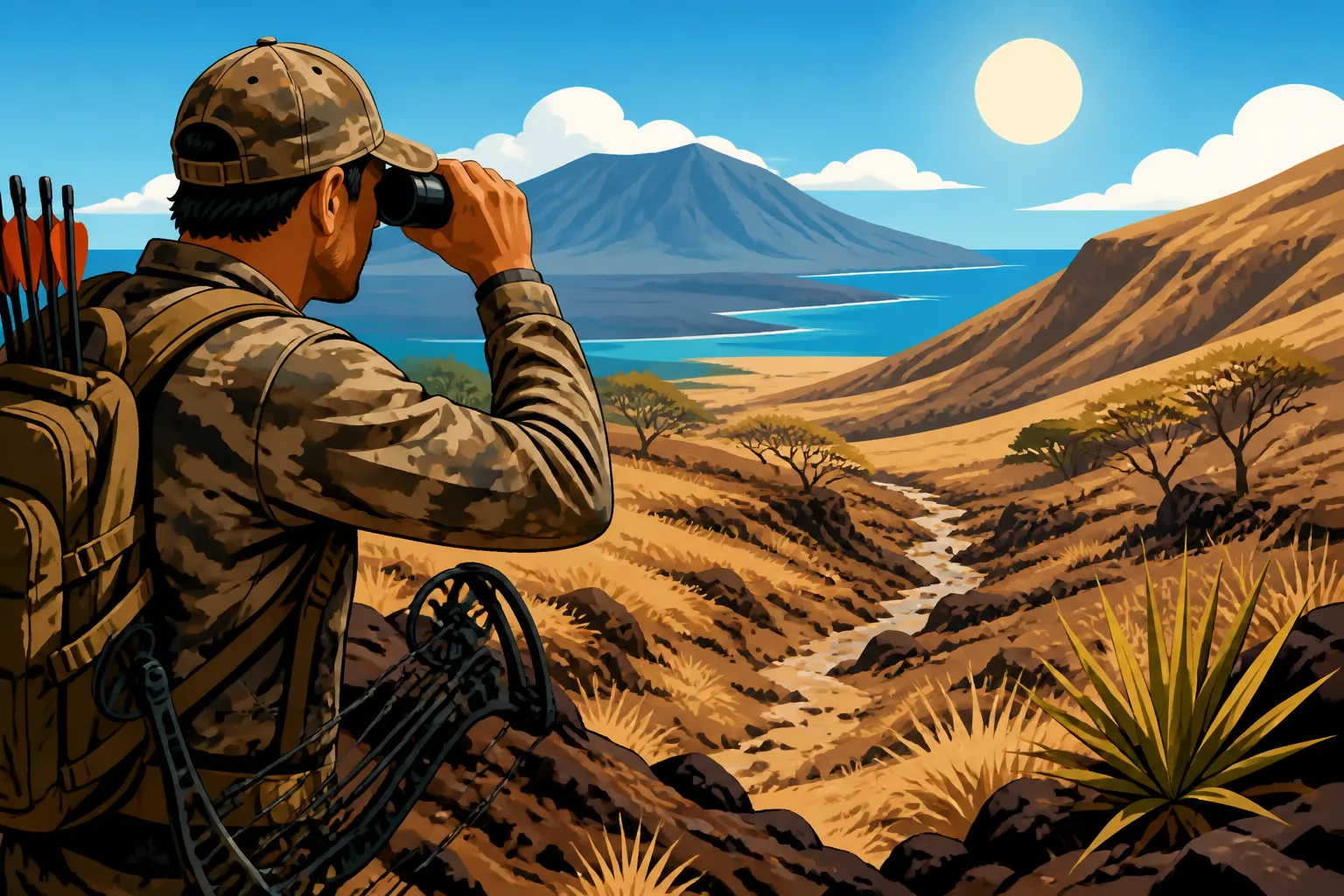
- Glassing from Afar: The key here is to use quality optics to glass the water source and its immediate surroundings from a significant distance. Find a vantage point that offers a broad view, ideally from a higher elevation. This allows you to locate animals without alerting them to your presence. Tactics described in Glassing Lanai's Open Ridgelines are highly applicable here, even if you're not on Lanai. Take your time, systematically scanning the area, especially shady spots where animals might be bedded near the water during the day.
- Strategic Approach: Once you've spotted your target, plan your stalk meticulously. The primary goal is to stay downwind and out of sight. This often means using terrain features like gulches, ridges, or dense vegetation for cover. It's a dance of moving when animals' heads are down, freezing when they look up, and always keeping the wind in your favor.
- Challenging Terrain: Hawaii’s dry country can be rugged. Lava flows are sharp and noisy, kiawe thickets are thorny, and open country offers little concealment. You might need to crawl, move slowly, and take detours to maintain cover and silence. The more open the country, the more critical your Spot-and-Stalk Tactics on Open Country become, demanding precise movements and a keen eye for subtle changes in topography.
- Wind Shifts: Be constantly aware of the wind. In many Hawaiian areas, thermals can shift unexpectedly, especially as the sun rises higher or begins to set. A sudden change can carry your scent directly to your target, sending them scattering. Have a contingency plan to adjust your approach or back out if the wind turns unfavorable.
Both stand hunting and spot-and-stalk demand patience, keen observation, and a deep understanding of animal behavior. Successfully hunting a water source means being adaptable and choosing the right tactic for the specific situation.
Gear and Ethical Considerations for Water Source Hunting
Hunting around water in Hawaii's dry regions isn't just about strategy; it's also about being properly equipped and upholding ethical hunting practices that respect the land, the animals, and other users.
Essential Gear for Dry Country Hunting
The unique environment of dry Hawaii country demands specific gear choices to ensure both your success and your safety.
- Water, Water, Everywhere (for you!): This might seem obvious when hunting a water source, but it's paramount. You will be out in direct sun, often in hot, dry conditions. Carry significantly more water than you think you'll need. Dehydration is a serious risk in Hawaii, and our guide on Water and Heat Planning for a Hawaii Hunt details just how critical this is. Don't rely on finding potable water from natural sources; always pack your own.
- Quality Optics: Binoculars (10x or 12x) and a spotting scope (15-45x or 20-60x) are non-negotiable, especially for spot-and-stalk or glassing. They allow you to survey vast dry landscapes and identify game at great distances without disturbing them.
- Appropriate Camouflage: Choose patterns and colors that blend with the dry scrub, kiawe, and lava rock. Khakis, tans, and dull greens are often more effective than deep forest patterns. Lightweight, breathable fabrics are key to managing heat.
- Sun Protection: A wide-brimmed hat, sunglasses, and high-SPF sunscreen are vital. Consider lightweight, long-sleeved shirts and pants to protect your skin from the intense Hawaiian sun, even if it feels counterintuitive in the heat.
- Navigation Tools: A reliable GPS device or a smartphone app like OuterSpatial (which is often used for checking in and out of units) is critical. Topographic maps, digital or paper, will help you navigate the often-featureless dry expanses and steep gulches. There's often no cell service, so download offline maps before you head out. Checking In and Out of Hawaii Hunting Units often relies on these apps, so be prepared.
- First-Aid Kit: A compact but comprehensive first-aid kit is essential. Sharp lava rock can cause nasty cuts, and thorns from kiawe and other plants are common. Be prepared for scrapes, blisters, and minor injuries.
- Field Dressing Supplies: Knife, game bags, and gloves are critical. The heat in dry Hawaii country means you need to field dress your animal quickly and efficiently to prevent spoilage. Our guide on Field Dressing Axis Deer in Hawaii Heat offers crucial advice for this. You'll want to get the hide off and the meat cooling as fast as possible.
Ethical Hunting and Conservation
Hunting in Hawaii isn't just a recreational pursuit; it's often a critical component of conservation efforts aimed at managing invasive ungulate populations. Approaching a water source hunt with strong ethical principles is paramount.
- Respect the Water Source: Never contaminate a water source with trash, human waste, or chemicals. Many of these sources are vital not only for game animals but also for local ecosystems and potentially even human use downstream. Leave no trace.
- Private Land Boundaries: Be absolutely vigilant about knowing your location and respecting private land boundaries. Many key water sources are on private ranches or agricultural lands. Trespassing is a serious offense and can jeopardize public hunting access in the long run. Always verify land ownership with tools like GoHunt or official DOFAW maps. If a water source is on private land, seek explicit permission from the landowner before entering.
- Other Hunters: On public land, especially around desirable water sources, you may encounter other hunters. Be respectful, maintain a safe distance, and communicate your intentions if necessary. Good etiquette ensures a positive experience for everyone.
- Humane Harvest: Take only ethical, well-aimed shots. A wounded animal fleeing into thick cover or across expansive lava fields can be incredibly difficult to recover, especially in challenging terrain and heat. Practice your shooting diligently before your hunt.
- Post-Harvest Care: Proper field care of your harvested animal is not just about meat quality; it's an ethical responsibility. Rapid cooling is essential in Hawaii’s heat. Get the animal field dressed quickly, skin it if possible, and get the meat into game bags that allow for airflow. Our guide on Cooling Meat Fast on a Hawaii Hunt provides essential tips for this.
- Conservation Impact: Understand that the animals you're hunting—Axis deer, feral goats, pigs, mouflon—are all introduced species that can have significant detrimental impacts on Hawaii's fragile native ecosystems and watersheds. Your hunting efforts contribute to managing these populations. Learning about what Ungulates Cost Hawaii's Watersheds highlights the importance of this role.
By combining thorough preparation, effective strategy, and a commitment to ethical hunting, you can have a rewarding and successful experience hunting water sources in Hawaii’s dry country. It's a challenging but deeply satisfying way to connect with the land and its unique wildlife.
Disclaimer
Please remember that hunting regulations, seasons, and unit boundaries in Hawaii can change. Always consult the most current Hawaii Department of Land and Natural Resources (DLNR) Division of Forestry and Wildlife (DOFAW) regulations before planning any hunt. This guide is for informational purposes only and does not supersede official state regulations.