Hunting Kauai’s Rifle Deer Weekends
Hunting Kauai's rifle deer weekends can feel like a daunting puzzle. You've got limited time, challenging terrain, and a unique species of deer that isn't found just anywhere. It’s easy to get overwhelmed trying to figure out the regulations, the best spots, and what gear you truly need for those precious weekend opportunities. This guide is here to untangle all that, helping you maximize your chances and enjoy a successful hunt for Black-tailed deer on the Garden Isle.
Understanding Kauai's Black-Tailed Deer and Their Unique Habitat
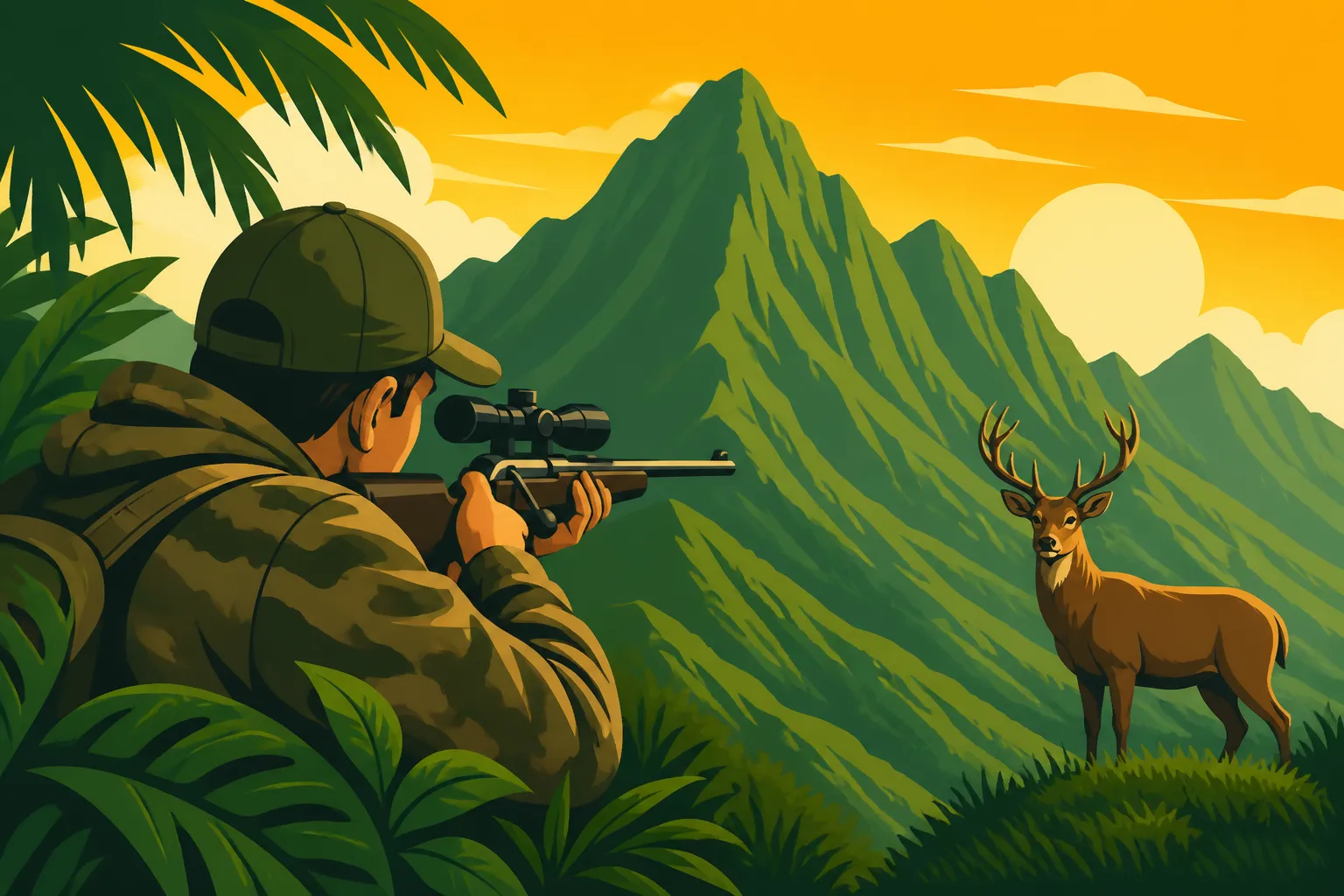
When you're talking about hunting deer on Kauai, you're specifically talking about the Pacific Black-tailed deer (a subspecies of mule deer). These aren't the Axis deer you find on Maui or Lanai; they're a completely different animal with their own quirks and habitat preferences. They were introduced to Kauai back in the 1960s and have since established a population primarily in the rugged Kokee and Waimea Canyon areas.
Black-Tailed Deer Behavior on Kauai
These deer on Kauai are hardy, having adapted to some truly wild country. They're often found in dense forest cover, using the thick undergrowth of koa, ʻōhiʻa, and fern forests for bedding and security. When they move, they typically stick to the cover of gulches, ridges, and the edges of more open areas. Unlike Axis deer which can be seen in large herds, Black-tailed deer often move in smaller groups or as solitary individuals, especially the older bucks.
Their diet is varied, consisting of browse like ferns, shrubs, and young shoots. You might find them transitioning between the dense forest and the edges of clearings or old agricultural plots, especially at dawn and dusk. The key to finding them is understanding this preference for cover, even when feeding. They won't typically stand out in a wide-open pasture like an Axis deer might. Their activity patterns are heavily influenced by hunting pressure; on public land, they become far more nocturnal or retreat into the thickest, most inaccessible parts of the canyons and ridges. Knowing what a Kauai Black-Tailed Deer Weighs can help you appreciate the robust build these animals develop in such demanding environments.
Key Deer Habitat Zones on Kauai
The vast majority of Kauai's Black-tailed deer population resides within the Kokee and Waimea Canyon areas. These are incredibly rugged, diverse landscapes. Kokee State Park and the surrounding forest reserves offer a mix of dense forest, open clearings, and deep gulches. The elevation changes significantly, and weather can shift rapidly from sunny and dry to foggy and wet. The Waimea Canyon, often called the "Grand Canyon of the Pacific," is a massive chasm with steep, eroded walls, narrow ledges, and thick vegetation along its rim and within its numerous tributary canyons.
Hunting these areas means being prepared for intense physical exertion. You’ll be navigating steep slopes, traversing uneven lava rock and muddy trails, and pushing through thick brush. Deer often use the contours of the land, moving along the rim of the canyon or dipping into its smaller gulches for cover. Understanding the nuances of Hunting Black-Tailed Deer in Kokee is crucial, as is knowing how to effectively hunt the Waimea Canyon Rim for Deer. These deer are adept at disappearing into the terrain, making careful glassing and slow, deliberate still-hunting methods essential.
Navigating Kauai's Rifle Season Regulations and Check-In Procedures
Hunting any game in Hawaii comes with its specific set of rules, and Kauai’s Black-tailed deer rifle weekends are no exception. These rules are designed to manage the deer population, ensure public safety, and protect the unique island ecosystem. Getting your ducks in a row before you head out is paramount.
Understanding Kauai's Specific Rifle Season Dates and Permits
Kauai's rifle deer season typically consists of designated weekends, often spread throughout the fall and winter months. These dates are announced by the Department of Land and Natural Resources (DLNR), Division of Forestry and Wildlife (DOFAW). It's not a free-for-all; you need to be aware of the exact dates. For example, some years might see hunts in November and December, while others could stretch into January. The specific dates can and do change annually, so always check the most current Hawaii Game Mammal Seasons information directly from the DLNR/DOFAW website or through the GoHunt Hawaii portal, which is a fantastic resource for all Hawaii hunting information.
To hunt Black-tailed deer on Kauai, you'll need a valid Hawaii hunting license and, importantly, a specific Kauai hunting permit for deer. Unlike some other islands where tags are drawn, Kauai’s deer hunts often operate on an over-the-counter permit system, but always verify current requirements. This permit typically specifies the unit you can hunt and your bag limit. Historically, the bag limit has been one Black-tailed deer (either-sex) per hunter per permit. Make sure you understand the nuances of a Kauai hunting permit costs, as these are separate from your general hunting license.
The Hunter Check-In and Out System
A critical aspect of hunting public land in Hawaii is the mandatory check-in and check-out procedure. For Kauai's rifle deer weekends, this means reporting to a designated check station before you enter the hunting unit and immediately after you exit, regardless of whether you harvested an animal. These check stations are usually located at key access points to the hunting areas, often staffed by DOFAW personnel.
The check-in process usually involves showing your hunting license and permit, receiving a unit map, and signing in. The check-out process is equally important, where you report your harvest (or lack thereof), providing details like sex, age, and location of the kill. This data is vital for DOFAW's wildlife management efforts. Forgetting to check out is a serious violation and can lead to fines or loss of hunting privileges. While traditional paper cards are still sometimes used, the state is increasingly moving towards digital options. Utilizing the OuterSpatial App to Check In is becoming a popular and convenient method. Always carry your license and permit with you in the field.
Legal Weapons and Hunter Education
For rifle deer weekends on Kauai, only specific rifle calibers are permitted. Generally, centerfire rifles .22 caliber and larger are allowed, but always consult the current regulations for any specific exclusions or minimum energy requirements. Shotguns with slugs are typically allowed, but check for gauge restrictions. Muzzleloaders are often part of a separate season, so confirm they are legal for the rifle weekend you plan to hunt.
Furthermore, all hunters, resident and nonresident, must complete a state-approved hunter education course. If you’re a Hawaii resident, you’ll take the Hawaii course. If you’re a nonresident, you can usually present proof of a hunter education certificate from another state or country. However, make sure to get The Nonresident Letter of Exemption from Hawaii DLNR/DOFAW beforehand if you plan to use an out-of-state certificate. You can find more information on Hawaii Hunter Education Requirements through the GoHunt Hawaii portal.
| Requirement | Details |
|---|---|
| Hunting License | Required for all hunters, resident or nonresident. Purchase annually. |
| Kauai Deer Permit | Specific permit needed for Black-tailed deer on Kauai, usually over-the-counter for designated weekends. Confirms unit and bag limit. |
| Hunter Education | Mandatory for all hunters. Nonresidents may need a Letter of Exemption with out-of-state certification. |
| Legal Weapons | Centerfire rifles .22 cal and larger (check specifics), shotguns with slugs. Always verify current year's regulations for exact calibers and restrictions. |
| Check-In/Out | Mandatory at designated stations before entering and after exiting the hunting unit. Failure to check out is a violation. |
| Bag Limit | Typically one Black-tailed deer (either-sex) per permit. |
| Blaze Orange | Generally required: one article of outer clothing (hat, vest, jacket) of solid blaze orange/pink, visible from all sides. Always confirm current regulations. |
| Youth Hunting | Specific rules apply for youth hunters, including minimum age and adult supervision. Check for Youth Hunt Weekend Dates by Island as special opportunities may exist. |
Effective Rifle Hunting Tactics for Kauai's Challenging Terrain
Hunting Kauai's Black-tailed deer on rifle weekends demands a well-thought-out approach. The terrain is brutal, the deer are wary, and those weekend-only hunts mean you’ll likely be sharing the woods with other hunters. Success here isn’t about luck; it's about preparation, patience, and adapting your tactics to the unique environment.
Spot-and-Stalk in Dense Cover
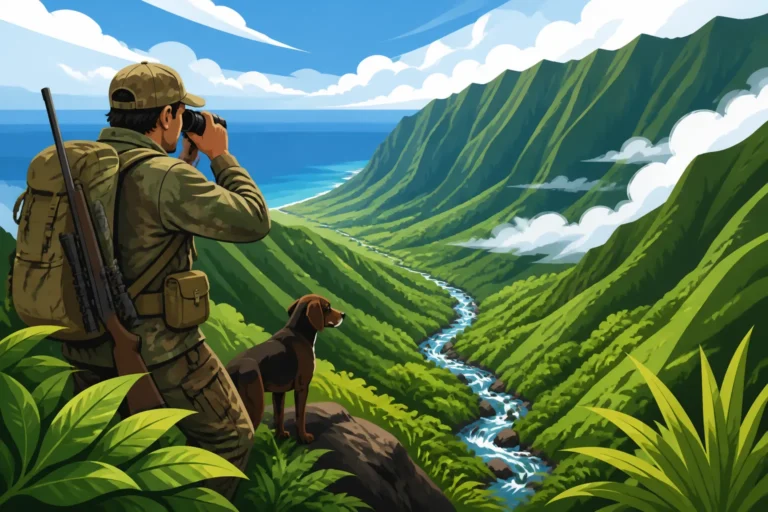
While Kauai has some more open areas, the Black-tailed deer often prefer the thick stuff, especially as hunting pressure mounts. This means traditional wide-open country spot-and-stalk often turns into a more nuanced game. You'll need to move slowly and deliberately, pausing frequently to glass not just open clearings but also dense pockets of vegetation, the shadowy edges of gulches, and the broken terrain of ridges. Quality optics are your best friend here. Binoculars like a good 10×42 or even a compact spotting scope can help you pick apart distant cover.
Instead of scanning vast landscapes, focus on smaller, manageable sections of terrain. Look for a flicker of an ear, a horizontal line in a vertical forest, or the distinct dark brown hide against the green. Wind direction is critical; constantly monitor it to ensure your scent isn't blowing ahead of you. The thermals in Kauai's deep canyons and varying elevations can be tricky, often shifting throughout the day. In the mornings, air tends to flow downhill, reversing to flow uphill as the day warms. Always try to hunt with the wind in your face or across you. This slow, methodical approach is often the most effective way of Still-Hunting Pigs in Hawaii's Wet Forest, and much of that same patience applies to deer in similar habitats.
Navigating Steep Gulches and Ridges
The Waimea Canyon and Kokee are defined by their dramatic topography: deep, steep-sided gulches and sharp, winding ridges. These features are both a challenge and an opportunity. Deer use these natural corridors and barriers for travel, bedding, and escape. Learning how to navigate a Hawaii Gulch System is paramount. You might find deer bedded on small benches within a gulch, or traveling along a game trail carved into a steep hillside.
When hunting these areas, safety is paramount. The ground can be unstable, slippery, and covered in loose rock or thick vegetation that conceals hazards. Always maintain three points of contact when climbing, and use trekking poles for stability. When approaching a ridge crest or a gulch rim, do so slowly and cautiously, often crawling the last few yards to peek over. You don't want to skyline yourself or blow out a deer that's just on the other side. Think about how you would approach Hunting Goats on Hawaii's Coastal Cliffs – the principles of stealth and careful movement apply here too.
Reading Sign and Understanding Pressure
Kauai's rifle deer weekends mean you'll be sharing the public hunting units with other folks. This pressure makes deer incredibly cautious. They'll often move to the thickest cover, deeper into gulches, or become mostly nocturnal. Knowing how to read their sign becomes even more important. Look for fresh tracks, droppings, rubs on small trees (especially by bucks), and browse lines indicating their feeding areas. The absence of fresh sign might tell you that area has been heavily pressured or that deer have moved elsewhere.
Hunting the fringes of known high-pressure areas, or focusing on less accessible spots where other hunters might not venture, can pay dividends. Consider a long walk in to a remote Hawaii unit, which can often lead to less disturbed animals. Be patient; sometimes it’s best to sit quietly for extended periods in a promising spot, letting the woods settle, rather than constantly pushing through cover and potentially pushing deer out of your area. Using an app like onX or even a good old-fashioned topo map with satellite imagery can help you identify these less-traveled pockets and plan your approach around the expected movement of both deer and other hunters.
Essential Gear and Safety for Kauai Deer Hunts
Kauai's environment is rugged and unforgiving. Packing the right gear and prioritizing safety are non-negotiable for a successful and enjoyable rifle deer hunt weekend. Don't cut corners here; preparedness can make all the difference.
Weaponry and Ammunition
Your rifle is obviously key. Ensure it's sighted in and you're proficient with it. For Black-tailed deer, a .270, .30-06, .308, or even a 6.5 Creedmoor are all excellent choices, offering enough power and flat trajectory for the varied shot distances you might encounter. Bring enough ammunition for your hunt, and consider bringing a few extra rounds for any unforeseen re-sighting or practice. Always keep your rifle cased and unloaded until you are in the field and ready to hunt.
Optics are also critical. A good quality rifle scope with sufficient magnification for varying light conditions and shot distances is a must. Don't forget a pair of reliable binoculars (10×42 is a great all-around choice) for glassing thick cover and identifying deer at a distance. Having a rangefinder is also highly recommended, especially with the undulating terrain, as judging distance can be deceiving.
Clothing, Footwear, and Hydration
Kauai's weather is notoriously unpredictable. One moment it's sunny and warm, the next a torrential downpour rolls in, especially in the higher elevations of Kokee. Layering is key. Start with moisture-wicking base layers, add insulating mid-layers (fleece or synthetic down), and top it off with a waterproof and windproof outer shell. Even in warmer temperatures, a sudden shower can make you dangerously cold if you're wet. Good rain gear for a windward Hawaii hunt is a must, even on the seemingly drier leeward side of the mountains, as storms can blow in.
Your footwear is arguably the most important piece of gear. You'll be walking rough lava without wrecking your boots, traversing muddy trails, and climbing steep, uneven terrain. Invest in sturdy, waterproof hiking boots with excellent ankle support and aggressive tread. Break them in well before your hunt to avoid blisters.
Hydration is critical. Even on cooler days, physical exertion in Hawaii's humidity can lead to rapid dehydration. Carry at least 2-3 liters of water, more if you plan a long trek, and consider electrolyte supplements. A quality backpack capable of carrying your gear and a potential deer quarter is also essential.
Safety and Emergency Preparedness
Beyond the basics, several items contribute directly to your safety. Blaze orange is often required on public hunting lands in Hawaii – typically at least one item of outer clothing, like a vest or hat, that is visible from all sides. Check the current regulations for specific requirements. A reliable first-aid kit, a headlamp with extra batteries, a knife, fire-starting materials, and a whistle are standard emergency gear.
Given the spotty cell service in remote areas like the Waimea Canyon, carrying a satellite communication device (like a Garmin inReach or a Zoleo) is highly recommended. These devices allow you to send SOS messages and communicate with loved ones even without cell signal, which is crucial for safety during a Hawaii hunt where No Cell Signal on a Hawaii Hunt is a common reality. Always let someone know your hunting plan, including your intended unit, route, and expected return time.
After a successful harvest, Field Care in Hawaii's Heat and Humidity becomes a priority. Having game bags, rope, and perhaps even a lightweight game cart for Packing Meat Out of a Hawaii Gulch can be invaluable. Getting the meat cooled quickly is essential to prevent spoilage in the warm climate.
Disclaimer
Please remember that hunting regulations in Hawaii can change. Always consult the official Hawaii Department of Land and Natural Resources (DLNR), Division of Forestry and Wildlife (DOFAW) website or contact their offices directly for the most current rules, season dates, and permit requirements before planning any hunt. This guide is for informational purposes only and does not constitute legal advice.