Hunting a Ridge Above a Hawaii Valley
Navigating the dense, often impenetrable valleys of Hawaii can be a hunter's greatest test, where the thick canopy hides animals and the wind swirls in unpredictable ways, making every step a gamble. But shift your focus upwards to the ridges overlooking these valleys, and a whole new set of challenges and opportunities emerges. This guide is dedicated to equipping you with the knowledge and tactics needed to successfully hunt these elevated pathways, helping you understand how Hawaii's diverse game animals utilize ridges and how you can plan your approach to intercept them.
Understanding Hawaii's Ridge and Valley Dynamics
Hawaii’s unique volcanic geology and relentless erosion have sculpted a landscape of dramatic peaks, deep gulches, and countless ridges that snake their way from the mountains to the sea. These features aren't just scenic backdrops; they are critical elements in how game animals move, feed, and seek security across the islands. For a hunter, grasping the interplay between a valley and its bounding ridges is fundamental to success.
The Unique Landscape of Hawaiian Ridges
When you picture a Hawaiian ridge, don't just think of a narrow spine of earth. These geological formations vary wildly, from sharp, exposed arêtes on the windward side of islands like Oahu or Maui, to broader, heavily vegetated contours found on the Big Island. Many ridges are ancient lava flows, now weathered, covered in soil, and cloaked in a mix of native 'ōhi'a and koa forests, or invasive guava, ironwood, and uluhe fern thickets.
What makes these ridges so unique is their role in creating distinct microclimates. One side might be perpetually wet, catching the trade winds and nurturing dense rainforest, while the leeward slope can be significantly drier, supporting more open, sparse vegetation. This stark contrast affects everything from water availability to food sources, directly influencing where game animals choose to live and travel. Hunters often find that ridges serve as natural highways or escape routes, connecting different habitats. They allow animals to move with purpose, avoiding the deep, often boggy or cliff-ridden valley bottoms, while also providing elevated vantage points for spotting predators – including two-legged ones. Knowing the specific character of a ridge, whether it’s a wide, gentle slope or a jagged, exposed edge, dictates your approach and even the species you might encounter.
Why Animals Use Ridges
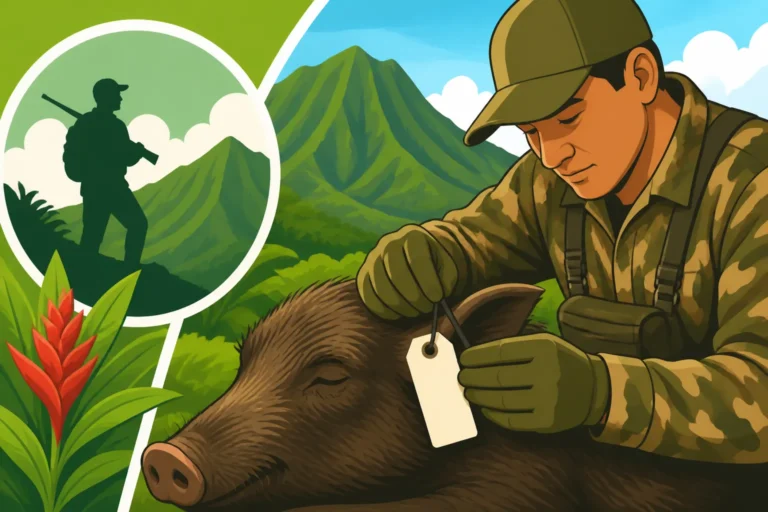
Game animals in Hawaii aren't just randomly wandering; their movements are purposeful and driven by fundamental needs for food, water, security, and breeding. Ridges play a pivotal role in meeting these needs across various species. Feral pigs, for instance, frequently utilize established game trails that run along ridge lines. These trails offer easier passage through otherwise impenetrable vegetation, linking their bedding areas in dense cover to prime feeding grounds, such as taro patches in the valley or fruit-bearing trees higher up. You'll often find signs of rooting, fresh tracks, and scat along these ridge trails.
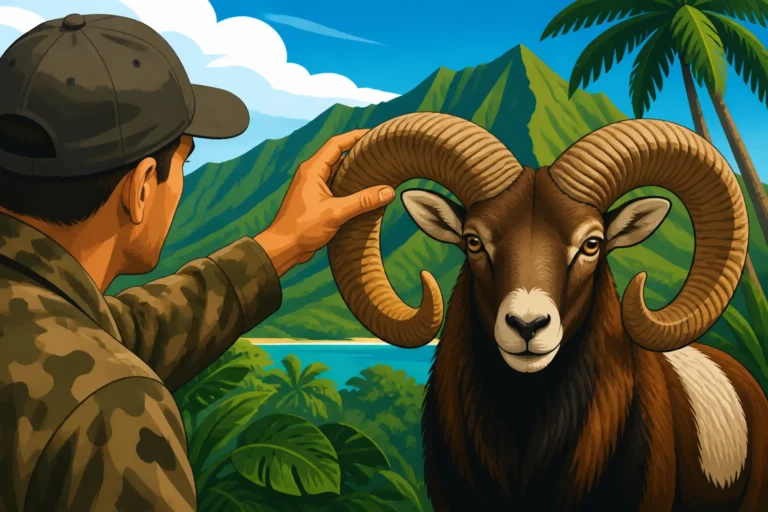
Feral goats, masters of the steep and exposed, instinctively seek the highest, most precarious ridges, especially those with rocky outcroppings or sparse vegetation, for security. They use their keen eyesight and agility to navigate these heights, making them incredibly difficult to approach. A goat will often traverse a ridge to move between bedding areas and foraging spots, or to escape perceived danger by climbing to an inaccessible perch. While less common on dense, steep ridges, Axis deer, especially on islands like Maui and Molokai, will use broader, gentler ridge lines or saddles to move between water sources and feeding areas in drier, more open country. Similarly, Mouflon sheep on the Big Island often frequent the high-elevation slopes and ridges of Mauna Kea and Mauna Loa, using the contours and sparse cover for bedding and travel in their rugged alpine environment. The common thread for all these species is the inherent advantage of elevation – it offers better visibility, often a drier footing, and a strategic position for both travel and defense.
Strategic Scouting and Planning for Ridge Hunts
Hunting a ridge above a valley in Hawaii isn't about blind luck; it's about meticulous planning and understanding the nuances of the terrain and local conditions. A successful ridge hunt begins long before you set foot on the trail, with diligent scouting and a deep dive into the environment's unique challenges.
Reading Topography and Vegetation
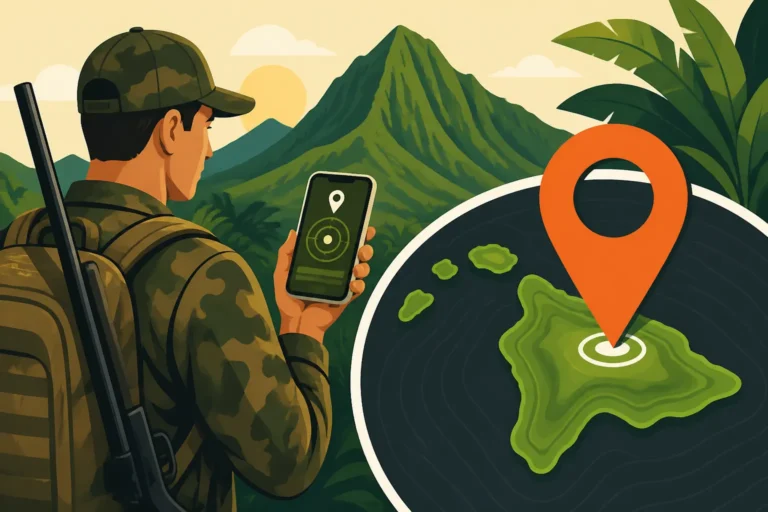
Before you ever lace up your boots, modern mapping tools like GPS apps on your phone or devices, such as those that integrate with GoHunt resources, combined with traditional topographic maps, are your best friends. Your goal is to identify key topographic features along the ridge: look for saddles, which are low points in the ridge that act as natural funnels for animal movement; benches or flats along a steep slope that might serve as bedding areas; and points or spurs that extend into the valley, offering vantage points for both you and the game. Pay close attention to vegetation changes: a transition from dense uluhe fern to open koa forest can create a natural edge that animals frequent. A line of specific fruit trees, like guava or mango, or a stand of kiawe, might indicate a prime feeding area. You’re essentially trying to predict where an animal would want to be, given the available cover, food, and escape routes. Understanding the lay of the land from an aerial view allows you to pinpoint potential stand locations or ambush points that you might never discover from the valley floor.
Analyzing Wind and Thermals
In Hawaii, understanding wind and thermals is paramount, perhaps even more so when hunting ridges. The islands are dominated by trade winds, typically blowing from the northeast, but these broad patterns interact violently with the complex topography of mountains and valleys, creating highly localized and often unpredictable conditions. As the sun rises and heats the valley floor and its slopes, the warmer, lighter air begins to rise, creating an upward draft known as a thermal. These thermals will carry your scent directly up the valley walls and over the ridges. This means that approaching a ridge from below during the morning hours, or still-hunting along its crest, will likely blow your scent directly to any game positioned above or along the ridge.
Conversely, as evening approaches and the land cools, the air in the valleys becomes cooler and denser, causing it to sink and create downward thermals. This effect carries scent from the ridge down into the valley. Therefore, a strategic approach might involve starting high and hunting down a ridge in the morning, or climbing into position on a ridge in the late afternoon to hunt down into the valley as the thermals drop. Near saddles or abrupt changes in elevation, winds can swirl erratically, making scent control a constant battle. Always carry a wind checker and use it frequently, every few minutes, to understand the subtle shifts in air current. Ignoring the wind in Hawaii's ridge country is a surefire way to educate the local game.
Pre-Season Reconnaissance
You wouldn't head into a major battle without recon, and hunting a Hawaii ridge is no different. Whenever possible, conduct pre-season scouting. This could involve physically walking in to a remote Hawaii unit, hiking the ridge lines, looking for fresh tracks, rub lines, wallows (for pigs), and heavily used game trails. The more time you spend on the ground, the better you’ll understand the subtle nuances of animal movement. Look for signs of bedding areas—often dense, sheltered spots with good visibility—or feeding areas where animals are regularly browsing.
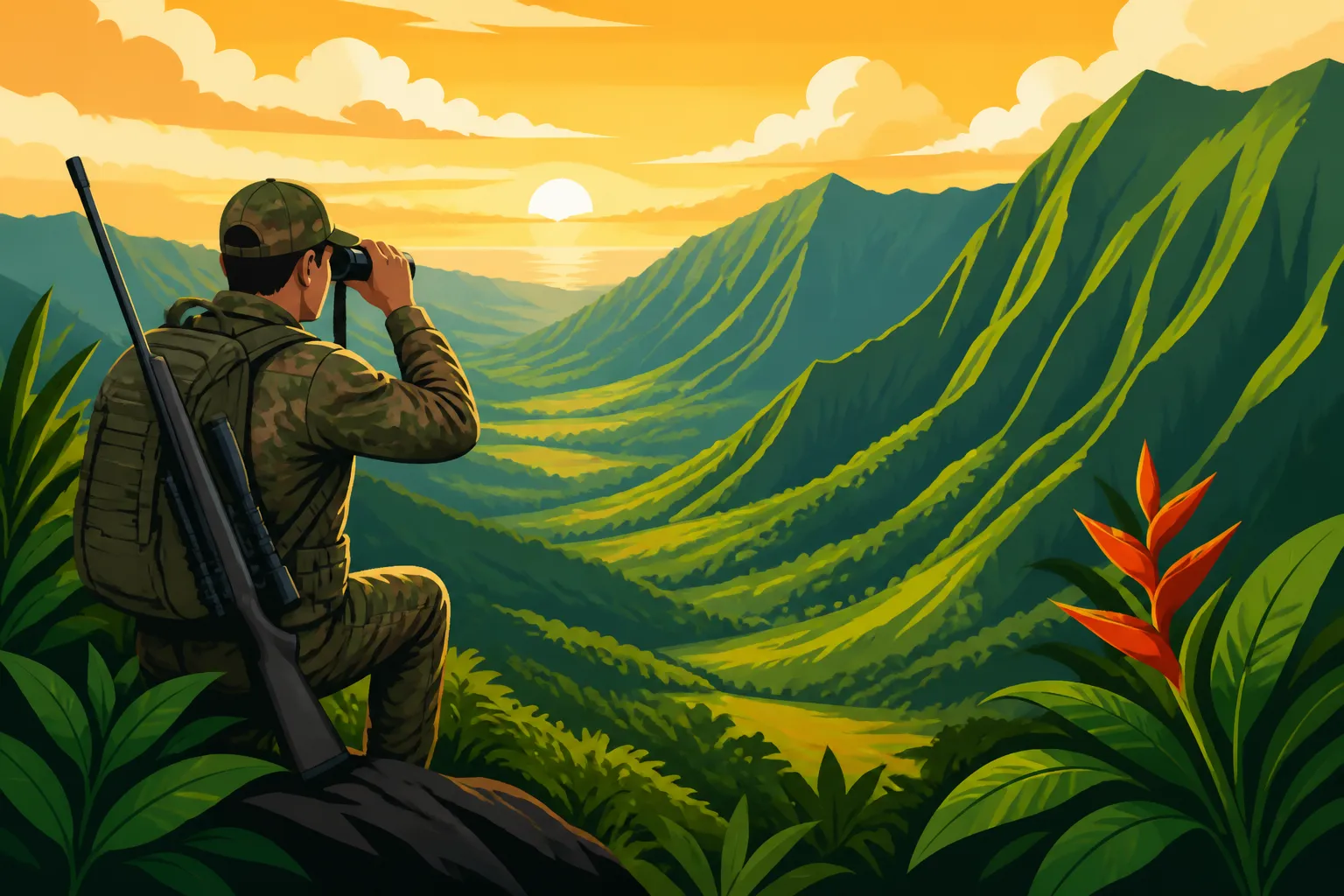
If physical access is limited, use high-quality binoculars or a spotting scope to glass a Hawaii coastline for goats or observe distant ridges from a safe vantage point. You might spot travel patterns, identify preferred bedding sites, or even locate water sources that concentrate game. Setting up trail cameras in promising areas, particularly along saddles or dense sections of a ridge with heavy sign, can provide invaluable intelligence about what species are present, their numbers, and their movement patterns, giving you a significant edge when the season opens.
Effective Hunting Tactics on Ridge Systems
Once you've done your homework and understand the unique dynamics of Hawaii's ridges, it's time to put those insights into action. The tactics you employ will need to be flexible, adapting to the specific species, the terrain, and the ever-changing Hawaiian weather.
The Power of the High Ground and Its Pitfalls
Holding the high ground offers inherent advantages in hunting. From a ridge, you often gain a commanding view of the surrounding valleys and slopes, allowing you to spot animals moving below or identify potential bedding areas. This elevated position can provide better shooting lanes, especially if you're targeting animals traversing the opposing slope. Approaching a bedded animal from above, with the wind in your favor, can also be easier than a frontal assault. However, the high ground also presents distinct pitfalls. You are more likely to be silhouetted against the skyline, making careful movement and concealment paramount. Ridge lines are often windier, exacerbating scent dispersal if you're not meticulous with wind direction. The climb to a productive ridge can be physically taxing, and the thought of Packing Meat Out of a Hawaii Gulch – especially if it’s from the bottom of a deep valley up to your ridge access point – is a daunting one.
When moving along a ridge, practice "cresting" tactics. Instead of walking directly on the very top where you'd be exposed, walk just below the crest, using the elevation change for concealment. Periodically, slowly and carefully peek over the crest to scan the other side of the ridge and the valley below. Always assume there's an animal just over the rise and plan your movements accordingly.
Still-Hunting and Ambush Strategies
Still-hunting is a highly effective tactic on Hawaii's ridges, especially for wary animals like pigs or Axis deer. This involves moving incredibly slowly, taking a few steps, then pausing to glass, listen, and scan your surroundings for extended periods. Focus on the nuances: the flick of an ear, the shine of a tusk, a patch of hide through the dense vegetation. Pay close attention to the wind, keeping it in your face or quartering. Still-hunting a guava thicket for pigs or moving through an 'ōhi'a and koa forest requires immense patience and sharp senses.
Ambush strategies work wonderfully when you've identified key travel corridors or feeding areas along a ridge. Saddles, for instance, are classic pinch points where animals are almost guaranteed to cross. Setting up before first light or in the late afternoon, with a favorable wind, and waiting patiently can pay huge dividends. Consider the two sides of a ridge: the windward side, constantly exposed to moisture, often boasts denser vegetation and more water sources, which might hold pigs or goats. The leeward side, typically drier and more open, could be better for spotting Axis deer or more exposed goat herds. Your choice of ambush site should reflect these microclimates and the likely movement patterns of your target species.
Leveraging Different Species Behavior
Each game animal in Hawaii interacts with ridge systems in its own way, and understanding these behaviors is key to tailoring your hunt.
- Feral Pigs: Pigs are incredibly adaptable and will use ridges extensively, particularly to traverse between feeding grounds in wet valley bottoms (like those you’d find when Hunting Pigs in Hawaii's Rainforest Gulches) and bedding areas in thicker, dryer cover higher up. Look for their distinct rooting patterns and wallows along ridge lines, indicating frequent travel. They're often most active at dawn and dusk, but will move during the day in cooler, wetter weather or when undisturbed. Still-hunting slowly along a ridge trail, with the wind right, is often successful.
- Feral Goats: Goats are arguably the kings of steep, broken ridge country. They use the high ground for security and vantage, often bedding on inaccessible ledges or steep slopes during the day. You’ll find them on exposed, rocky ridges, similar to those you might encounter when Hunting Goats on Hawaii's Coastal Cliffs or Hunting Goats in Hawaii's Canyon Country. They have incredible eyesight, so spotting them first and planning a careful stalk from below or across a neighboring ridge, again accounting for thermals, is essential. They move well at first light and last light, descending from higher bedding areas to feed.
- Axis Deer: While not typically found on the steepest, most overgrown ridges, Axis deer will utilize broader ridge lines and saddles, especially in the drier, more open environments of Maui or Molokai. These ridges serve as travel corridors between water sources and feeding areas. Spot-and-Stalk Axis Deer in Hawaii often involves glassing expansive leeward slopes and identifying deer moving along these contours. Their keen sense of smell and hearing means a slow, deliberate stalk is crucial.
- Mouflon Sheep: On the Big Island, Mouflon sheep are synonymous with high-elevation, open country. They are frequently found on the slopes and ridges of Mauna Kea and Mauna Loa. Hunting Mouflon Sheep on Hawaii Island requires significant physical exertion, as these sheep favor the steep, rocky terrain above the tree line. Glassing these vast, open ridges from a distance to locate a ram, then planning a careful, often long stalk through broken lava fields and sparse mamane forest, is the standard approach.
Essential Gear and Safety for Ridge Hunting
Hawaii's ridge country is beautiful, but it can be unforgiving. Coming prepared with the right gear and a strong emphasis on safety isn't just a good idea; it's critical for a successful and safe hunting experience.
Footwear and Traction
This cannot be stressed enough: your feet are your most important asset when hunting Hawaii's ridges. The terrain is often steep, uneven, rocky, and frequently slick with rain or dew. Investing in high-quality, waterproof or water-resistant hiking boots with excellent ankle support and aggressive traction is non-negotiable. Look for boots designed for mountaineering or serious backpacking, as they offer the rigidity and grip needed to prevent slips and sprains on steep, loose slopes or wet volcanic rock. For areas with extensive lava flows, like parts of the Big Island, boots designed for durability and abrasion resistance are key to Walking Rough Lava Without Wrecking Your Boots. A sprained ankle deep in a gulch or high on a ridge can turn a hunt into a life-threatening emergency.
Navigation and Communication
Even if you know a unit like the back of your hand, never rely solely on memory. Carry a reliable GPS device, whether it's a dedicated handheld unit or a smartphone with a robust hunting app like OuterSpatial. Download offline maps of your hunting unit before you go, because you can almost guarantee there will be No Cell Signal on a Hawaii Hunt in remote ridge country. A physical map and compass should always be carried as a backup, and you should know how to use them.
For serious remote hunts, a satellite messenger or personal locator beacon (PLB) is an essential safety item. These devices allow you to send emergency messages or check-in texts even when far beyond cell service, providing peace of mind for yourself and your loved ones. A powerful headlamp, with fresh batteries, is also crucial for early morning starts or unexpected delays that leave you hiking out after dark.
Water, Food, and First Aid
Hawaii's warm climate, combined with the strenuous effort of ridge climbing, means you will dehydrate faster than you think. Carry significantly more water than you believe you'll need. A hydration pack is excellent for hands-free sipping, and consider a water filter or purification tablets if you're planning a multi-day trip or anticipate needing to refill from natural sources (always purify stream water in Hawaii!). Pack high-energy, non-perishable snacks like trail mix, energy bars, and jerky to keep your fuel levels up.
A comprehensive first-aid kit is not optional. It should include supplies for blisters, cuts, scrapes, sprains, insect bites, and any personal medications. Knowing basic first aid is equally important. Remember, help can be hours away in some of these remote areas, so being self-sufficient is paramount.
Meat Care and Extraction
Successfully harvesting an animal on a ridge hunt is only half the battle. The real work often begins with getting that animal off the mountain. The heat and humidity of Hawaii mean that rapid field care is essential to prevent spoilage. Be prepared to immediately begin Field Dressing Axis Deer in Hawaii Heat or any other species, focusing on quickly cooling meat fast on a Hawaii hunt. This typically means quartering the animal and getting it into breathable game bags as soon as possible.
A sturdy frame pack is invaluable for packing out quarters. The steep, uneven terrain makes dragging an animal extremely difficult, if not impossible, so breaking it down into manageable loads is crucial. If hunting with a partner, plan to split the load. Consider a plan for Packing Meat Out of a Hawaii Gulch or off a steep ridge before you even begin your hunt. Sometimes, an extra trip or two might be required, or even calling in assistance for more remote extractions, but preserving the meat is the ultimate goal.
Disclaimer
Hunting is an inherently dangerous activity. The information provided in this guide is for informational purposes only and should not be considered a substitute for personal research, adherence to all local, state, and federal hunting regulations, or professional guidance. Always prioritize safety, practice ethical hunting principles, and be prepared for all potential hazards in the field.