Hawaii’s Rules on Baiting and Feeding
The world of hunting regulations can feel like navigating a dense kiawe thicket without a compass, and few topics stir up more confusion or debate than baiting and feeding. Hunters often face a real dilemma: how do you improve your chances while staying within the spirit and letter of the law? This comprehensive guide aims to untangle Hawaii's specific rules on baiting and feeding, helping you hunt responsibly and ethically across our unique island landscape.
Understanding the Basics of Baiting and Feeding in Hawaii
It’s easy to assume that if you’re trying to attract game, it must be considered baiting, but the reality is far more nuanced, especially in Hawaii. Our islands have distinct ecosystems, and the Department of Land and Natural Resources (DLNR) Division of Forestry and Wildlife (DOFAW) has crafted rules to address our specific challenges and species. Getting this wrong can lead to serious penalties, so understanding the fundamentals is crucial before you even think about setting out on your next hunt.
Why Baiting is a Complex Topic for Hunters
For many hunters, the idea of baiting is either a completely foreign concept or a standard practice, depending on where they learned to hunt and what species they pursued. On the mainland, baiting deer with corn piles is common in some states, while strictly forbidden in others. This national variation creates a lot of confusion when folks come to Hawaii or even for local hunters trying to decipher the rules. There's also the underlying ethical debate: does baiting diminish the "fair chase" aspect of hunting? In Hawaii, with our unique ecosystem and introduced game species, this debate takes on an even sharper edge, balancing conservation goals with hunting opportunities. The frustration often comes from wanting to improve success rates while adhering to a complex rulebook that might feel contradictory at times. Hunters just want a clear path to follow, and sometimes that path feels obscured.
The Core Legal Stance in Hawaii
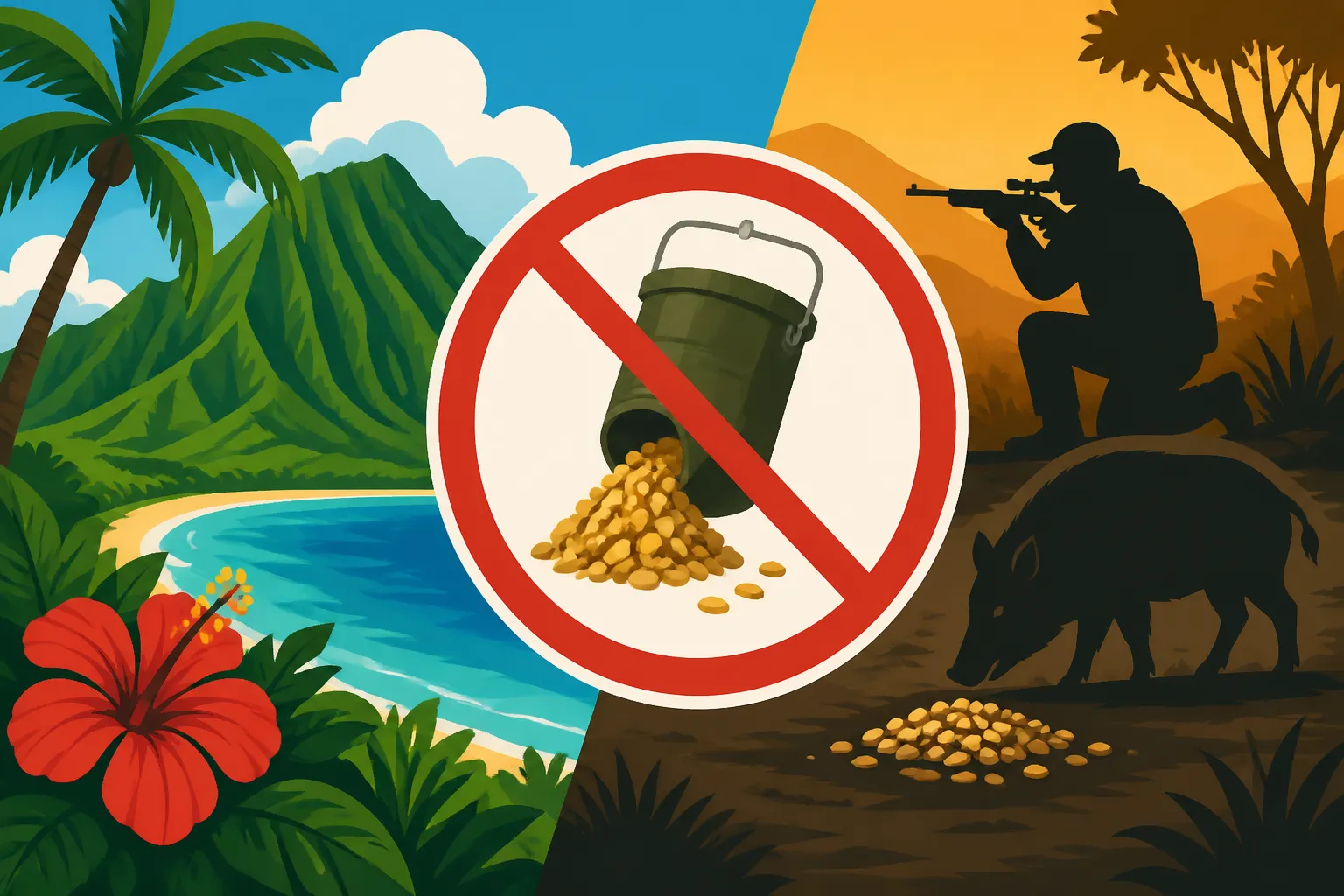
Hawaii's regulations are generally quite clear: for most game mammals, baiting is strictly prohibited. This means you cannot intentionally place food or other attractants to lure animals for the purpose of hunting them. The intent behind placing the attractant is key. This isn't just about throwing out a pile of corn; it extends to anything you put out with the specific aim of drawing game within range for a shot. However, the exact wording can differ slightly between game mammals and game birds, and even between specific public hunting units. It's not a blanket "no," but it's a "no" that applies very broadly across our big game species. For example, if you're out Hunting Hawaii's Feral Pigs or Axis Deer Hunting in Hawaii, you absolutely cannot set up a bait station. The rules are designed to promote fair chase and prevent the over-harvesting of animals that might become habituated to human-provided food sources.
Specific Rules by Game Species
Hawaii is home to a variety of huntable game species, from big game like Axis deer and feral pigs to a diverse array of game birds. The regulations around baiting and feeding can vary subtly between these categories, making it essential to understand the specifics for the animal you're pursuing. Don't assume that what applies to pigs automatically applies to francolins; a quick glance at the rulebook will tell you otherwise.
Rules for Big Game Mammals (Axis Deer, Pigs, Mouflon, Goats, Black-Tailed Deer)
When it comes to our beloved big game mammals in Hawaii – the swift Axis deer, the wily feral pigs, the majestic Mouflon sheep, the hardy feral goats, and the elusive black-tailed deer on Kauai – the rule is largely consistent and stringent: baiting is illegal. This means you cannot establish a feed site, lay out corn, sweet feed, fruit, or any other foodstuff with the intention of attracting these animals to a specific location for hunting. This isn't just a suggestion; it's a hard-and-fast rule enforceable by law. The concern here is multi-faceted: it promotes unethical hunting practices by removing the challenge of natural foraging patterns, and it can concentrate animals, potentially increasing the spread of disease or making them unnaturally dependent on human food.
Imagine you’re planning a hunt for Mouflon Sheep Hunting on Hawaii Island or venturing out for Hunting Hawaii's Feral Goats on a rugged cliff face. You might think leaving out some feed could bring them down from those steep slopes. But that's precisely what the regulations prohibit. The emphasis in Hawaii is on fair chase, relying on scouting, tracking, and natural hunting skills. This even applies to situations where you might be hunting near agricultural areas; while animals might naturally feed on crops, intentionally placing those crops in a hunting zone is a different matter. Understanding the difference between an animal naturally feeding in a field and you creating a "bait pile" is paramount.
Rules for Game Birds
Now, this is where the waters can get a little murkier, but also a little clearer for those who've hunted birds elsewhere. For game birds in Hawaii, such as pheasants, francolins, doves, and quail, the general rule is still "no baiting" if you're directly hunting over a baited area. However, there are distinctions related to agricultural practices and normal feeding. You cannot spread feed specifically to concentrate birds for hunting. But what about a landowner who routinely feeds their chickens or has a crop field where birds naturally gather? That's typically not considered baiting for hunting purposes as long as the primary intent isn't to draw birds for a hunt.
The key distinction for game birds often lies in "normal agricultural practices" or "bona fide feeding operations." For example, if you're on a ranch and the owner is broadcasting feed for cattle, and game birds happen to come in to feed on scattered grains, hunting those birds is generally permissible, provided it's a regular operation and not done solely to attract game birds for a hunt. Similarly, harvesting crops that leave residue on the ground is usually fine. However, actively broadcasting grain in a specific spot or creating a "bird feeder" scenario purely for hunting would fall under illegal baiting. It's a fine line, but the intent is crucial. When you're planning for Hawaii Game Bird Hunting, it’s always best to verify any specific unit rules, as certain areas might have additional restrictions.
Defining "Baiting" and "Feeding" in a Hunting Context
The terms "baiting" and "feeding" often get used interchangeably, but in the realm of hunting regulations, they carry specific legal weight. It's not just about what you put out, but why you put it out, and where. This distinction is vital for every hunter in Hawaii to grasp, preventing unintentional violations that could put your hunting privileges at risk.
What Constitutes a Legal Food Plot or Supplement?
This is a hot topic for many landowners and hunters who want to improve habitat and nutritional resources for game animals on their property. In Hawaii, establishing a food plot, planting specific crops, or even providing mineral supplements can often be done legally, provided it's not done with the intent to concentrate animals for immediate hunting. The distinction is often about the long-term management of wildlife versus short-term hunting strategy.
For example, planting a field of sorghum or corn on private land to provide cover and forage for game birds and deer over an extended period, as part of a habitat improvement plan, is generally allowed. The animals might visit these areas, and hunting adjacent to them could be considered fair chase, as the food source is part of the natural landscape created by agricultural practices, not a bait pile placed just before a hunt. Similarly, placing mineral licks or protein blocks for the general health and development of a herd is usually permissible, especially if it's a continuous, year-round practice not directly linked to a specific hunt date. The intent is animal health and habitat enrichment, not baiting for a quick kill. It’s about being a land steward, not a hunter using an unfair advantage. If you're utilizing services like GoHunt to plan your approach, be sure their resources on Hawaii's regulations align with this understanding of habitat improvement versus baiting.
| Activity | Intent | Legal Status for Big Game in Hawaii | Legal Status for Game Birds in Hawaii (Generally) |
|---|---|---|---|
| Placing a Pile of Corn | To attract animals for immediate hunting | Illegal | Illegal (if hunting directly over it) |
| Planting a Food Plot | Long-term habitat improvement/nutrition | Legal (if not for immediate hunting) | Legal (if not for immediate hunting) |
| Mineral/Protein Blocks | Herd health/supplementation | Legal (if not for immediate hunting) | Legal |
| Leaving Out Fruit/Scraps | To attract animals for immediate hunting | Illegal | Illegal (if hunting directly over it) |
| Agricultural Crop Residue | Result of normal farming practices | N/A (animals forage naturally) | Legal (hunting over natural residue) |
| Regular Livestock Feed | Feeding domestic animals, game forages naturally | N/A (animals forage naturally) | Legal (hunting over natural foraging) |
When Does Natural Forage Become "Bait"?
This is perhaps one of the trickiest grey areas. Imagine you're Reading Axis Deer Sign in Dry Country and you find a mango tree laden with ripe fruit that has fallen to the ground. Axis deer absolutely love mangoes and will congregate there. Is hunting over that naturally fallen fruit considered baiting? Generally, no. The key is "natural forage." If a food source occurs naturally in the environment – be it fallen fruit, wild berries, or indigenous plants that game animals consume – hunting near it is part of the challenge and strategy of fair chase.
However, if you, as a hunter, collect those mangoes and pile them up in a different location, or if you bring mangoes from home and scatter them, even under the same tree, that action transforms it into bait. The distinction lies in human intervention. The moment a human intentionally manipulates a food source to create an attractive hunting spot, it veers into the territory of illegal baiting. Even if the food item is something animals would naturally eat, your deliberate placement of it is what changes its legal status. This principle applies whether you're stalking deer or looking for What Feral Pigs Eat in the Islands – if you put it there to draw them in, it's bait.
Consequences of Violating Baiting and Feeding Regulations
Let’s be honest, nobody wants to find themselves on the wrong side of the law, especially when it comes to hunting. Violating baiting and feeding regulations in Hawaii isn't just a slap on the wrist; it can have significant and long-lasting repercussions that impact your ability to hunt in the islands and potentially elsewhere. It’s far better to understand and respect the rules than to face the severe consequences of a violation.
Penalties and Enforcement for Non-Compliance
DOFAW enforcement officers are serious about upholding Hawaii's hunting regulations, and baiting violations are no exception. The penalties can range from hefty fines to the forfeiture of equipment (including firearms, bows, and even vehicles used in the commission of the offense), and the suspension or revocation of your hunting license. A license revocation in Hawaii often means you won't be able to obtain a hunting license in any state that is part of the Interstate Wildlife Violator Compact, which includes most U.S. states. This isn't just a temporary setback; it can end your hunting career for years, or even permanently.
The process usually involves being cited by a conservation officer, potentially followed by a court appearance. Beyond the legal ramifications, there's also the social stigma within the hunting community. Reputations are hard-earned and easily lost. It’s crucial to remember that ignorance of the law is not an excuse. As a hunter, it's your responsibility to know and abide by all regulations. This includes not just the general statewide rules, but also any specific rules for Hawaii's Hunting Units and How They Work or particular drawn hunts you might be participating in. Always cross-reference the current Hawaii Administrative Rules (HAR) and any special conditions for the unit you're in.
Ethical Considerations and Fair Chase
Beyond the legal penalties, violating baiting and feeding regulations also brings up significant ethical questions, particularly regarding the principle of "fair chase." Fair chase is a cornerstone of ethical hunting, emphasizing respect for the animal and the challenge of the hunt. It means giving the animal a reasonable chance to escape and relying on your skill, knowledge of the terrain, and understanding of animal behavior, rather than artificial advantages.
When you bait an animal, you're essentially luring it into a false sense of security, concentrating it in a predictable location. This diminishes the animal's natural survival instincts and the hunter's need to truly "hunt." It turns a challenging pursuit into more of a waiting game, which many in the hunting community find disrespectful to the game animal and the tradition of hunting. In Hawaii, where many game animals are introduced species managed for ecological balance and recreational hunting, maintaining fair chase principles helps uphold the integrity of hunting as a conservation tool and a respected outdoor pursuit. Hunters play a vital role in Hawaii’s ecosystem management, and maintaining ethical standards reinforces that role.
Navigating Grey Areas and Best Practices
Despite the clear rules, situations often arise that feel like "grey areas." What if a neighbor is feeding domestic animals, and game birds are attracted to the spillage? What if you discover a natural food source that animals are hammering, and you want to hunt it? Navigating these scenarios requires good judgment and a commitment to transparency. The best practice is always to err on the side of caution and seek clarification when in doubt.
Researching Unit-Specific Regulations
Hawaii's hunting landscape is incredibly diverse, and so are its regulations. While statewide rules provide a general framework, specific public hunting units, often managed by DOFAW, can have additional, more granular rules that might impact baiting and feeding. For example, some units might have different rules regarding the use of specific attractants or the proximity to certain boundaries. You might find that Hawaii Island Hunting Unit Seasons have different nuances than those on Maui or Kauai.
Before heading out to any unit, it is imperative to check the specific hunting regulations for that particular unit. These regulations are usually published annually by DOFAW and can be found on their website, often within the annual hunting proclamation. Pay close attention to any "special conditions" listed for your chosen unit. These conditions often contain details that supersede or add to the general statewide rules. Hunters using services like GoHunt for their planning should always double-check the latest DOFAW proclamations, as unit-specific rules can sometimes change from year to year based on animal populations, habitat conditions, or public safety concerns.
Consulting with DOFAW and Local Experts
When in doubt, always ask. This is the single most important piece of advice for any hunter concerned about baiting or feeding rules. DOFAW staff are the definitive source for current regulations and interpretations. If you have a specific scenario in mind, pick up the phone and call your local DOFAW office. They would much rather answer a question beforehand than deal with a violation afterward. Be specific with your questions, describing the location, the animal you intend to hunt, and the exact nature of the attractant or activity you're questioning.
Beyond official channels, engaging with experienced local hunters can also provide valuable insight into how regulations are interpreted and applied in specific areas. However, always treat informal advice as secondary to official DOFAW guidance. Local wisdom is great for learning about Hunting Hawaii's Volcanic Terrain or understanding game movements, but for legal specifics, DOFAW is your go-to. Attending hunter education courses, even if you’re already certified, can also be a great way to stay up-to-date on regulations and clarify confusing points. Remember, the goal is not just to avoid a ticket, but to ensure that your hunting practices are legal, ethical, and sustainable for Hawaii's unique environment. When checking in and out of units, utilizing tools like the Using the OuterSpatial App to Check In is helpful, but it's also a great opportunity to ask unit managers any last-minute questions about regulations.
Disclaimer
Please remember that hunting regulations are subject to change. While this guide provides comprehensive information based on current understanding, it is your responsibility as a hunter to consult the most recent official Hawaii Department of Land and Natural Resources (DLNR) Division of Forestry and Wildlife (DOFAW) hunting regulations and proclamations before engaging in any hunting activity. This content is for informational purposes only and does not constitute legal advice.