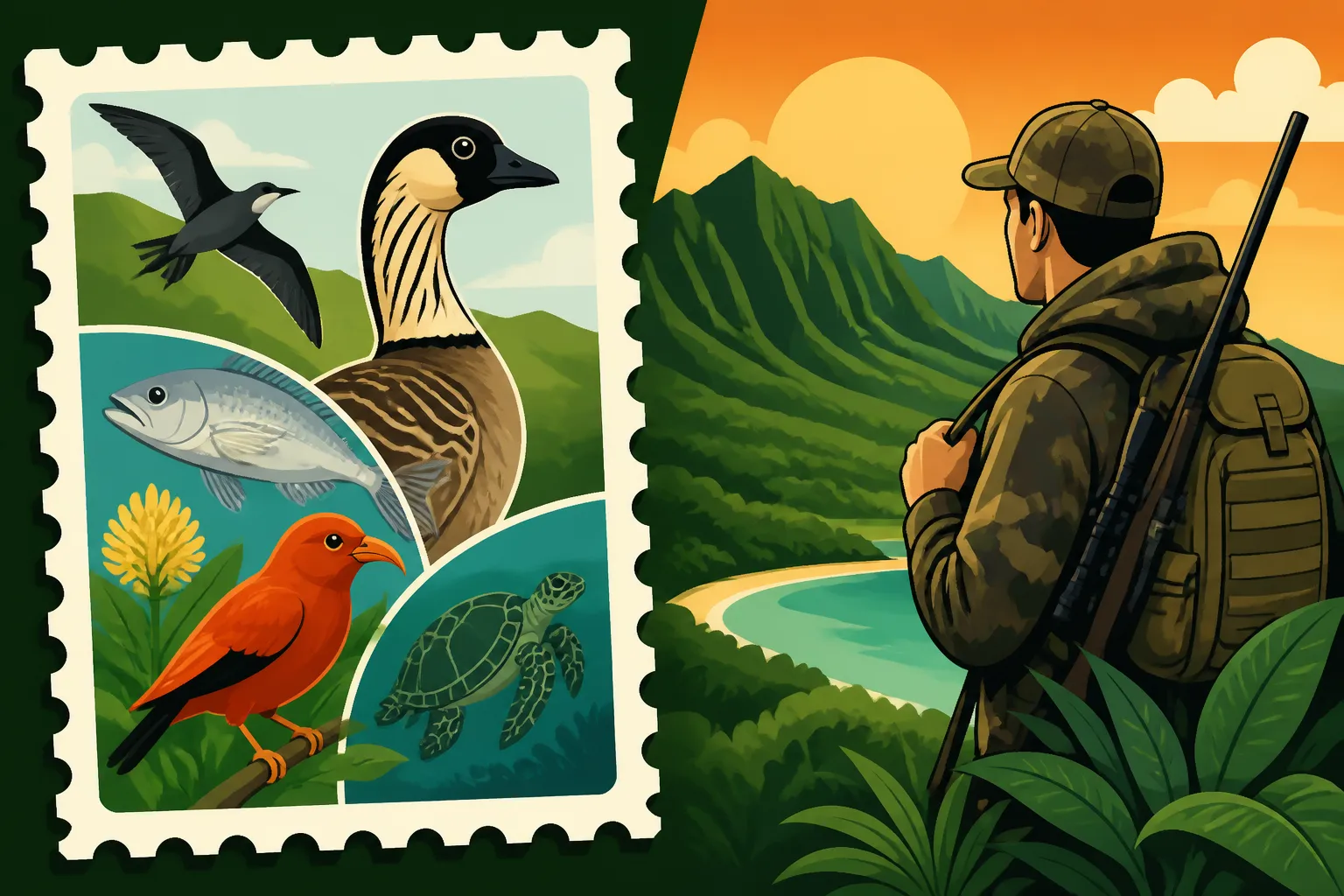
What the Wildlife Conservation Stamp Covers
One of the most common questions I get from hunters, especially those new to the islands or visiting from the mainland, revolves around the seemingly endless array of licenses, stamps, and permits needed to hunt in Hawaii. It can feel like a bureaucratic labyrinth, and nobody wants to show up for their hunt only to realize they're missing a critical piece of paperwork. This guide is here to untangle the specifics of the Hawaii Wildlife Conservation Stamp, clarifying exactly what it covers, why it's so important, and how it fits into your overall hunting plan in paradise.
Understanding Hawaii's Wildlife Conservation Stamp: More Than Just a Fee
When you're gearing up for a hunt in Hawaii, whether it's for the elusive axis deer or the challenging feral pigs, you'll encounter a few required purchases beyond just your weapon and gear. The Hawaii Wildlife Conservation Stamp is one of those foundational pieces, often overlooked in its significance because it’s not tied to a specific animal or season like a permit-tag might be. But trust me, this little stamp is a big deal, and understanding its role is crucial not only for staying legal but also for appreciating its contribution to the very hunting opportunities we cherish here.
What the Stamp Actually Is and Why It's Required
At its core, the Hawaii Wildlife Conservation Stamp is a mandatory purchase for any hunter looking to pursue game mammals in Hawaii's public hunting units. Think of it as a foundational contribution to the state's wildlife management efforts, specifically geared towards ungulates and other non-game species. It’s a dedicated revenue stream that supports the Division of Forestry and Wildlife (DOFAW) in their monumental task of managing Hawaii's diverse, and often fragile, ecosystems. Without it, your Hawaii hunting license isn't fully active for big game, and you wouldn't be able to legally check in to a public hunting unit or purchase a permit-tag for species like axis deer or mouflon. It's not just an arbitrary fee; it's a direct investment in the health of the game populations and the maintenance of the lands we hunt.
The stamp is a testament to the North American Model of Wildlife Conservation, where hunters financially support the resource they utilize. Here in Hawaii, with our unique and delicate environment, this support is even more critical. The funds generated by these stamps go towards everything from habitat restoration projects in dryland forests where axis deer thrive, to research on population dynamics of feral goats on sea cliffs, and even to the enforcement of hunting regulations to ensure fair chase and ethical practices. When you buy that stamp, you're not just buying a piece of paper; you're buying into the future of hunting in Hawaii.
The Fundamental Hunting Privileges It Grants
So, what exactly does the Wildlife Conservation Stamp allow you to do? This is where many people get confused. The stamp, in conjunction with your valid Hawaii hunting license, grants you the fundamental privilege to hunt game mammals in Hawaii where seasons are open and you possess the necessary unit-specific permits or tags. It’s the gatekeeper for big game hunting. If you plan on pursuing Axis Deer, Hawaii's Feral Pigs, Mouflon Sheep, or Hawaii's Feral Goats, you absolutely need this stamp. It essentially activates your hunting license for these species across the islands, making you eligible to then apply for or purchase the specific tags required for certain areas or species.
For instance, if you're dreaming of a trophy axis buck on Molokai or a challenging mouflon ram on Mauna Kea, the conservation stamp is the first step. Without it, you cannot legally acquire the actual permit-tag that allows you to harvest that specific animal. It’s the green light that says, "Okay, this hunter is contributing to conservation and is now eligible for further permits." It paves the way for participating in drawn hunts for premium species or purchasing over-the-counter tags for feral pigs and goats in designated units. Without it, you’re simply not in the game for mammal hunting on public land.
What the Conservation Stamp Does NOT Cover
This is a really important distinction, and it's where many hunters, especially those from outside Hawaii, can stumble. The Wildlife Conservation Stamp does not cover everything. It is specifically for game mammals. What it does not cover are game birds. If your primary interest is Hawaii Game Bird Hunting, chasing after Francolin, Pheasant, Chukar, or Dove, then you'll need a separate stamp: the Hawaii Game Bird Stamp. This is a common point of confusion, with hunters sometimes thinking one stamp covers all types of game.
Furthermore, the Conservation Stamp does not replace the need for specific permit-tags. On islands like Lanai, Molokai, and parts of Hawaii Island and Kauai, permit-tags are required for certain species, especially axis deer and mouflon. The conservation stamp makes you eligible to get those tags, but it doesn't include them. You'll still need to navigate Hawaii's Permit-Tag System to secure the actual tag for your animal. For example, if you draw a coveted Lanai axis deer tag, you still need to have purchased your Hawaii hunting license and the Wildlife Conservation Stamp beforehand to validate that tag. Similarly, the stamp doesn't grant access to private land. If you're hunting with an outfitter on a private ranch, while some may bundle the state license/stamp, you'll typically still need to fulfill the state requirements yourself. It's critical to understand that the stamp is one piece of a larger puzzle, not the whole picture.
The Financial Lifeline for Hawaii's Hunting and Conservation
It’s easy to look at an extra fee and wonder where your money is actually going. But when it comes to the Hawaii Wildlife Conservation Stamp, your contribution is far from a hidden tax. In a state like Hawaii, where the unique ecosystems are constantly under threat from invasive species and development, every dollar dedicated to wildlife management is crucial. This stamp represents a direct investment by hunters into the very resources they pursue, upholding a long-standing tradition of conservation funding that benefits both game and non-game species alike.
How Your Dollars Directly Impact Hawaii's Wildlife
The revenue generated from the sale of Hawaii Wildlife Conservation Stamps is channeled directly into programs administered by the state's Division of Forestry and Wildlife (DOFAW). These programs are incredibly diverse, spanning everything from critical habitat restoration to wildlife research, and even the hiring and training of enforcement officers who ensure ethical hunting practices and compliance with regulations. Think about the incredible biodiversity of the islands, from the unique native forest birds to the landscapes carved by volcanoes. Protecting these requires constant effort.
For example, a portion of the funds might go towards controlling invasive plants in key watershed areas on Hawaii Island, which not only benefits native flora but also improves forage and habitat for game animals like feral pigs. Other funds could support population surveys for axis deer on Maui to better inform harvest quotas and season lengths. These aren't abstract projects; they are tangible efforts to maintain healthy animal populations and the integrity of the natural environments where they live. Your stamp purchase directly contributes to keeping these wild places wild and viable for hunting.
Supporting Game Mammal Management Programs
Perhaps the most direct impact of the Conservation Stamp is its role in supporting specific game mammal management programs. Hawaii's diverse array of game mammals – from the agile axis deer to the powerful feral boars, the nimble feral goats, and the majestic mouflon sheep – are all managed under specific plans. These plans require significant resources for implementation, monitoring, and adaptation. The funds from the Conservation Stamp provide a steady and predictable source of income for these efforts.
Consider the ongoing challenge of managing Axis Deer on islands like Maui, Lanai, and Molokai. The stamp helps fund efforts such as population counts, assessing herd health, managing water sources in dry conditions, and even supporting public land access for hunters. Similarly, for Hunting Hawaii's Feral Pigs, funds might go towards research into their movements in dense rainforests or efforts to control their impact on sensitive native plant communities. For Hunting Hawaii's Feral Goats, the stamp could contribute to projects that monitor their numbers on steep coastal cliffs or in rugged canyon country. Without these funds, DOFAW's ability to proactively manage these populations, and thus sustain hunting opportunities, would be severely hampered.
Ensuring Sustainable Hunting Opportunities for the Future
Ultimately, the Hawaii Wildlife Conservation Stamp is an investment in the longevity and sustainability of hunting in Hawaii. Hunters are, by nature, conservationists. We understand that healthy populations and accessible lands are paramount for future generations to enjoy the same traditions we do. The money collected from these stamps directly contributes to ensuring those conditions exist. It helps maintain public hunting units, supports programs that mitigate conflicts between wildlife and agriculture, and provides the scientific data needed to make sound management decisions.
Without a robust funding mechanism like the Conservation Stamp, wildlife agencies would struggle to keep up with the demands of managing diverse game populations and the habitats they rely on. This could lead to reduced hunting opportunities, shorter seasons, or even closures of certain areas. By purchasing your stamp, you're actively participating in a system designed to prevent such outcomes, preserving the unique and challenging hunting experiences that Hawaii offers. It's a way for every hunter to leave a positive legacy, ensuring that the wild traditions of hunting remain a vital part of the islands' future.
Navigating the Purchase Process for Your Conservation Stamp
Buying your Hawaii hunting license and the associated Wildlife Conservation Stamp isn't overly complicated, but knowing the correct steps can save you time and frustration. Like many states, Hawaii has moved towards a more streamlined online system, which is fantastic for both residents and nonresidents. However, understanding how the stamp fits into your overall permit strategy is key to avoiding any last-minute surprises before your hunt.
Where to Buy Your Hawaii Hunting License and Stamp
The easiest and most reliable way to purchase your Hawaii hunting license and the required Wildlife Conservation Stamp is online through the GoHunt Hawaii portal. This centralized system allows you to manage all your hunting-related purchases in one place. You'll need to create an account if you don't already have one, and you'll typically need to provide proof of hunter education certification from any U.S. state or jurisdiction. For nonresidents, this usually involves an approved hunter education card or a letter of exemption.
Once you're logged into GoHunt, you'll find options to purchase your annual Hawaii Resident Hunting License Options or Hawaii Nonresident Hunting License Options. The Wildlife Conservation Stamp is usually presented as an add-on or a mandatory component when you select a license that qualifies for game mammal hunting. It's a simple checkbox or an automatically included item in your cart, making the process fairly intuitive. While some local vendors might still sell licenses, the online system is generally the most convenient, ensuring you have digital proof and a physical copy can be mailed or printed. Make sure to buy it well in advance of your hunt, especially if you're waiting for a physical copy to arrive, though a digital copy is usually sufficient for proof in the field.
Combining the Stamp with Other Necessary Permits and Tags
The Wildlife Conservation Stamp is a prerequisite, but it's rarely the only permit you'll need for a successful Hawaii hunt. Think of it as your entry ticket to the big game world; once you have it, you can then purchase or apply for the specific ride tickets. For many game mammals in Hawaii, especially axis deer on Maui, Molokai, or Lanai, or mouflon on Hawaii Island, you'll also need a separate permit-tag. These are usually acquired through an application process (often a lottery draw) or purchased over-the-counter for certain units or species.
For example, after you secure your annual hunting license and the Wildlife Conservation Stamp through GoHunt, you might then apply for one of the coveted Lanai Axis Deer Drawn Weekends. If successful, that specific tag will be issued to you, contingent on your prior purchase of the license and conservation stamp. Similarly, for feral pig hunting in units that require permits, having the conservation stamp in place makes you eligible to acquire those permits. It's crucial to understand this layering of requirements. Always consult the specific hunting regulations for the unit and species you intend to hunt to ensure you have all the necessary documentation, including your base hunting license, the Wildlife Conservation Stamp, and any specific permit-tags.
Common Pitfalls and Misconceptions When Buying
There are a few common mistakes hunters make when dealing with the Conservation Stamp. One is forgetting it entirely, especially if they're used to hunting in states where a general license covers everything. Always double-check your GoHunt cart to ensure it's included if you plan to hunt game mammals. Another pitfall is confusing it with the Hawaii Game Bird Stamp. If you're planning a combo hunt for pigs and francolin, for example, you'll need both the Wildlife Conservation Stamp (for pigs) and the Game Bird Stamp (for francolin).
A common misconception, particularly for nonresidents, is that a guided hunt will automatically handle all these permits. While reputable Hawaii hunting guides will certainly help you understand the requirements and often facilitate the process, ultimately, you are responsible for purchasing your own state hunting license and the associated stamps. Always confirm with your guide what you need to acquire personally versus what they might provide. Being prepared means understanding all the pieces of the puzzle before you even set foot on Hawaiian soil. The rules can be specific, so a little proactive research goes a long way.
Here's a quick overview to help clarify the roles of Hawaii's key hunting stamps and permits:
| Item | Primary Purpose | What it Covers | What it Does NOT Cover | Who Needs It |
|---|---|---|---|---|
| Hunting License | General authorization to hunt in Hawaii | Eligibility to hunt game. | Specific species/areas, game birds, additional stamps. | All hunters (resident/nonresident) |
| Wildlife Conservation Stamp | Supports game mammal management and conservation. | All game mammals (Axis Deer, Pigs, Goats, Mouflon). | Game birds, specific permit-tags. | All hunters pursuing game mammals |
| Game Bird Stamp | Supports game bird management and habitat. | All game bird species (Francolin, Pheasant, Dove). | Game mammals, specific permit-tags. | All hunters pursuing game birds |
| Permit-Tags | Specific authorization to harvest a particular animal. | Specific species (e.g., Axis Deer, Mouflon). | Other species, general hunting authorization (requires license + stamp). | Hunters pursuing tagged species in designated units (e.g., Lanai Axis Deer) |
Disclaimer
Hunting in Hawaii involves unique challenges and regulations. The information provided in this article is for general guidance only and is subject to change. Always consult the most current Hawaii Department of Land and Natural Resources (DLNR) Division of Forestry and Wildlife (DOFAW) regulations and official publications before planning any hunt. It is the hunter's responsibility to know and follow all applicable laws and rules.